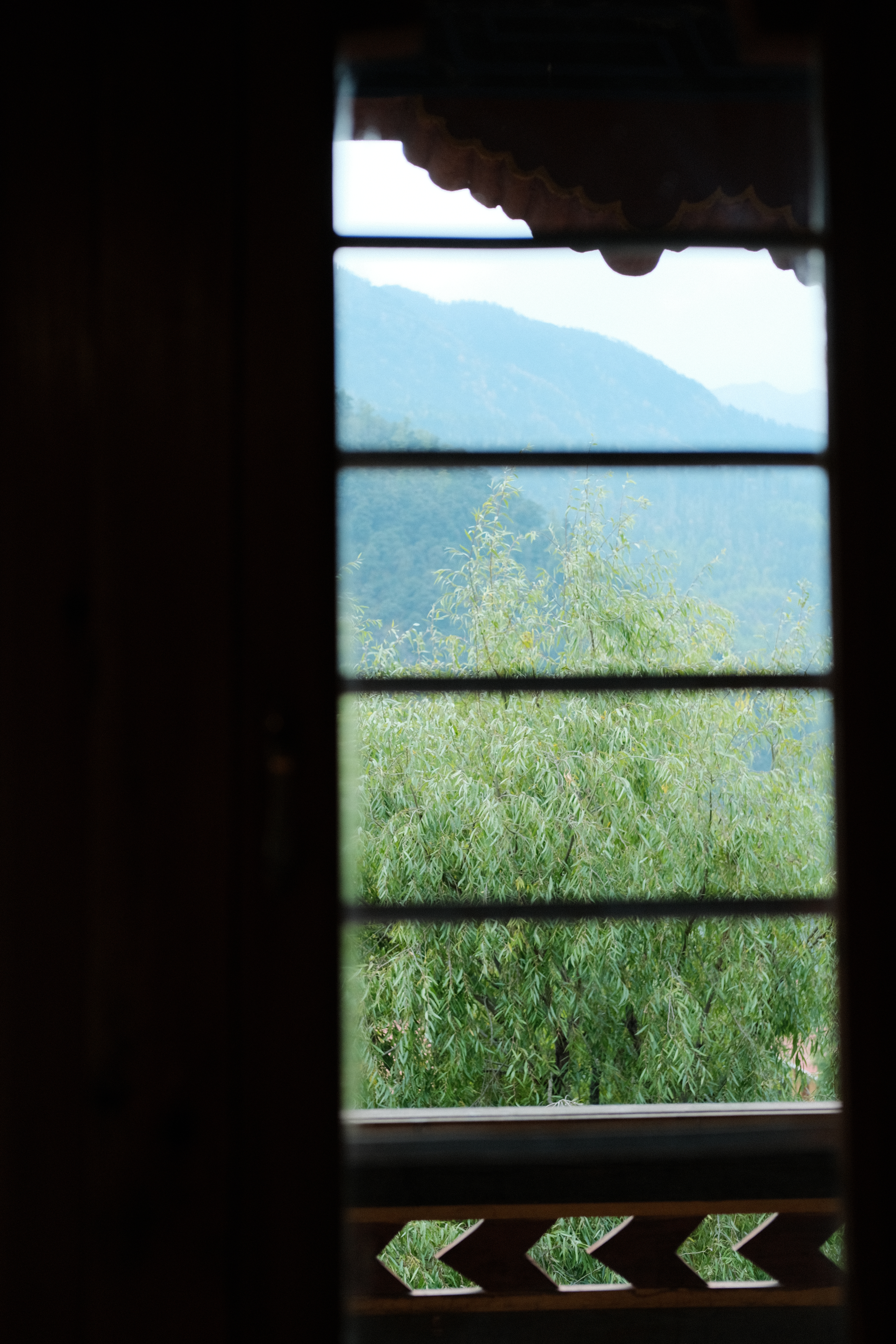
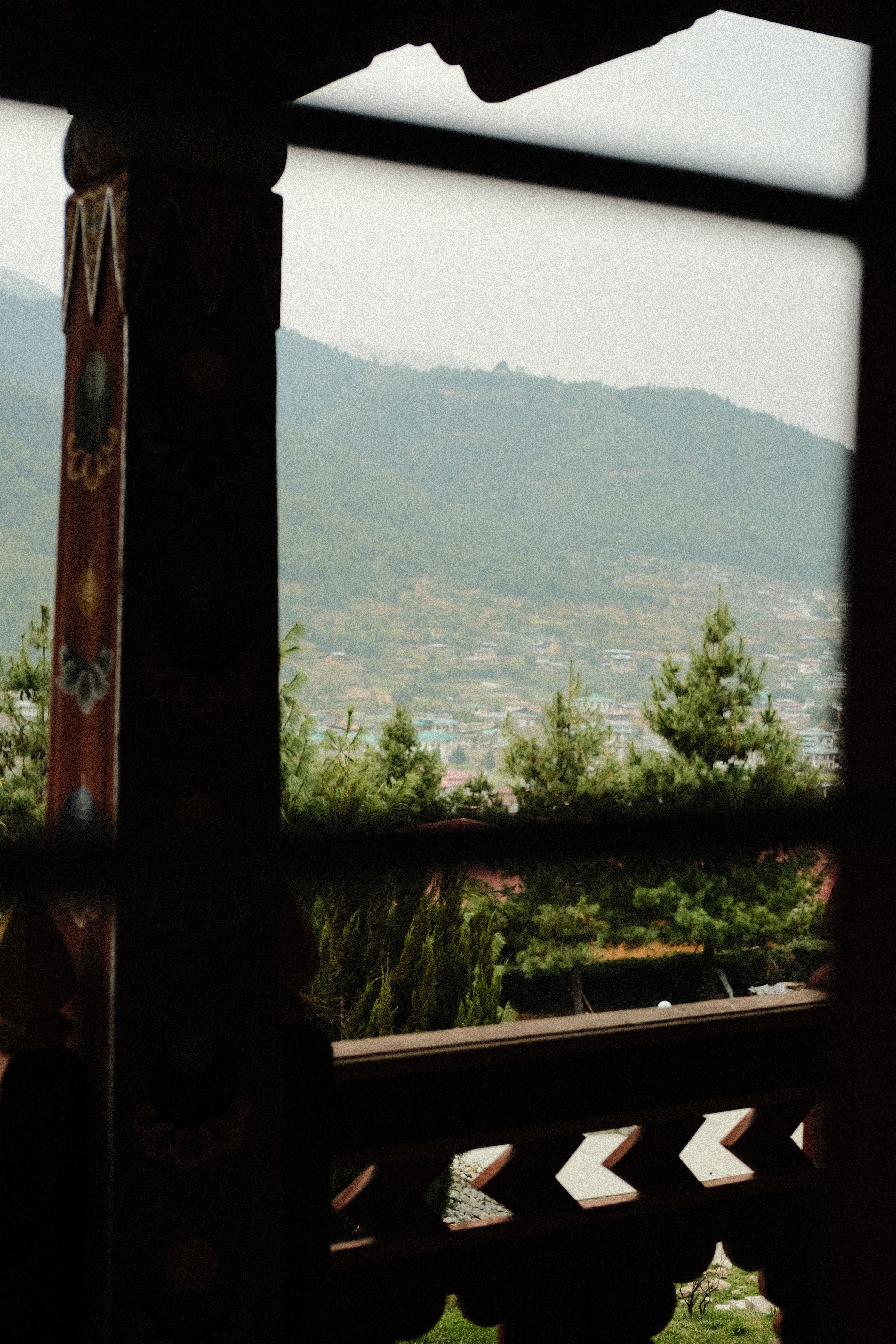
We woke up to a stunning view over the Haa Valley, hot sweet porridge, pancakes and fruit, and strong coffee with milk (for renaud) and milk tea (for fee).
This morning, we had a choice between a quiet 2-hour hike or the “panoramic Haa-Valley” 5-hour hike, taking us to the Yangthang monastery and on to the cliffside Juneydrak Hermitage… we opted for the longer route (I mean, it’s panoramic, right?), and for a while, it really honestly felt like we had made a terrible mistake.
We drove out of town for about half an hour, passing a magnificent yak herd on our way (or perhaps more accurately: they passed us), and to the bottom of the foothills we would climb on our way to the monastery.
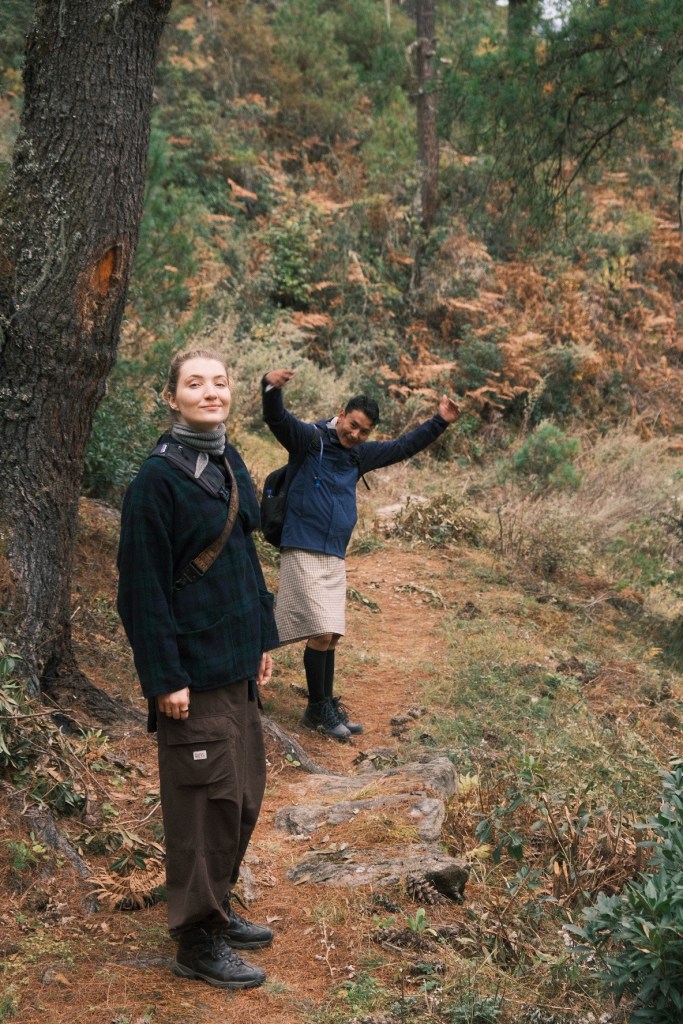
Fee was not.
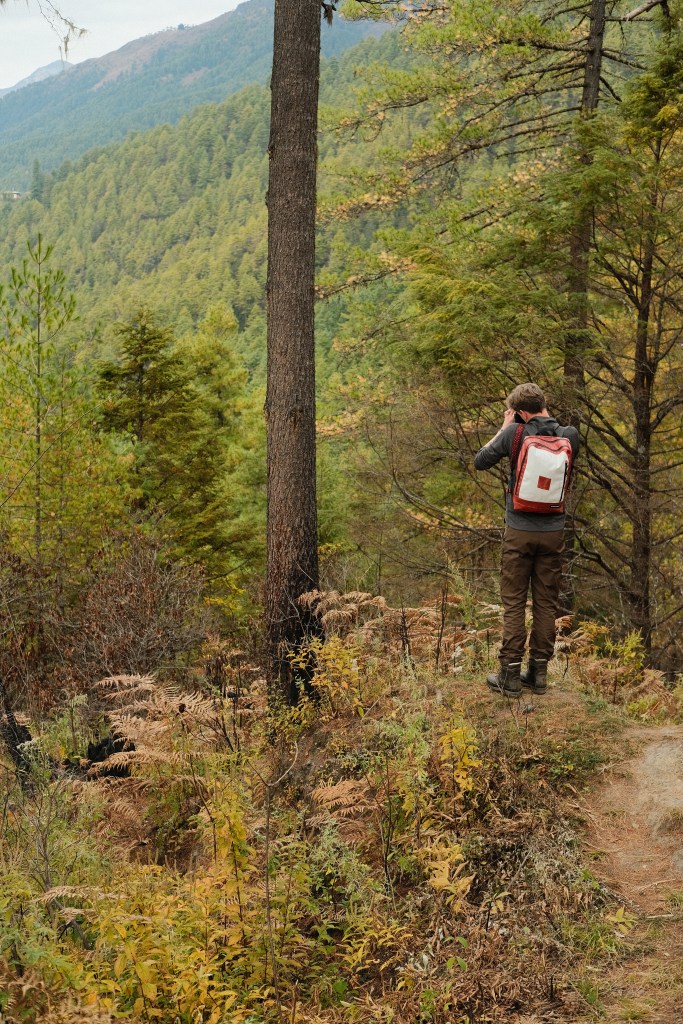
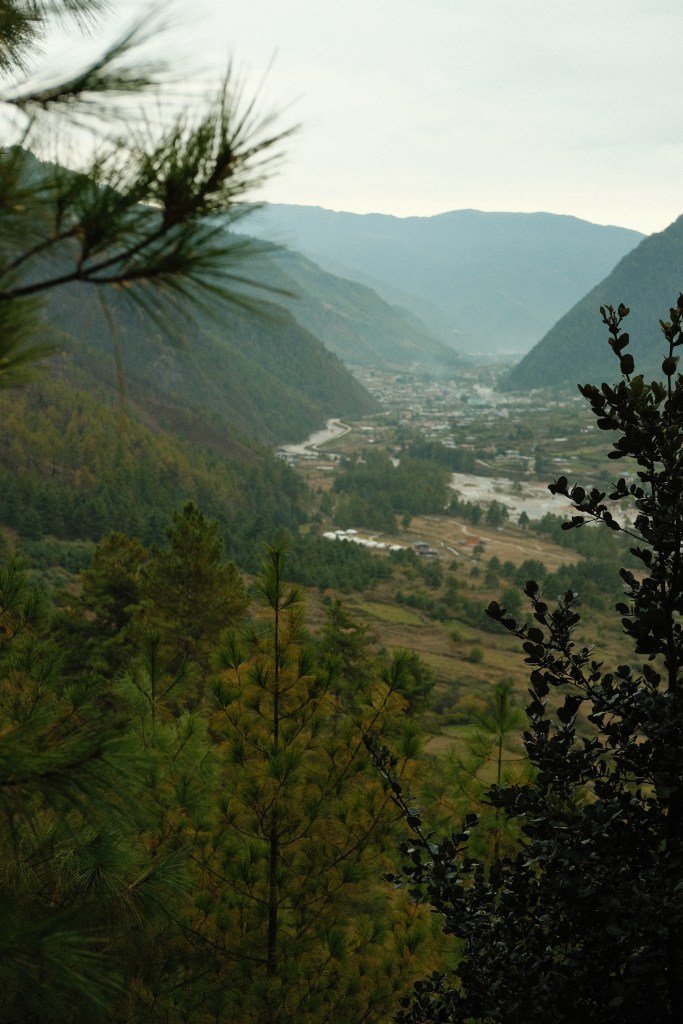

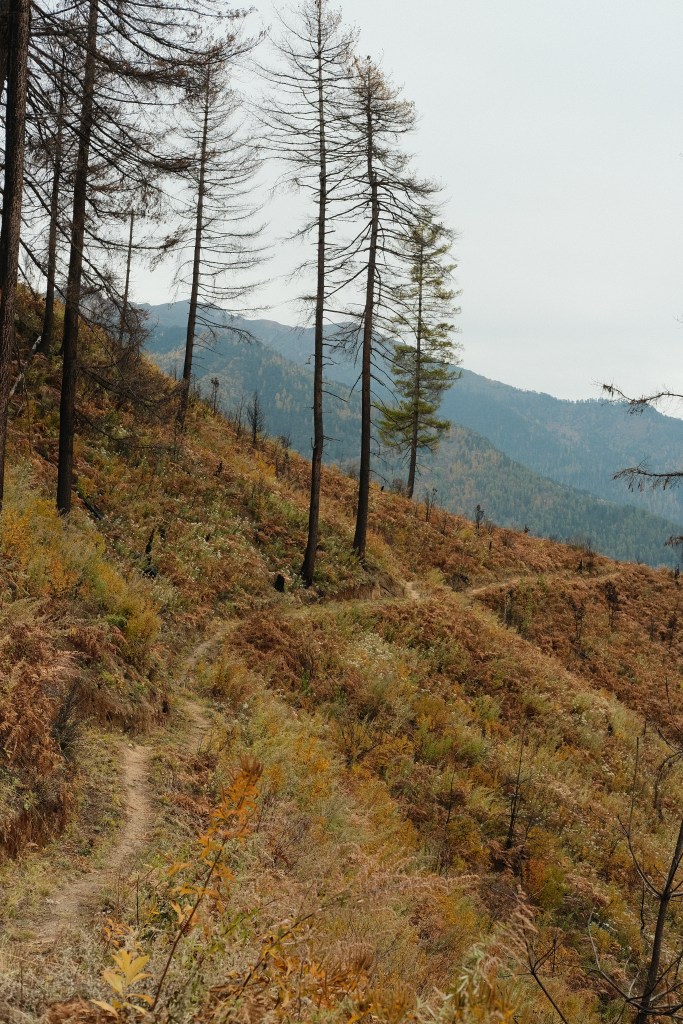
Our path would take us over and along two hillsides, steadily walking up a steep slope through sparse woodlands, and as we started climbing up the mountains proper —at times climbing rocky-slopes, struggling not to slip on the brittle orange dirt track— our sunny hobbit-hike turned into a rough march.


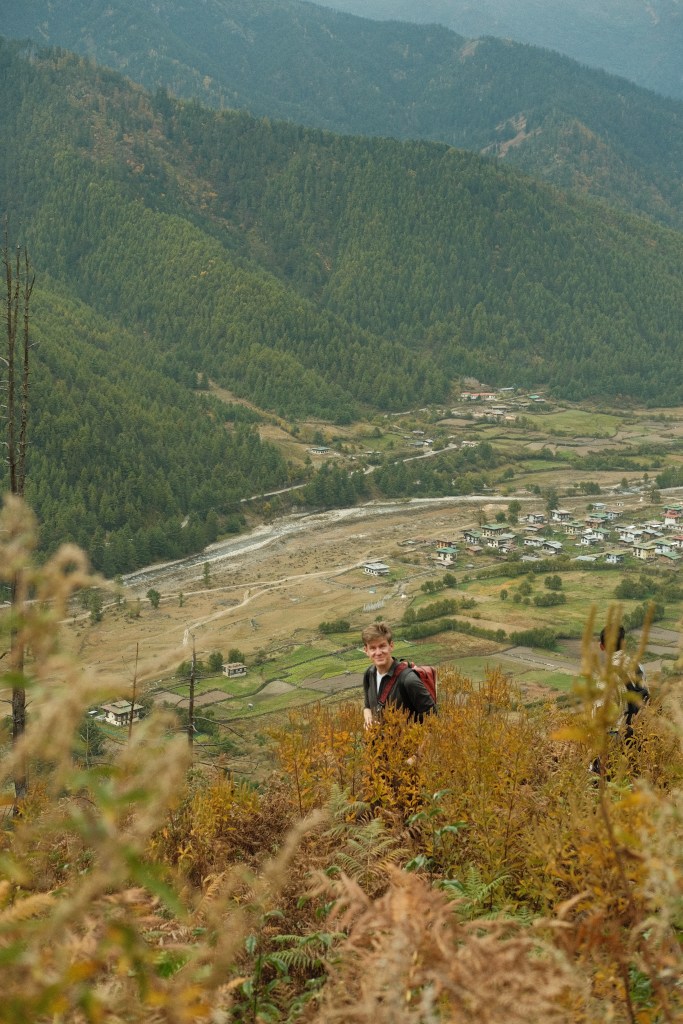
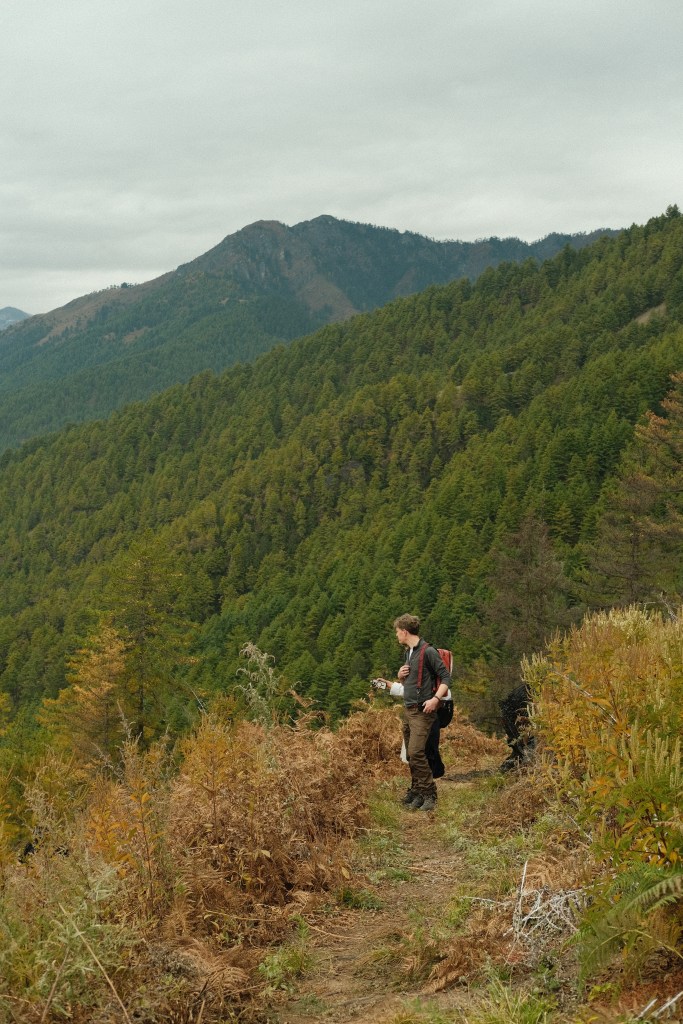

The jet-lag and the high altitude —we live at sea level, and we were suddenly almost 4000 meters closer to the sky— played havoc with our systems, and as DD repeatedly asked us if we were good, we quietly wished we weee back at the hotel, exploring Haa itself, maybe taking a nap.
But my gods, it. was. beautiful.
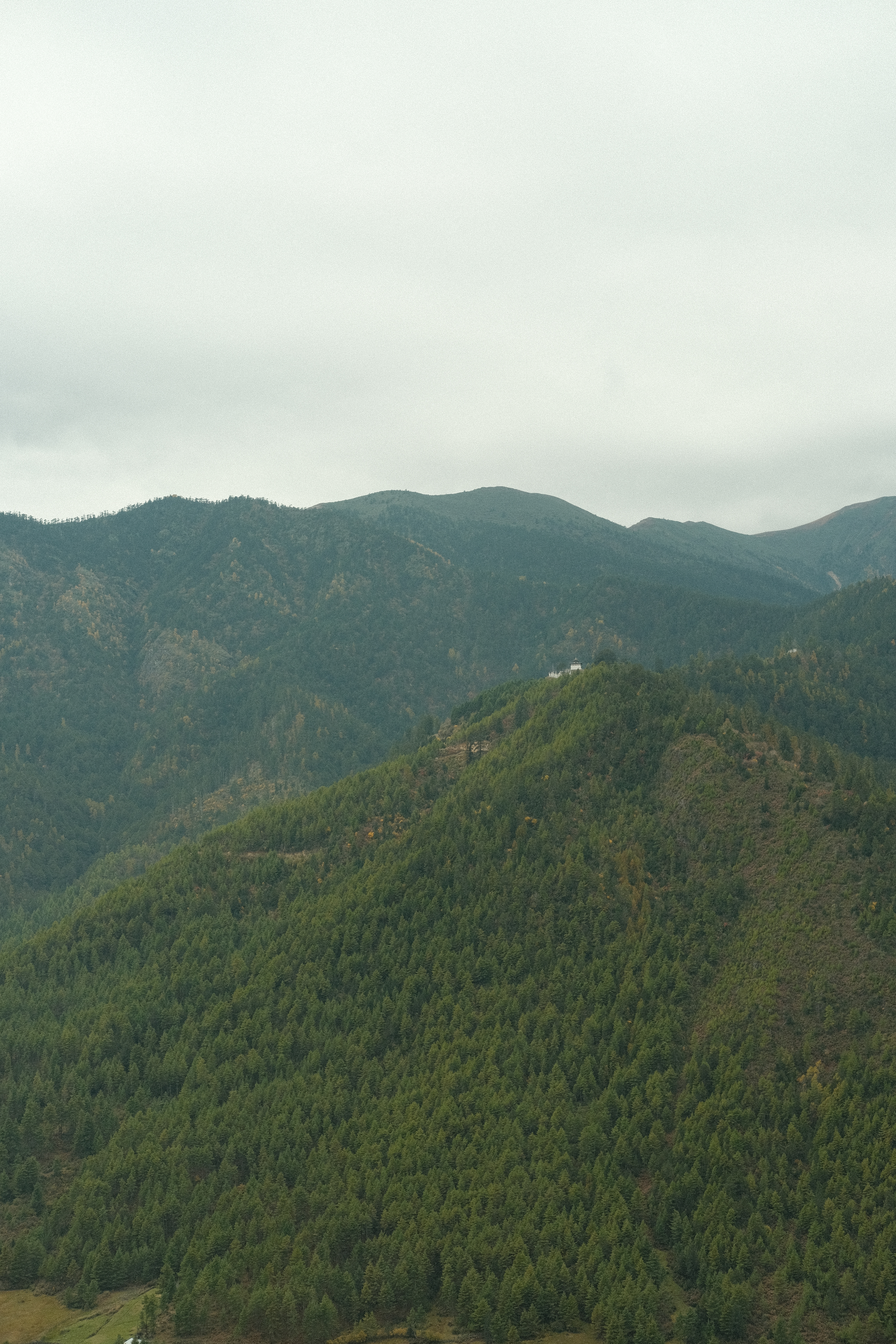
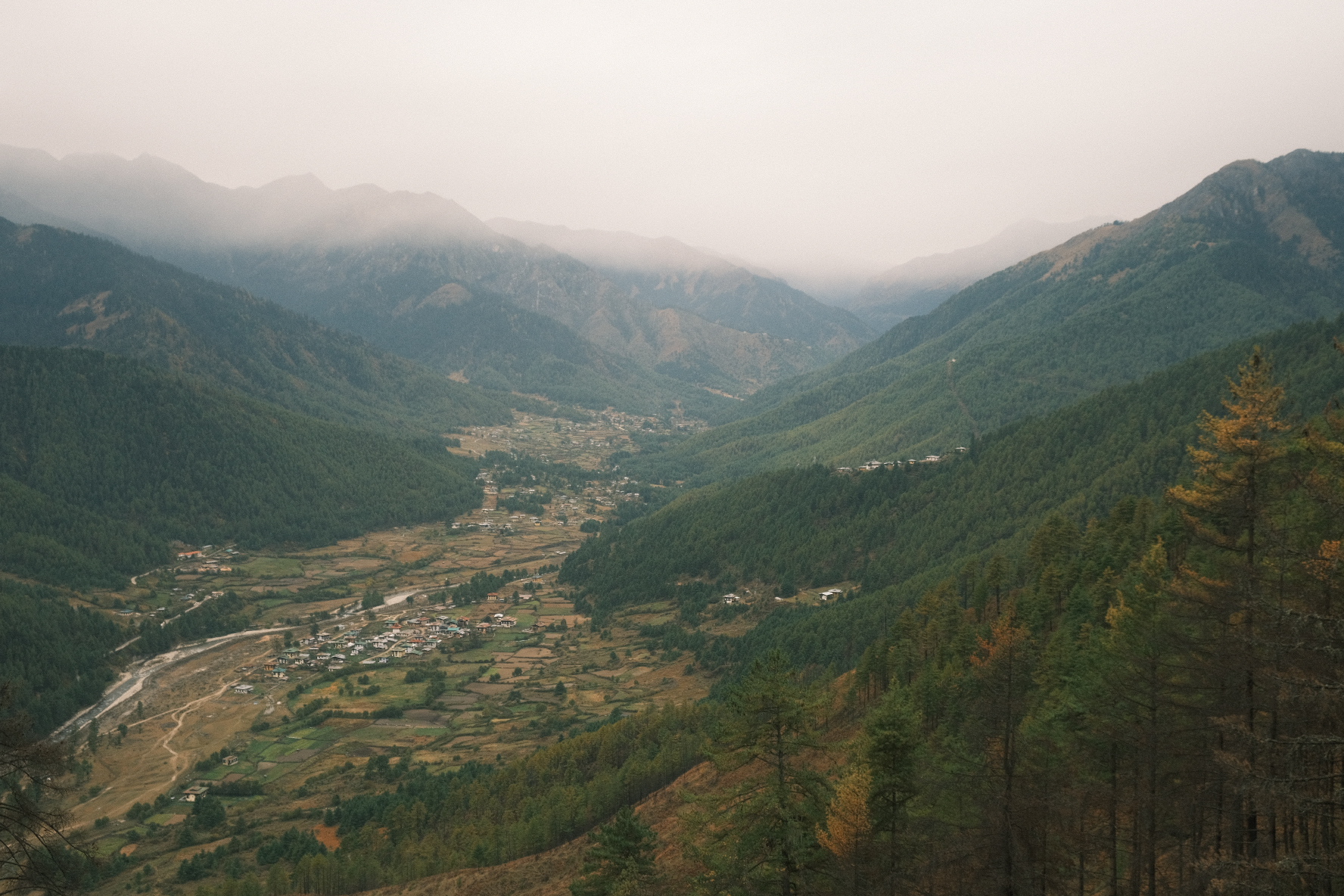
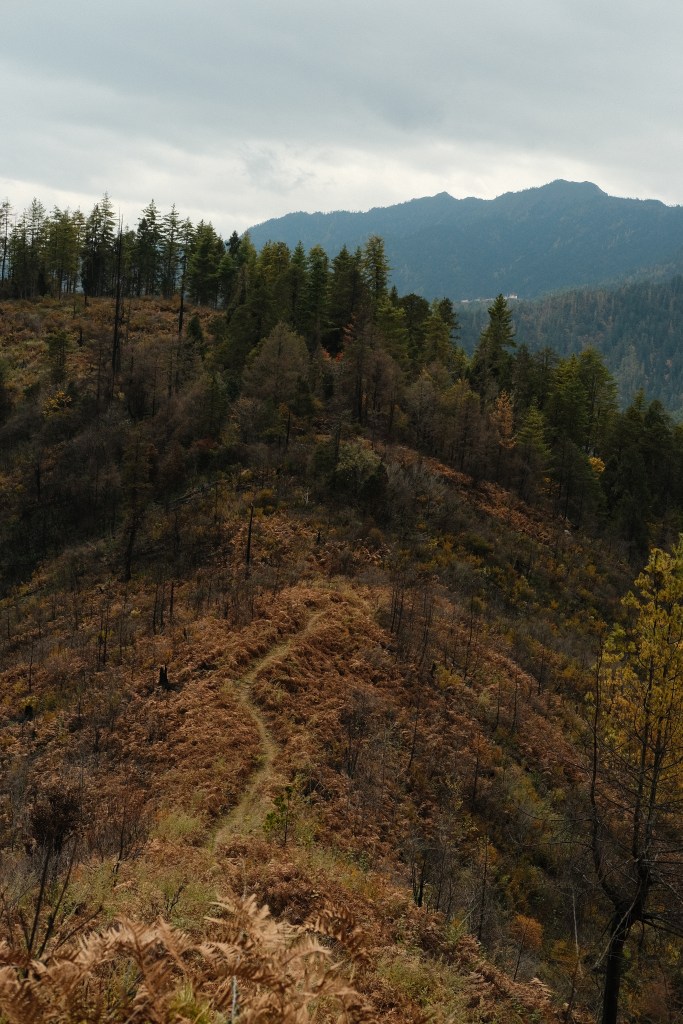
We were blessed with a striking view of the valley and the Risums —three mountains variously embodying the bodhisattvas of Compassion, Wisdom, and Energy, who watch over the Haa valley and its people— and a vast forest of blue pine and brown oak (both native to Bhutan), and rhododendrons growing from the blackened ground, remains of a recent forest fire, all to the background song of cicadas.
As we climbed the last hill through this blackened forest we dipped into a small valley which we would cross in order to climb back up Yangthang monastery.
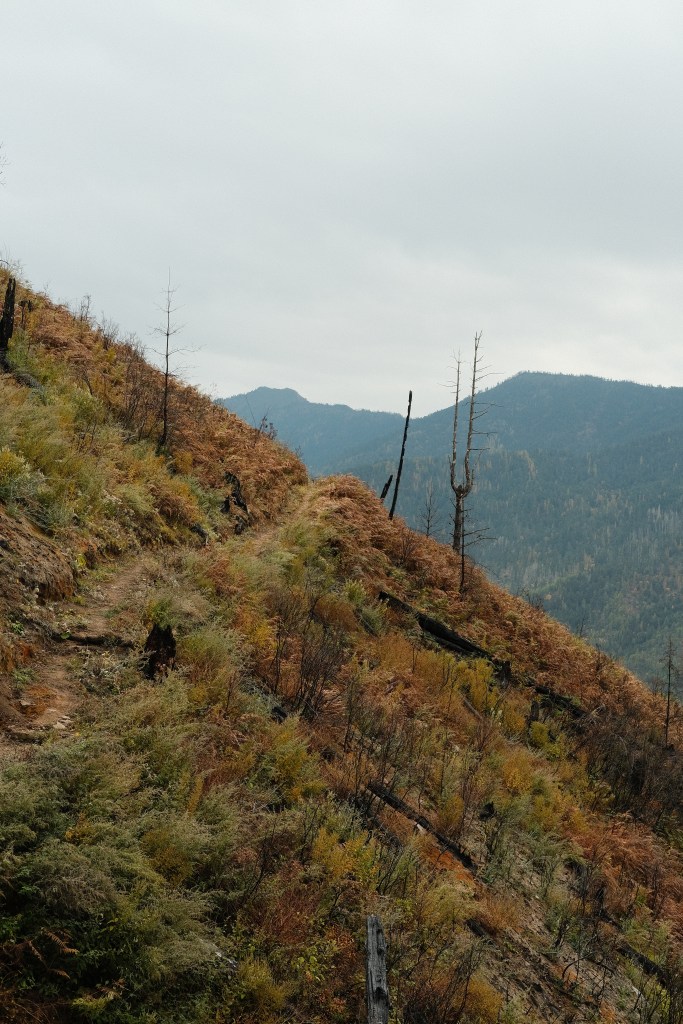
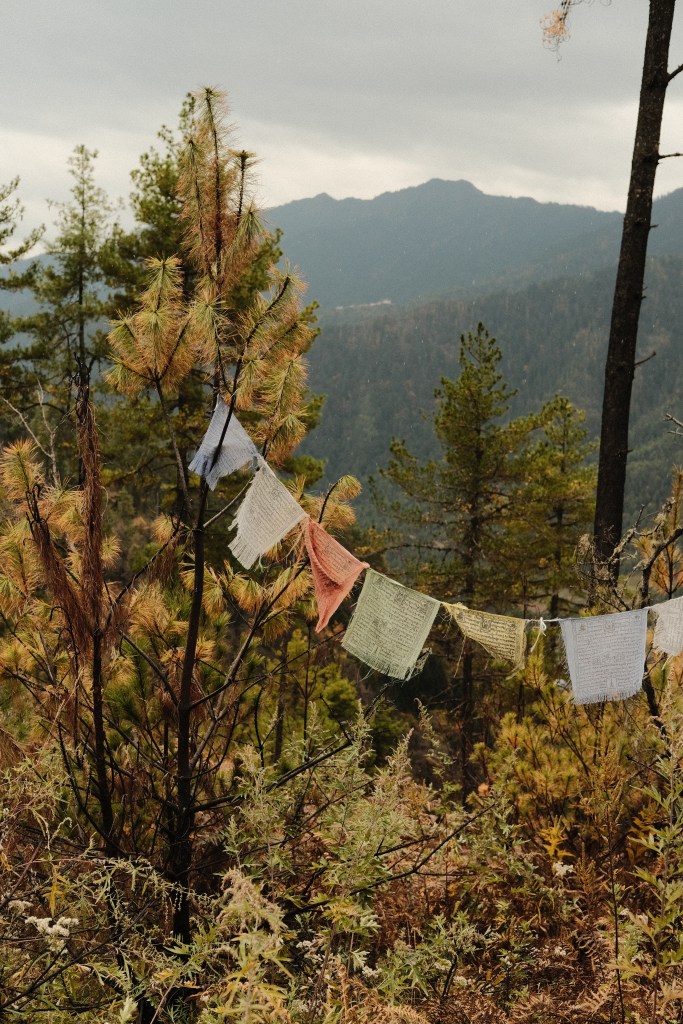
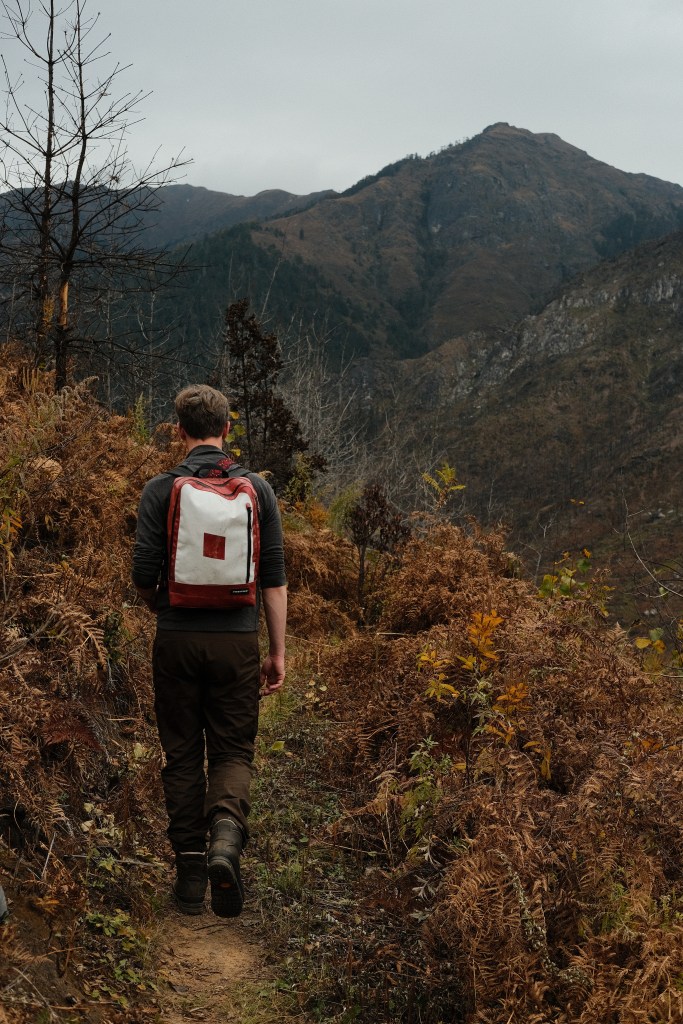

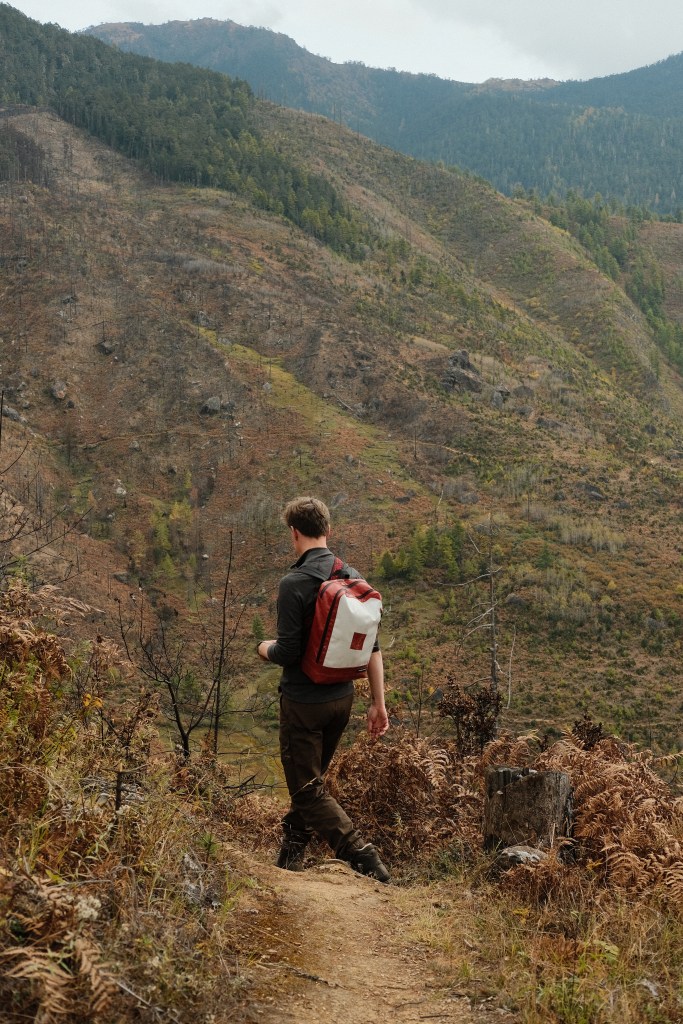
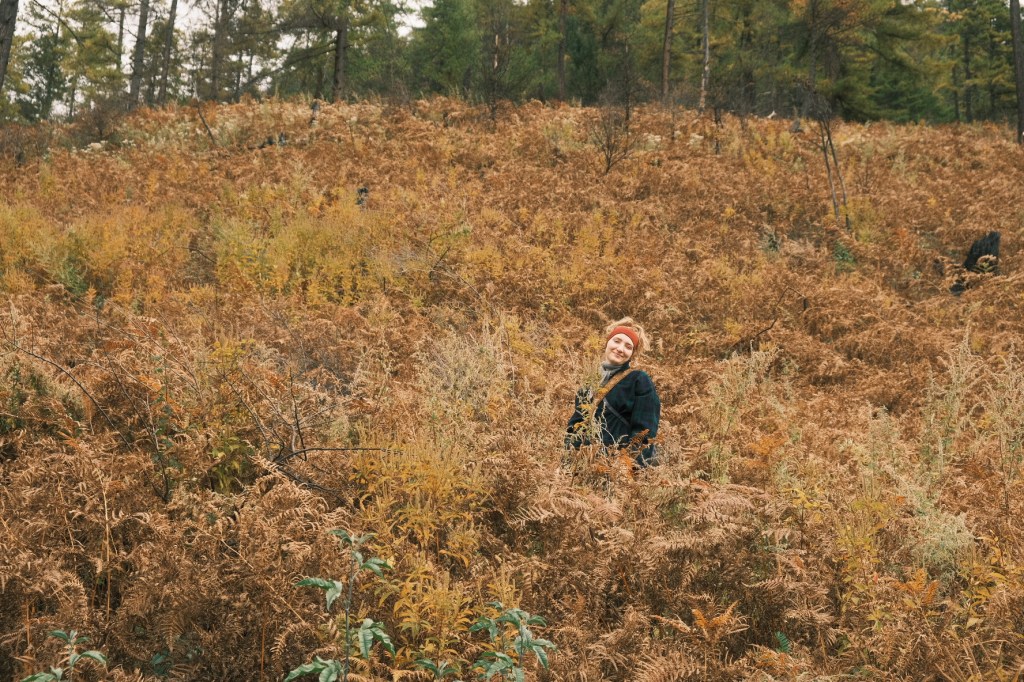
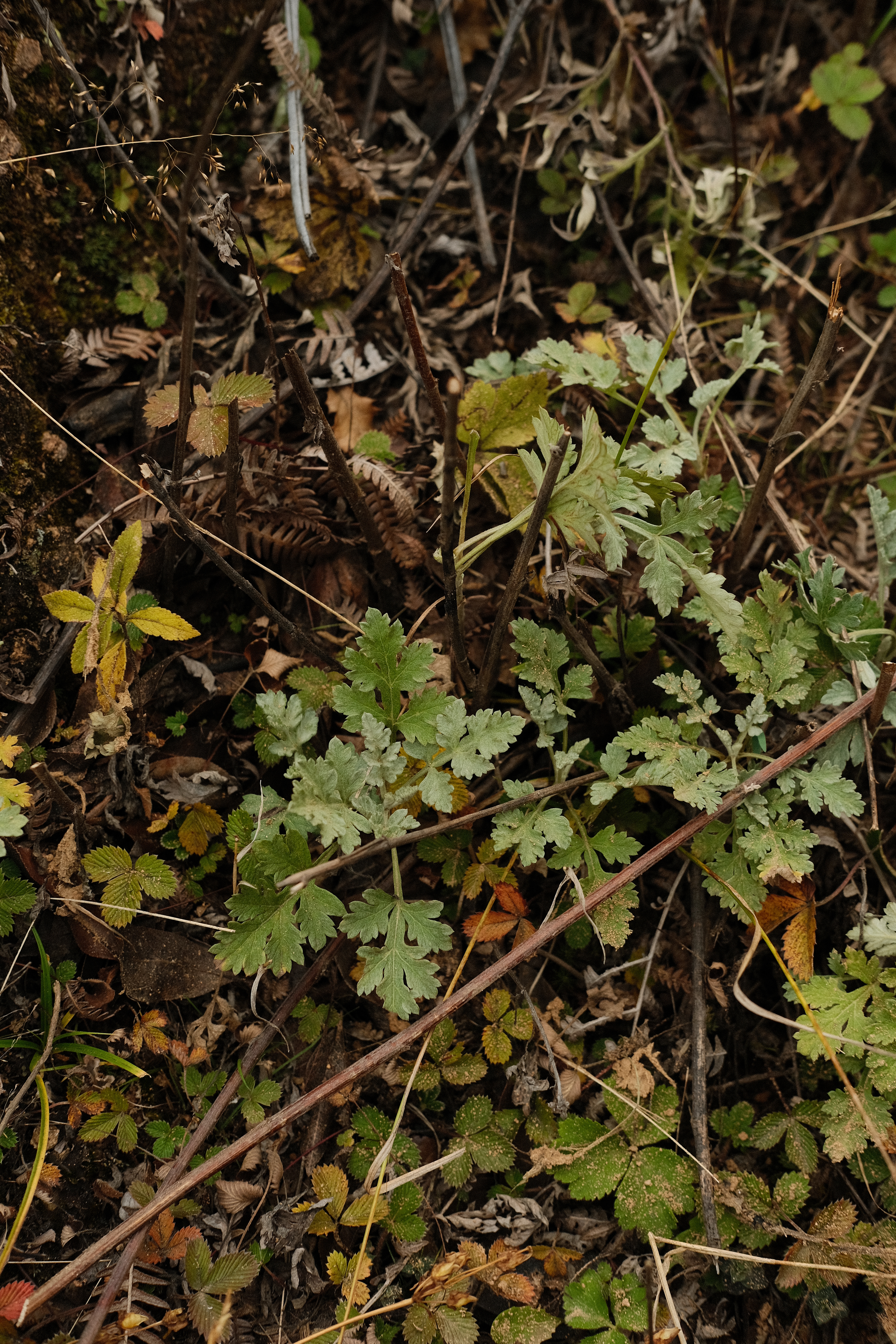
On our way down to the valley, we found wild Artemesia, one of the many medicinal plants that Bhutan is famous for; there are more than 600 medicinal plant species identified in Bhutan and the Bhutanese practice of traditional medicine dates back to the eighth century. When you crush the plant between your fingers it smells pungently spicy, a kind of musky moss smell.
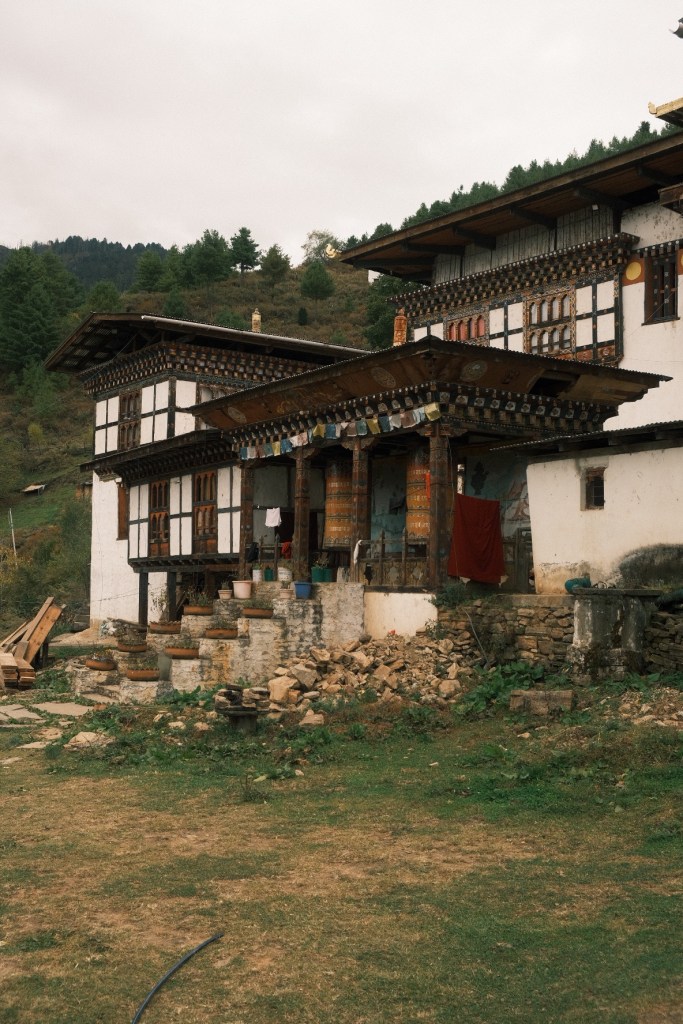
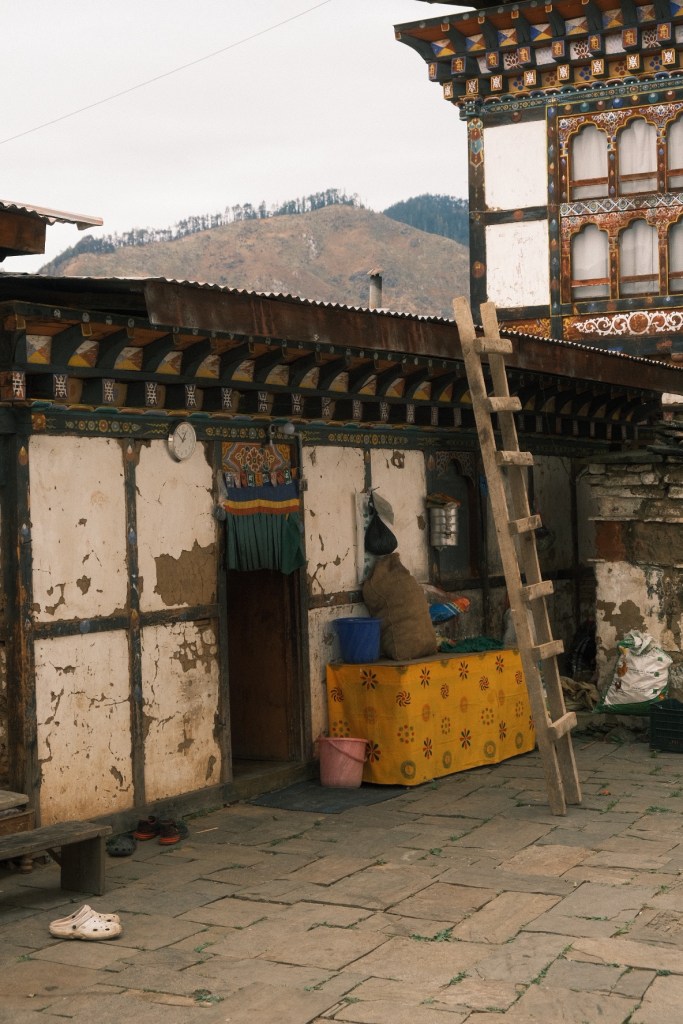
The monastery was under renovation, and a charming mixture of the sacred and the mundane: Effigies of the 2nd Buddha and local deities, all surrounded by offerings and blessings, sat opposite two young monks and a carpenter, calmly planing and assembling thick pine planks into new flooring.

The resort packed us a lunch which turned out to be somewhat desultory — a boiled egg, a roast potato that was largely still raw, and some particularly sad sandwiches — but we all bonded happily in our disappointment, and fē made a new friend!
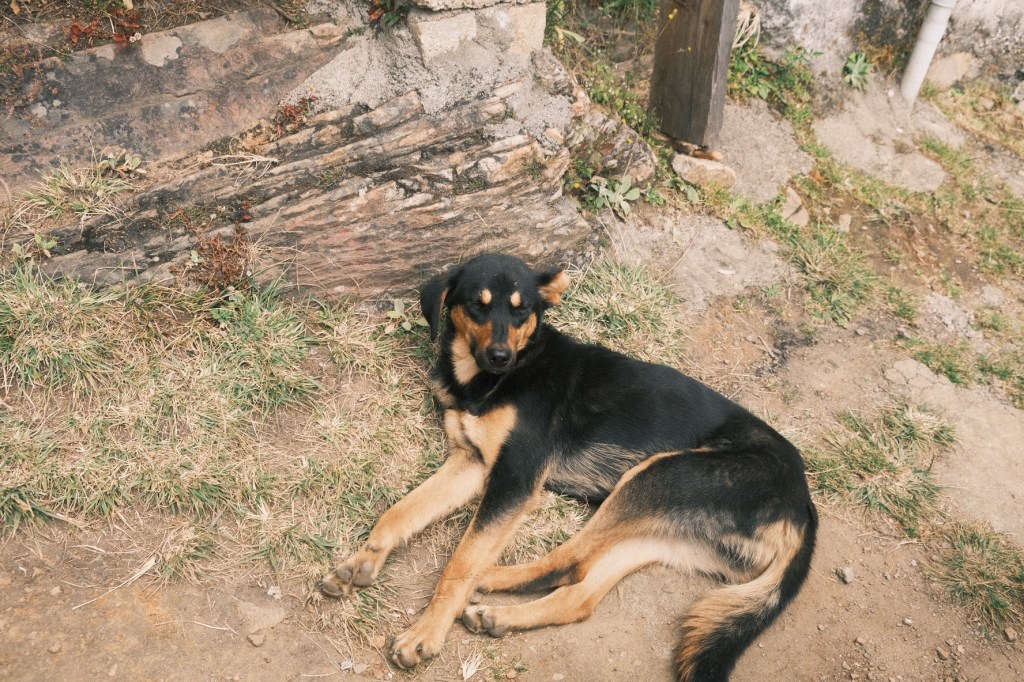
He came marching up from the monastery towards our lunch spot, and would cheerfully follow us —sometimes ahead, sometimes behind— all the way to the hermitage, until we climbed back into our car… fē fell madly in love with him, and immediately declared that we were bringing him home with us.
We will see if there is a way to bring dogs from Bhutan to Denmark, and if there is, we will come back for him.

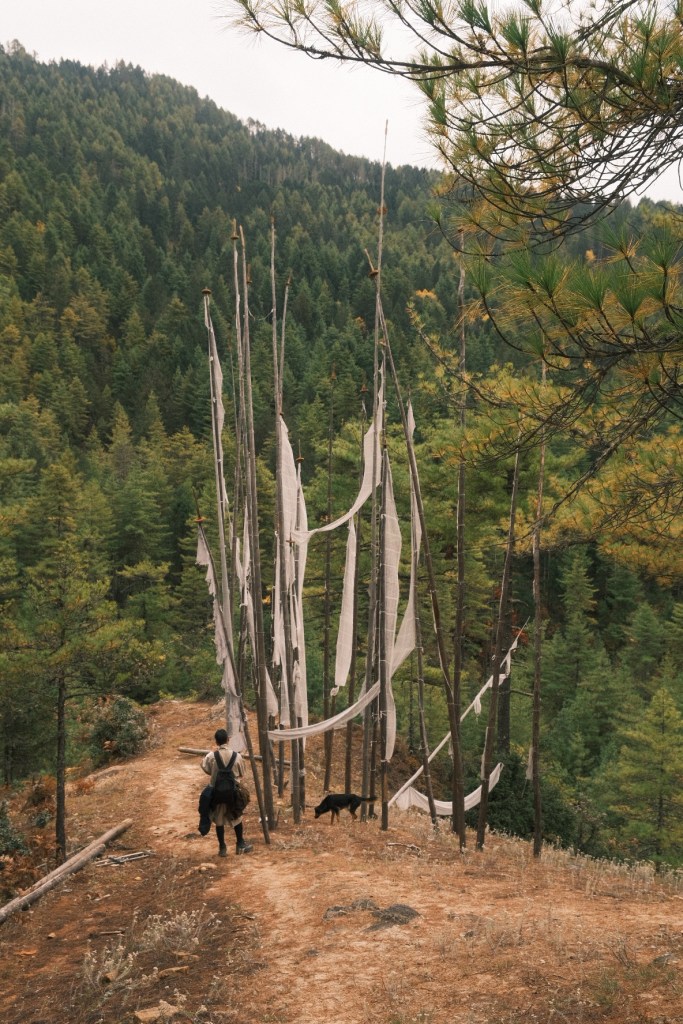
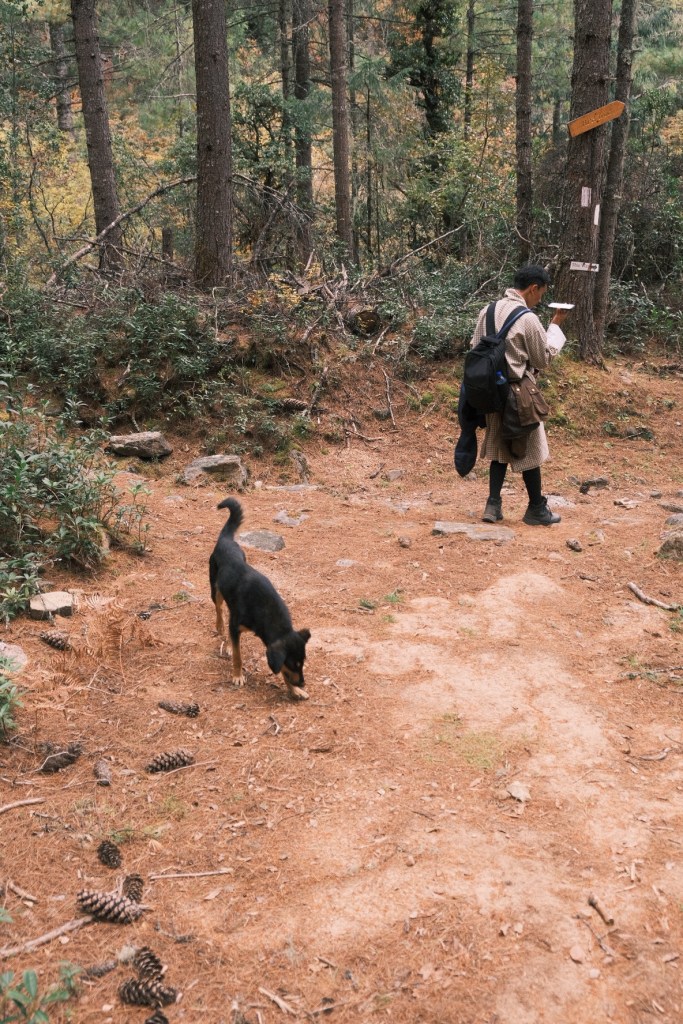
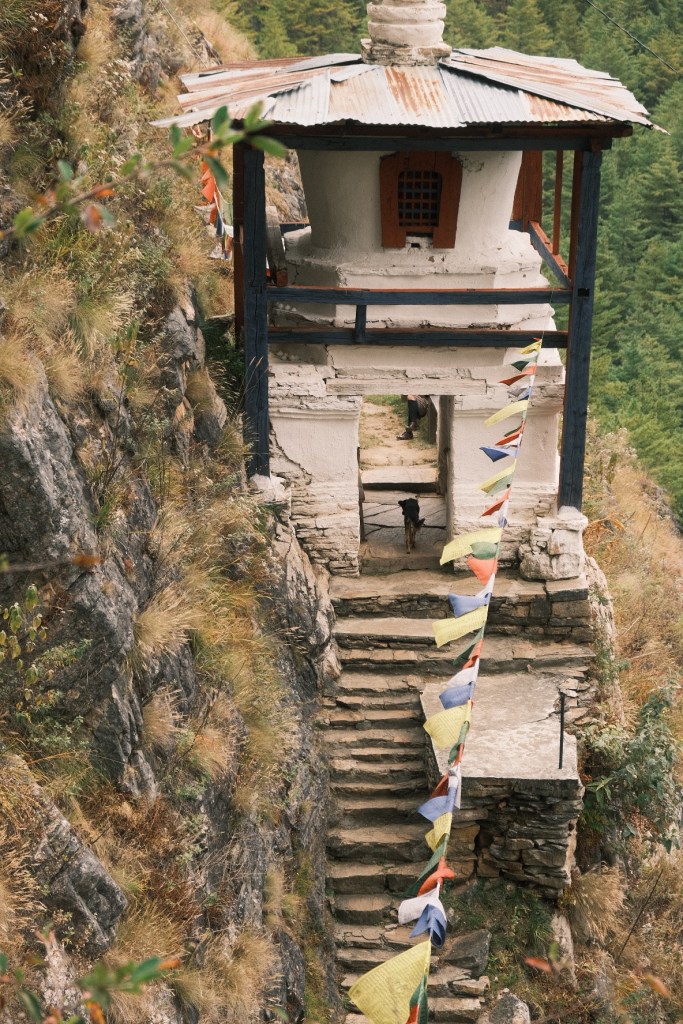
The climb to the hermitage was fraught but cheerful, full or treacherous stones and beautiful views. The nuns were in seclusion, and had blocked the primary paths from the monastery, forcing us to climb over the ridge and down the other side… so that we could climb up the single access available from there.

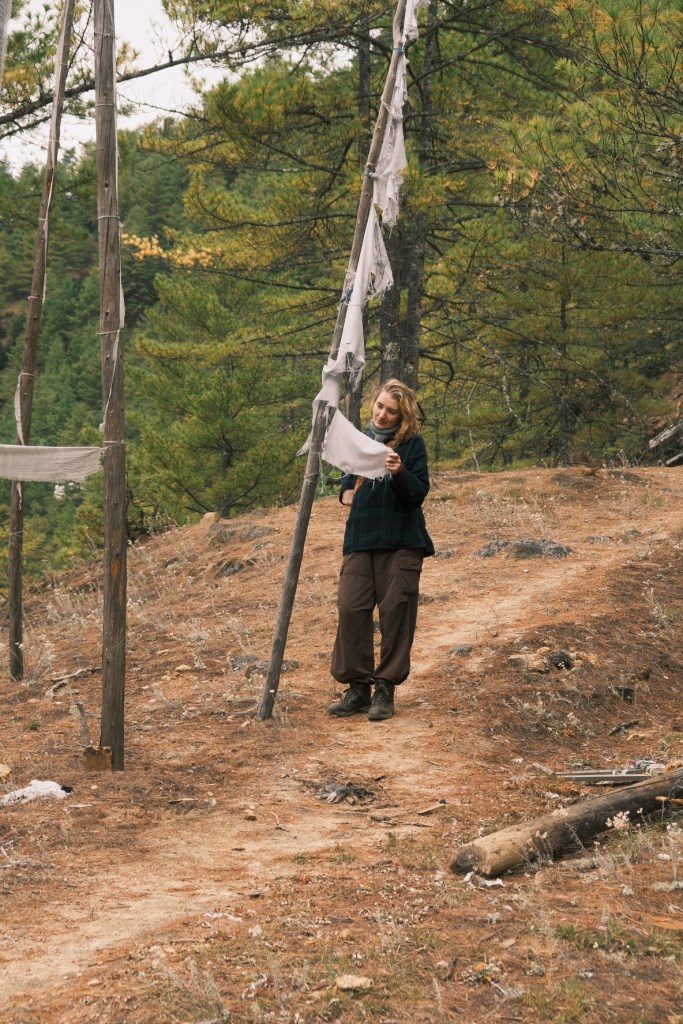

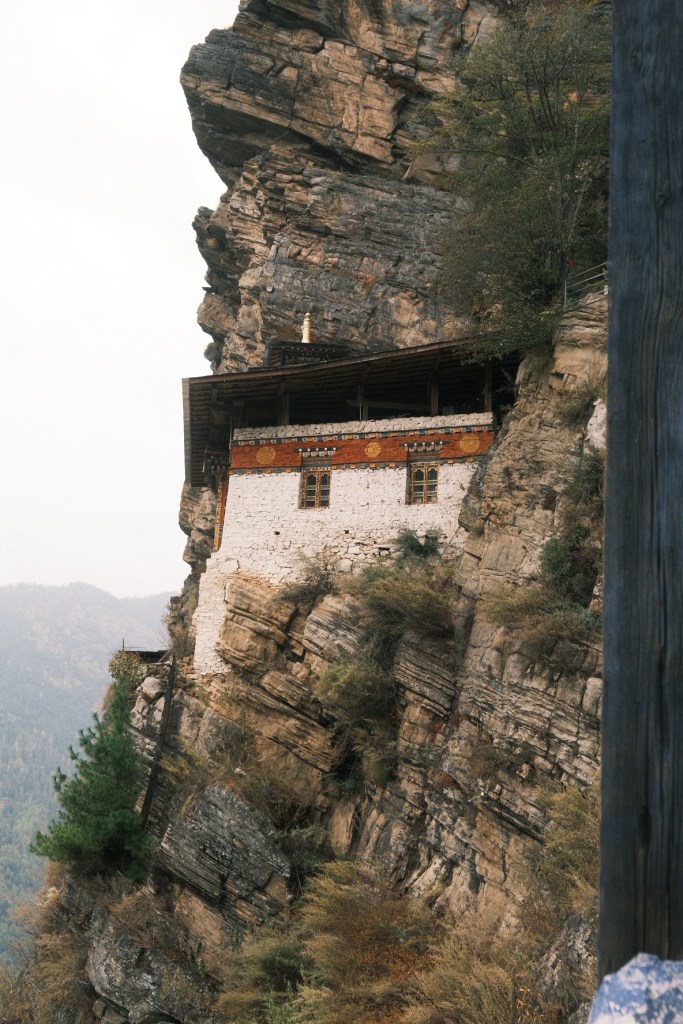
The climb was entirely worth it, however. The hermitage is an ancient and much-renovated building, built into the cliffside, where a single nun stood quietly by as DD showed us the saint’s holy footstep, embedded in the rock, and taught us fascinating details of the history of Bhutan and their buddhism.

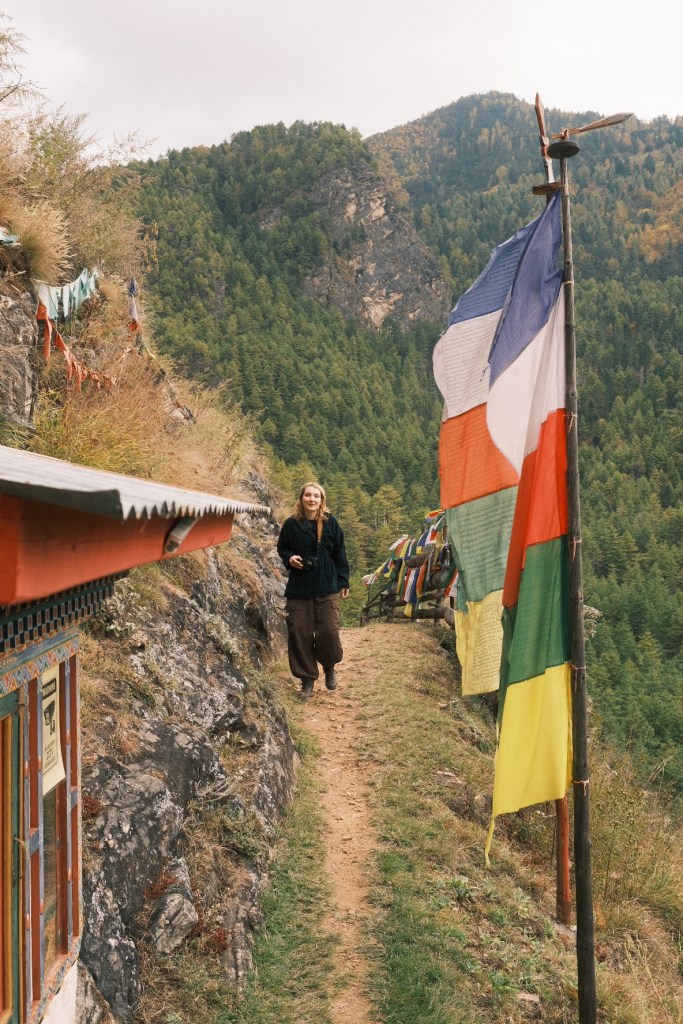
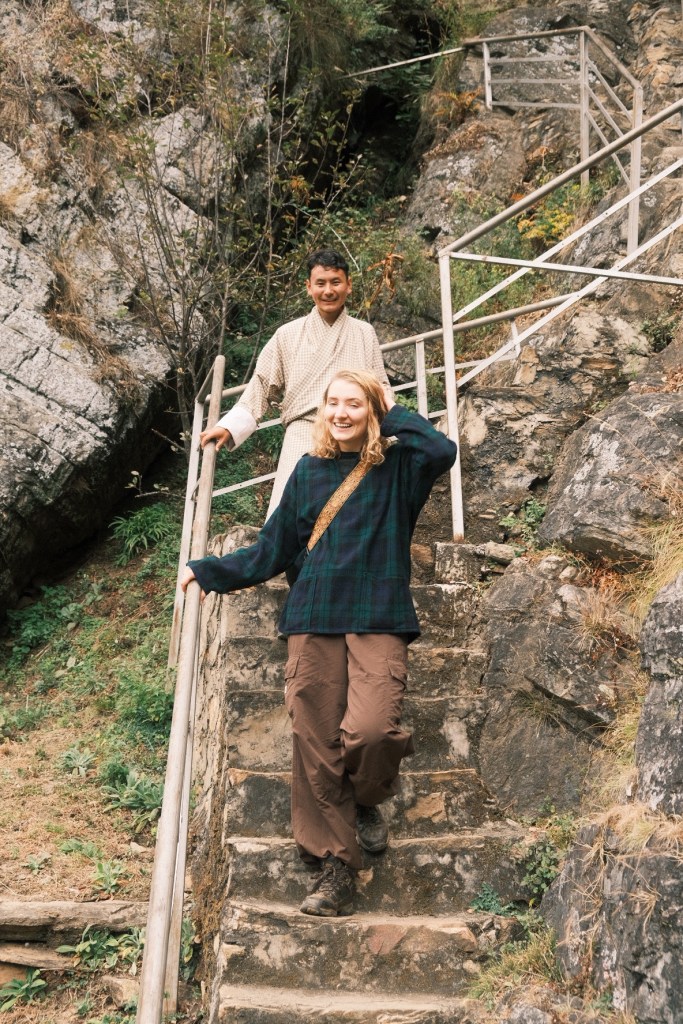
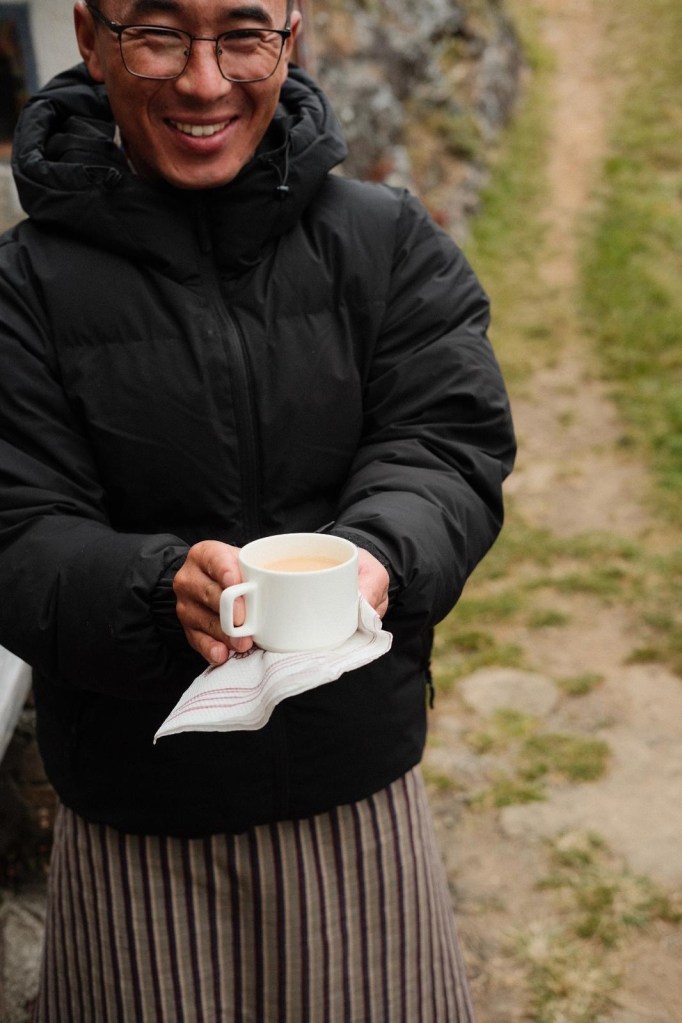
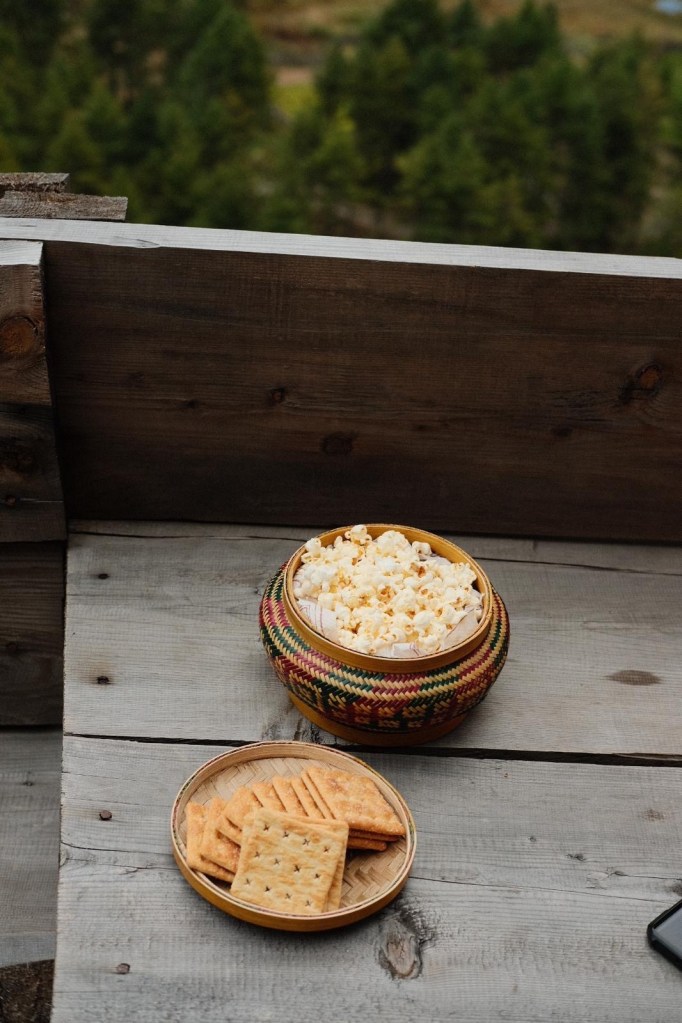
On our way out of the hermitage, our marvellous driver Dorji was waiting for us with a Bhutanese milk tea made with black tea, ginger and cordyceps, along with popcorn and sweet-and-sour crackers, and we merrily recounted the tales of the day.
A short drive back, and a quick break at the hotel, and we were back on the road to a local homestay, to soak our sores in a traditional hot stone bath.
These baths are typical of Bhutan’s herbal medicinal culture: a smallish wooden tub, filled with herbs (Artemisia), flowers and various minerals and salts, and heated by plunging hot river stones fresh from the fire into the water.
You rubs the leaves and flowers into your heated skin, and call for more stones when the water starts to cool; the effect is like an aromatic sauna, and all our aches and pains were gone by the time we returned to our rooms.

 Renaud and Fee
Leave a comment