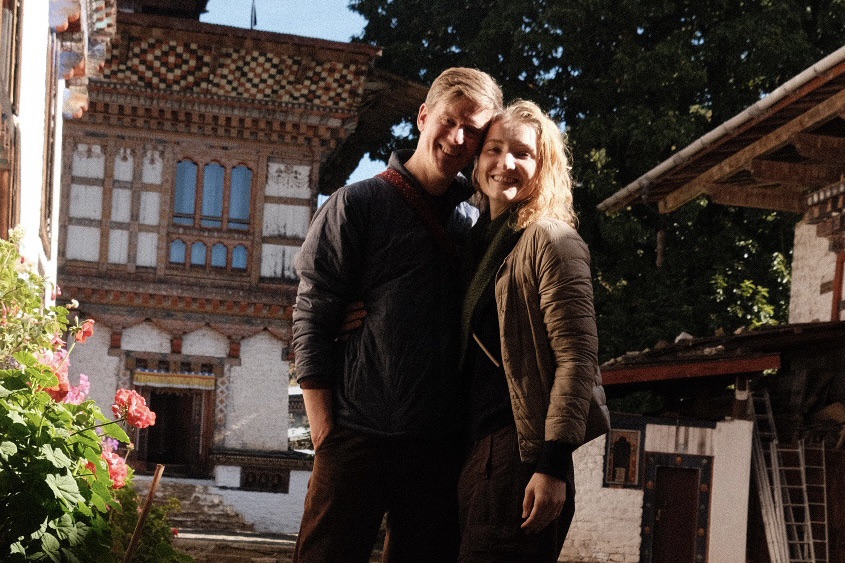
After a somewhat chaotic breakfast at the Ogyen Choling Heritage House, we took some time to walk around the Palace Museum, and met our hostess and her swiss husband.
Renaud’s grandfather Guy has visited Bhutan many times, and last stayed at the Heritage House in 2005, where he took a photograph of the couple then running the guesthouse.
He had kindly provided us with a copy of that photo to give to them, 20 years after it was taken, if they weee still alive.
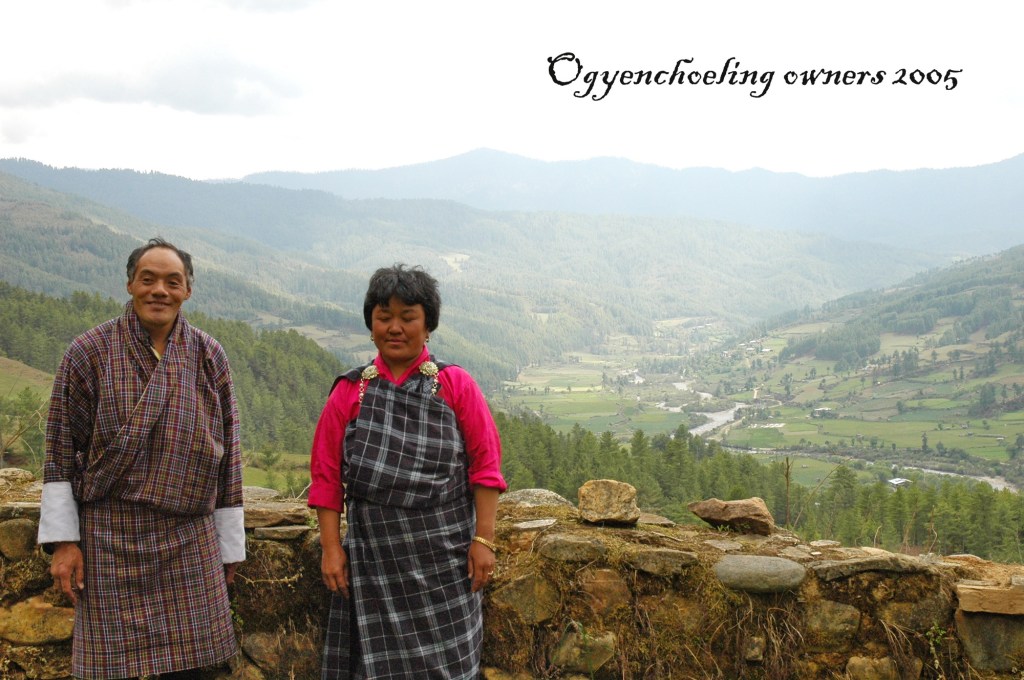
When we showed the photograph to the hostess Ashi Kunzang Choden (Ashi meaning Lady or Princess in Dzonka), she told us that the photo shows her brother and his wife, and that she would ask him to come to the house so we could give him the photograph in person.
We briefly met him, and handed him the photograph, for which we received his thanks (that we pass on to Guy), learning that his wife has since moved to Australia to help take care of their grandchildren there, and that he is very busy taking care of their grandchildren here in Bhutan.
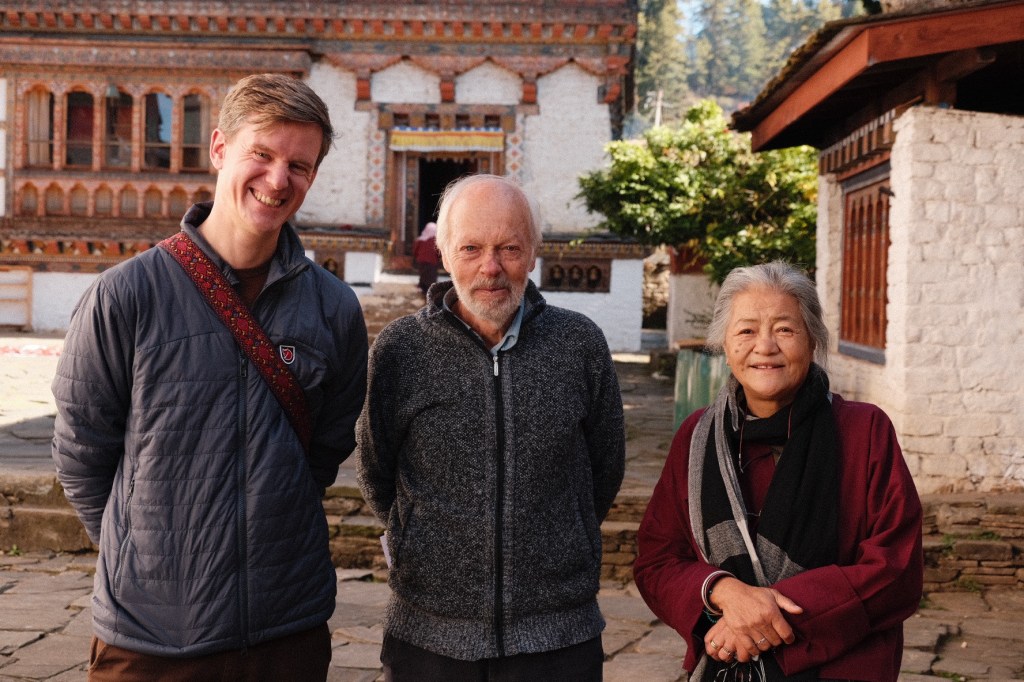
We had a lovely conversation with Ashi Kunzang Choden, the executive director of the Ogyen Choling Foundation, and a direct descendant of the family that built the place —she herself was born there, in a room that has since been turned into guest accommodations— and her husband Walter Roder, who came to Bhutan in the early 1970s and fell in love with the country, and later with Kunzang herself.
They have modernised the Guesthouse, using the income (and donations) to maintain the palace museum as well as the historical architecture of the manor and temple.

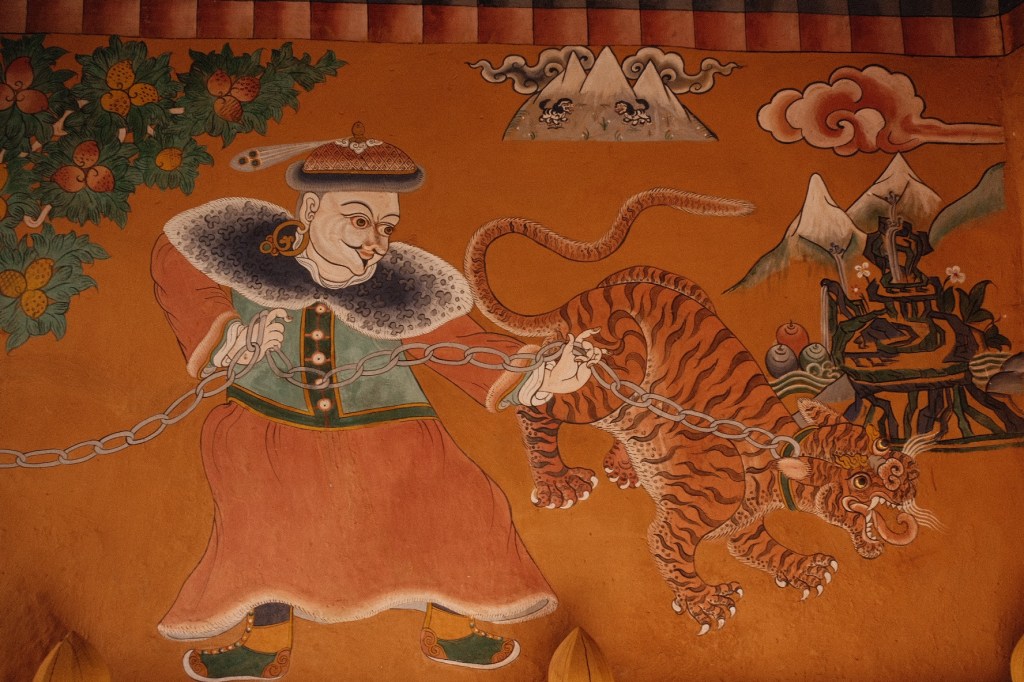
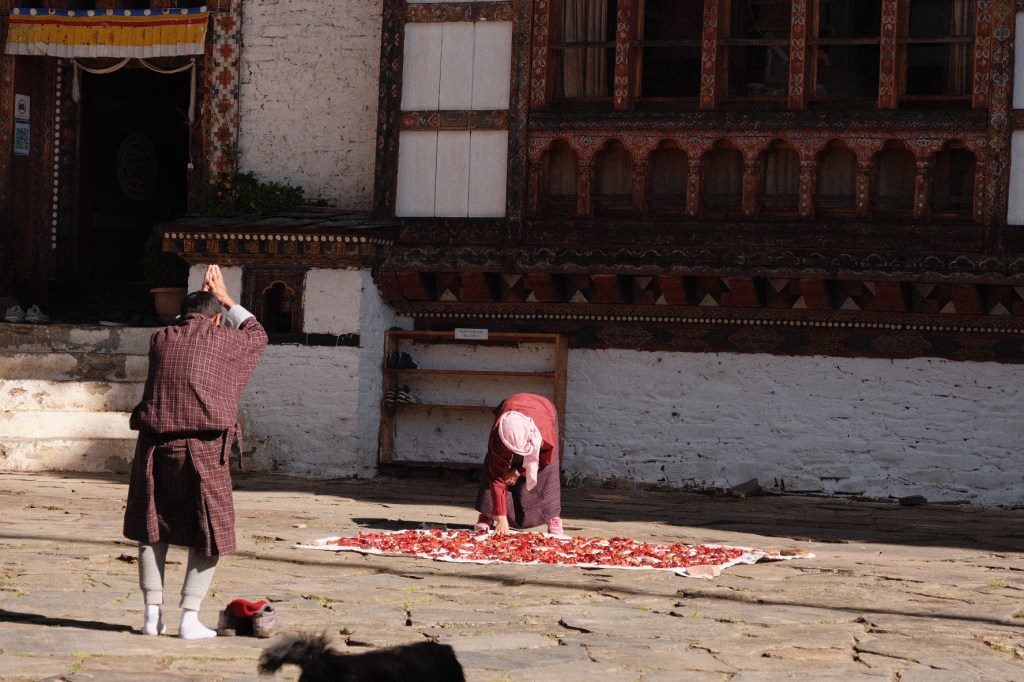
We would love to show you the beautiful temple, as it is one of the few temples in the country dedicated to Tara —the goddess of compassion— but photographs are strictly prohibited inside temples and monasteries, as we may have mentioned earlier.
We were incredibly fortunate to witness the temple last night after closing hours, however; we had asked for a room to meditate in before dinner and were surprised to be led to the temple itself.
It was such a gift to be allowed to meditate and spend time in silence in a temple that is usually busy with visitors, and not generally open after dark.
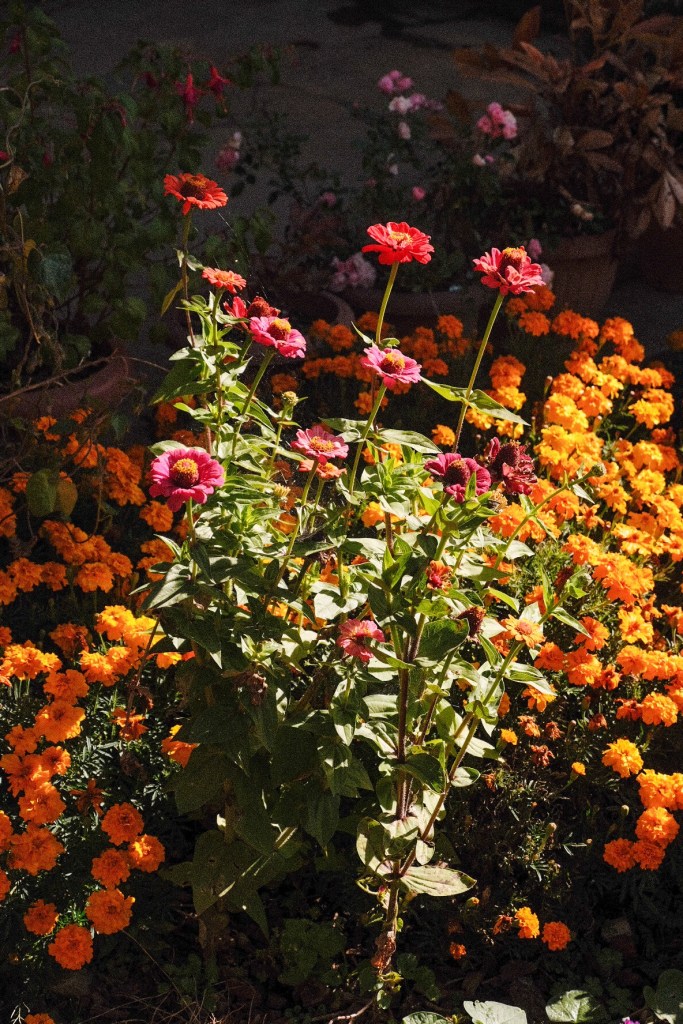
After a last stroll around the museum and the premises, and a final cup of tea, we bid farewell to our hostess and continued our journey.
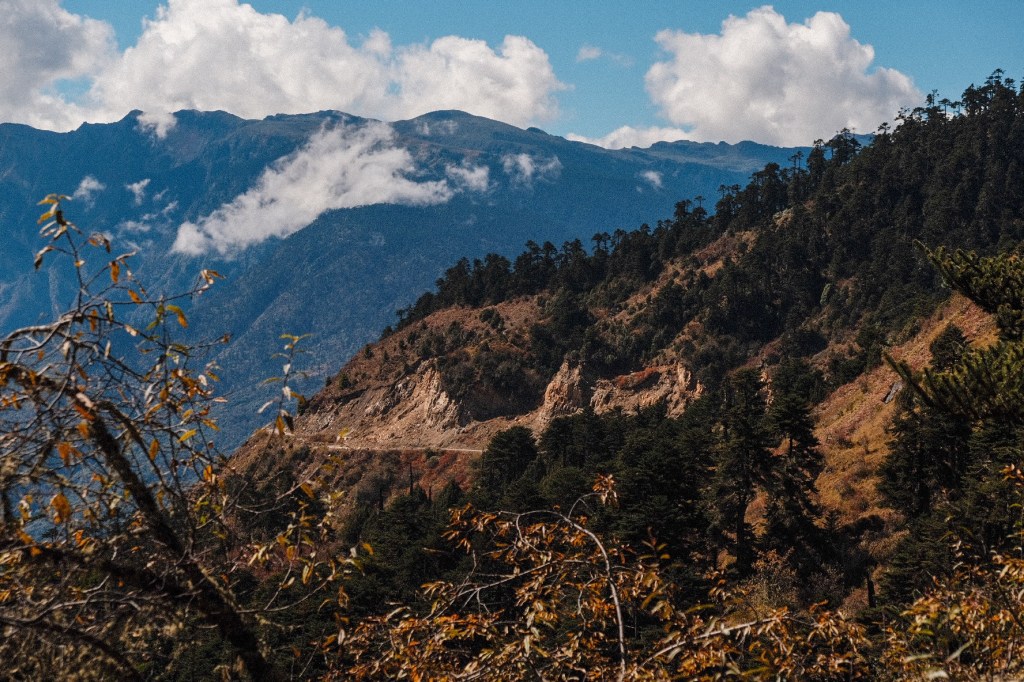
We left the Tang Valley and headed for Jakar, the capital city of the Bhumthang district, itself often referred to as “Bhumthang”.
We checked into the Valley Resort hotel, and since we had briefly stayed there in our rush to the east, we were able to collect some laundry that we had asked them to wash for us.
Great excitement ensued at the prospect of fresh t-shirts and socks, and we had tea and a relaxing nap (the first one since our arrival in Bhutan) before heading to the famous “Jampay Lhakhang Drup Festival” in the main temple of Jakar.
This festival, unlike the one in Haa Valley, begins in the evening at 8:30pm and continues well into the night. fee was very keen on witnessing the sacred Mewang Ceremony, a fire ceremony taking place on the first night of the 3-day festival, which is why we had planned our stay in Jakar accordingly.
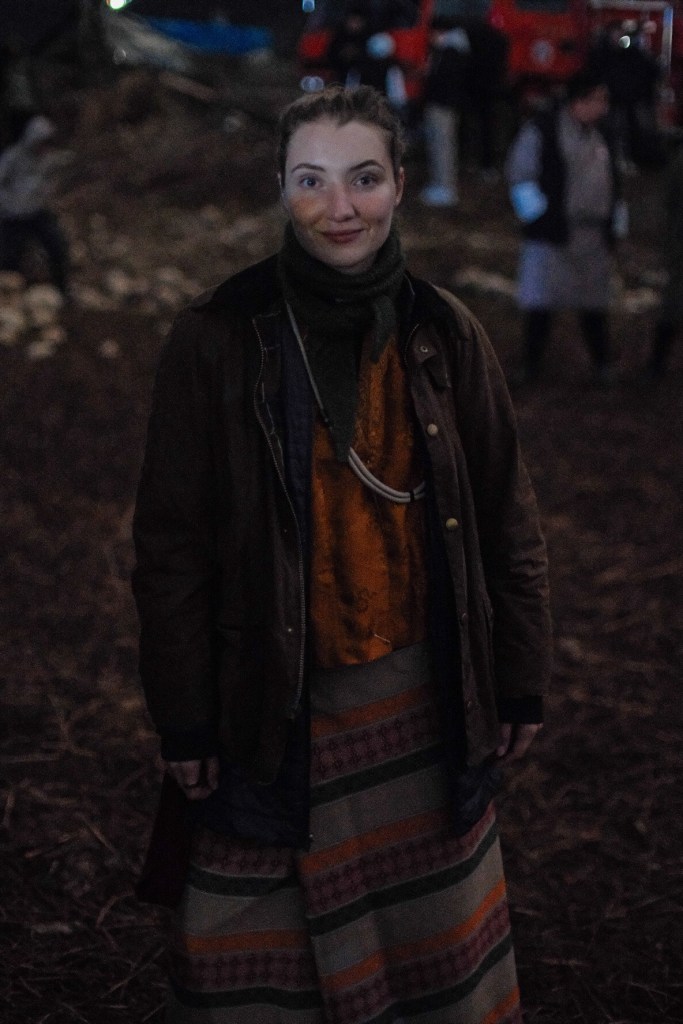
We dressed in Gho and Kira, and many layers of merino wool, jackets and thick socks, as it gets very cold at night.
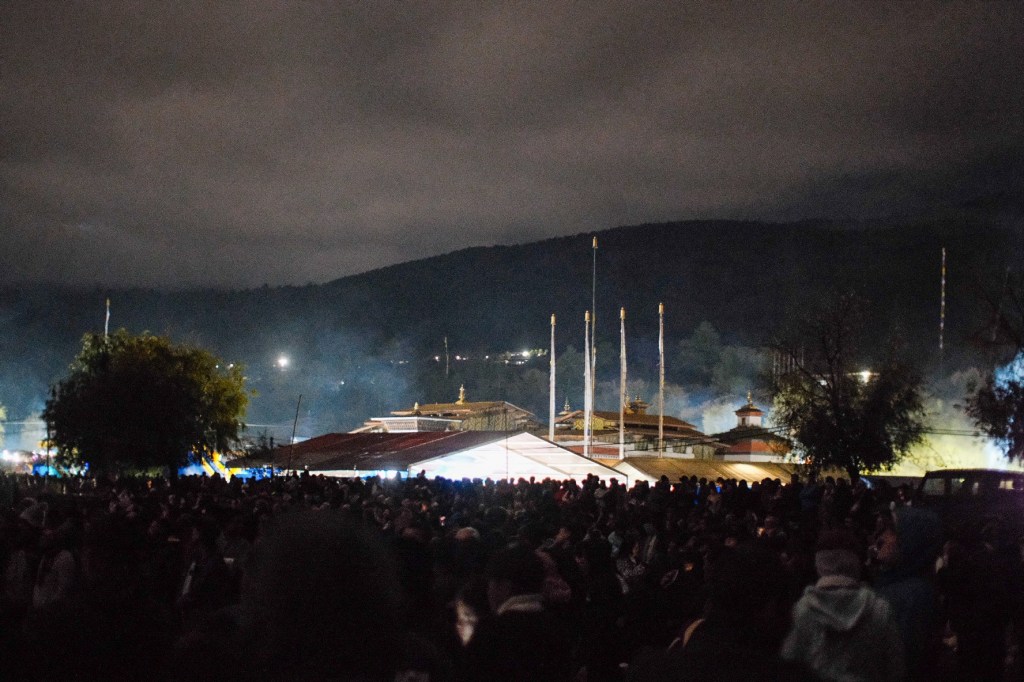
The temple grounds were crowded (as if every tourist and bhutanese who lived somewhat nearby had come) and absolutely spectacular.
It felt like a funfair, but in and around a temple, and in a culture that is so different from everything you would associate with loud, music and flashing lights. We were mesmerised.
There were families selling homemade Milk Tea, Butter Tea and porridge, there were bouncy castles for kids, a stage with live music (bhutanese pop-rock) and, as advertised everywhere, later a big DJ concert and dancing throughout the night.
There were tents with restaurants, open fires and benches to sit and eat, there were stalls that sold goods of every kind (clothes, religious items, jewellery, kitchen appliances, books, woven cloth and yathra, and so much more).
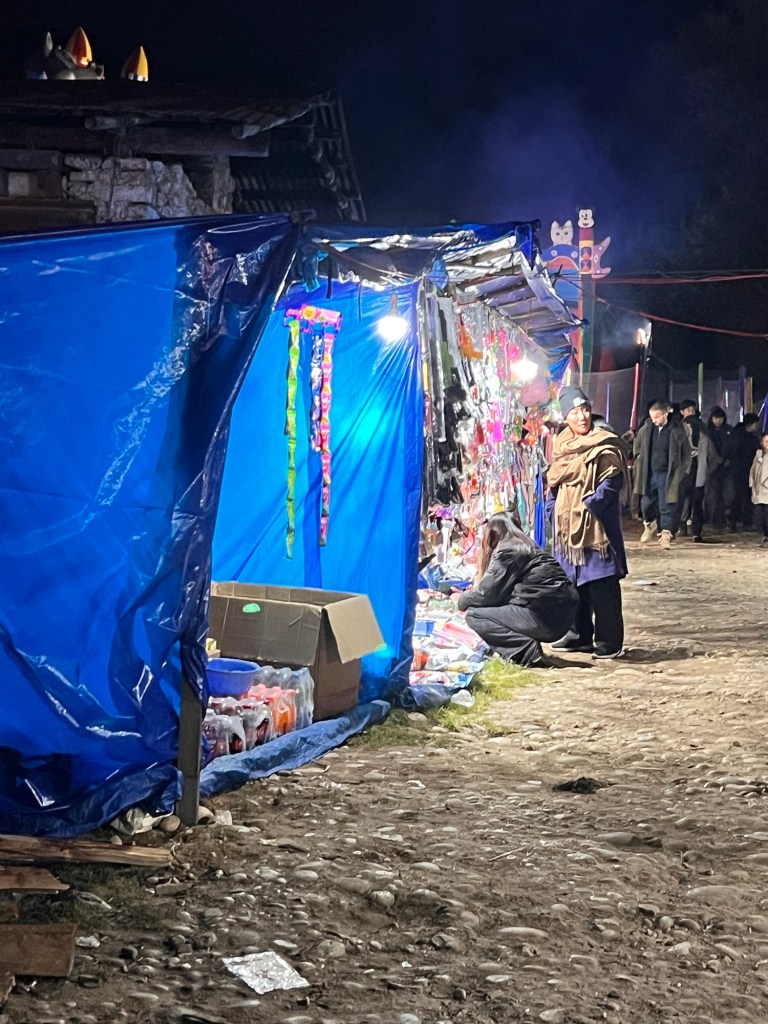
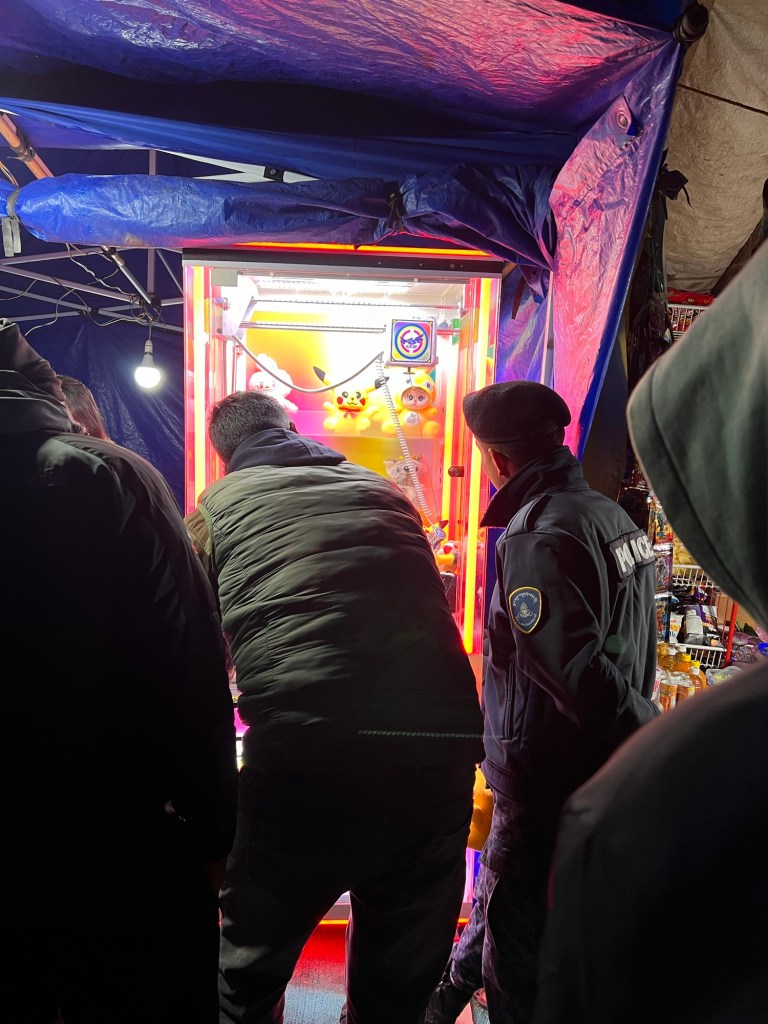
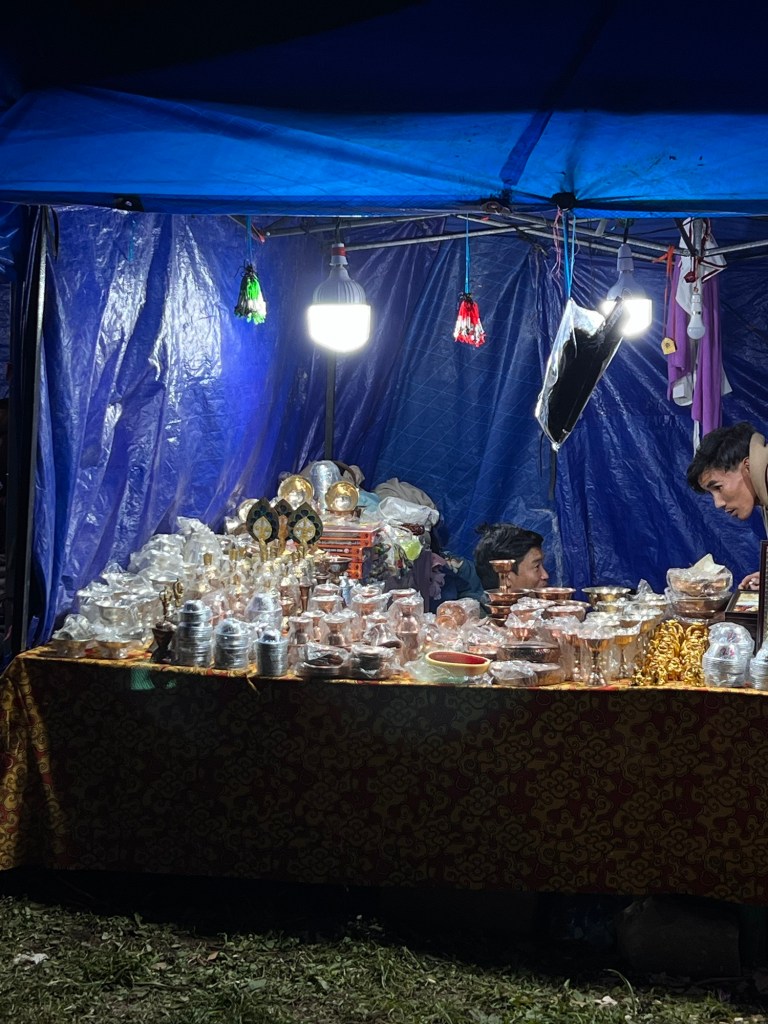
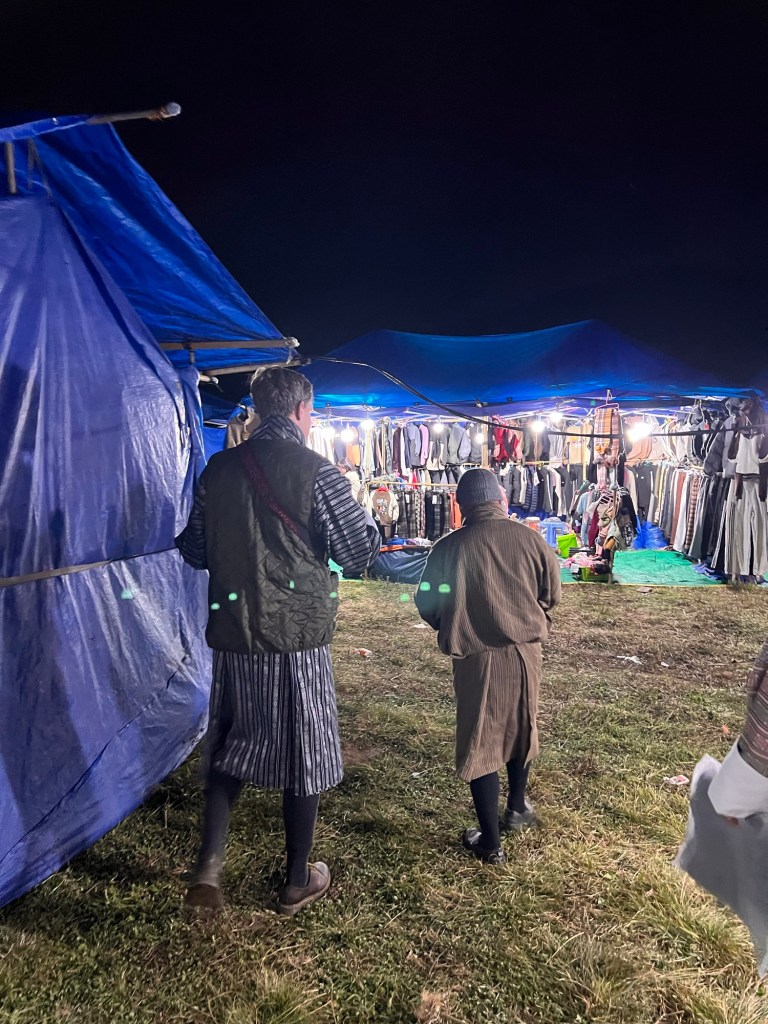


And then, there were the festivities, which began with the opening ceremony in the courtyard of the main temple.

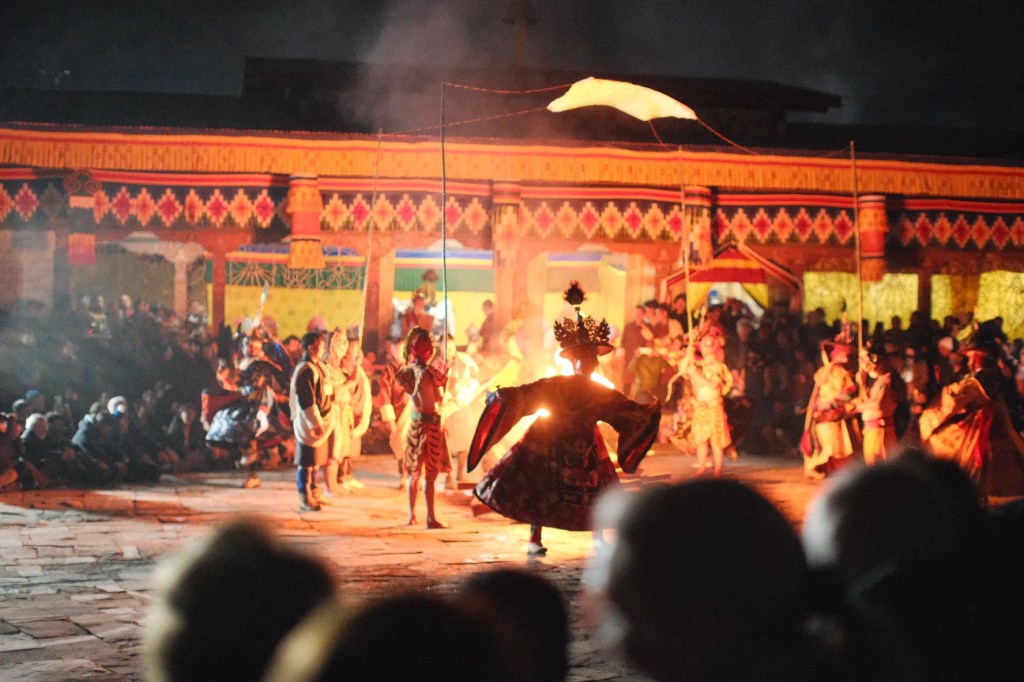
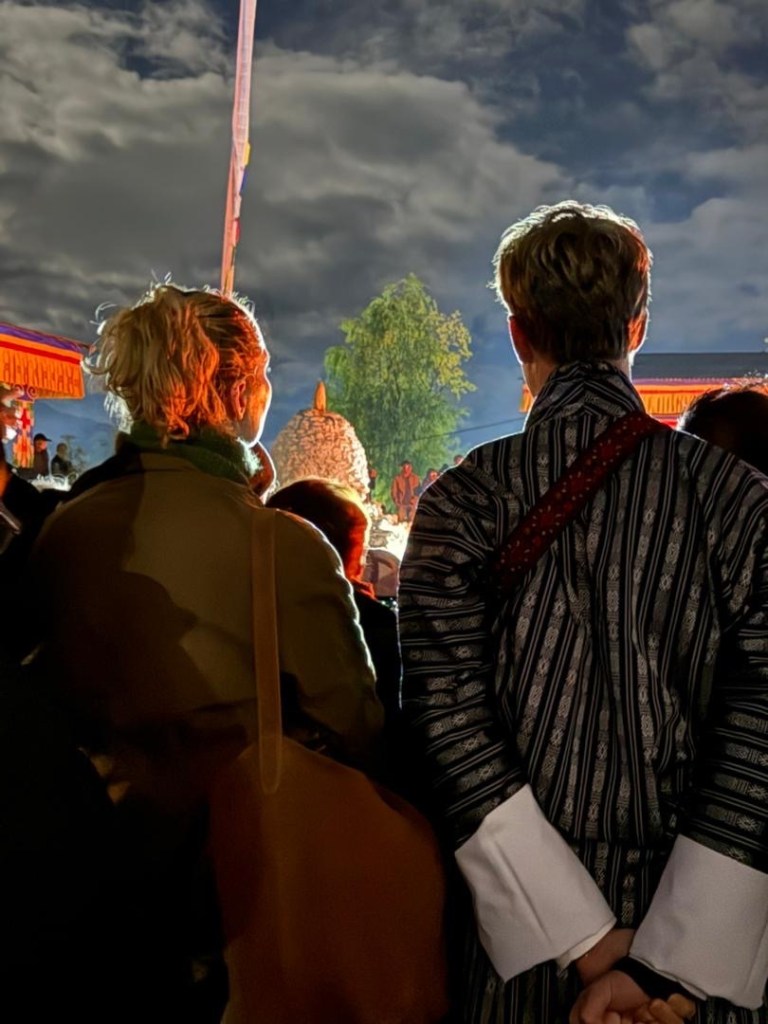
Being both very tall, and renaud being very very tall, we did our best not to block the views for the (often much shorter) bhutanese attendees.
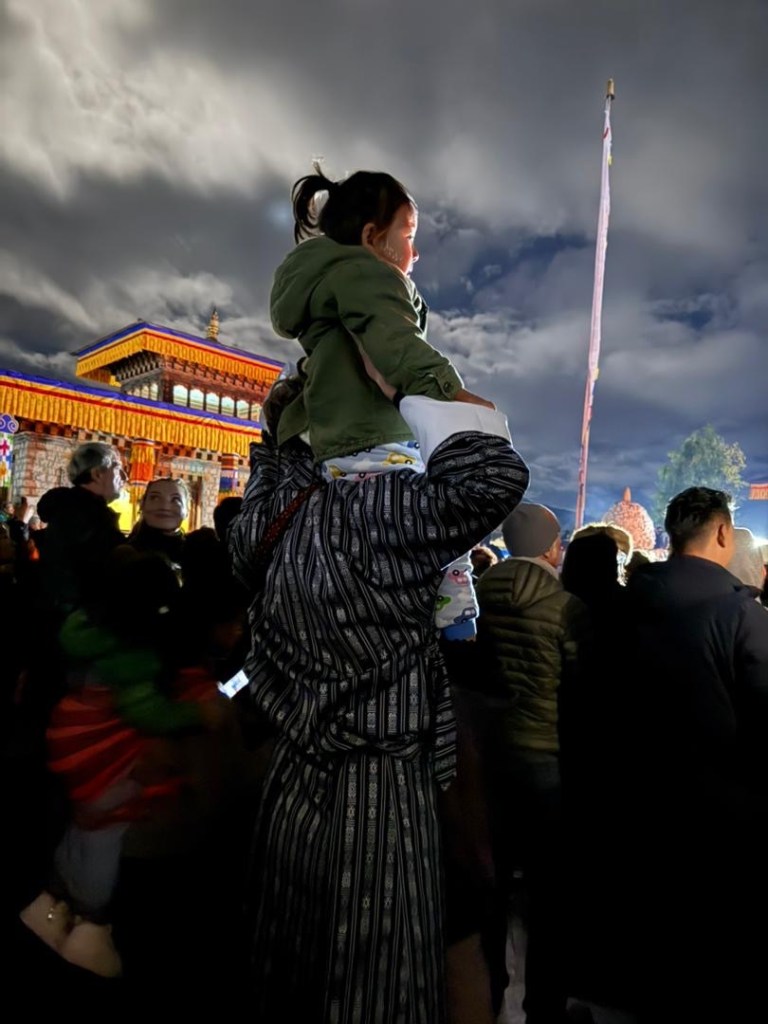
The littlest festival spectators however got to ride on renaud’s back, seeing the ceremony from high above the crowds – and expressing their excitement by enthusiastically slamming their little hands into his hair while yelling “zhong! zhong!”.

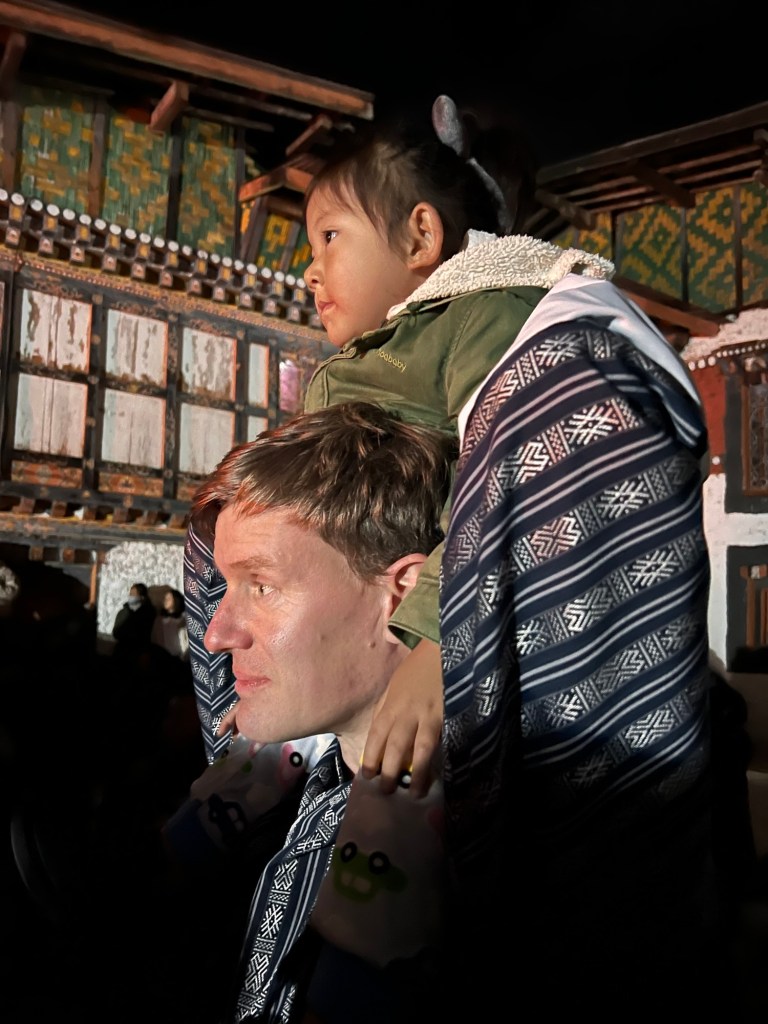
After carrying several bhutanese children, and risking adding an interesting new kind of backache to our travel adventures, we headed for a large field just outside the temple and festival grounds to wait for the ‘big fire ceremony’, as our guides called it.
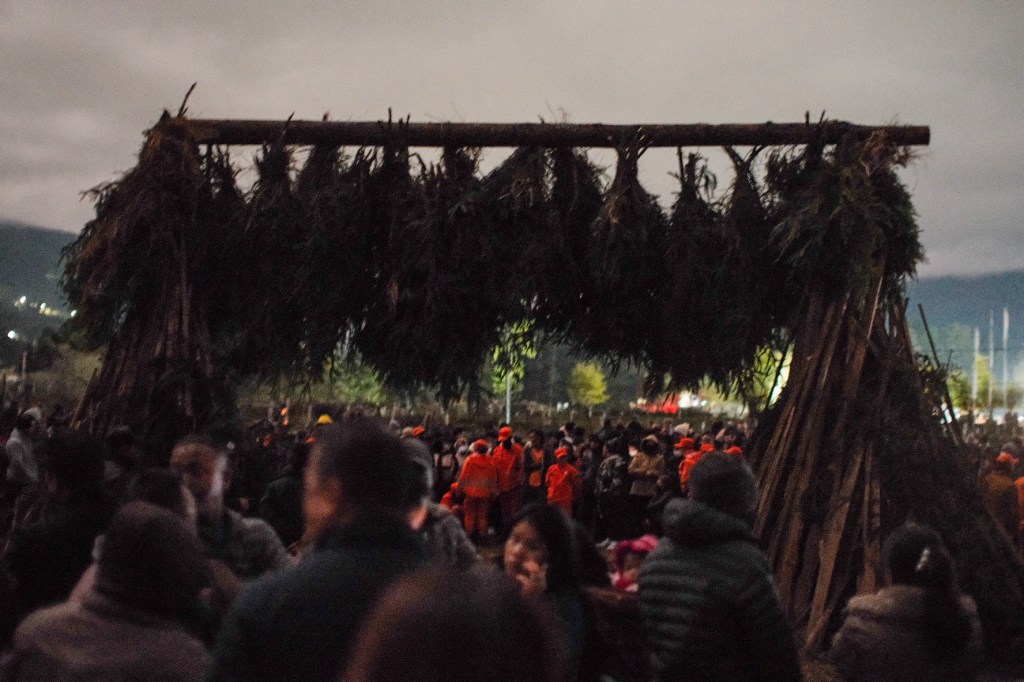
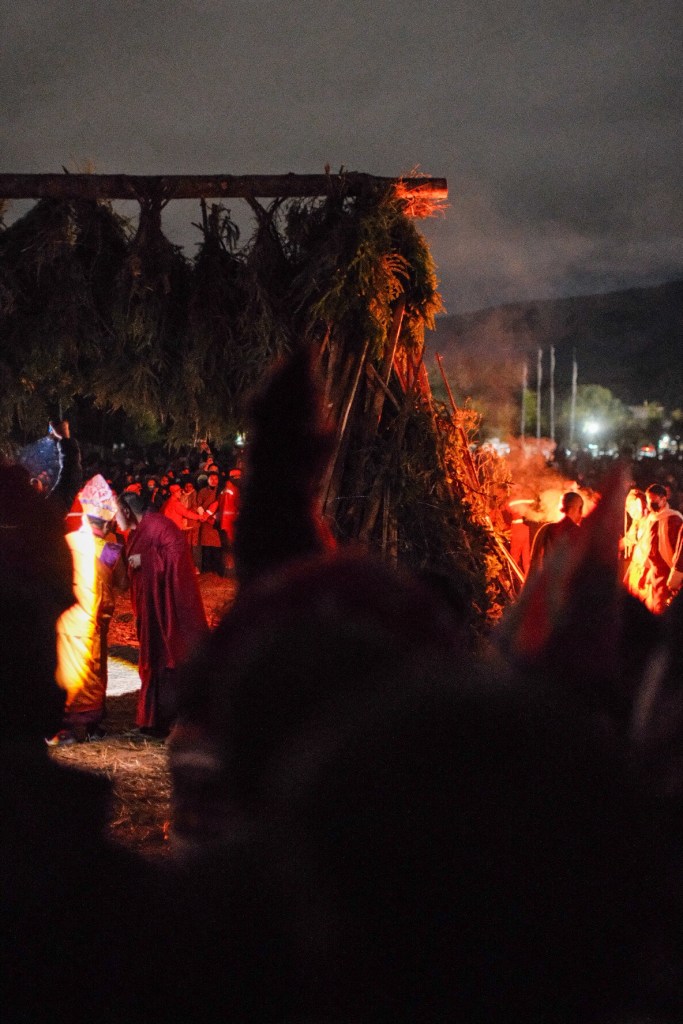
Here is what we found: a large gate made of pine wood and branches built in the middle of a field. A fire truck, many volunteers and many bhutanese spectators patiently waiting.
In a ceremonial walk, the fire which was lit during the opening ritual was brought over to the field in a long procession of monks in formal and festival dress (you’ve seen some photos in our post from the Haa Festival).
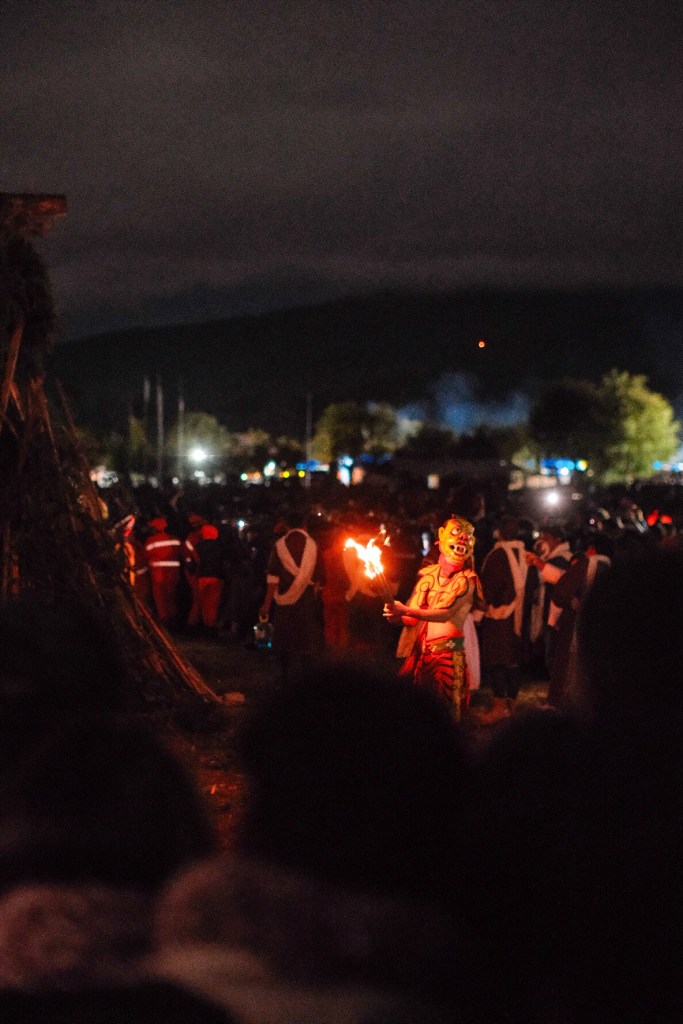
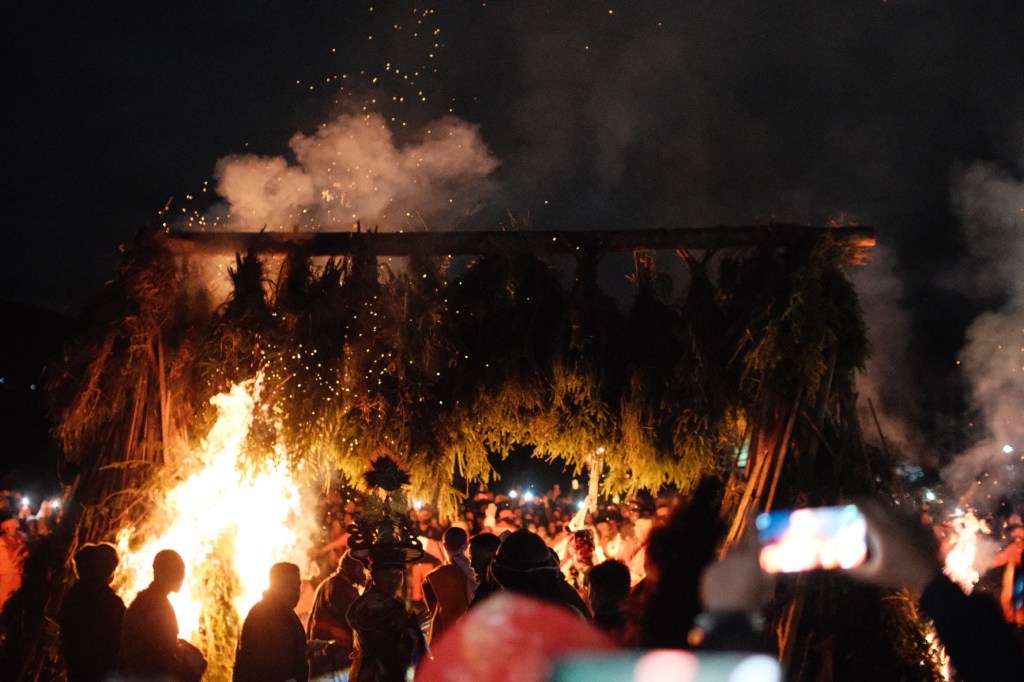
The crowd (for we were quite a crowd by then) started “woohiiing” and whistling and shouting in anticipation.
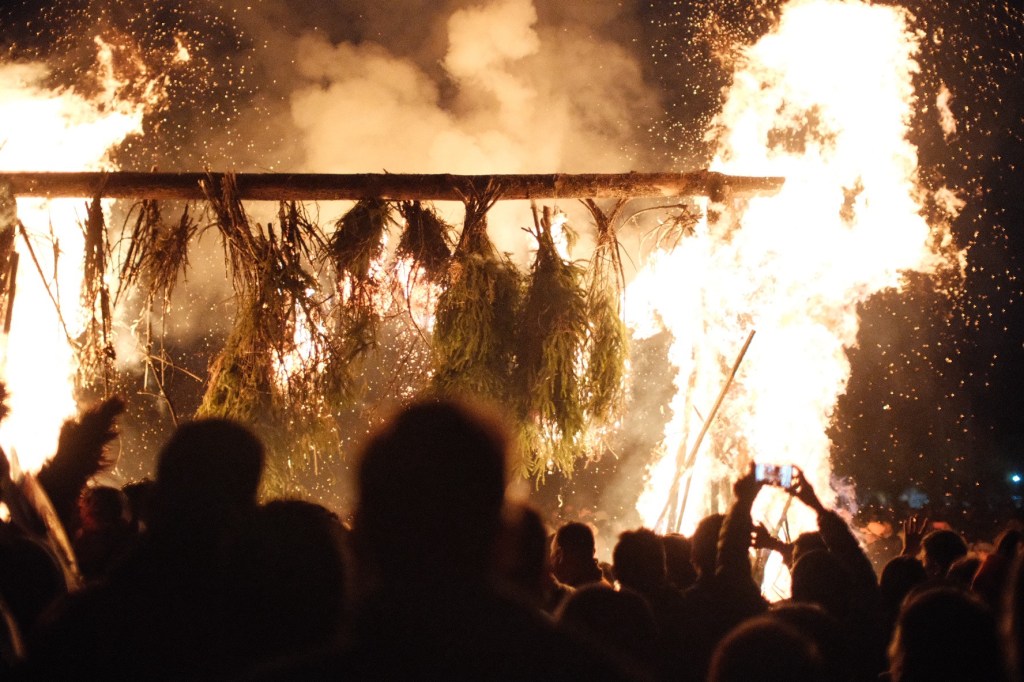
There was a lot of shuffling, then trumpets and drums began a fast melody and the fire gate was lit.
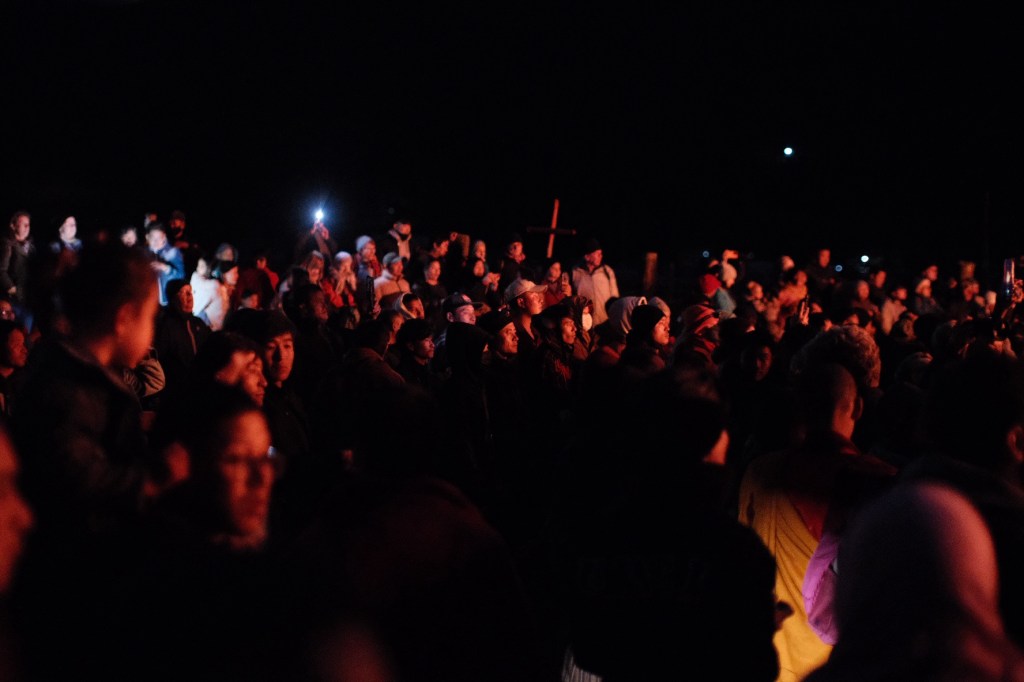

The flames, fed by gasoline and dried wood, bellowed over the edges and shot up high into the night sky.

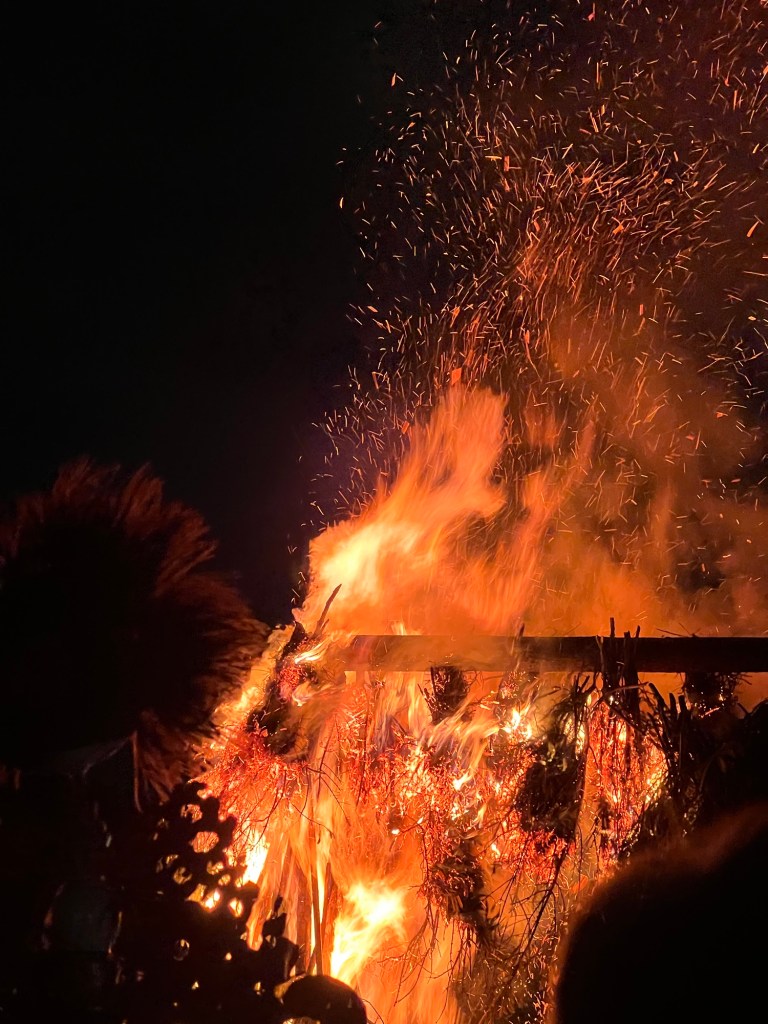
This is when we first realised that people were moving around and through the burning gate!
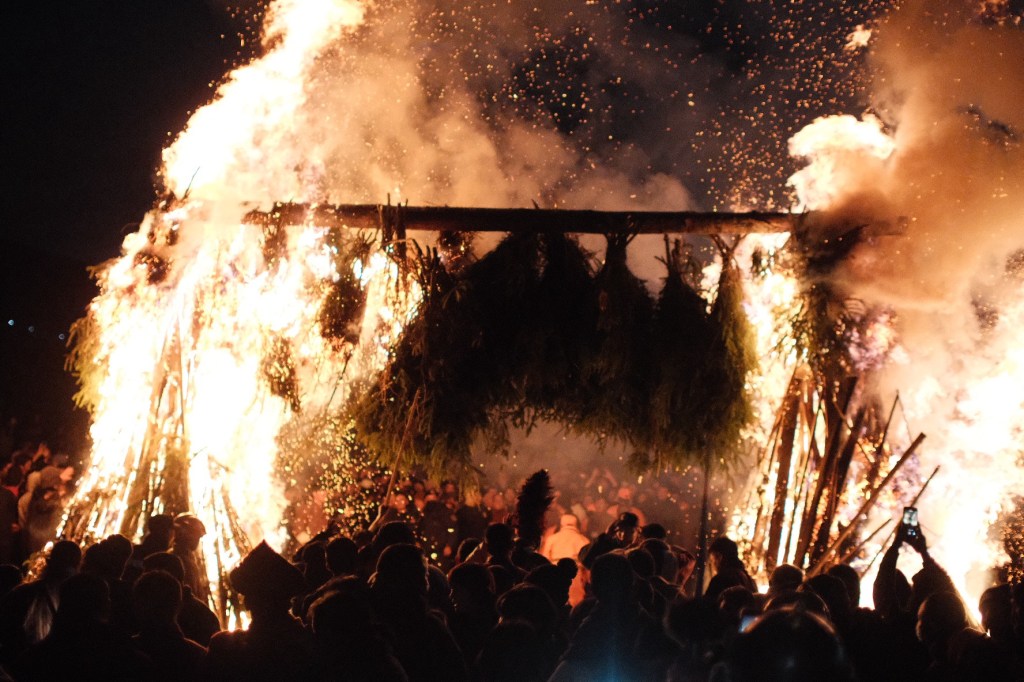
Hastily, large crowds would rush through, walk around one gatepost and directly through again, each side of the gate acting as the center of a whirling wheel of supplicants, rushing under the flames over and over again.
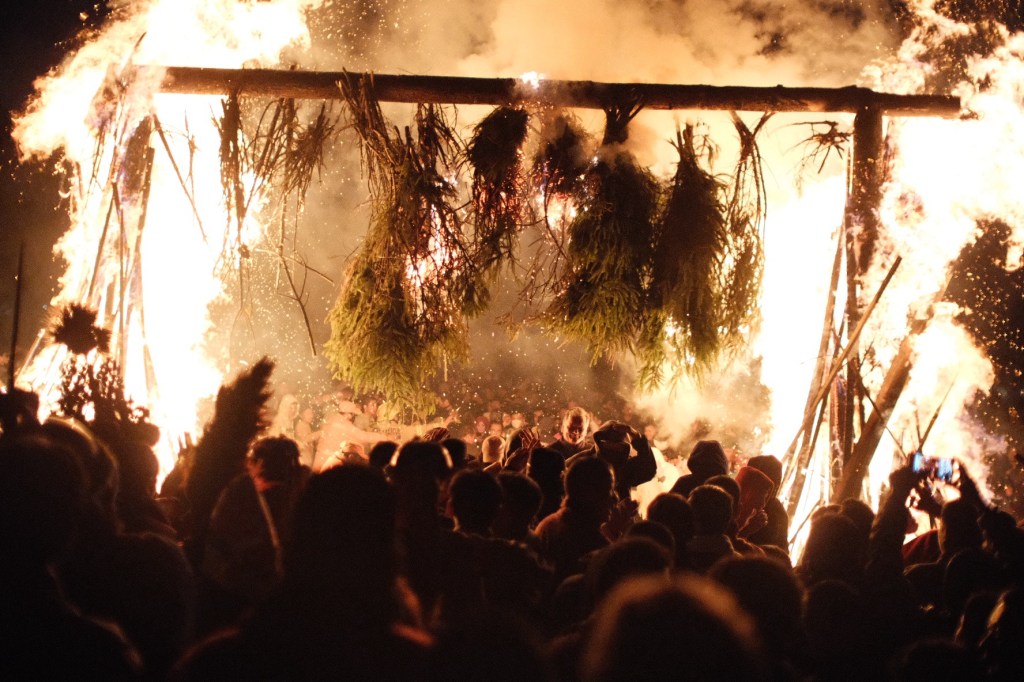
We thought they had lost their minds — how appealing is the idea of burning branches falling on your head, really?
We learned that if you go through once, you are relieved of your sins. If you go through three times, the next year will be fortunate and lucky for you.


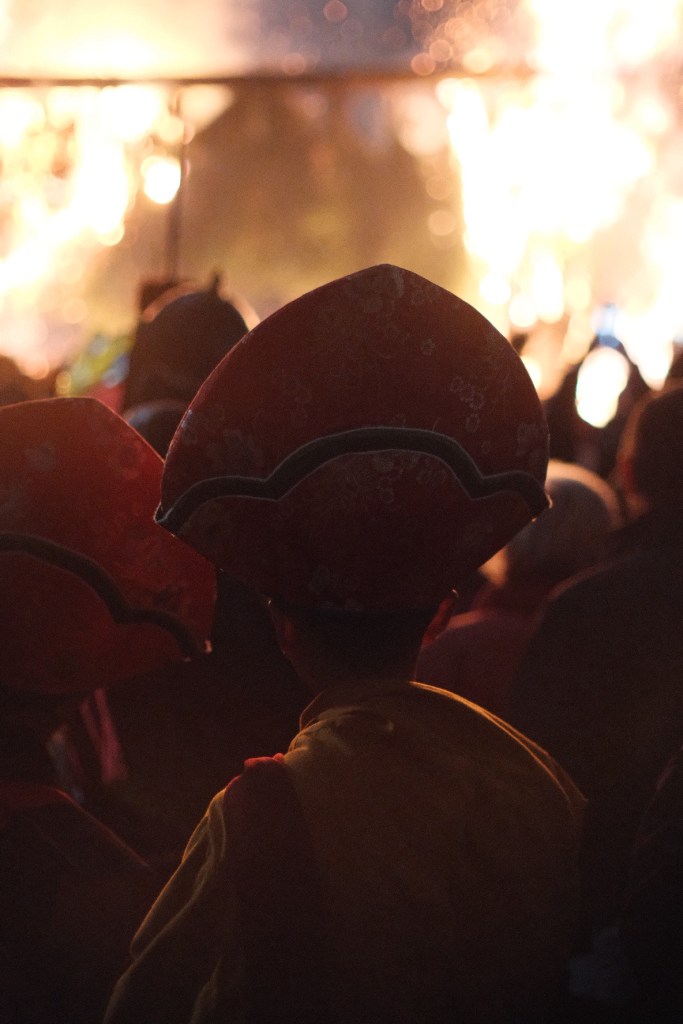
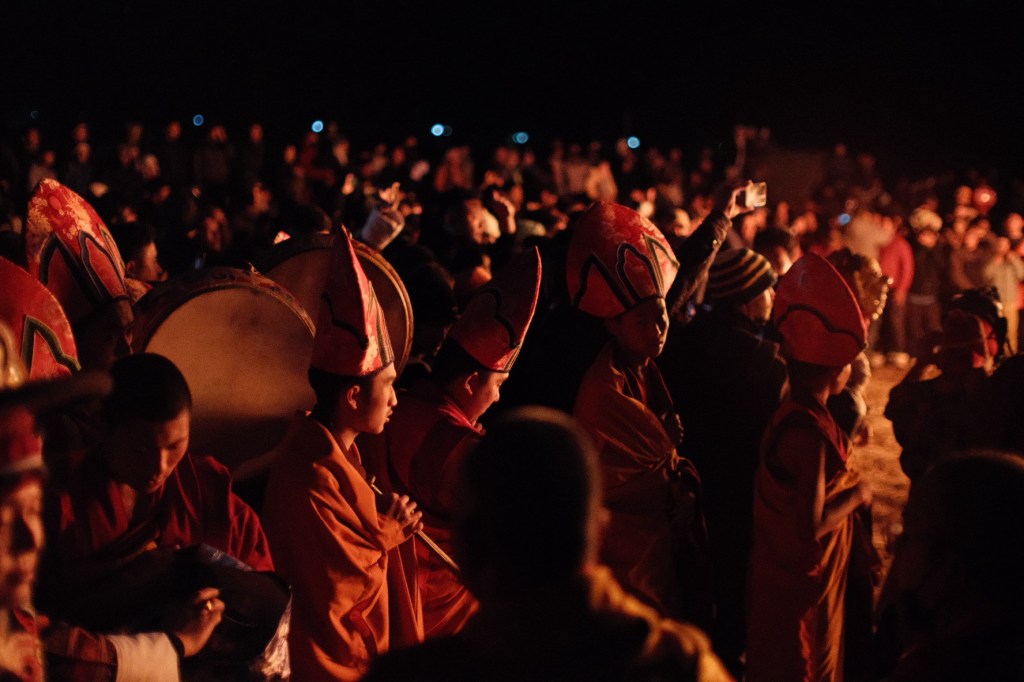
It was just when fee declared that this was absolutely crazy (and by the way, this would be regulated in Germany!) that renaud was getting ready to walk through the burning gate himself.
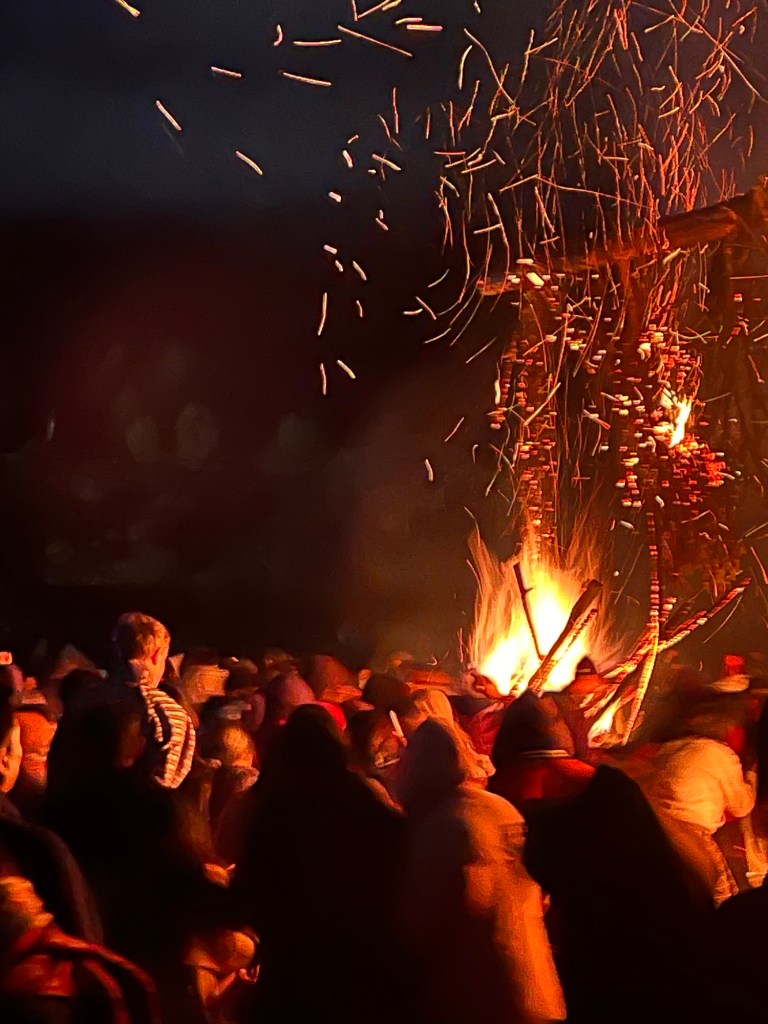
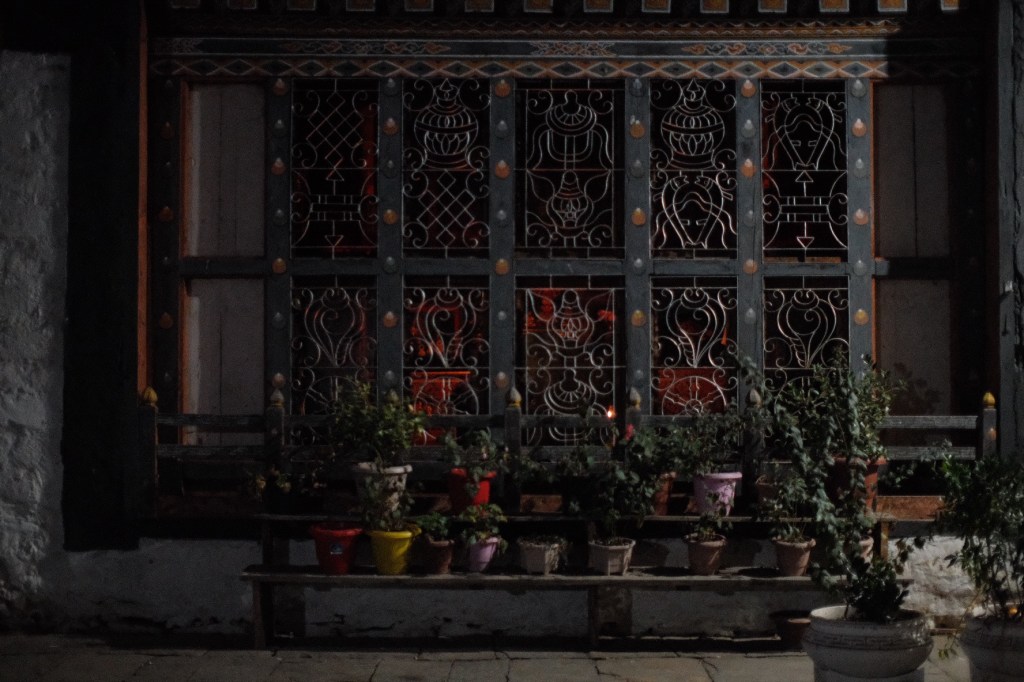
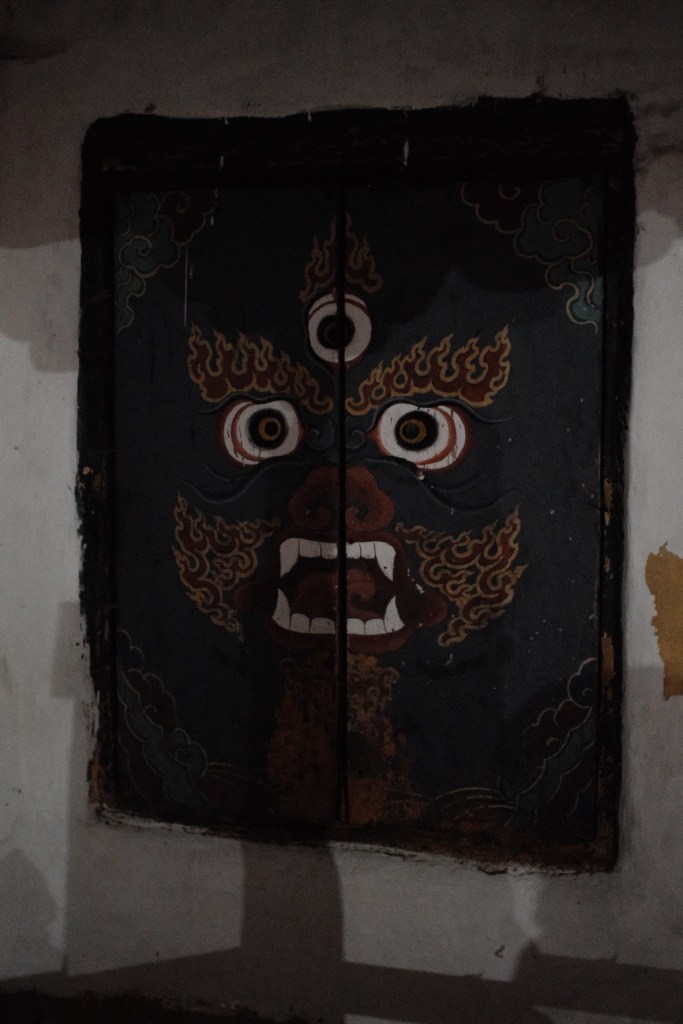
Once the fire was spent and the crowds started to disperse, we took the opportunity to visit the temple itself, while we waited for the next dance, which would start at midnight.


But our energies were as spent as the flames, and we quickly realised that we would never last until midnight (despite Tashi’s best efforts to distract us).
The famed naked dance would have to wait, we needed sleep.
 Renaud and Fee
Leave a comment