
We woke up after a short but restful night, to a bright blue sky and a delicious breakfast before heading to the Wangdue Chhoeling Palace Museum in Jakar proper.
The Palace, which was built by the father of the first King of Bhutan in 1857, served as domestic residence and government building until the third king moved the chambers of government to Thimphu in the 1950s, putting an end to the yearly resettlement of the court (winters were spent in Punakha, summers in Jakar).

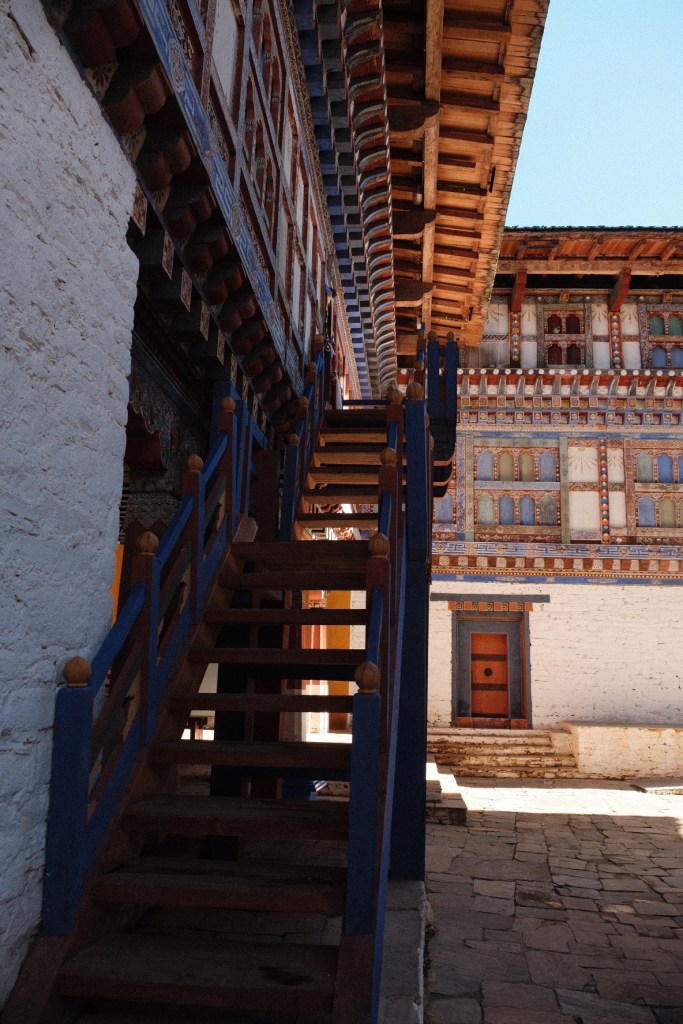

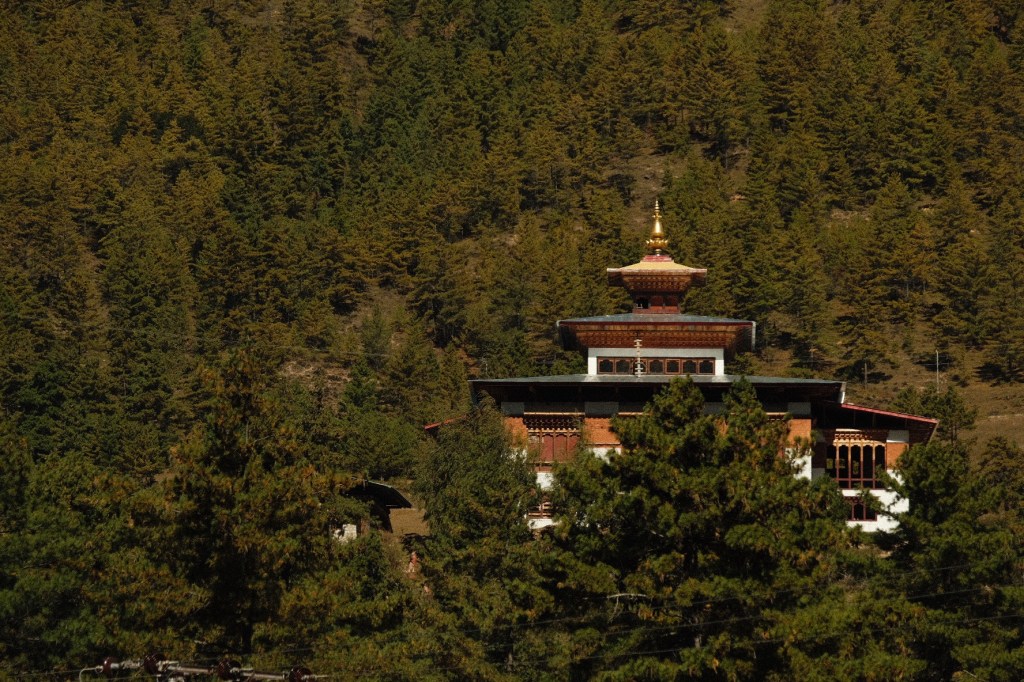


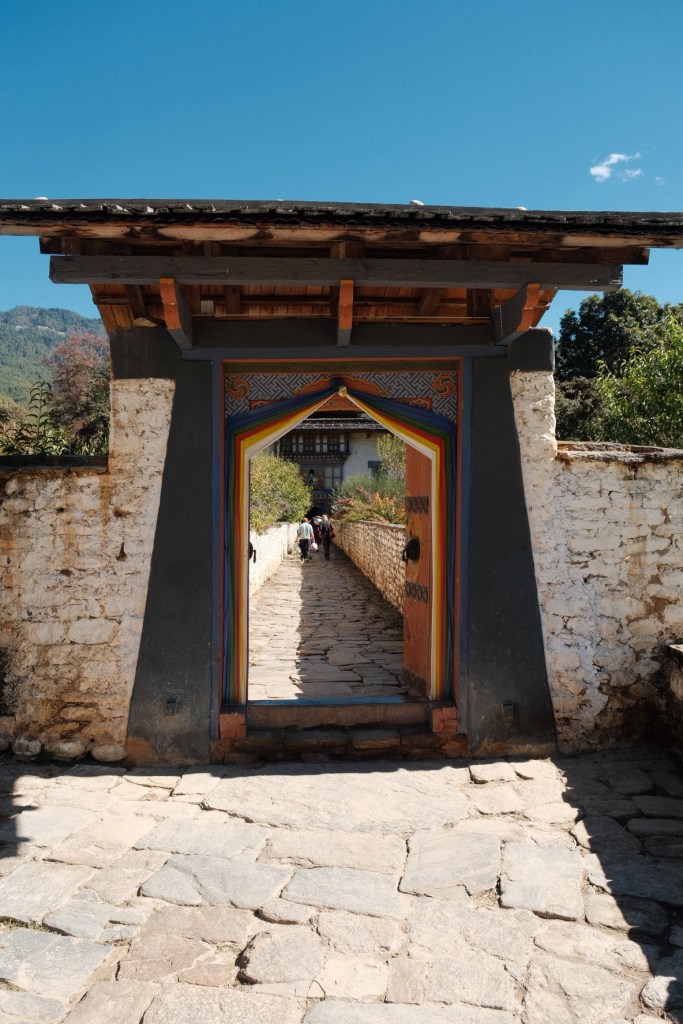

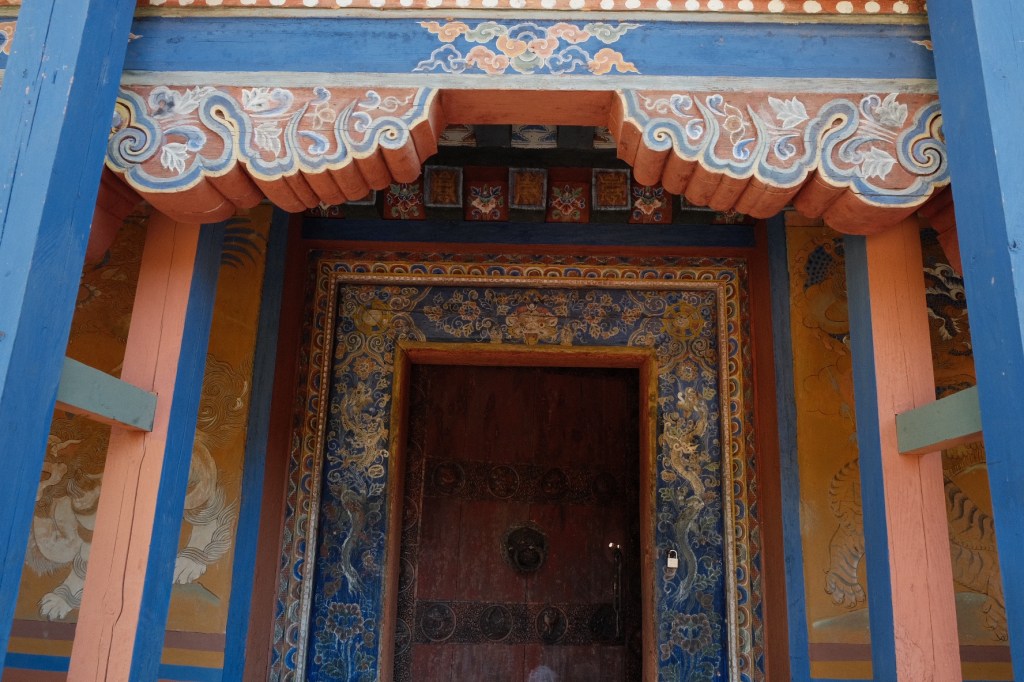
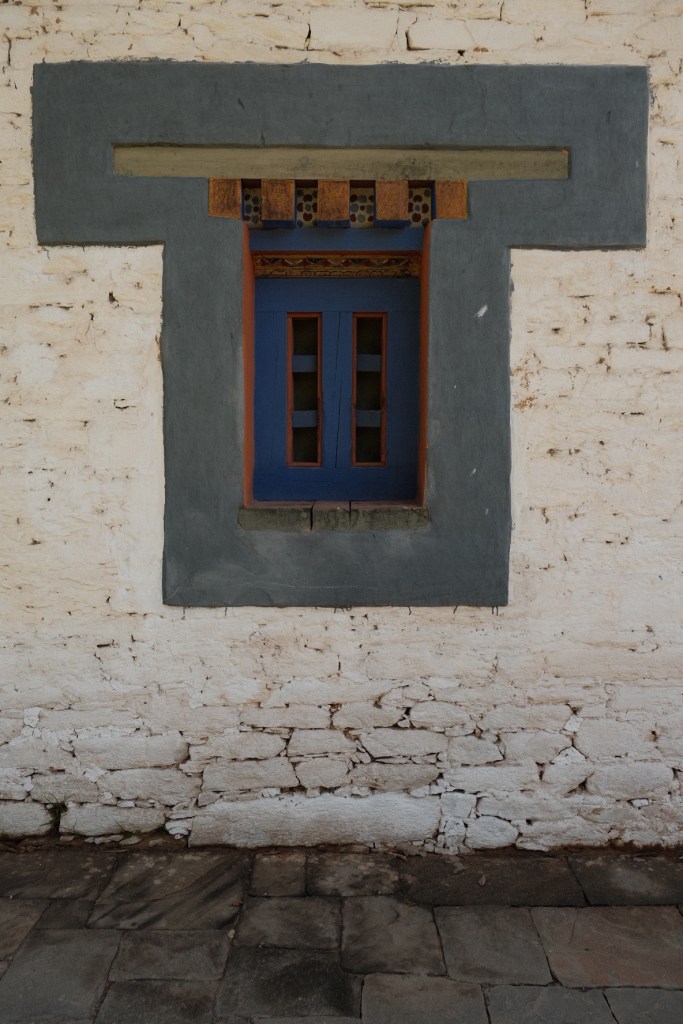
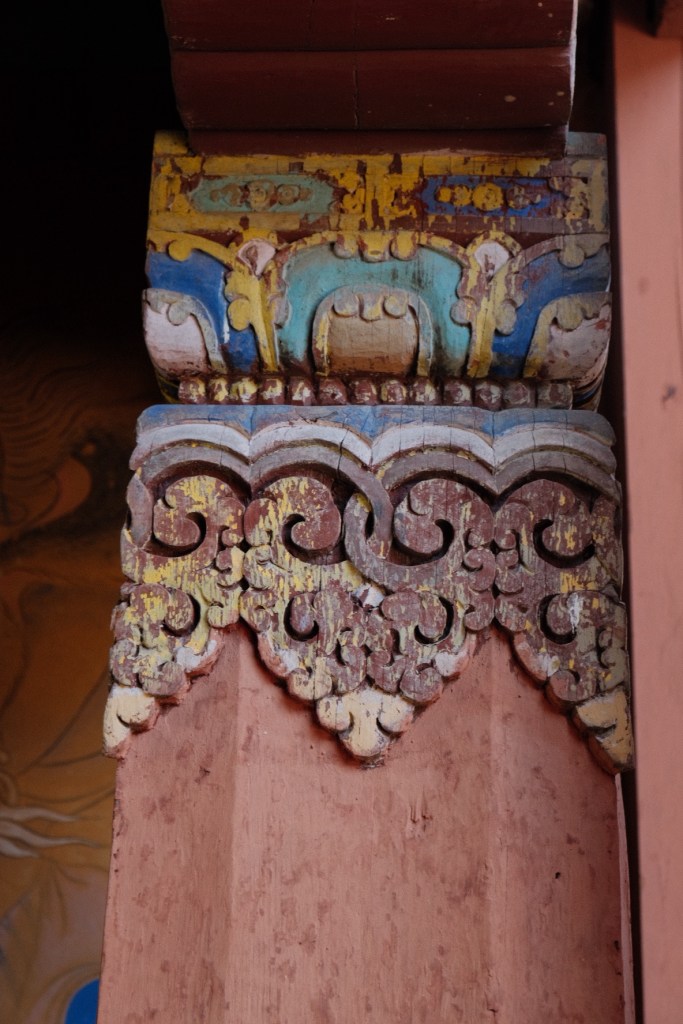
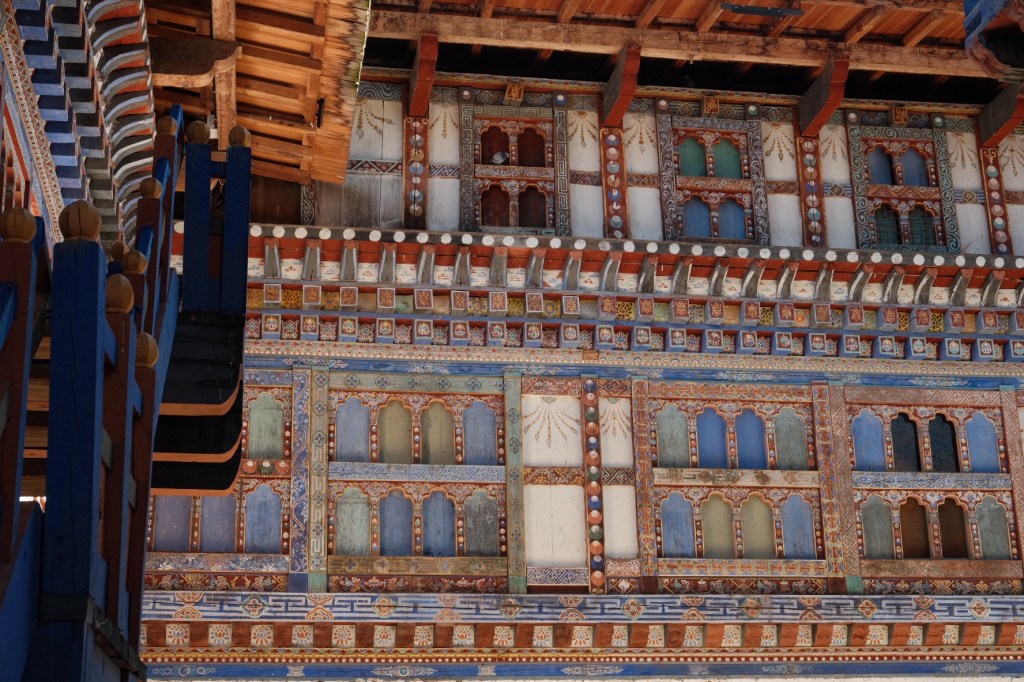
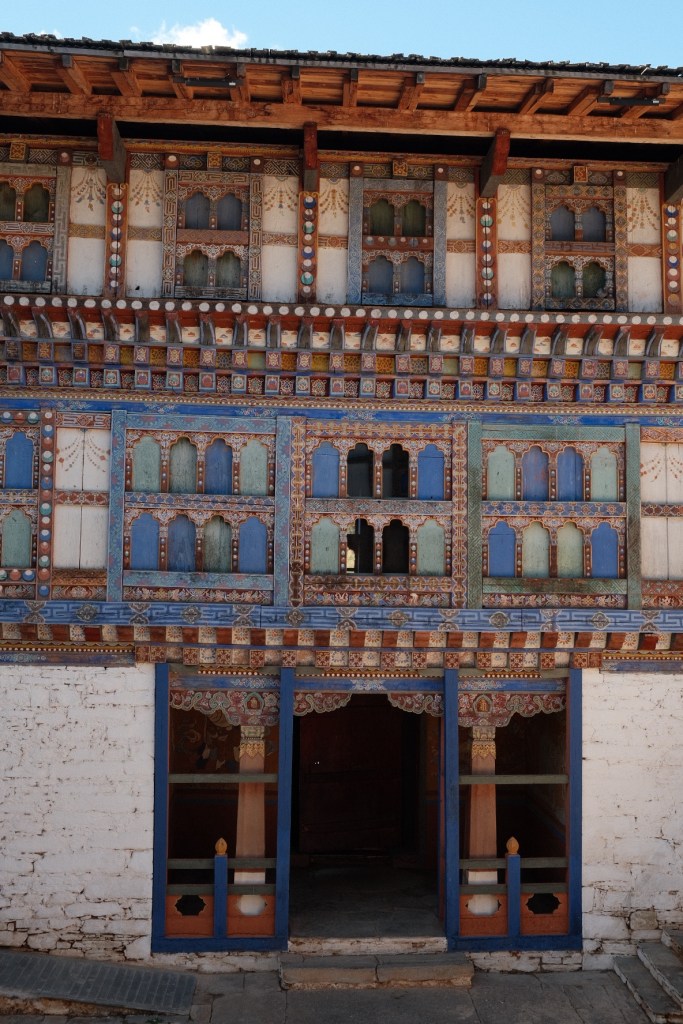
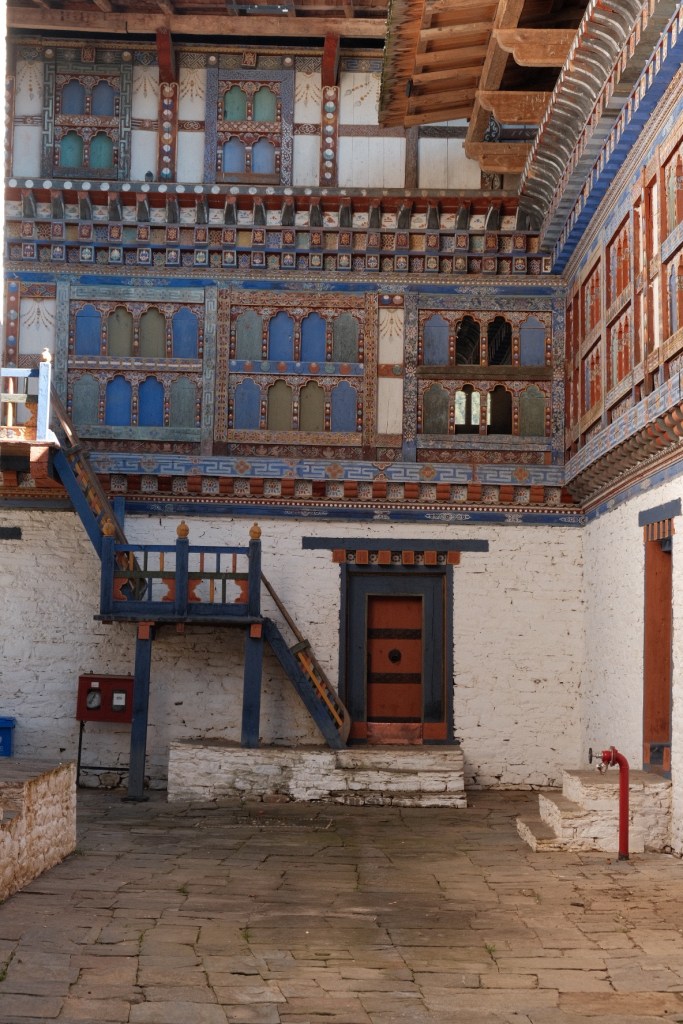
The building had been slowly falling apart until the royal family organised its renovation in 2024, and turned it into a museum of the history of Bhutan.
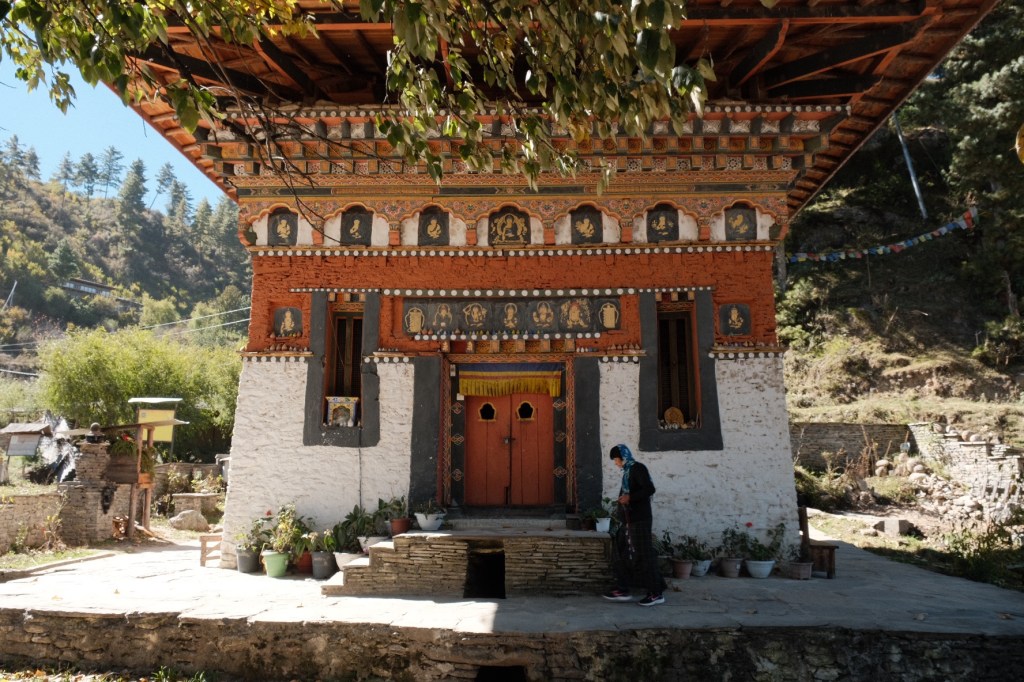
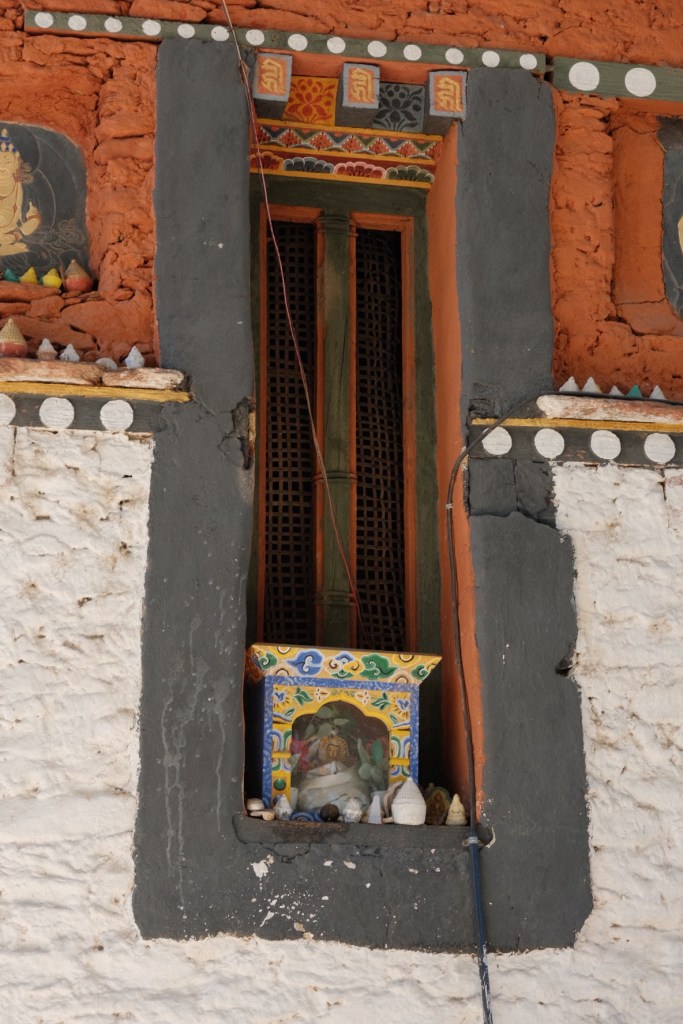
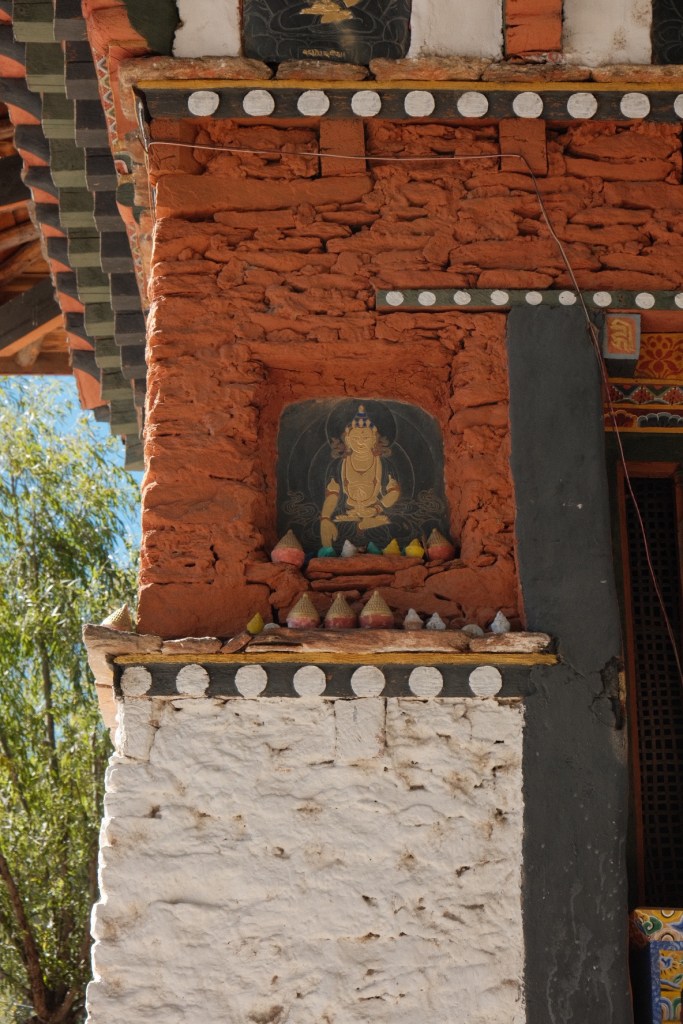
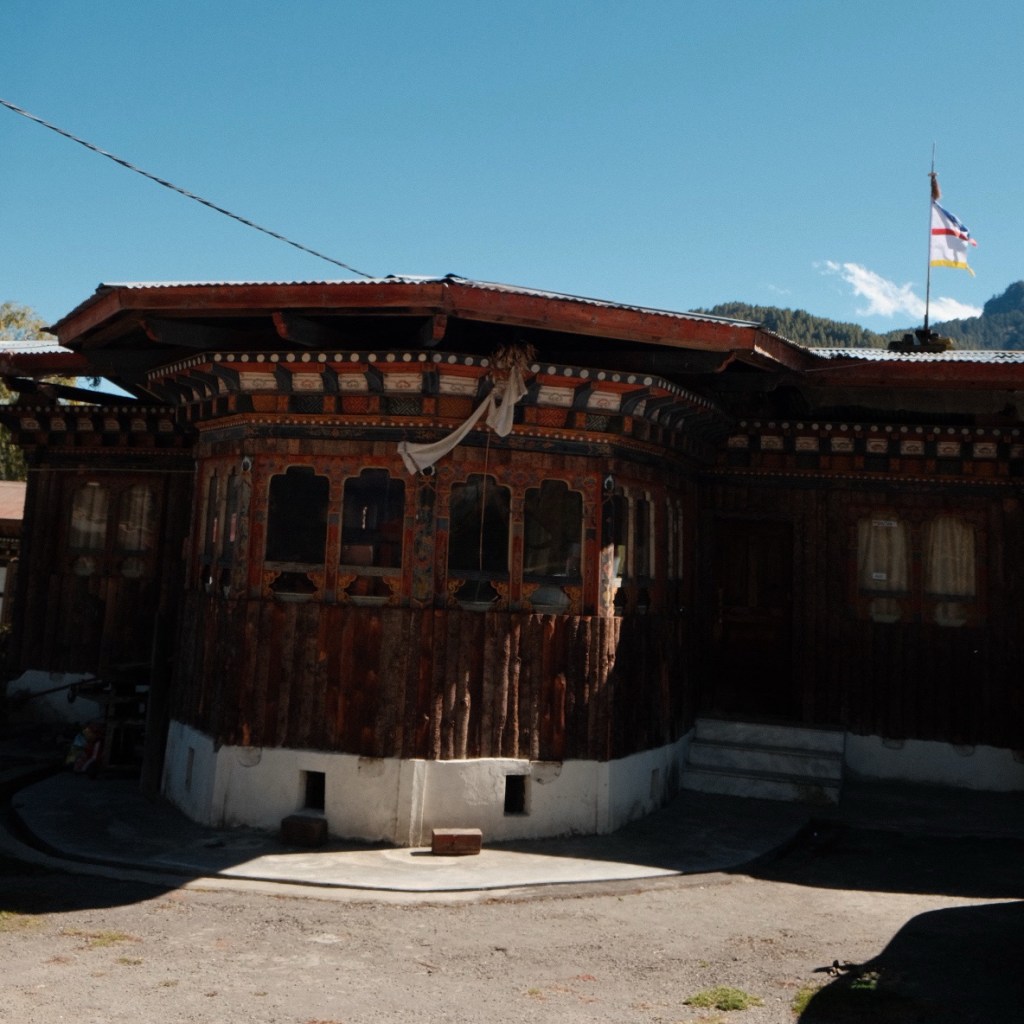
Here are some impressions of the building, which hosts a lovely temple. The rooms that traditionally stored grains, rice, weavers, a distillery and residential quarters have been turned into museum space.


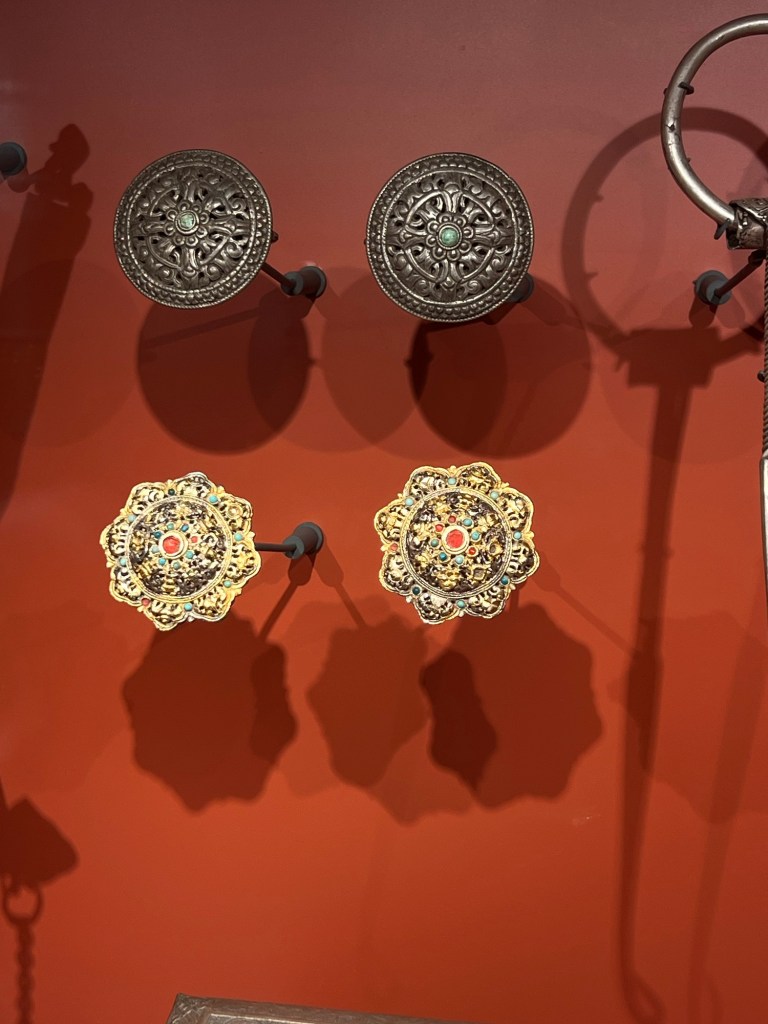


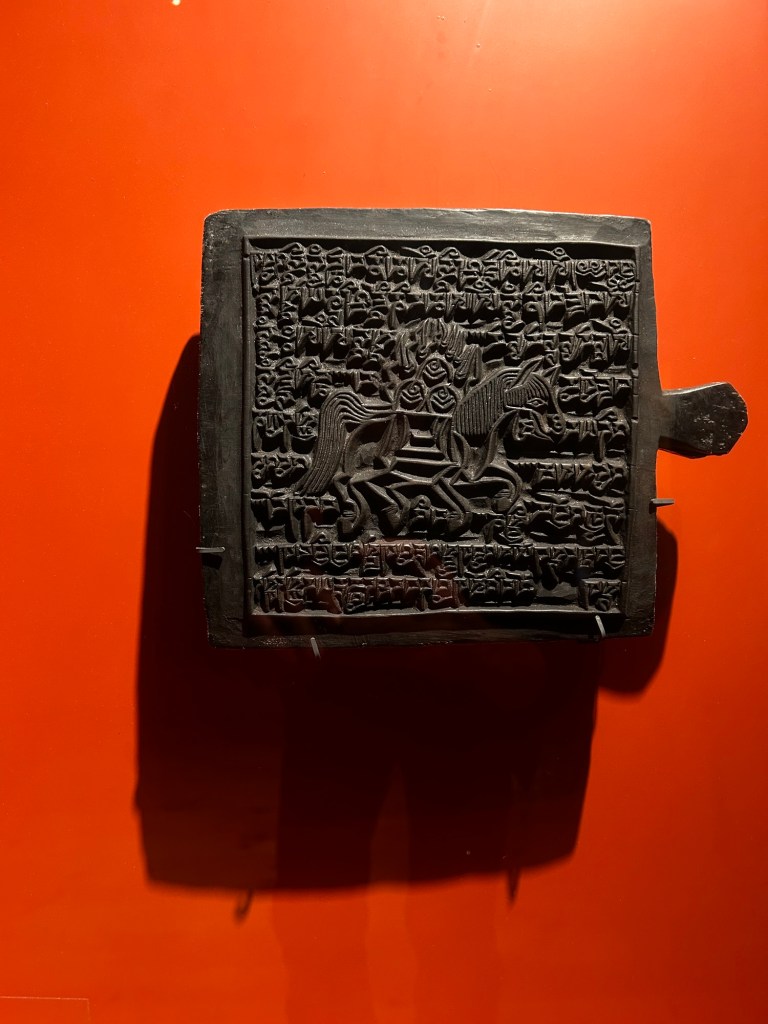

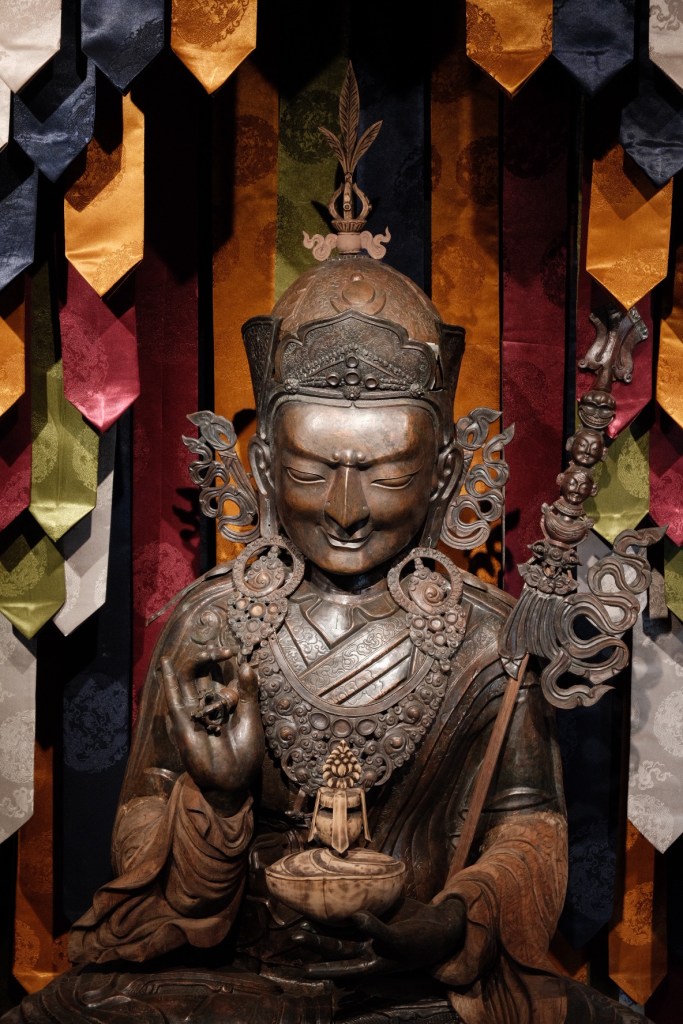
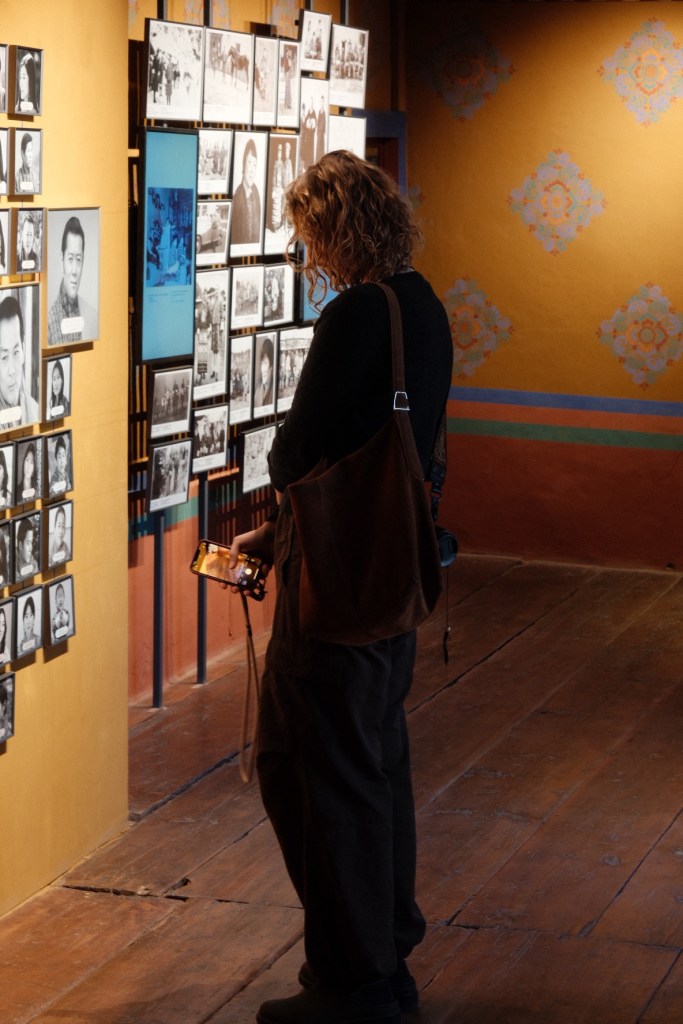
We spent an inordinate amount of time wandering around the exhibits, learning about Bhutanese history and culture, and pouring over old photos and artefacts of the early years of Bhutan’s royal family.
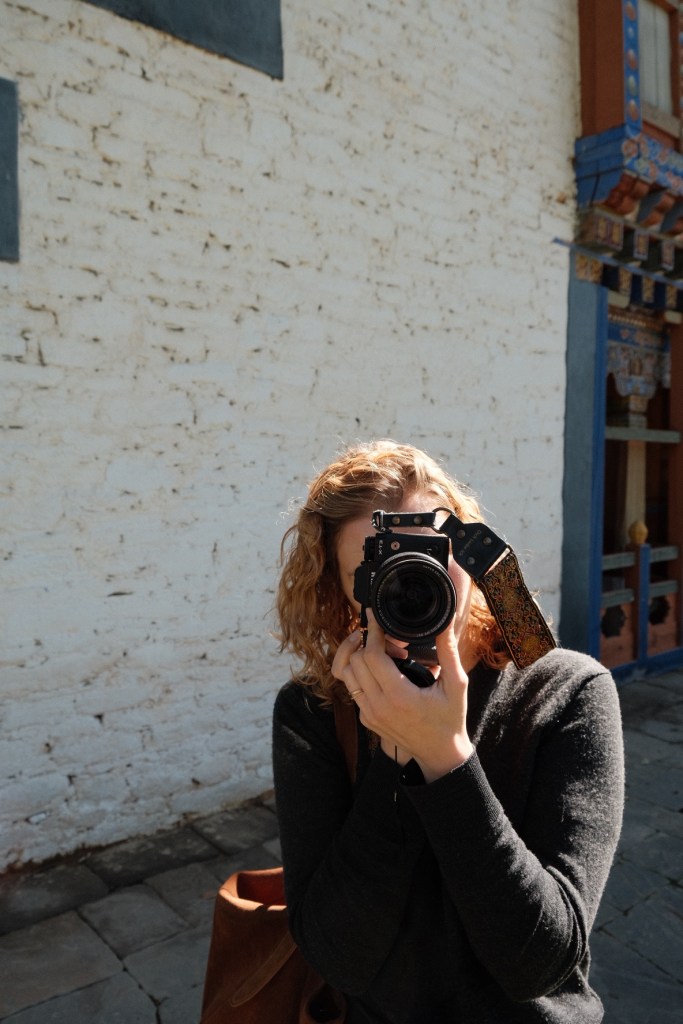
From there, we drove towards Tharpaling temple, with a plan to stop at one of the local yathra-weaving ateliers to see the famed weavers of Bumthang in action, and perhaps buy some beautiful weaves of our own.
Like the silk of Lhuentse, much of the Yathra had been sent to the showrooms of Thimpu to sell to the crowds attracted by the Global Peace Prayer Ceremony, and we learned that yathra weaving is generally not done around this time of the year, as people are busy with the harvest, and the weaving is better done in the warmer months.
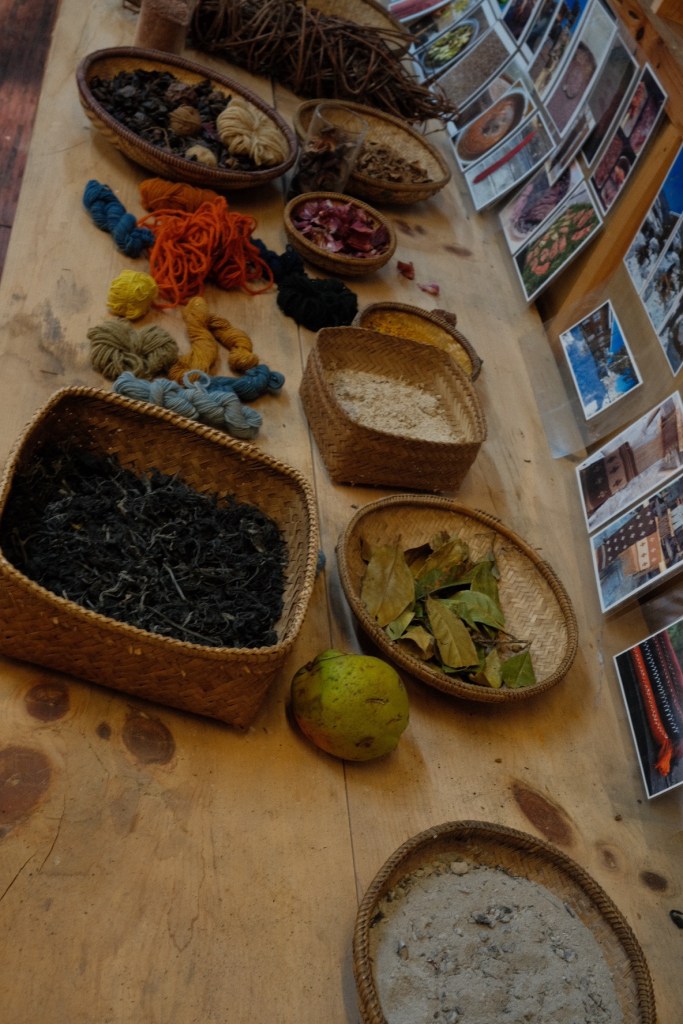
Still, we met a charming young weaver who explained the often-elaborate process by which the raw sheep and yak wool is treated and dyed to achiever the Yathra’s many incredible colours.
All wool in Bhutanese weaving is died organically, and through agonisingly long processes (indigo blue taking over a year), requiring many steps and often great physical strength from the person dying the wool.
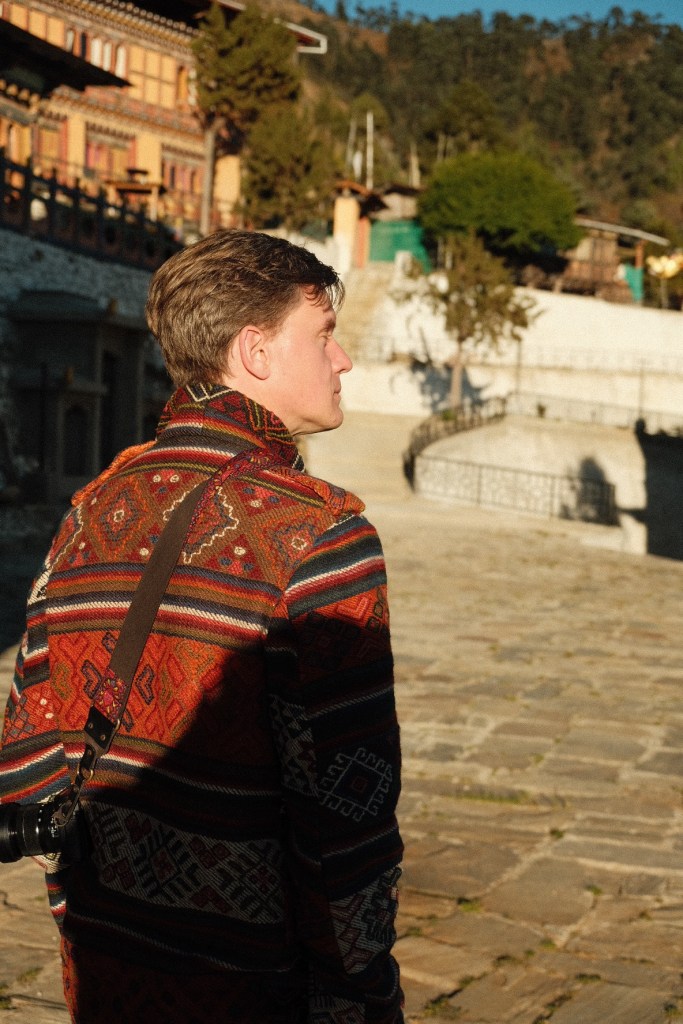
Nowadays cheaply produced Yathra (with artificial fabrics and chemical dies from India) can mostly be found in the large cities, ready to be sold to tourists. We learned that Yathra woven to the quality of renaud’s jacket is essentially not produced anymore — news that brought Fees hopes of buying her own Yathra to a crushing, disappointing low.

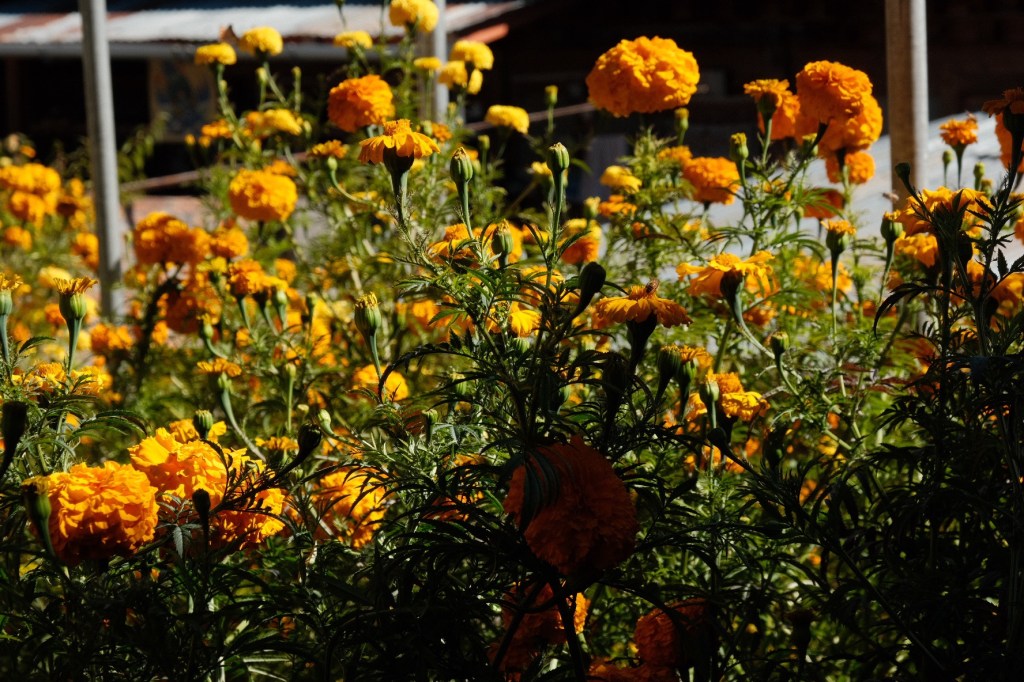
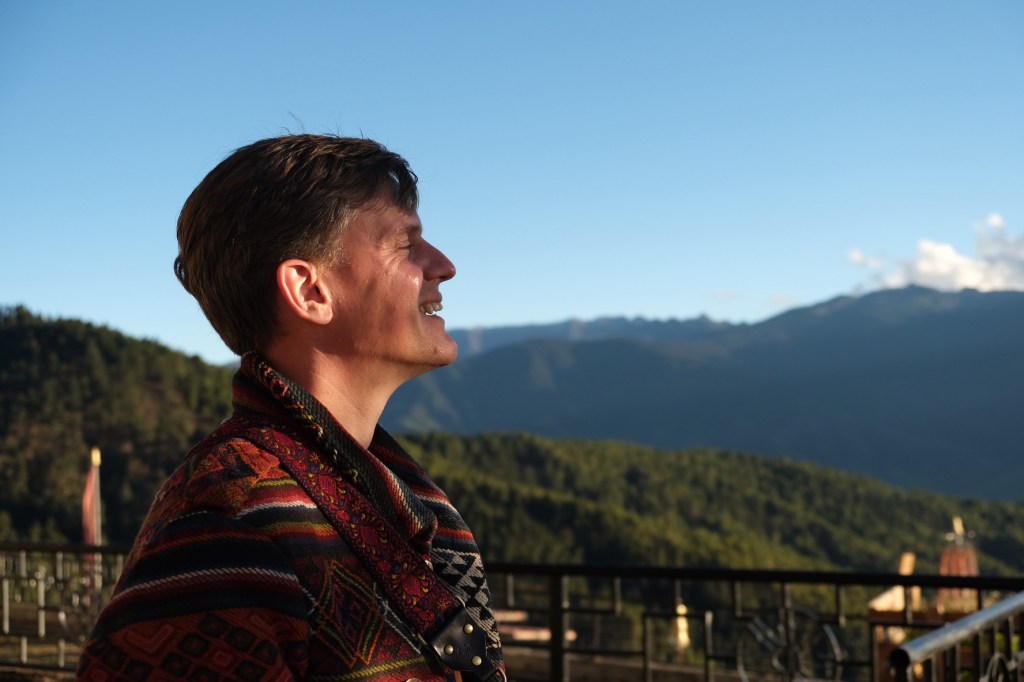
And then onwards, ever onwards on the road towards Tharpaling Monastery, empty-handed but glad of the sun and the sky and the many, many colours.

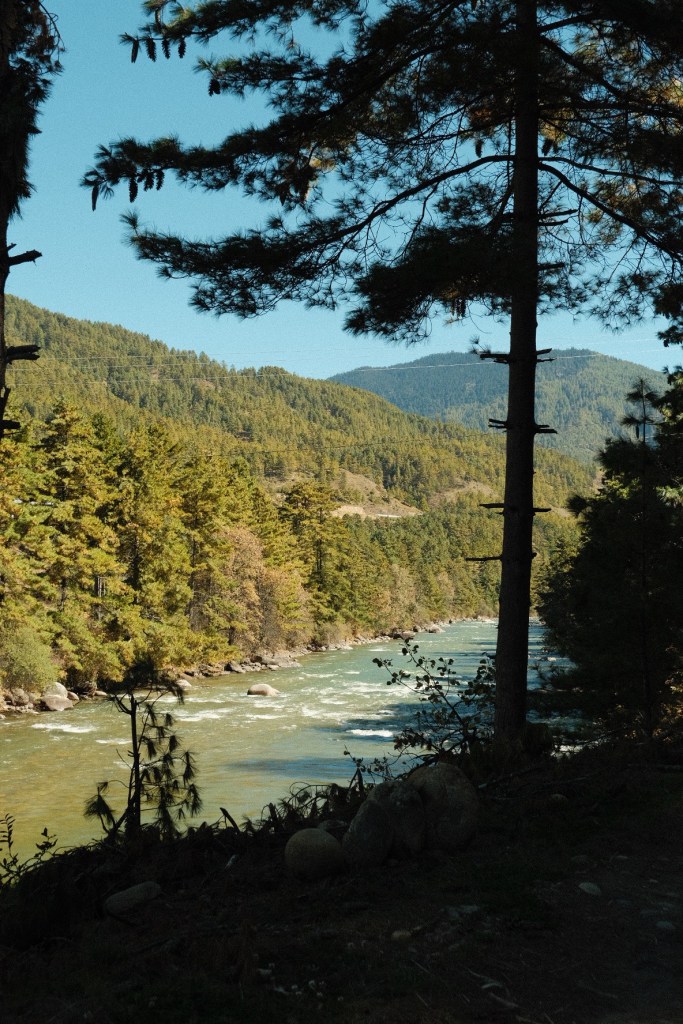
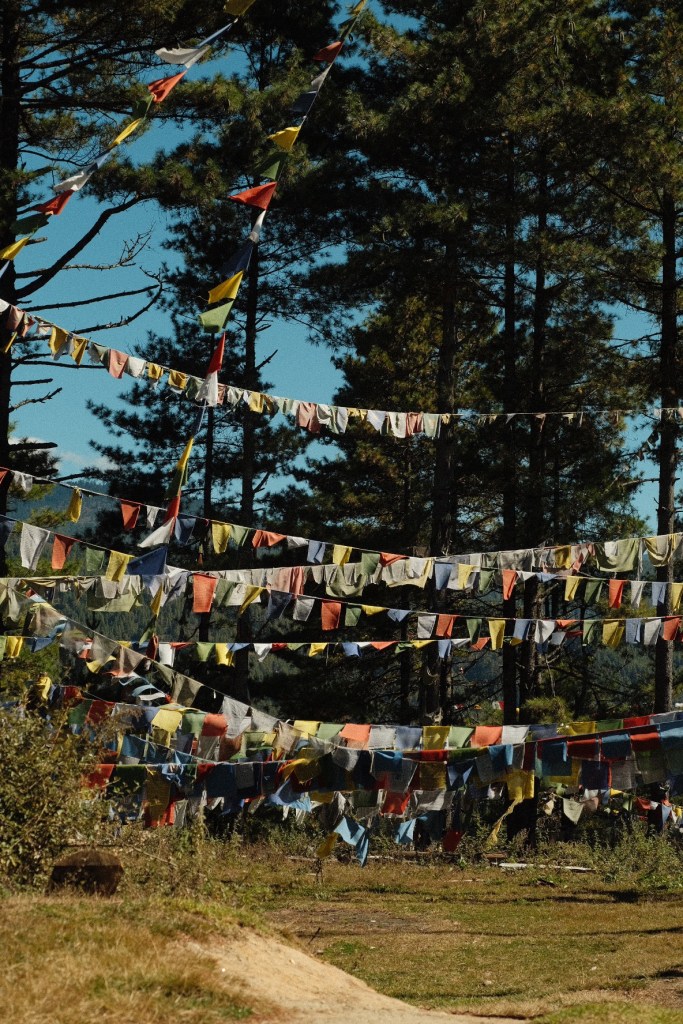
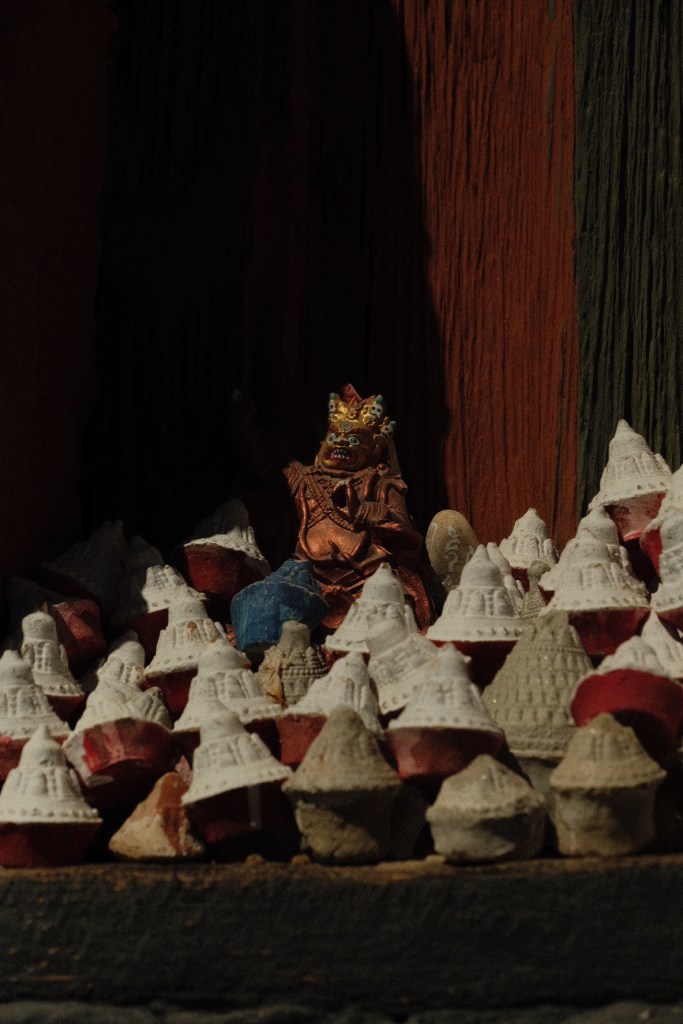
As with many of the temples we passed, Tharpaling seemed under some stage of construction or renovation.
Carpenters were busy planing long thick planks as we reached the lower ground, there was a smell of fresh cut pine in the air.
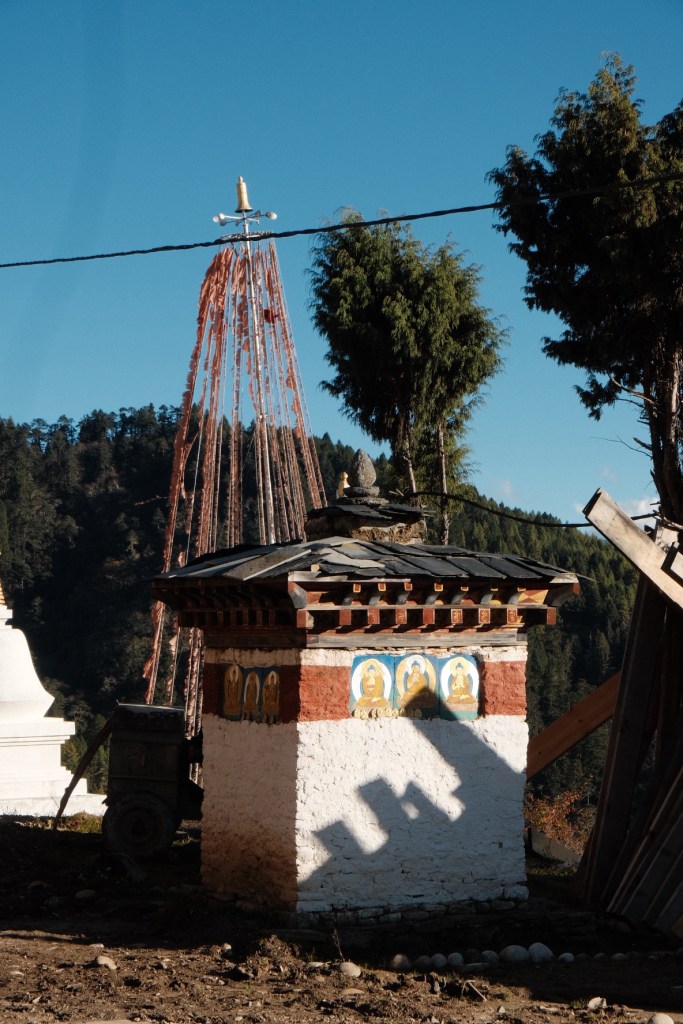
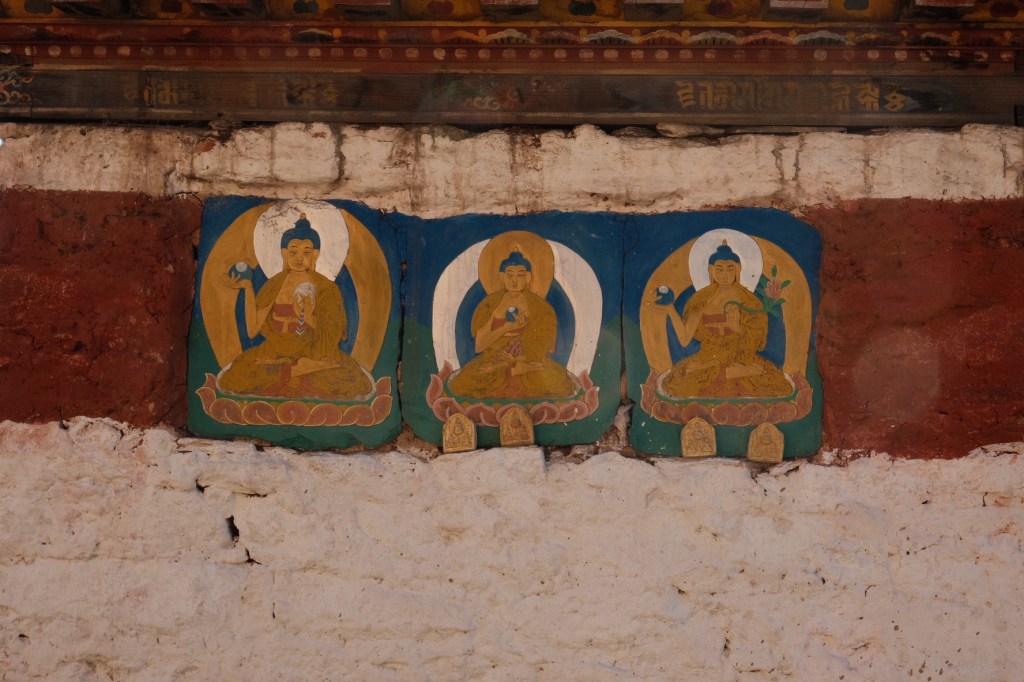
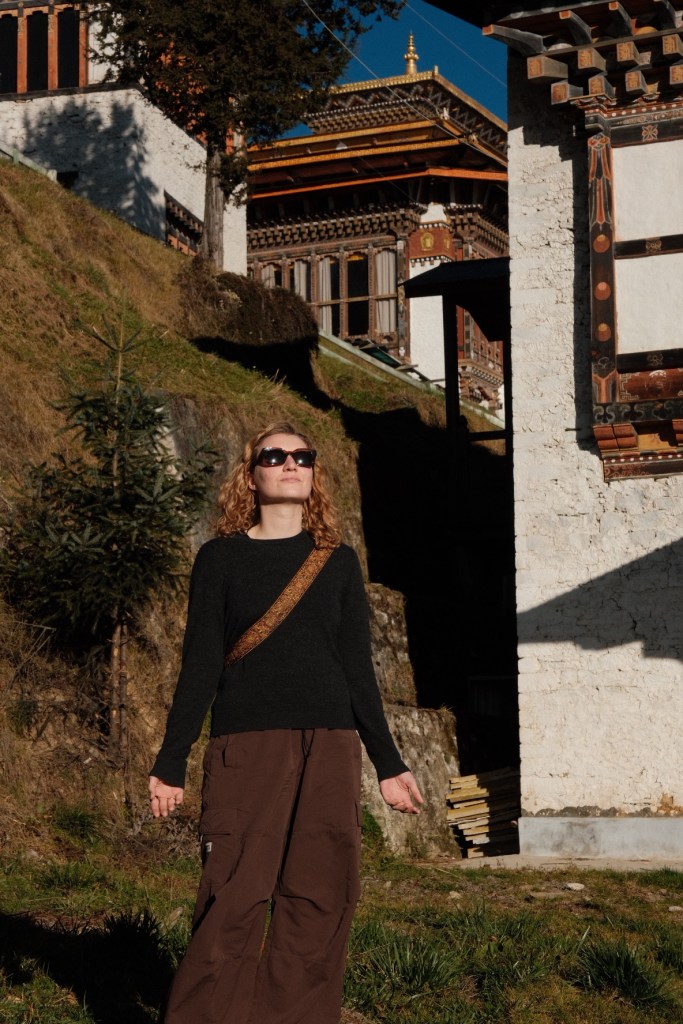
Tharpaling Monastery is unusual in that it contains a small residence for the 1st king, in recognition of the fact that he had the site renovated in the early 20th century.

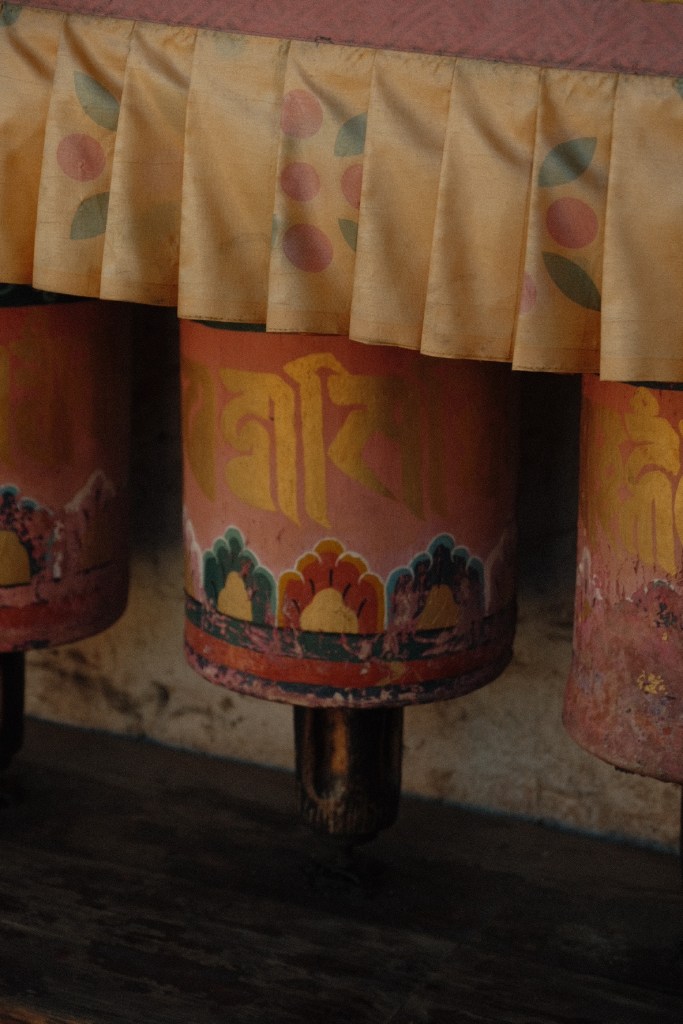
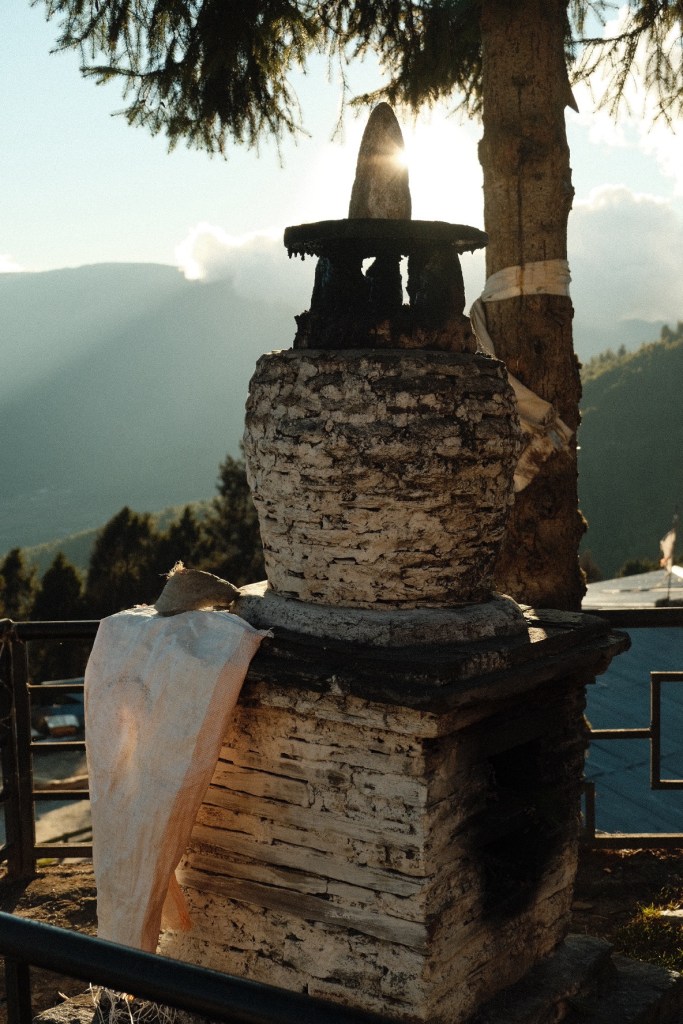
One of the most striking things about architecture in Bhutan is how beautiful it is — even modern residential buildings are, by royal decree, built in the traditional style and aesthetic of the country — but none are more beautiful than the temples and monasteries (and Dzongs, as you will see later).

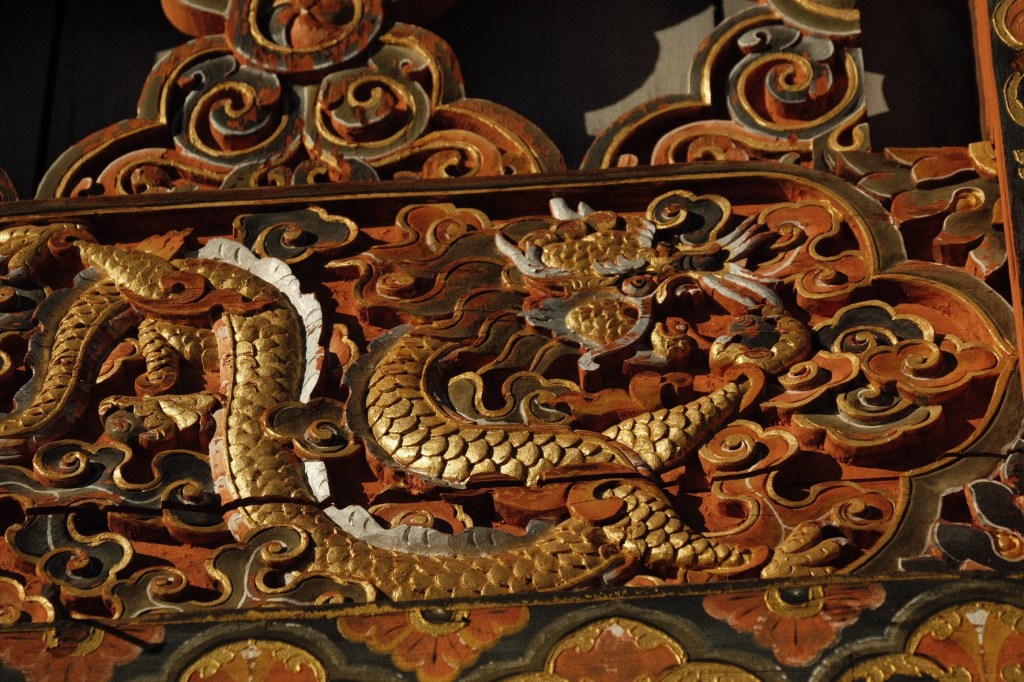
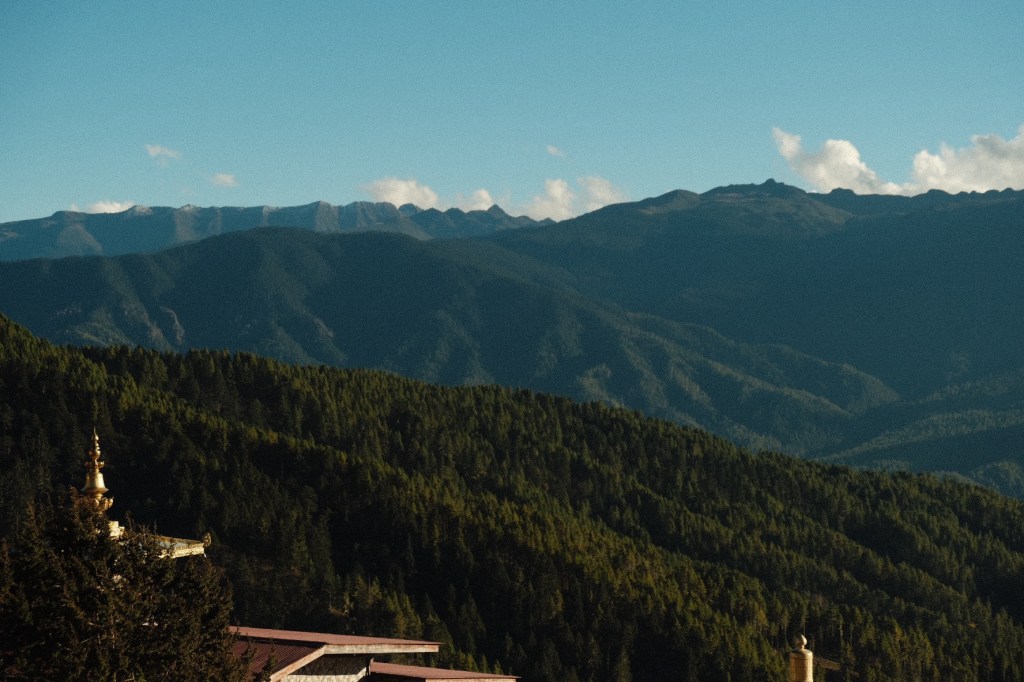



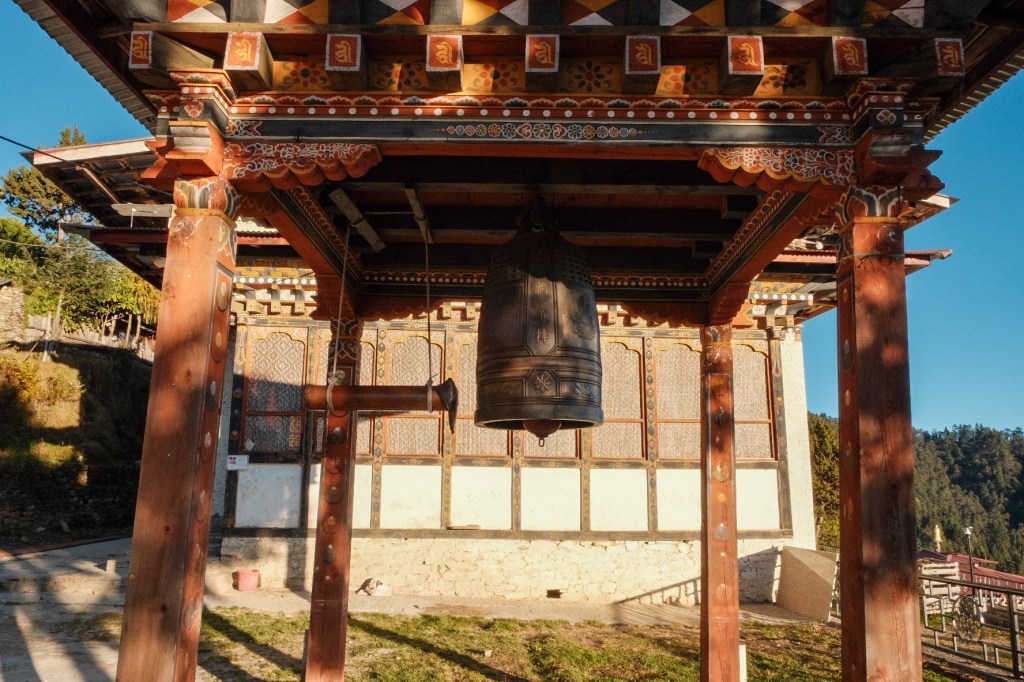

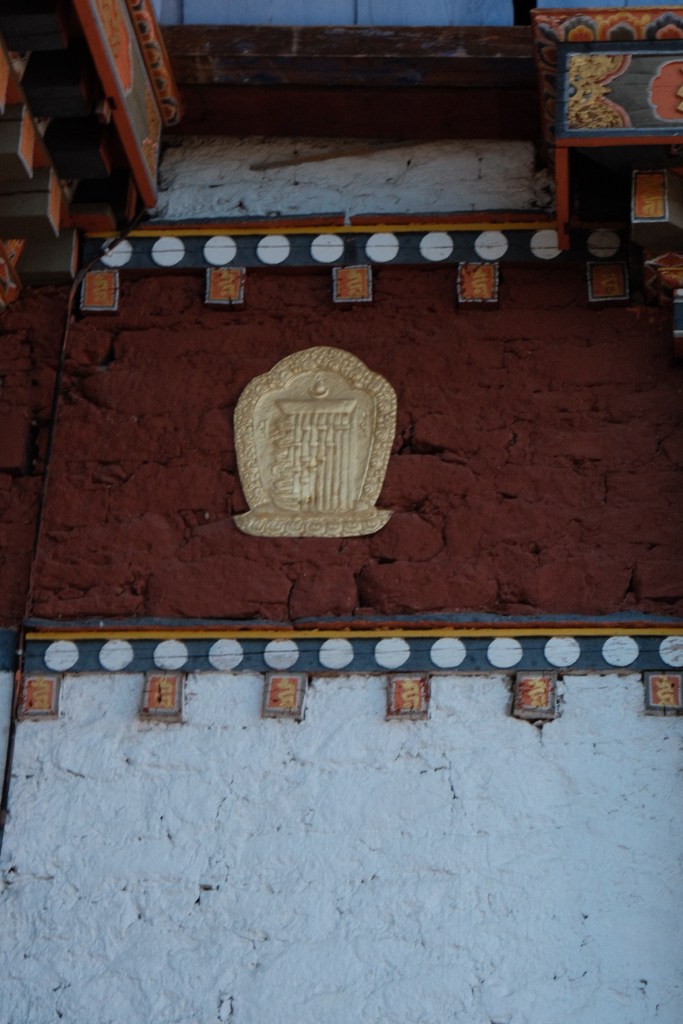


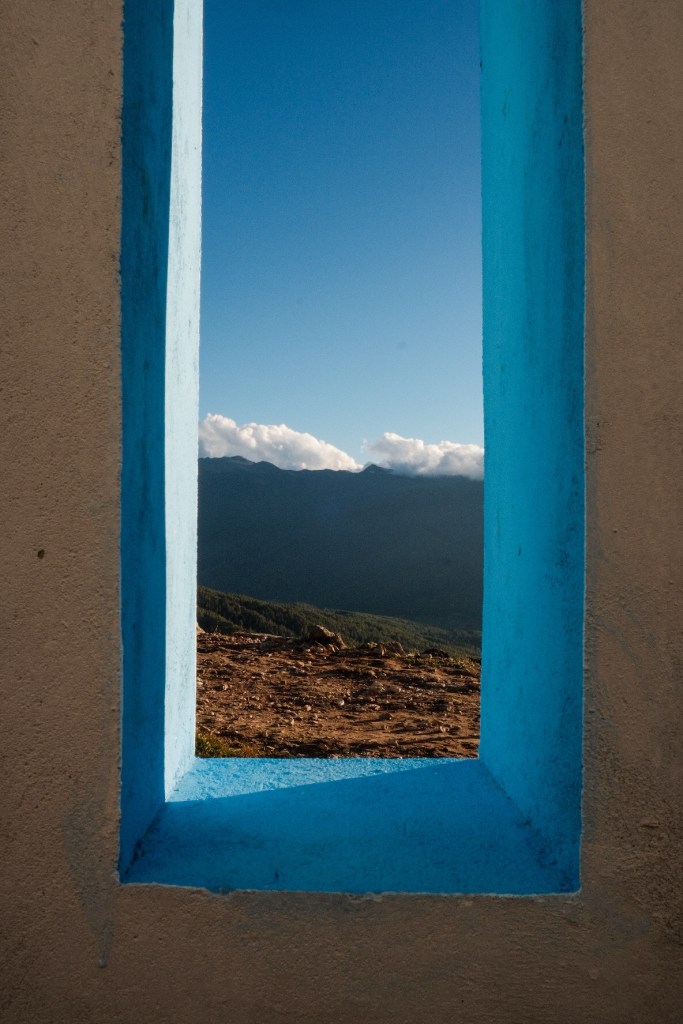
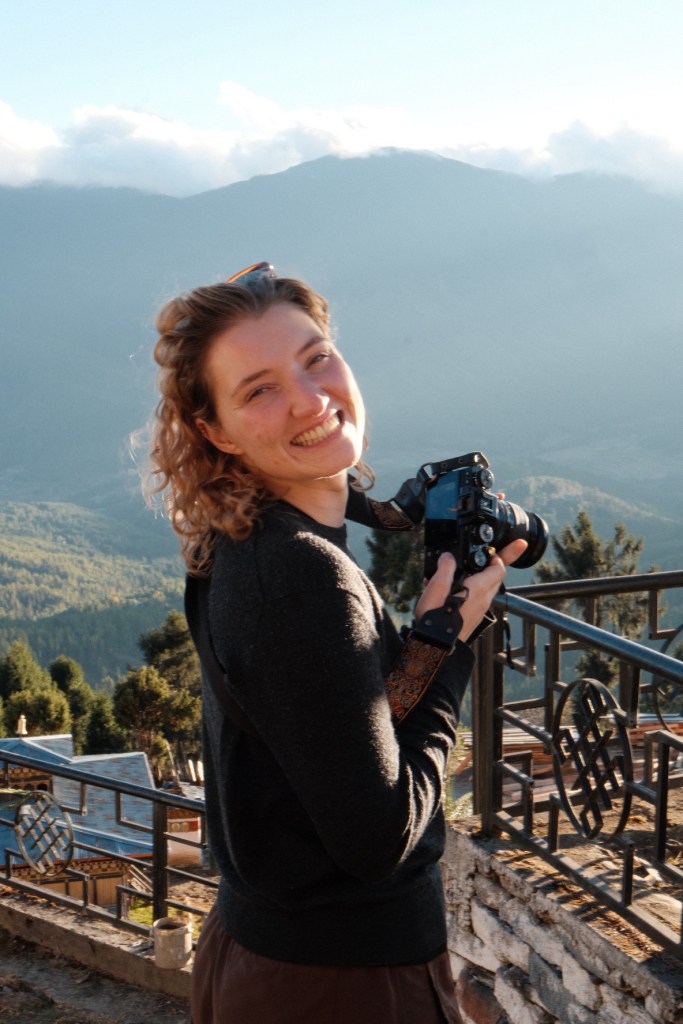
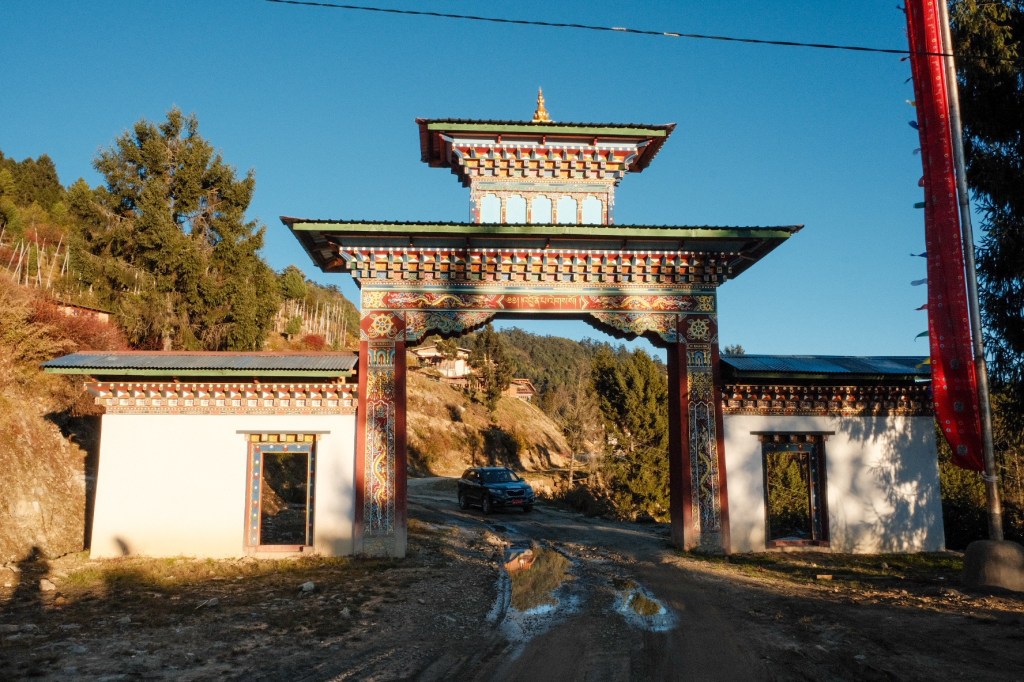
After descending down from the temple, crossing a valley and rounding another mountain, we arrived in Trongsa.
Trongsa, another district of central Bhutan, was once considered the most influential in the country and is rich in Dzongs, temples and monasteries.
We cannot wait to explore more!
After the long drive, we arrived at our hotel to a light dinner and some much needed sleep.
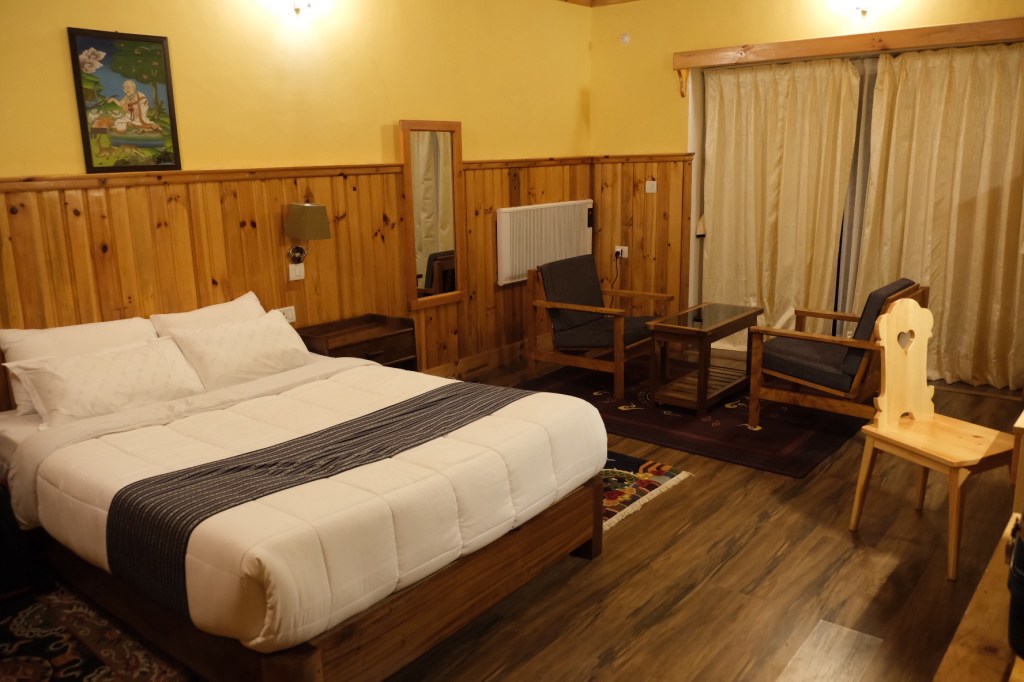
We forgot to take photos of the food (at some point, you seem to get so used to it, you almost forget you’re on holiday) but here is what our room looked like.
 Renaud and Fee
Leave a comment