We are writing about the adventures of our last days in Bhutan from our home in Denmark. Stay with us for the next stories.
Good morning from the valley!
After a cold start to the day (power shortages in the village meant there was no hot water), we made a quick stop at the local Black Neck Crane Centre.
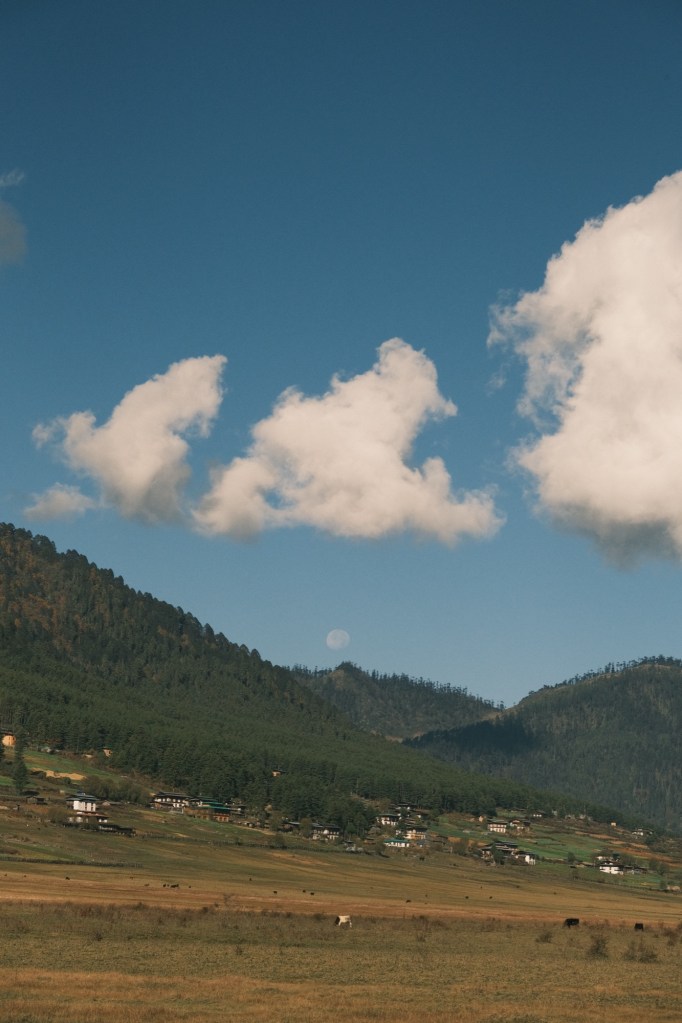
The centre was opened as a sanctuary for —and to provide information about— the cranes, the threats to their habitat, and ways in which the local population can help protect these rare birds.

We were able to watch the birds through binoculars, learn about their journey through the Himalayans (Phobjikha Valley being their wintering grounds), and meet two cranes who live in the centre since a few years — Karma and Pema.
The birds were rescued and brought to the sanctuary to recover, though it was impossible to rewild them.
We drank a cup of Nadja and took a last look around, then we were on our way again — off to Punakha, one of the warmest regions in the country.
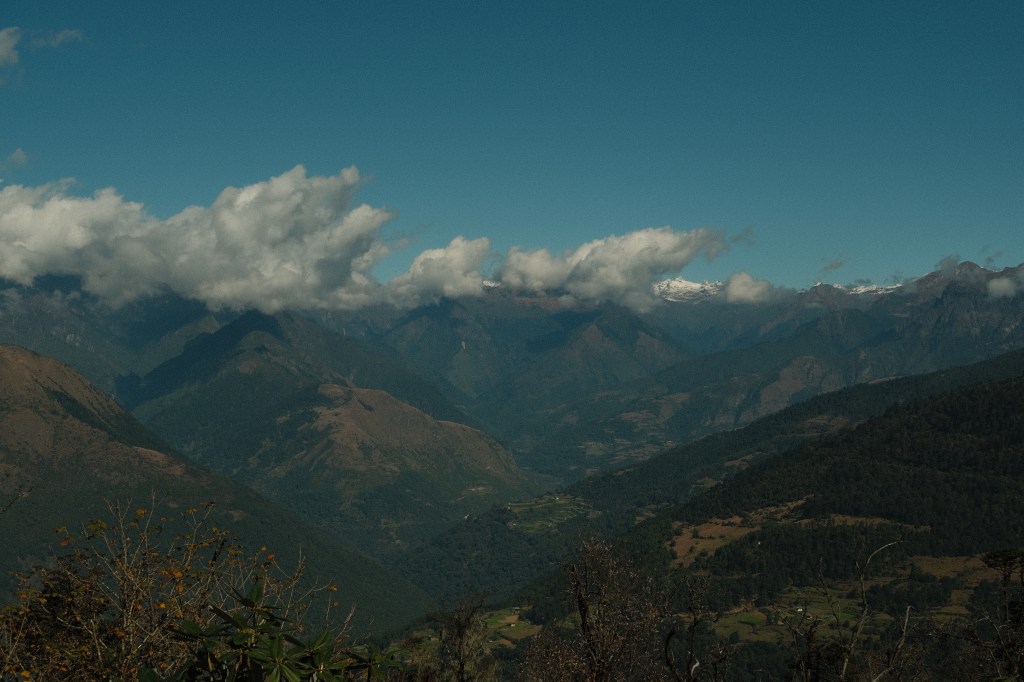
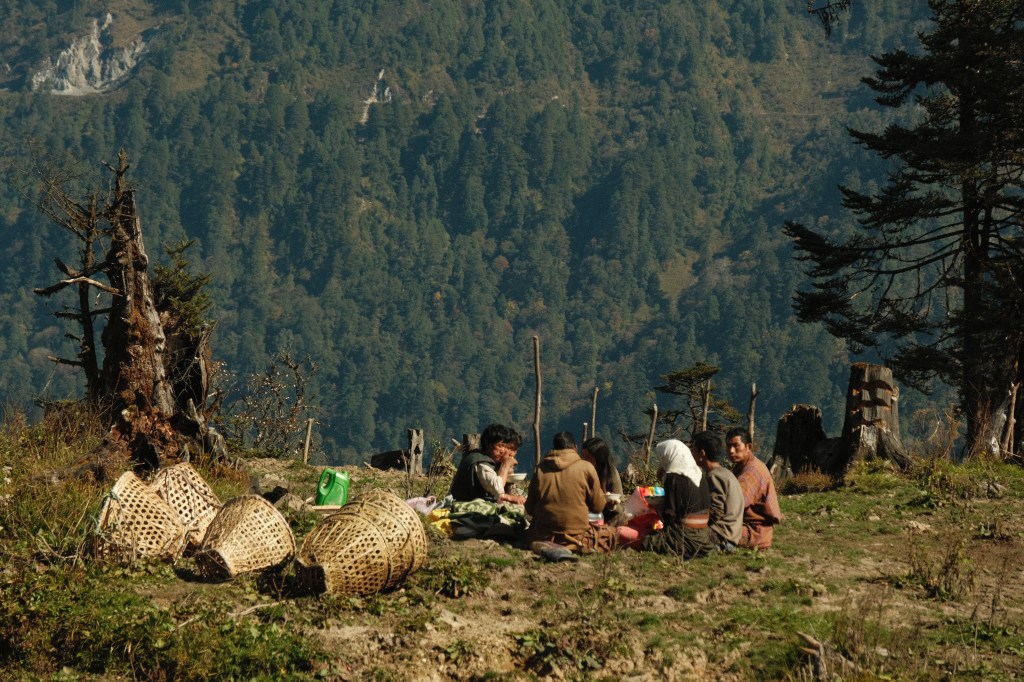
En route, we visited the Wangdue-Phodrang-Dzong, the third oldest Dzong (fortress) in the country, built in 1638.
Like all Dzongs, it houses the offices of the local municipality as well as a temple, quarters for monks, and a large courtyard for festivals and festivities.
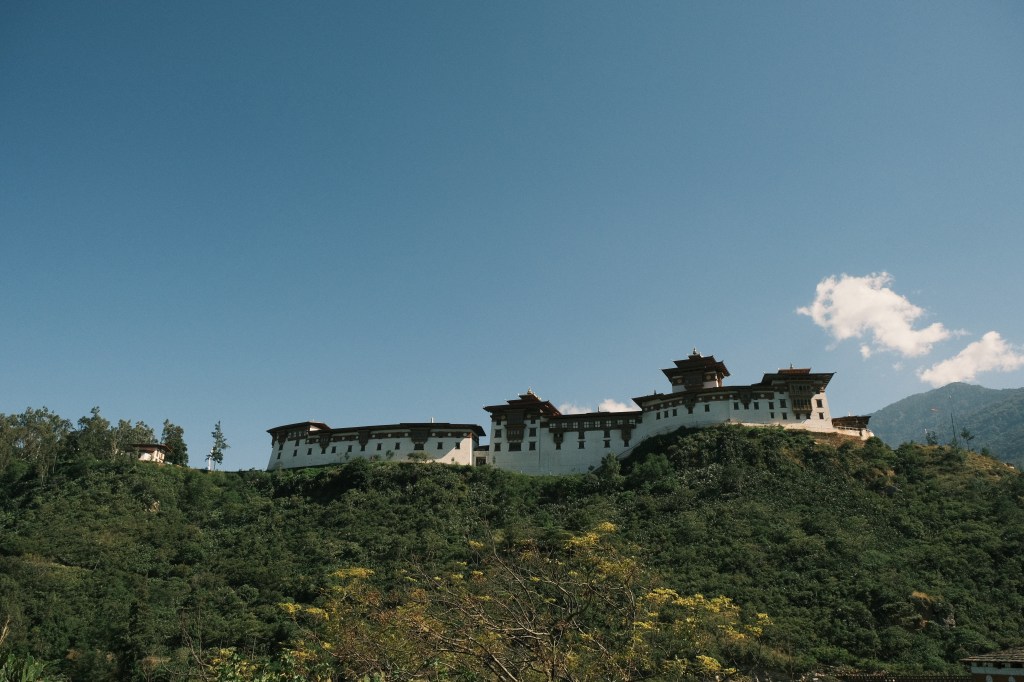
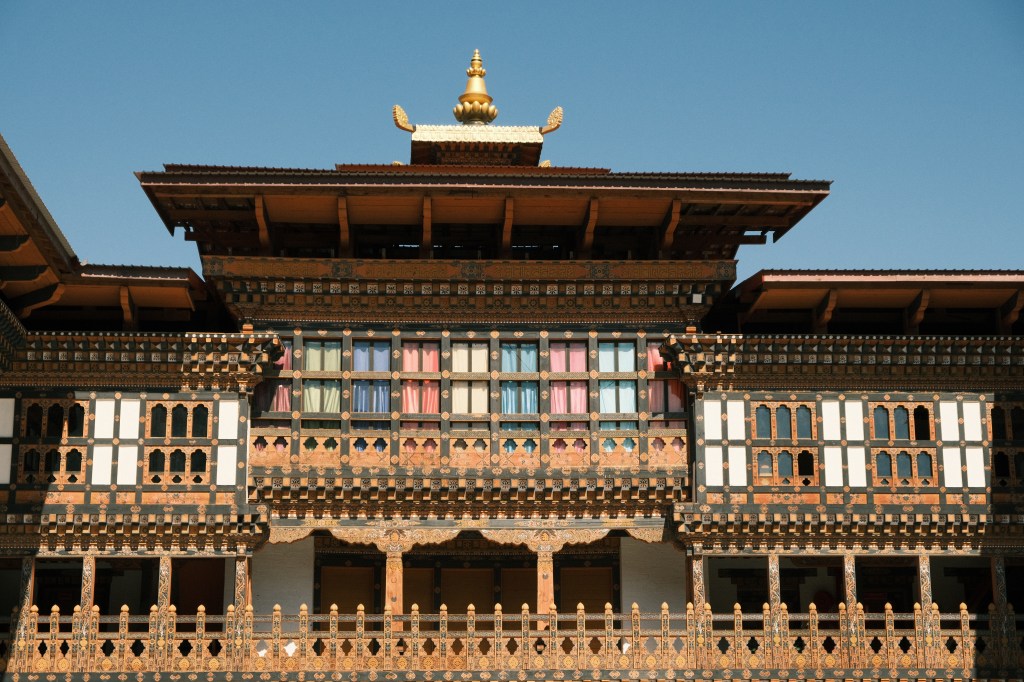
The Dzong has a long history of being damaged or destroyed, either by earthquakes (in 1897 and 2011), or by fires (in 1837 and lastly in 2012).
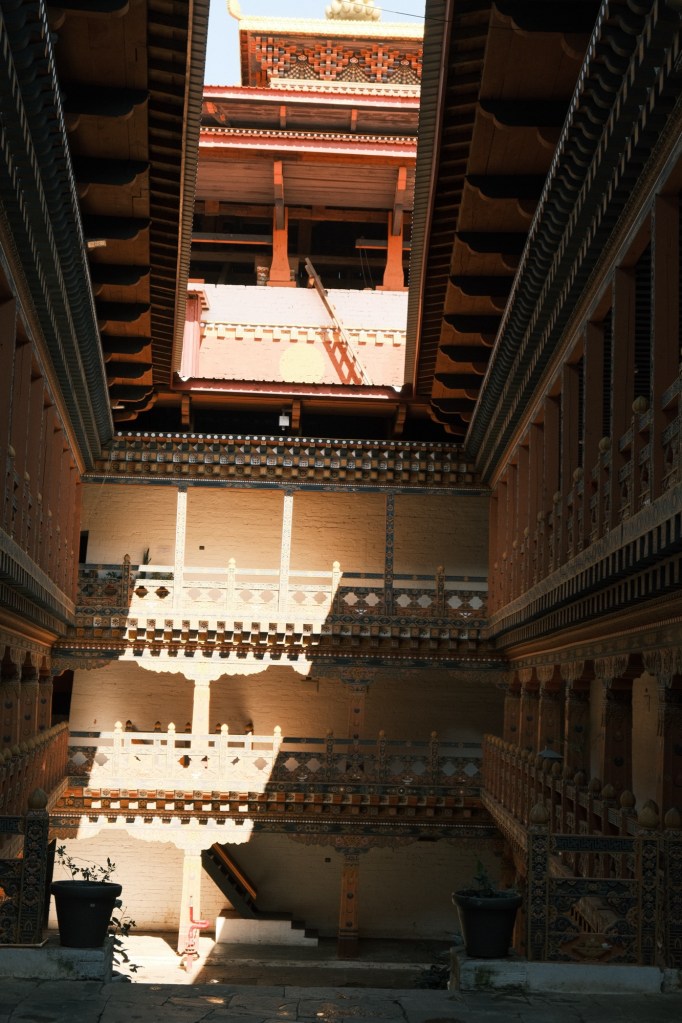
The fire in 2012 burnt the Dzong to the ground, though the help of many volunteers meant most of the ancient art works in the temple could be rescued, the rest of the structure had to be rebuilt from the ground up.
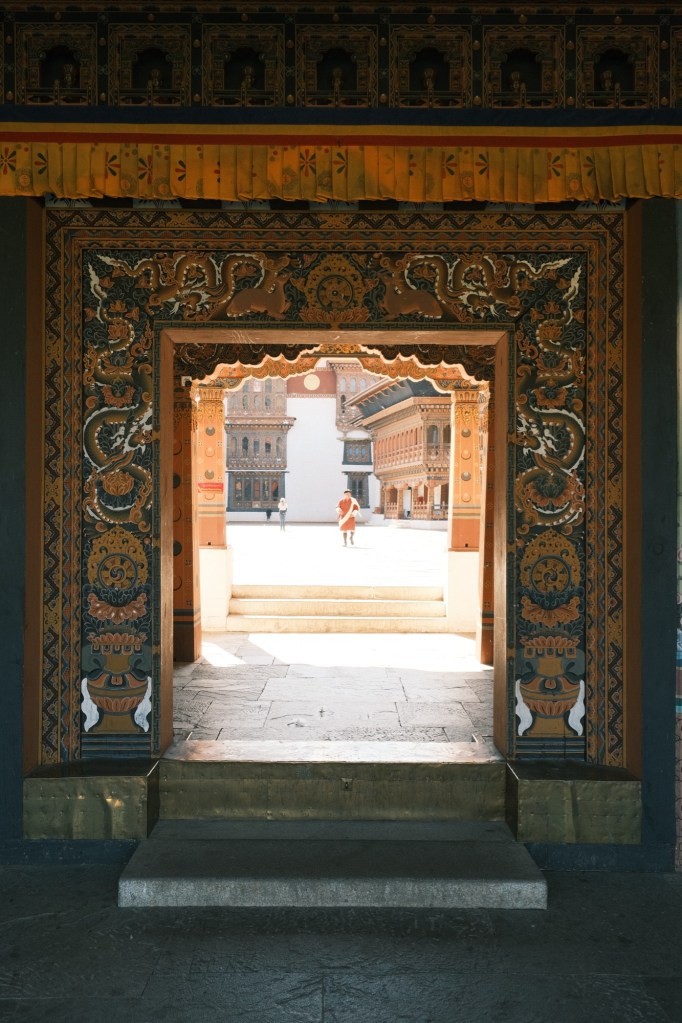
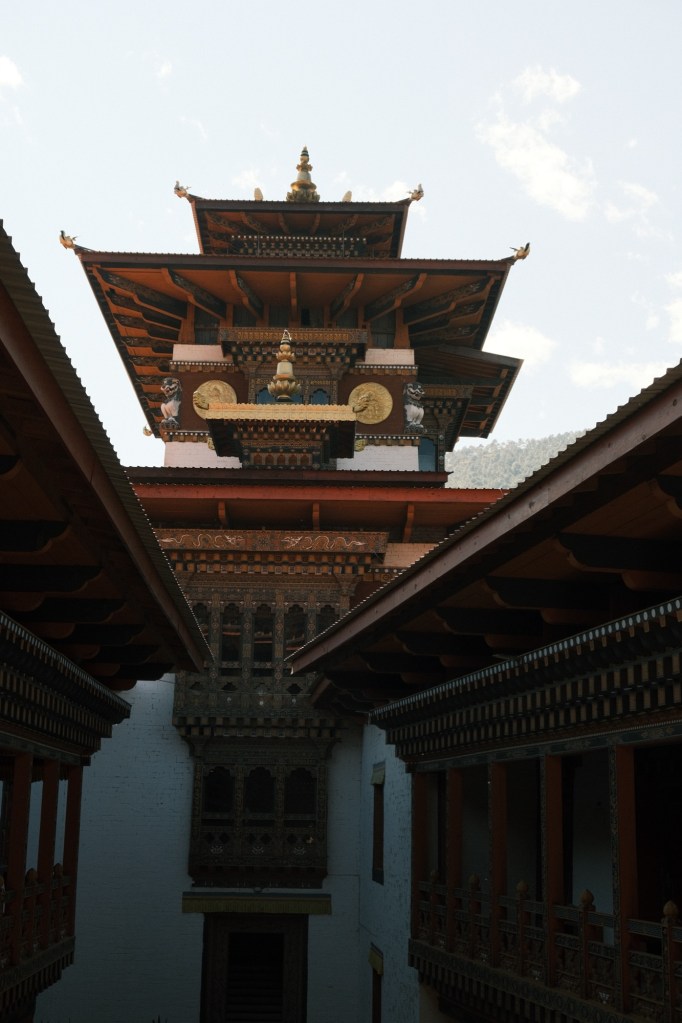

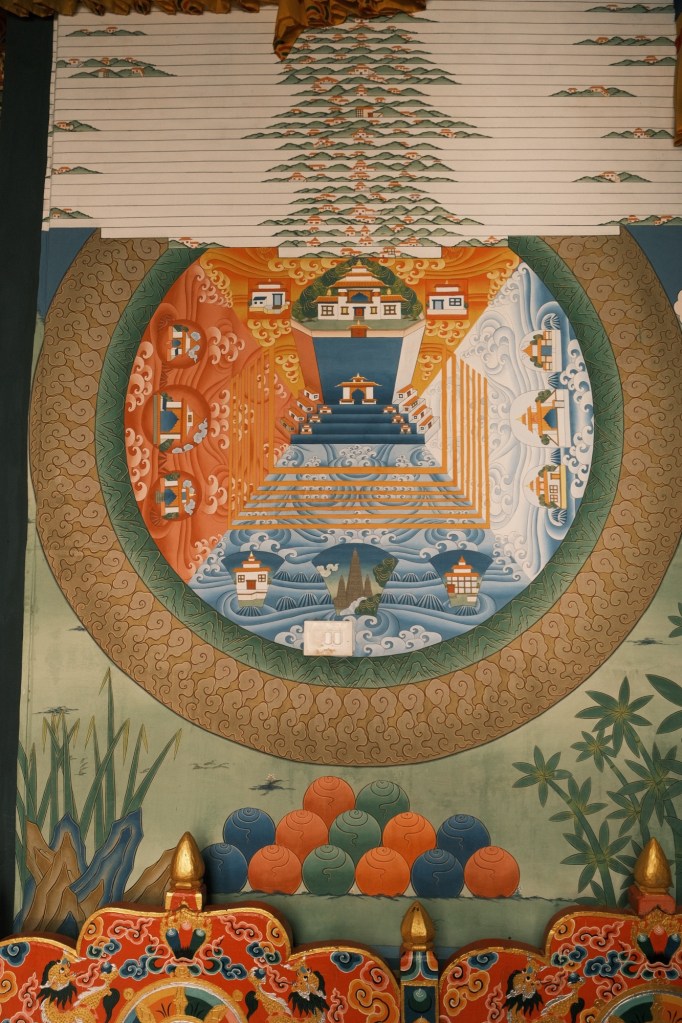

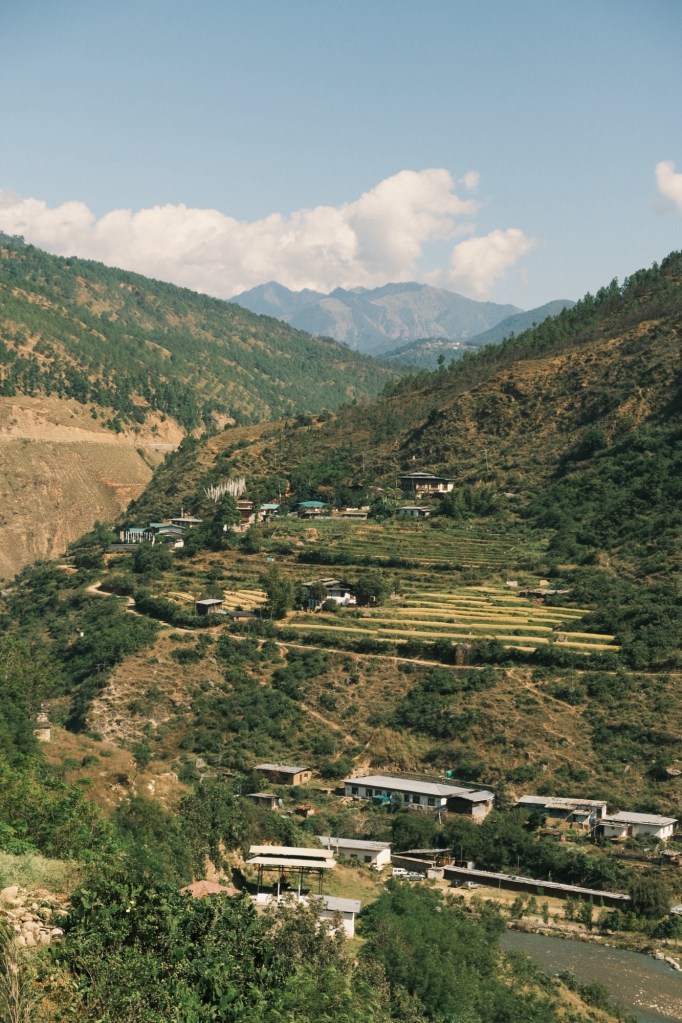
After a brief stop for lunch, we proceeded to Punakha, and got ready to visit the Chimi Lhakhang Temple — the name of which used to mean something like “no more dogs” as it was founded on the site at which Drukpa Kunley defeated the evil forces plaguing the valley in the shape of a dog.
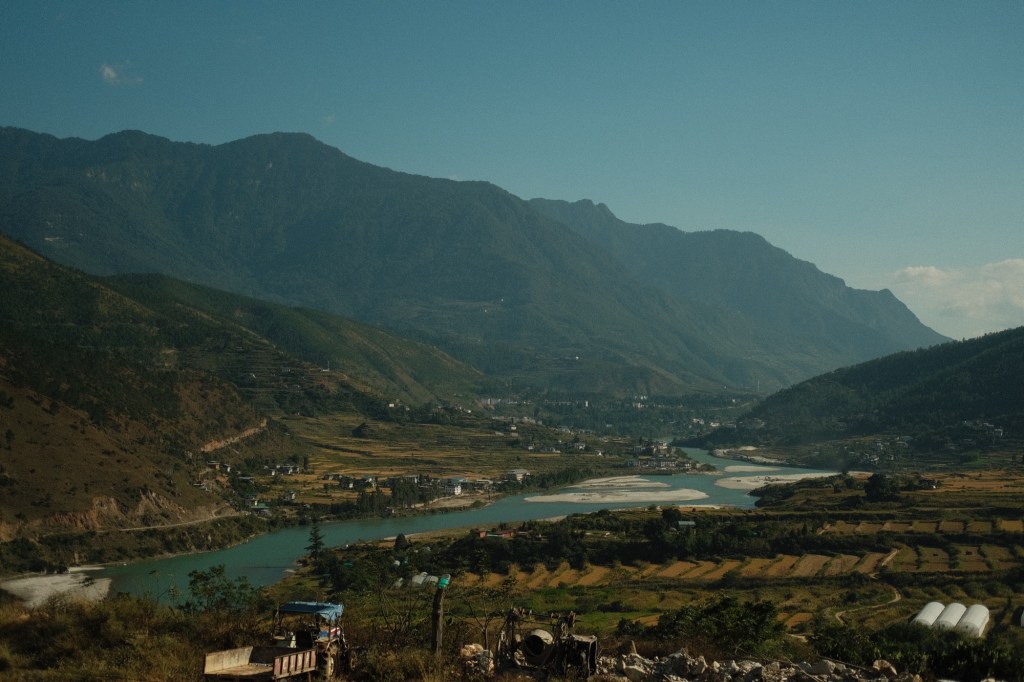
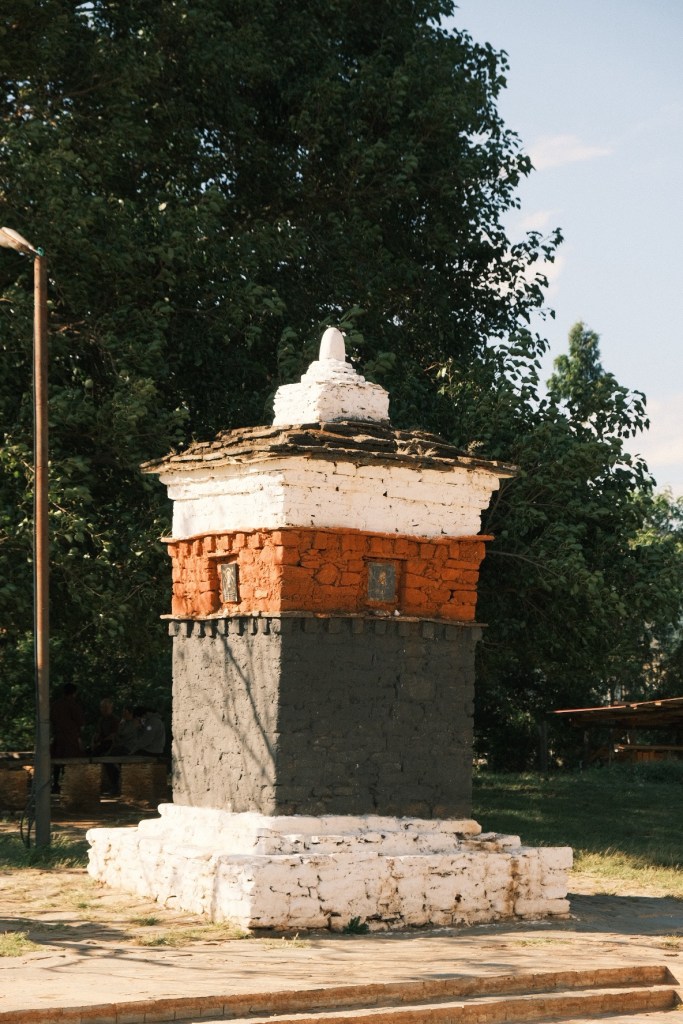
The temple stands on a round hillock (one has to walk for about 20mins to reach it) and was founded and built in 1499.
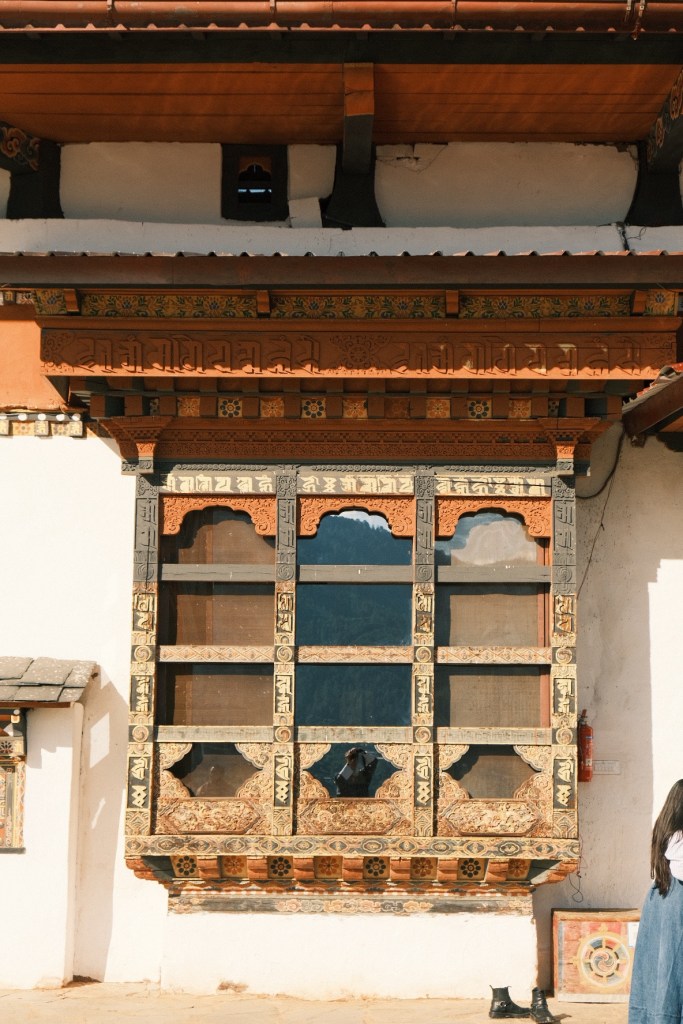
It is known as the temple of fertility and the repository of the original wooden phallus that Kunley brought from Tibet.
This phallic relic is decorated with a silver handle and used to bless people who visit the monastery on pilgrimage.
Phallus symbols are present all over the country, painted on the walls of houses or as wooden figures in temples.
Traditionally the symbol is intended to drive away the evil eye and malicious gossip.
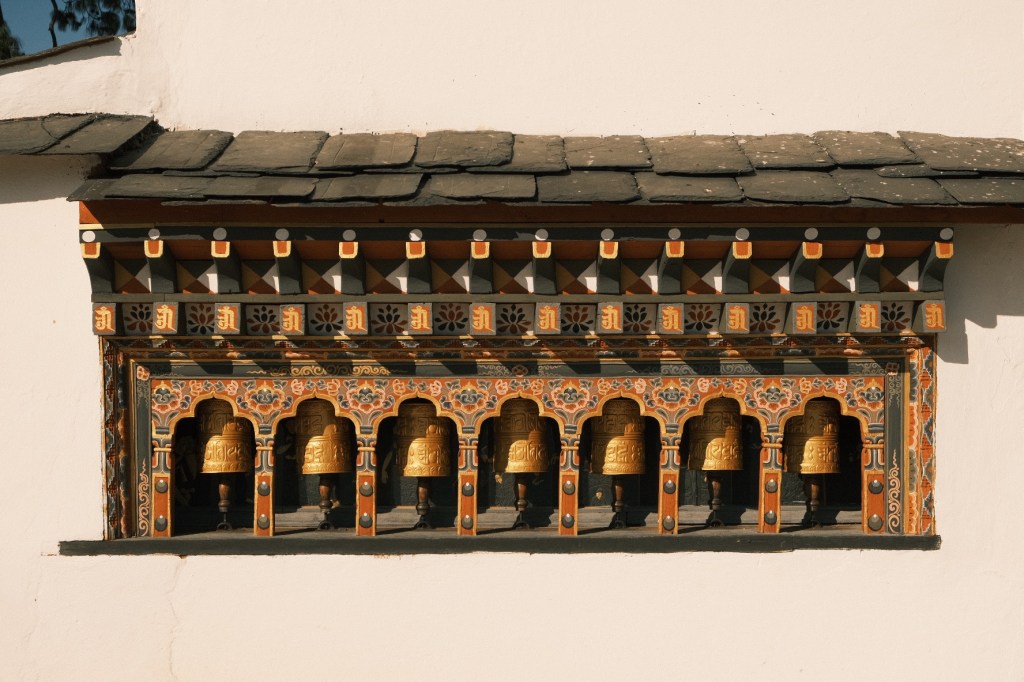
Because of the temple’s association with fertility, it is also the main temple to ask for blessings of newly born children and make offerings for the health of a family.
We don’t have many photos of the temple because it was honestly rather crowded, being a popular place for tourists and bhutanese alike to visit, who comes from all over the country.
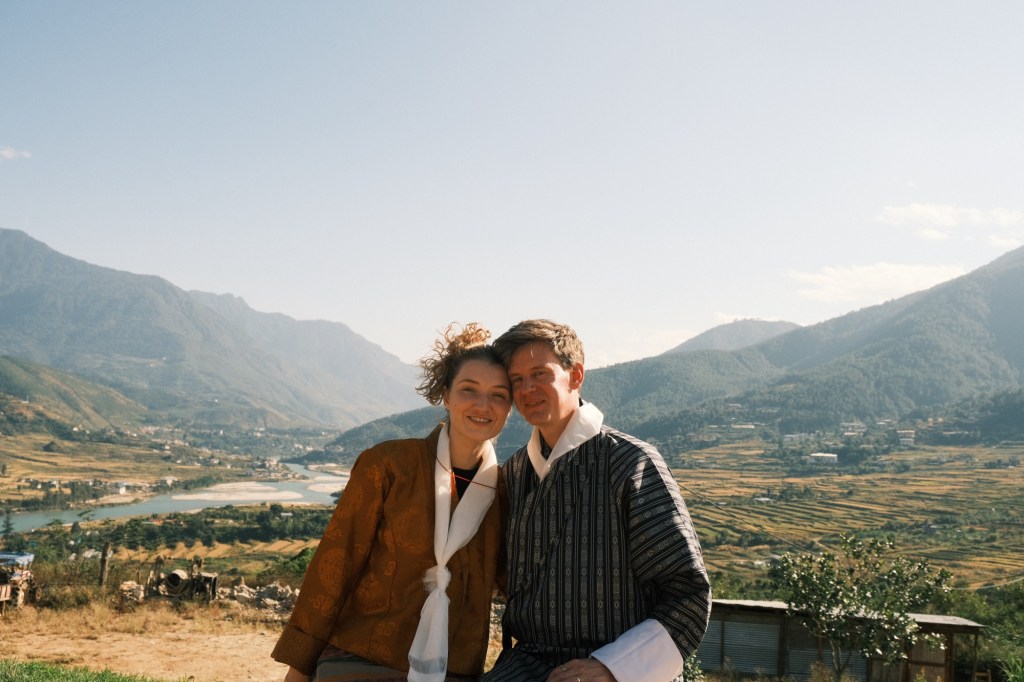
Fee wanted to ask for blessings for the newborn children of two close friends, and so we asked our guide to arrange a meeting with the local Lama (the term is bestowed on venerated spiritual masters).
For this special occasion, we were dressed in traditional bhutanese clothes again – Fee wearing a Kira and renaud a Gho.
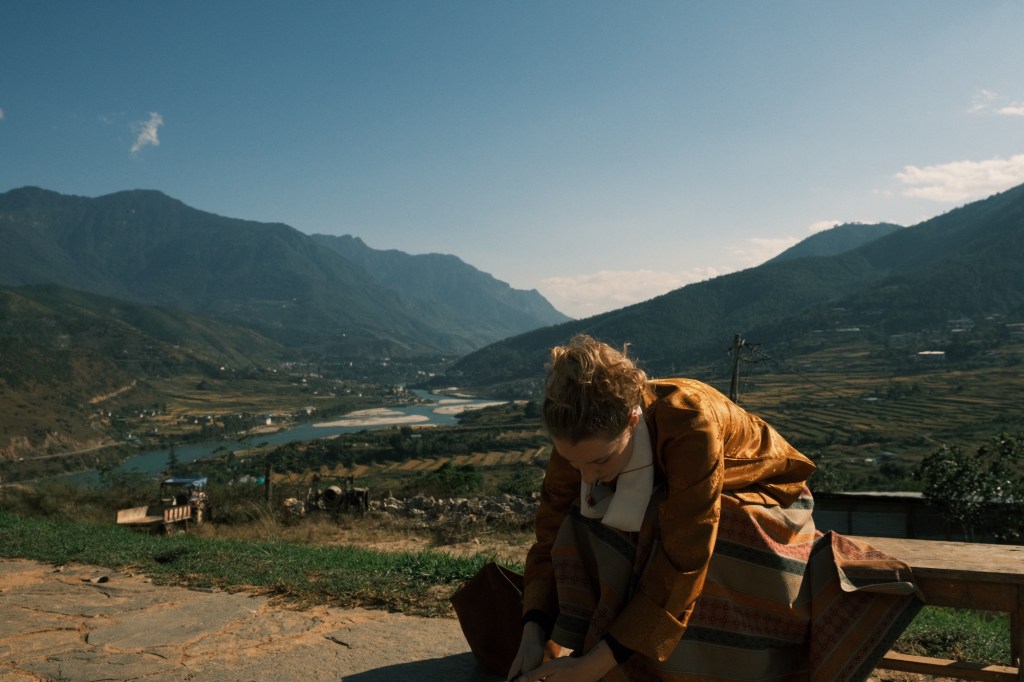
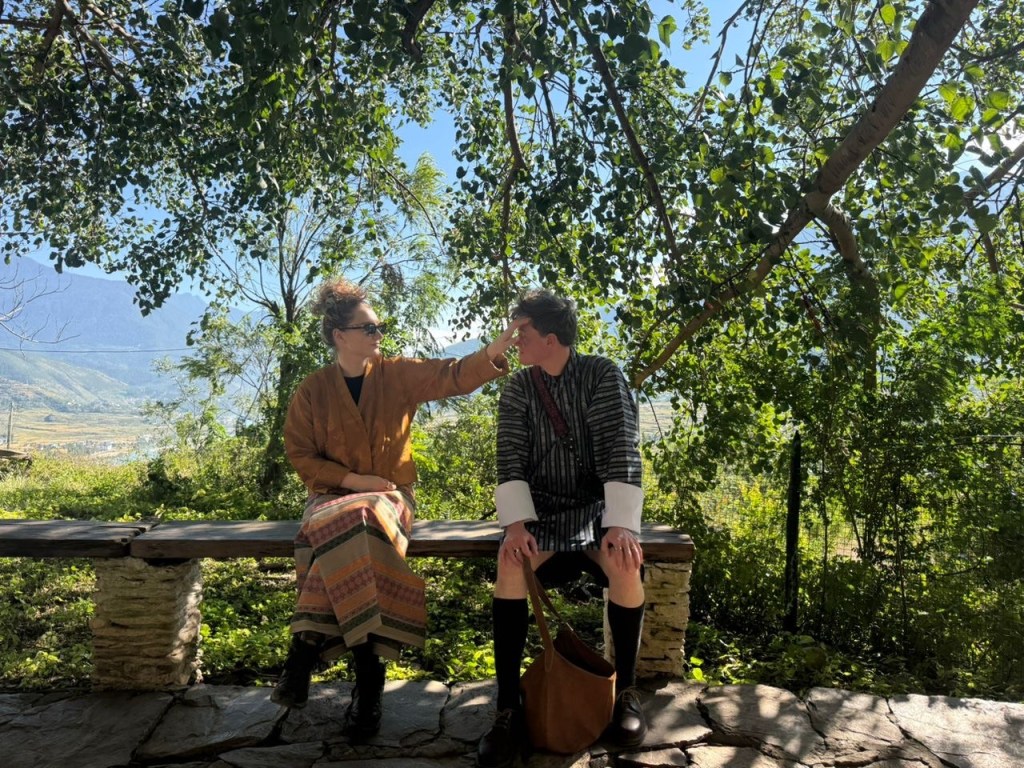
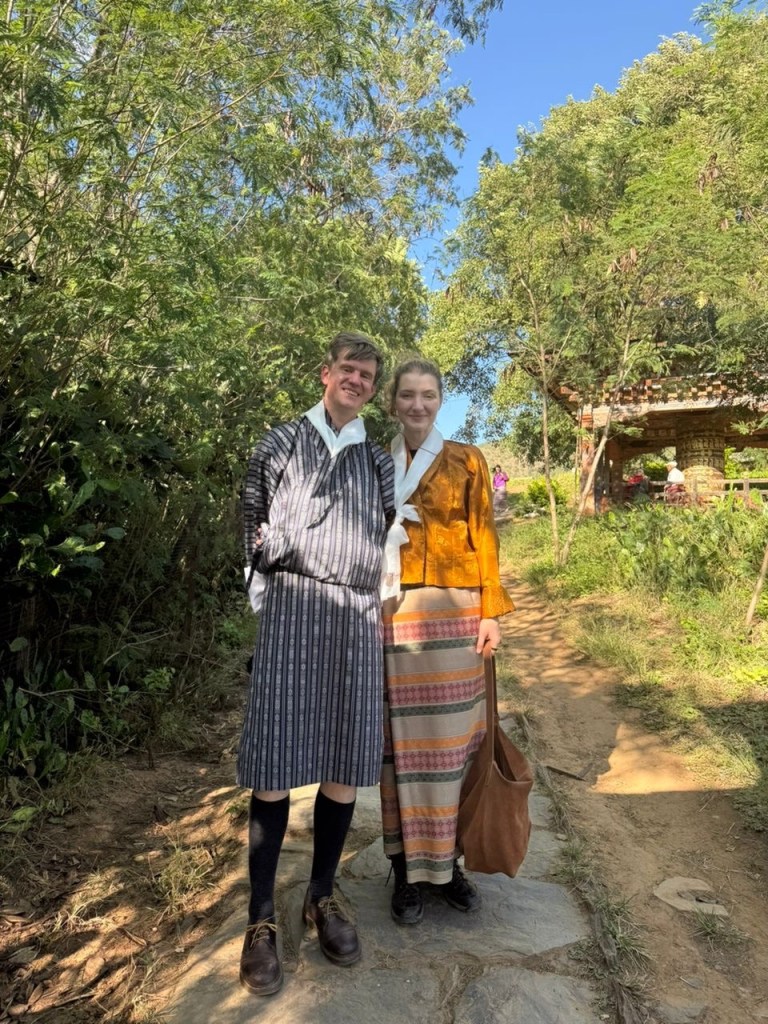
After taking a good look around the temple (the art was stunning) and with two newly blessed scarves for our friends, we made our way out of the valley and on to Punakha itself.
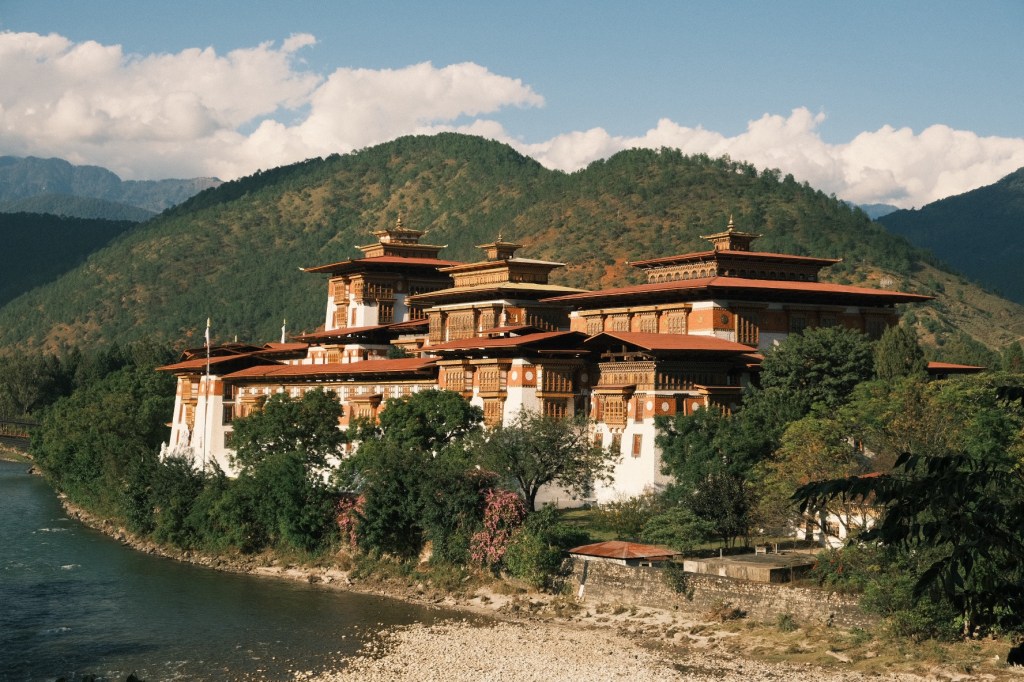
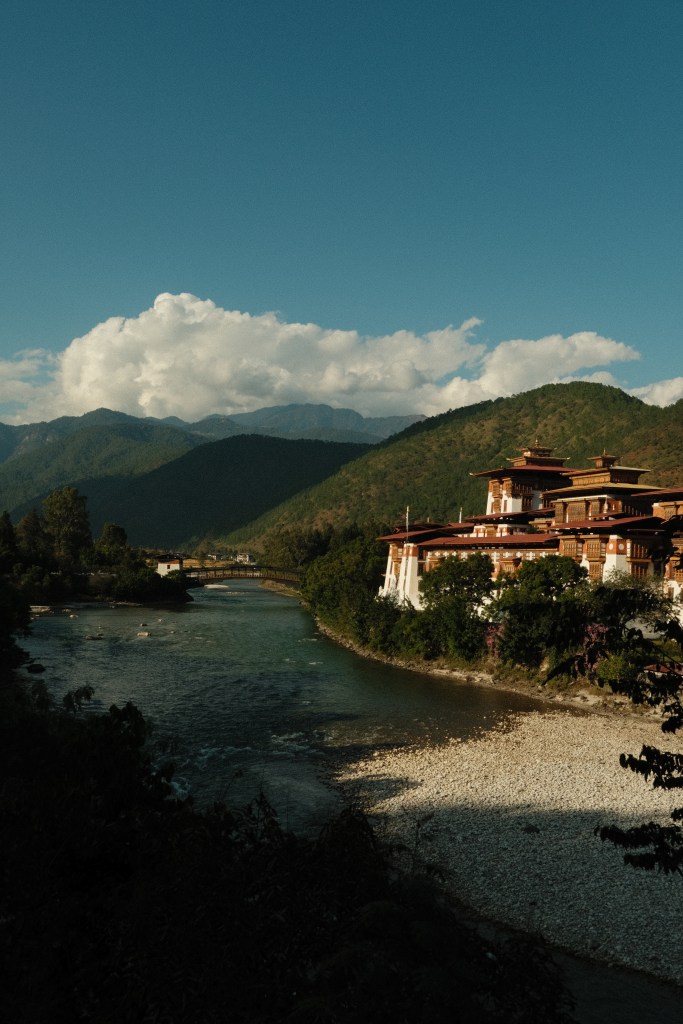
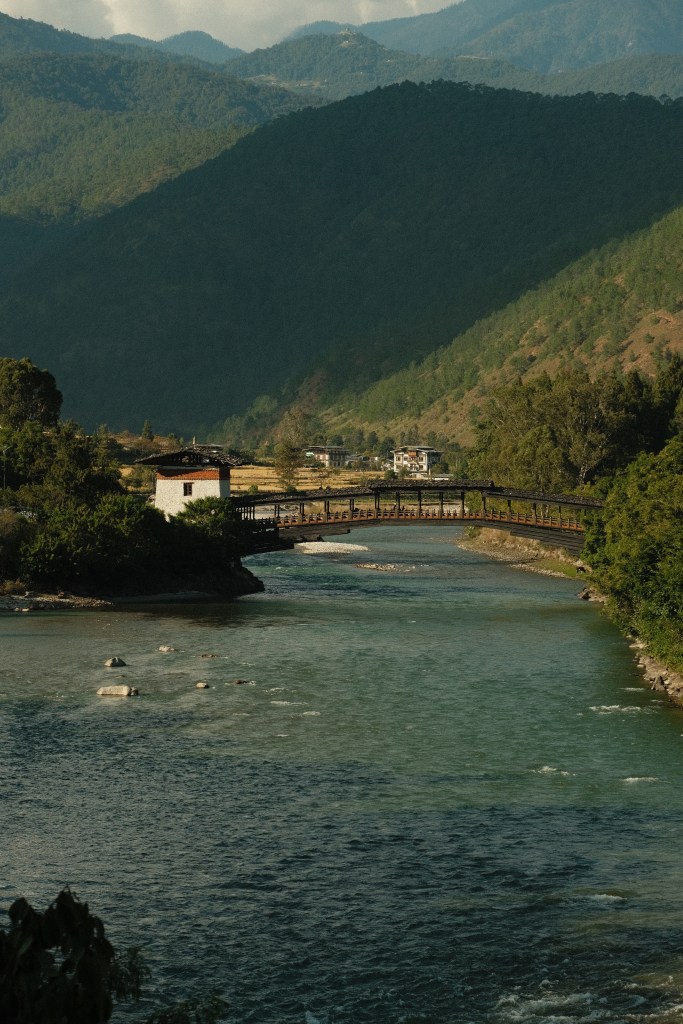
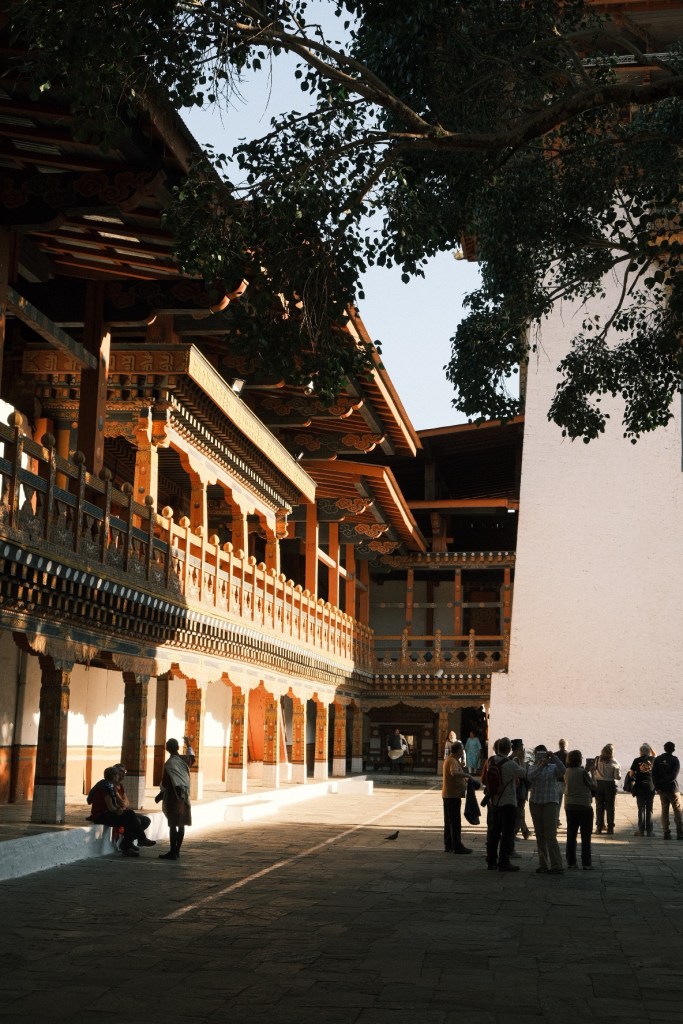
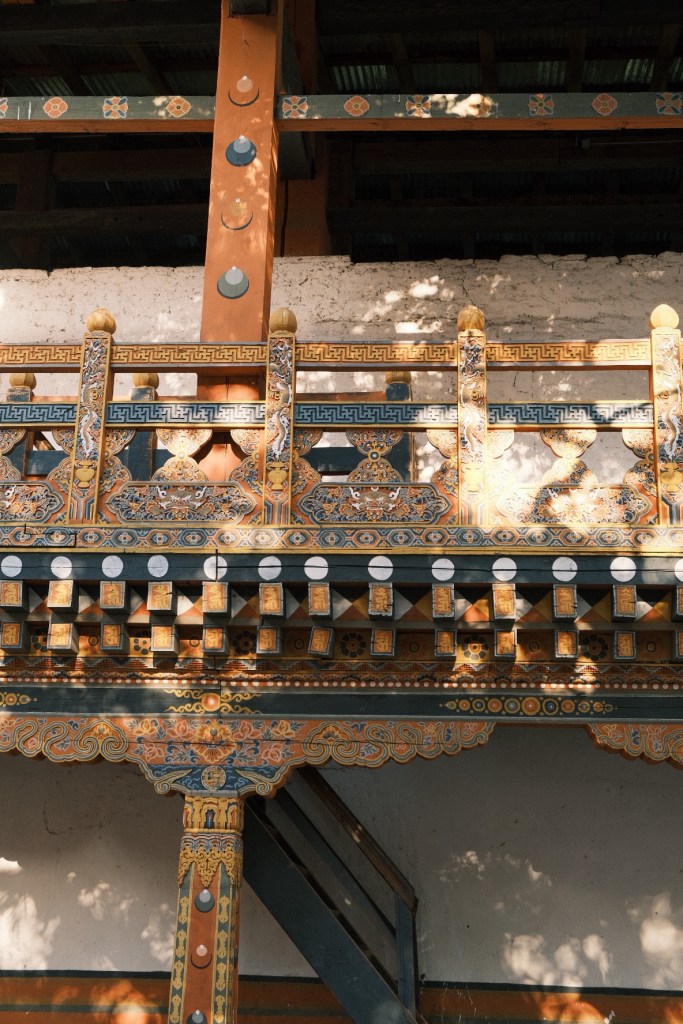
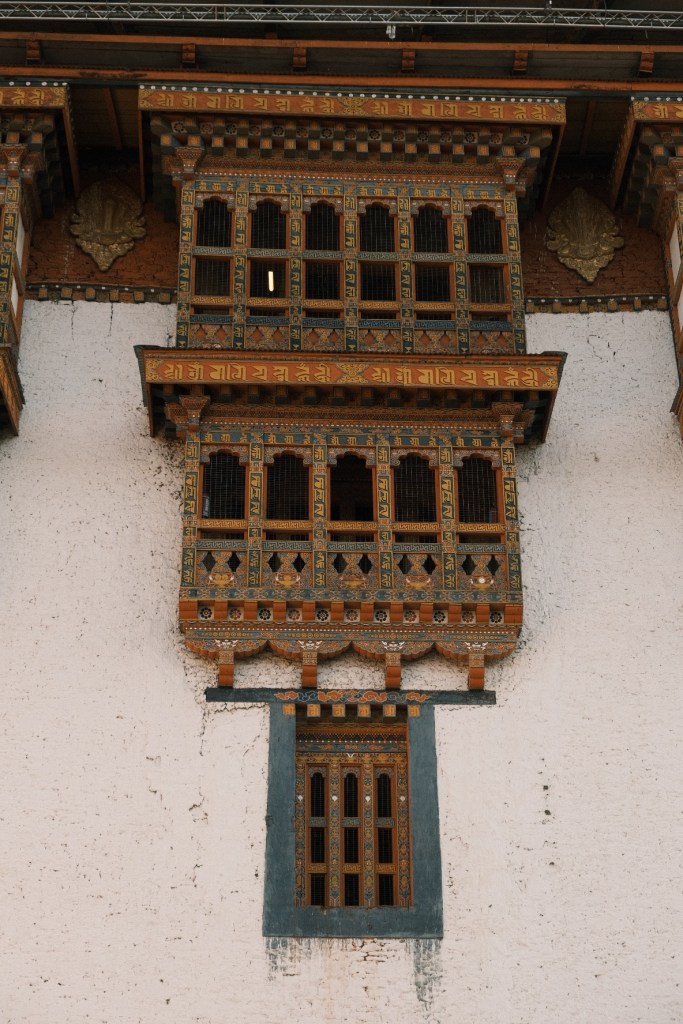
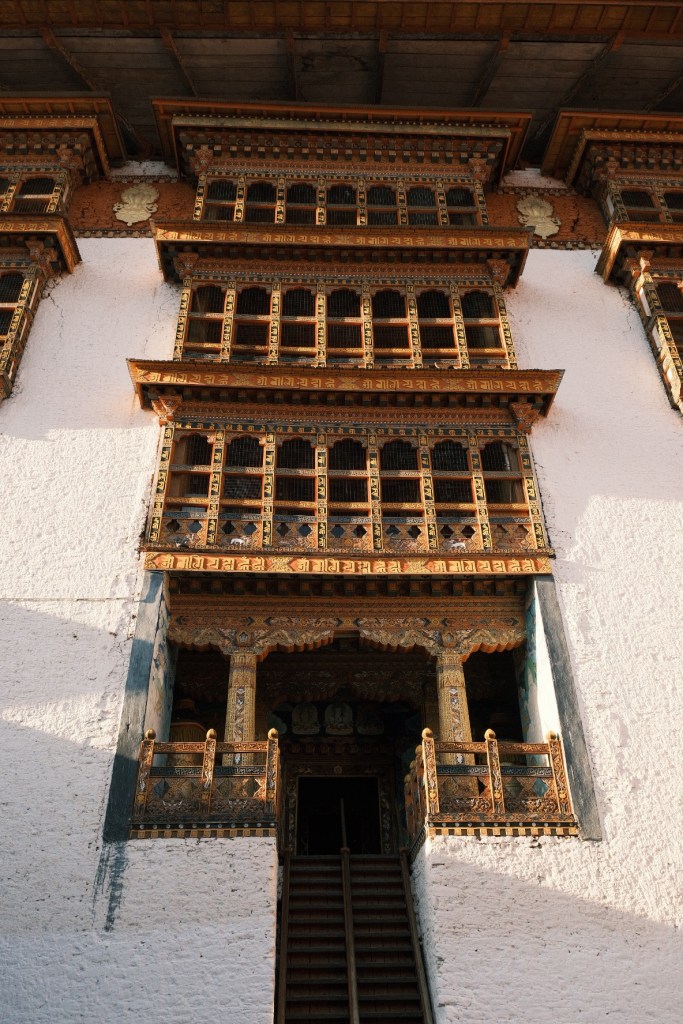
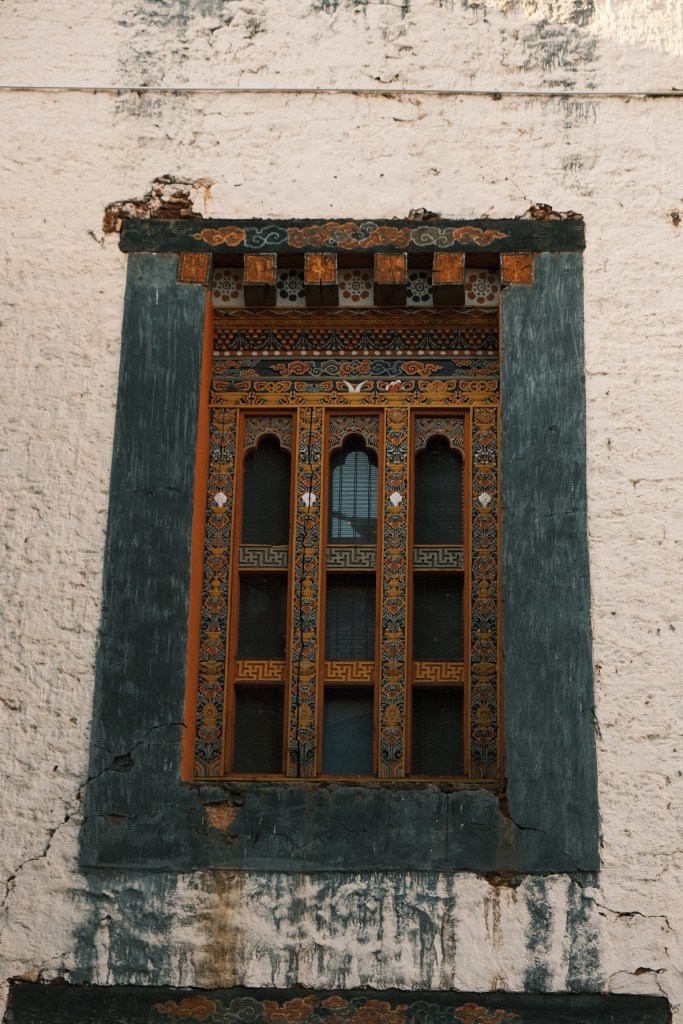
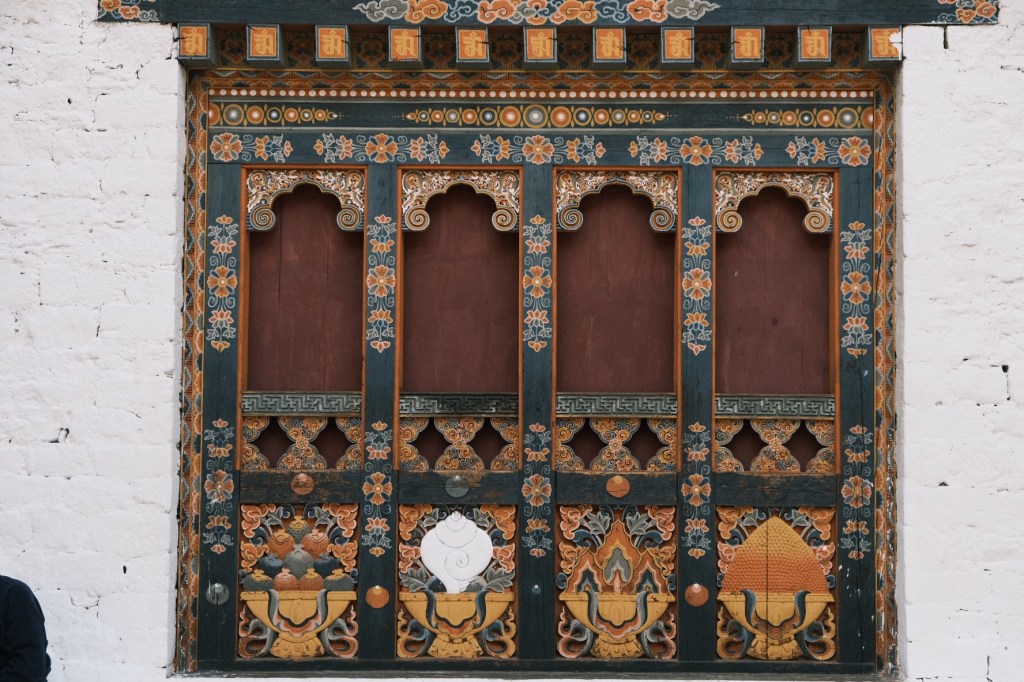
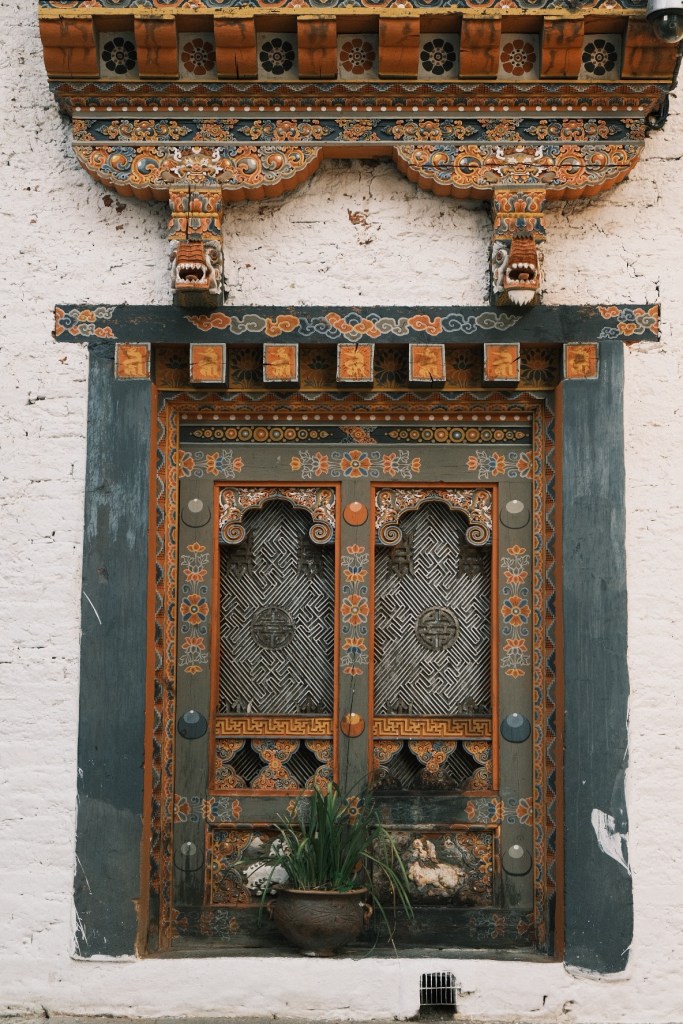
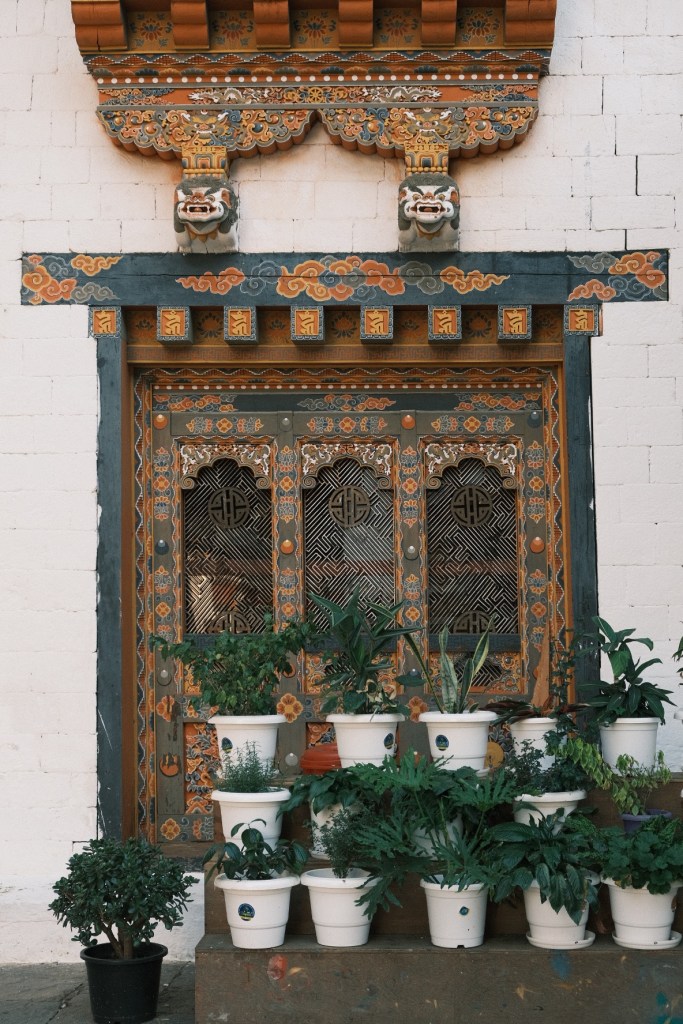
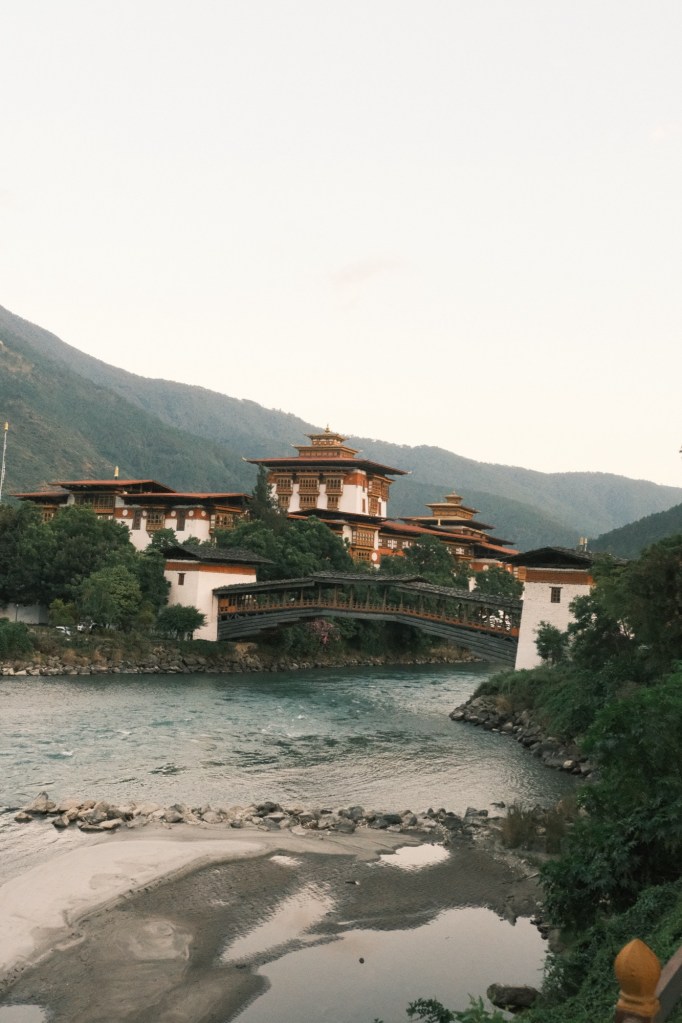
The Punakha Dzong is the second oldest and second largest Dzong in Bhutan (it was built in 1637–38), and famous for its beautiful architecture and location.

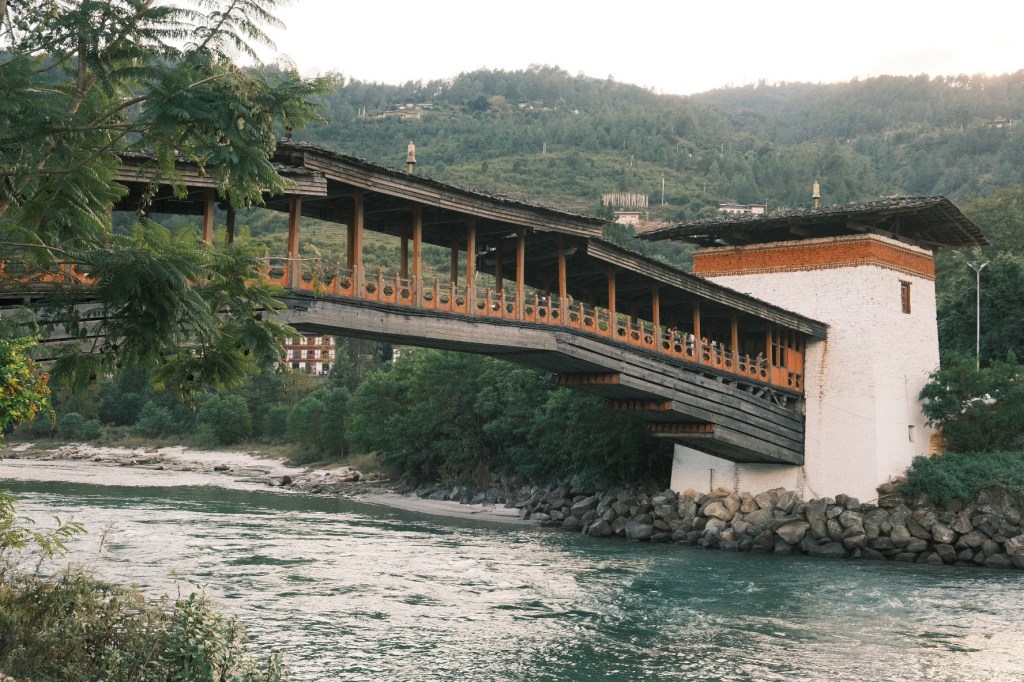
The Dzong is located between the Pho Chhu (Male) and Mo Chhu (Female) river in the Punakha valley, and sits atop a strip of land that looks like a river island — the sound of the rivers is a constant companion as we walked around the Dzong.
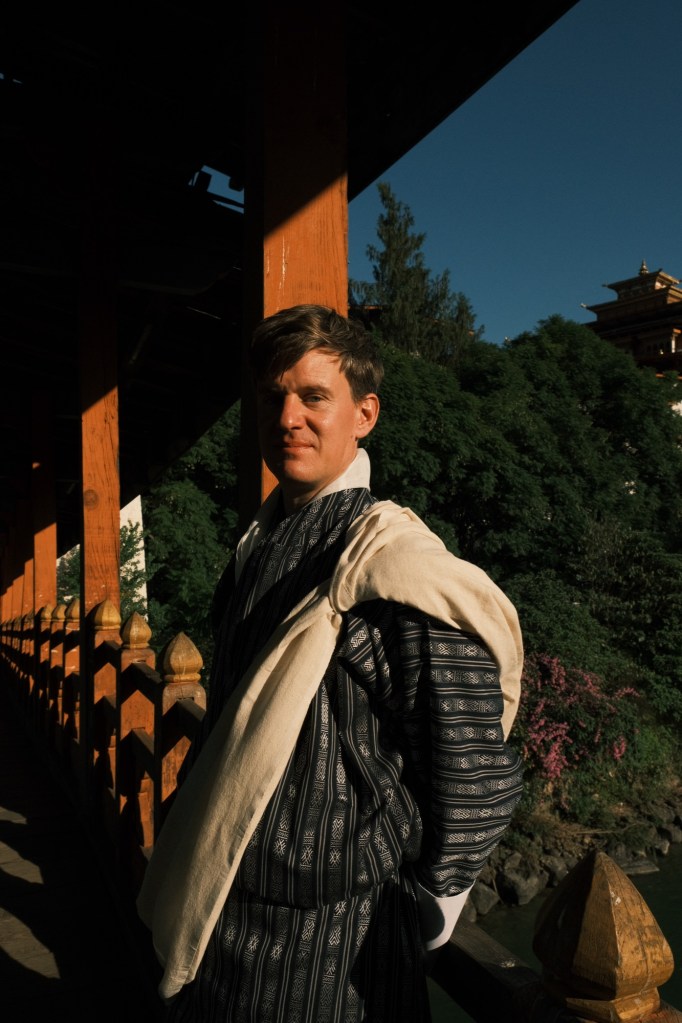
As all Dzongs, this one has a large part dedicated to the monastery and temple; Punakha is the winter capital of Bhutan, and the head of the clergy and his entourage spend the winter here.
It is also the place where the current king married his wife, and where the kings of Bhutan are traditionally crowned.
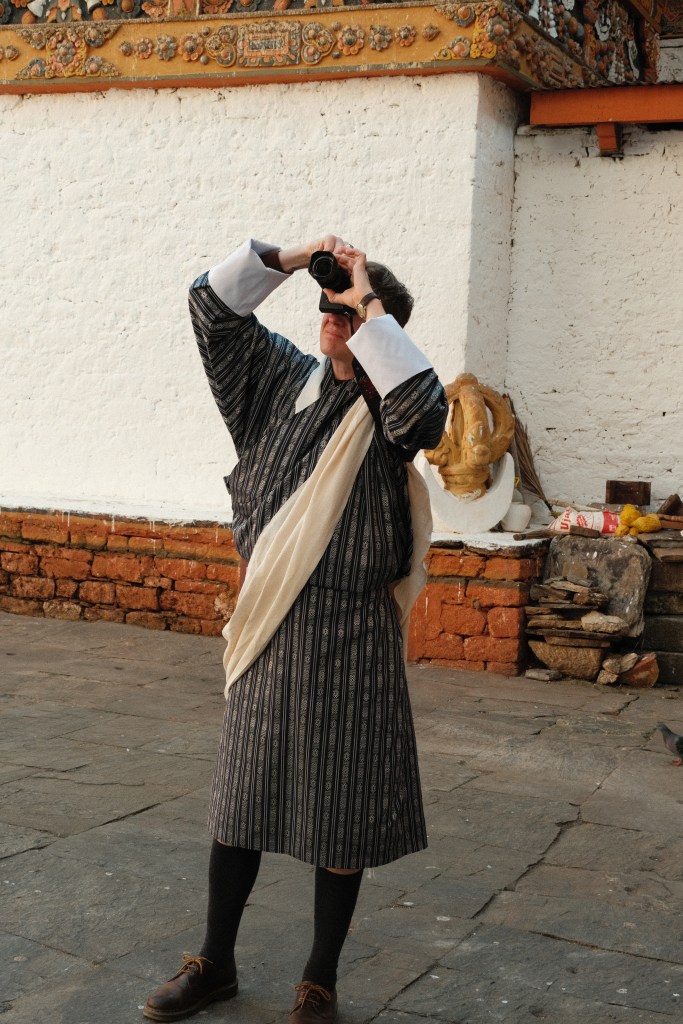
He’s also wearing a white shawl over his Gho, as required of civilians in Dzongs.
Proper attire is required of the Bhutanese when entering Dzongs, though not required of tourists, and requires men to wear a kabney, a large shawl the colour of which denotes their status — white for civilians, blue for members of parliament, orange for ministers, yellow for the king (to name a few).







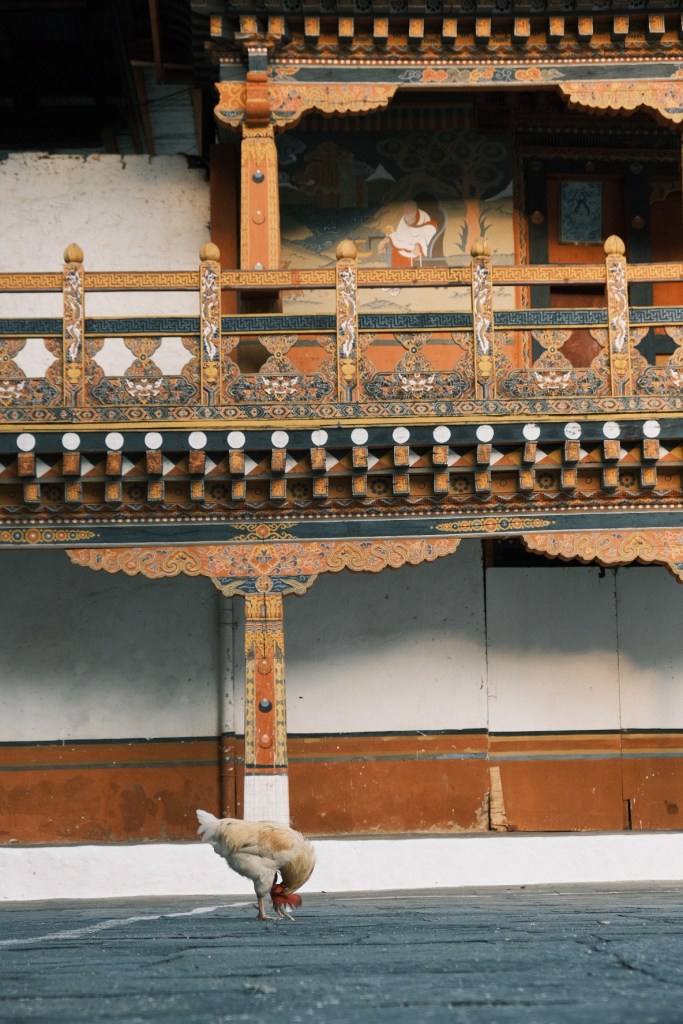
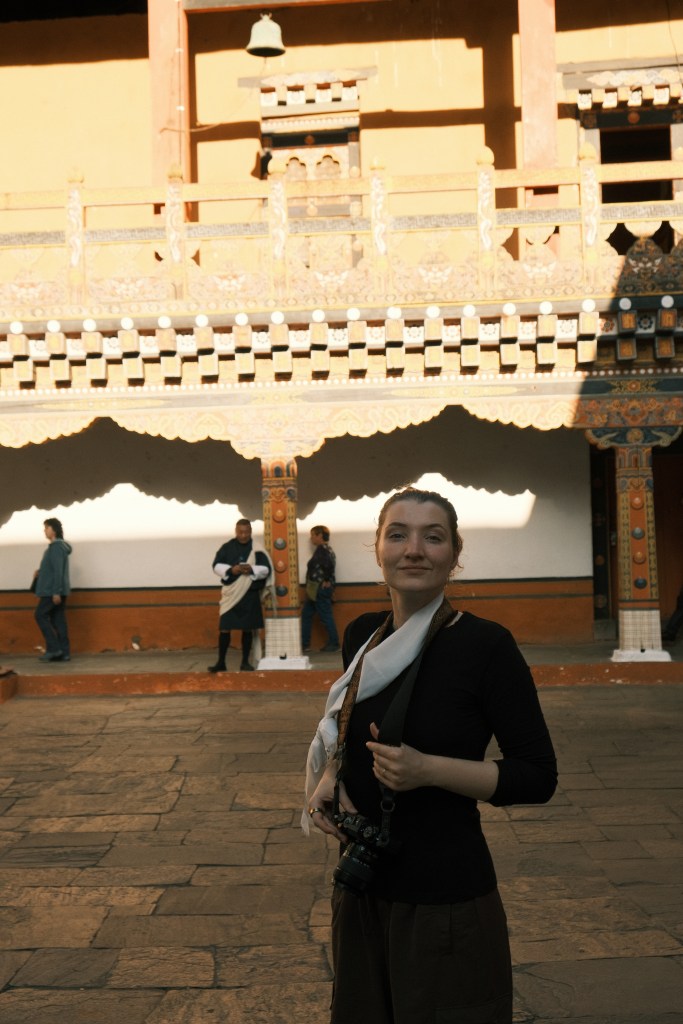

The fortress is also just a short drive and walk way from Bhutans longest suspension bridge… so back in the car we hopped!

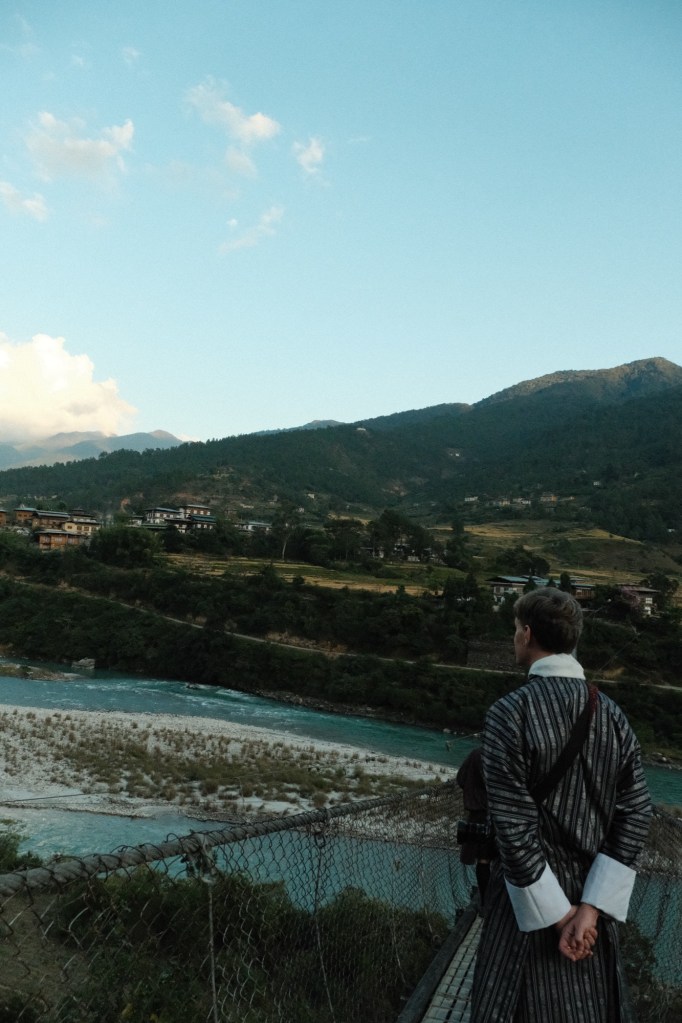

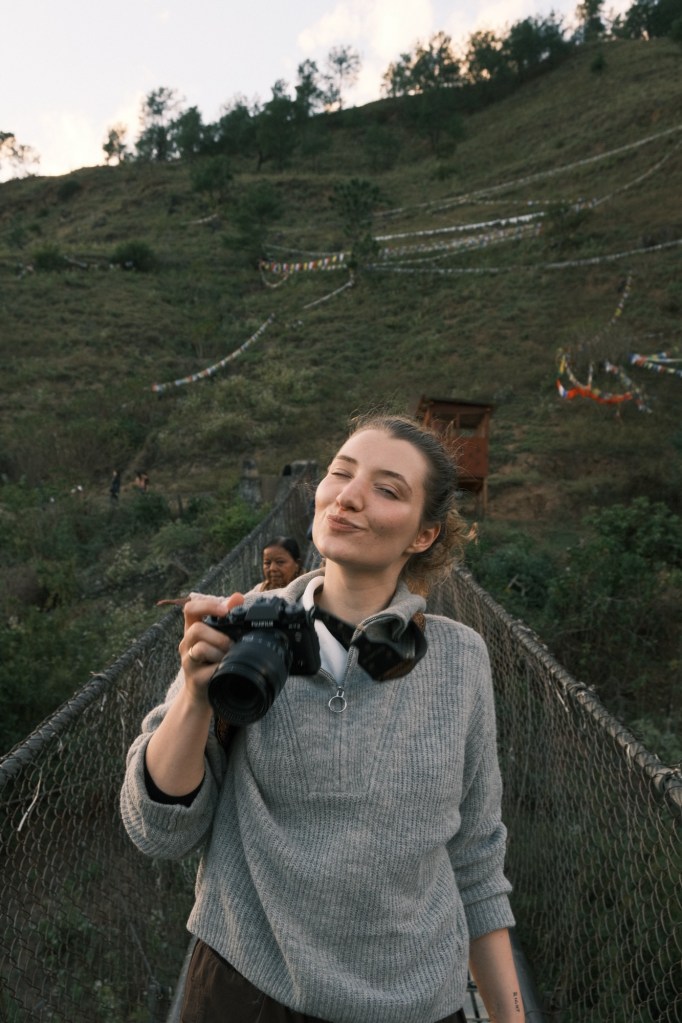

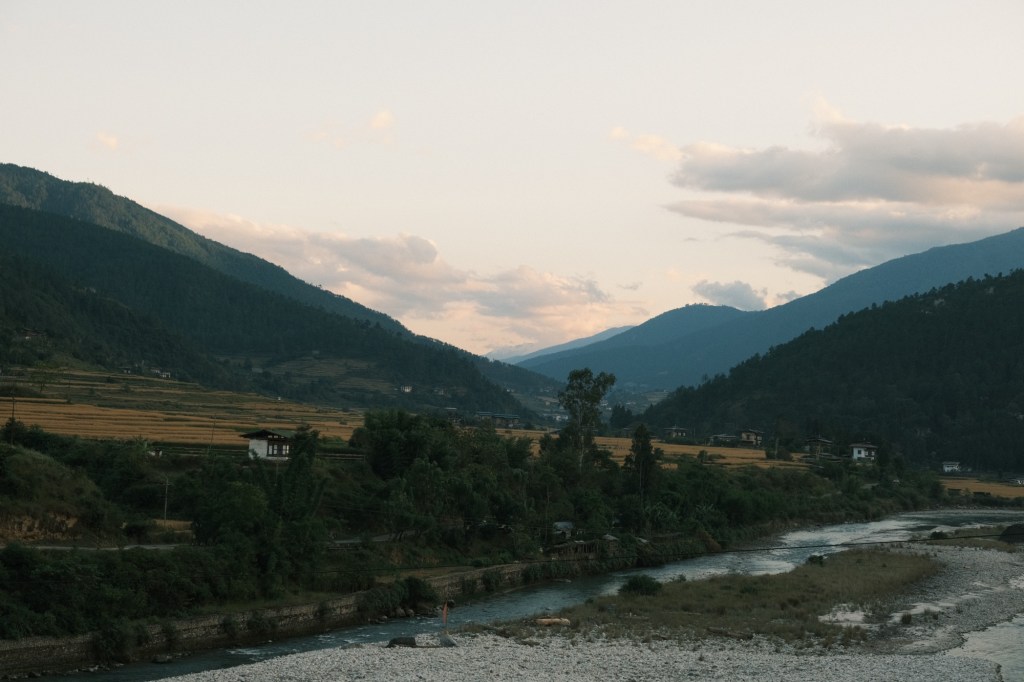
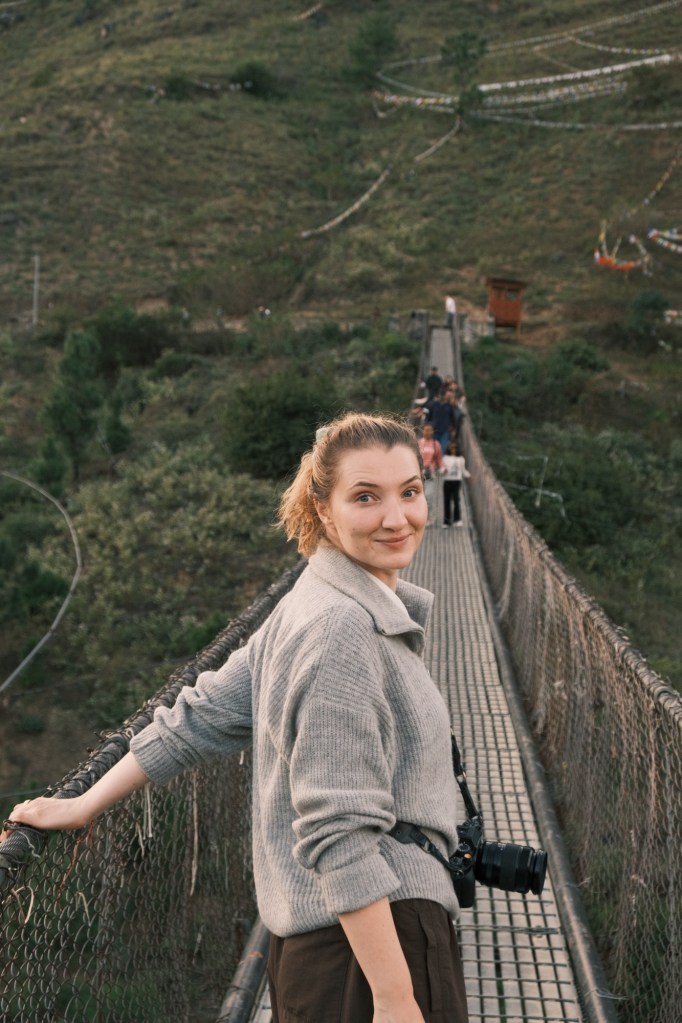
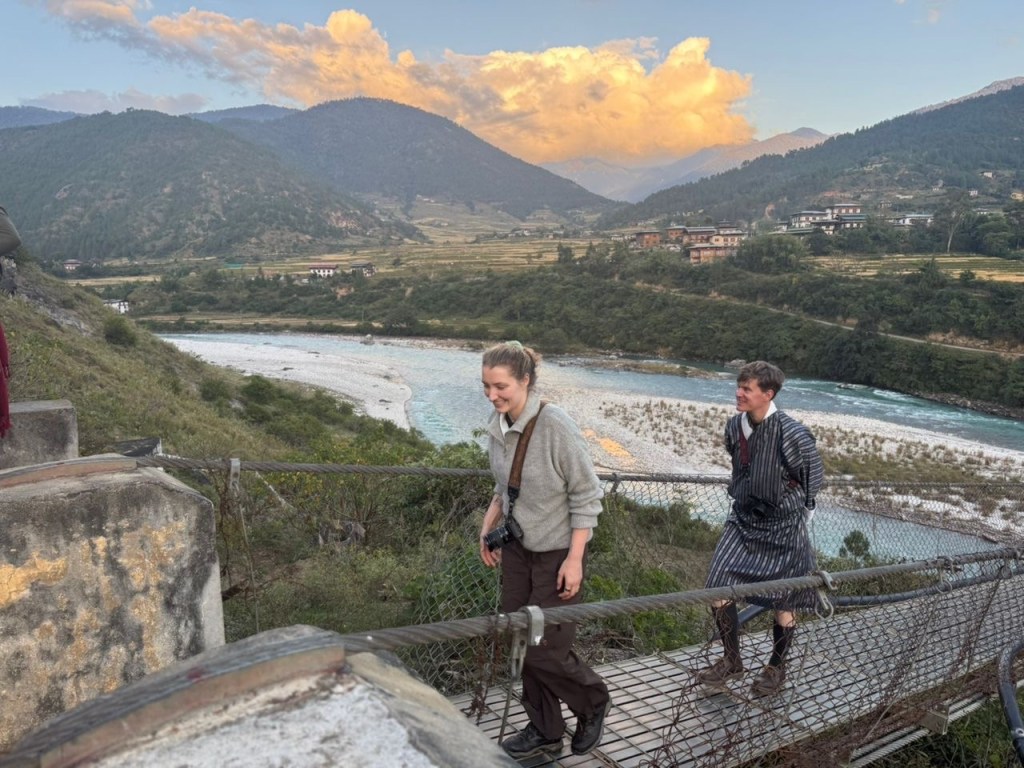
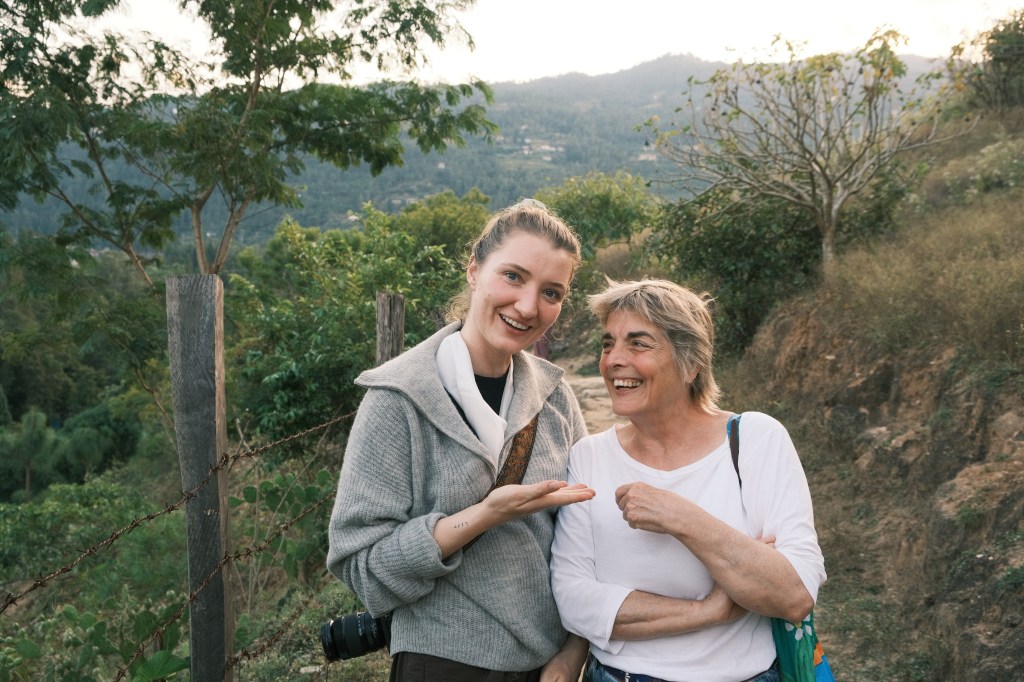
…where we made a new friend (from London) who we had a lovely conversation with — people who work in the cultural sector always have so many things to talk about!
We were delighted to meet her and immediately agreed to go for dinner once we reached Paro, at the end of our trip.

We stopped for one last view at the fortress on the way back, before darkness set in — it’s amazing how short the days felt.
Then we were ushered back to our hotel, where we settled in, had dinner… and fell asleep the moment our head hit the pillow.
 Renaud and Fee
Leave a comment