After breakfast with a stunning view (we forgot to take a photo, so you’ll just have to believe us), we packed the car and headed for our first stop of today: a hike!

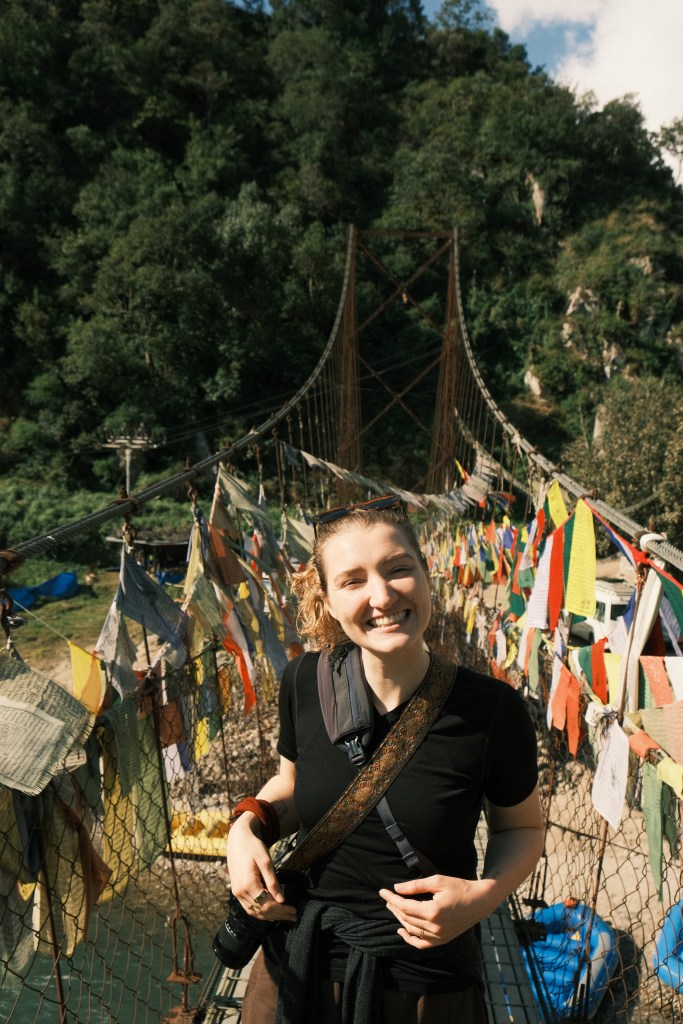
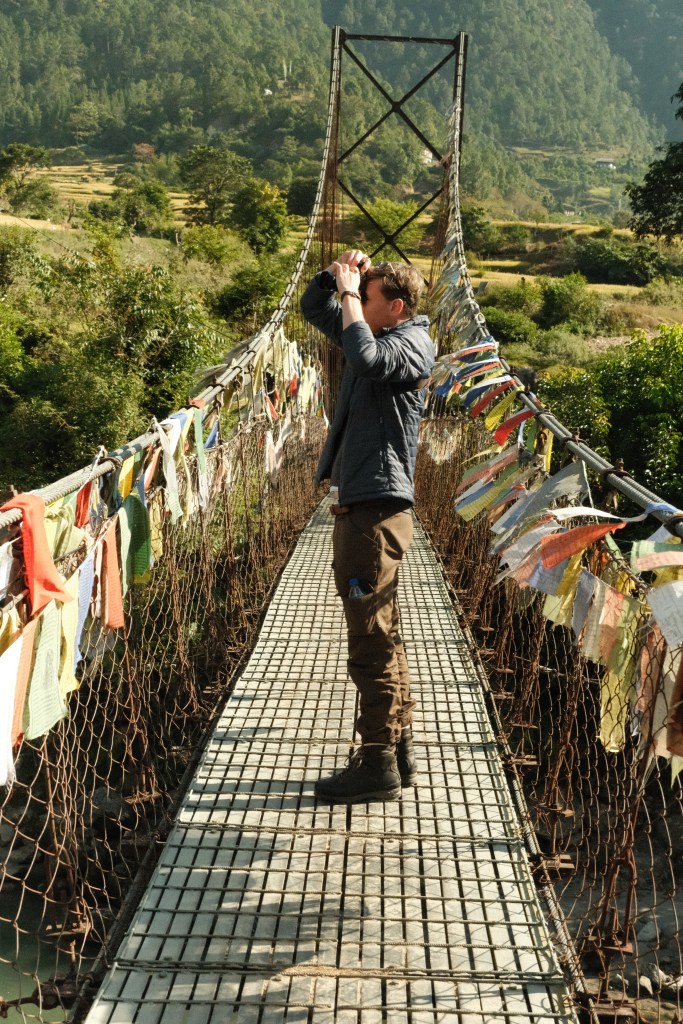
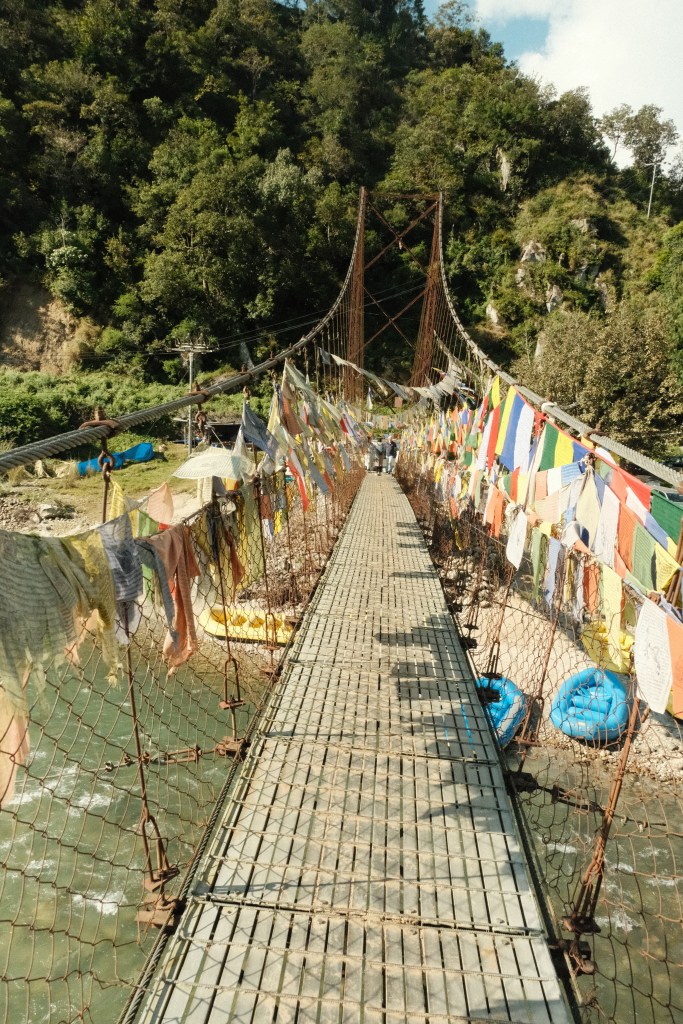
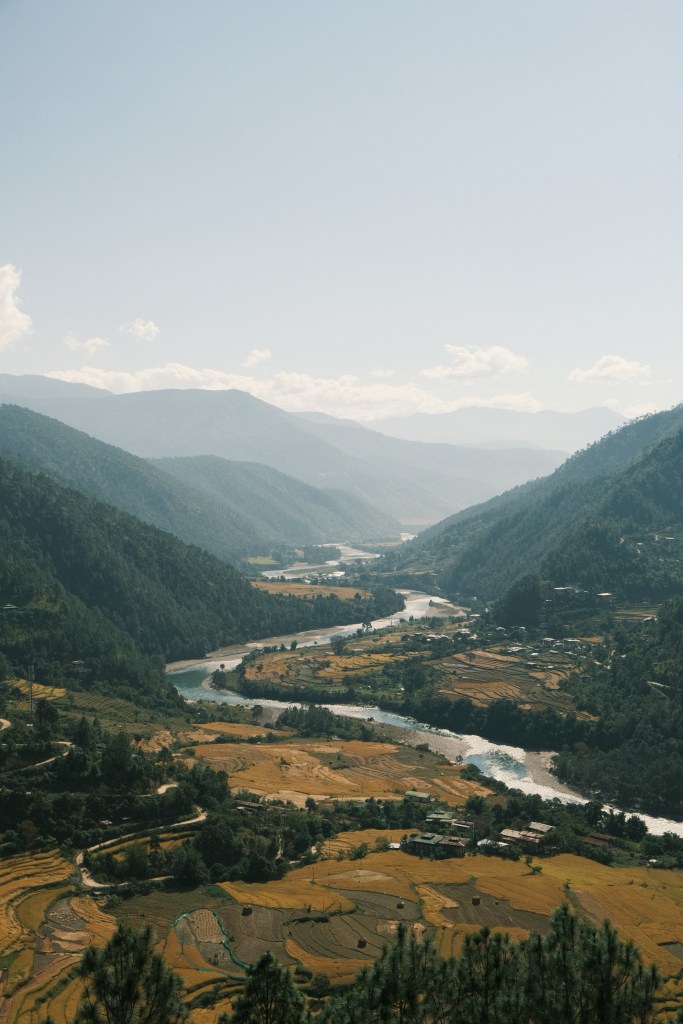
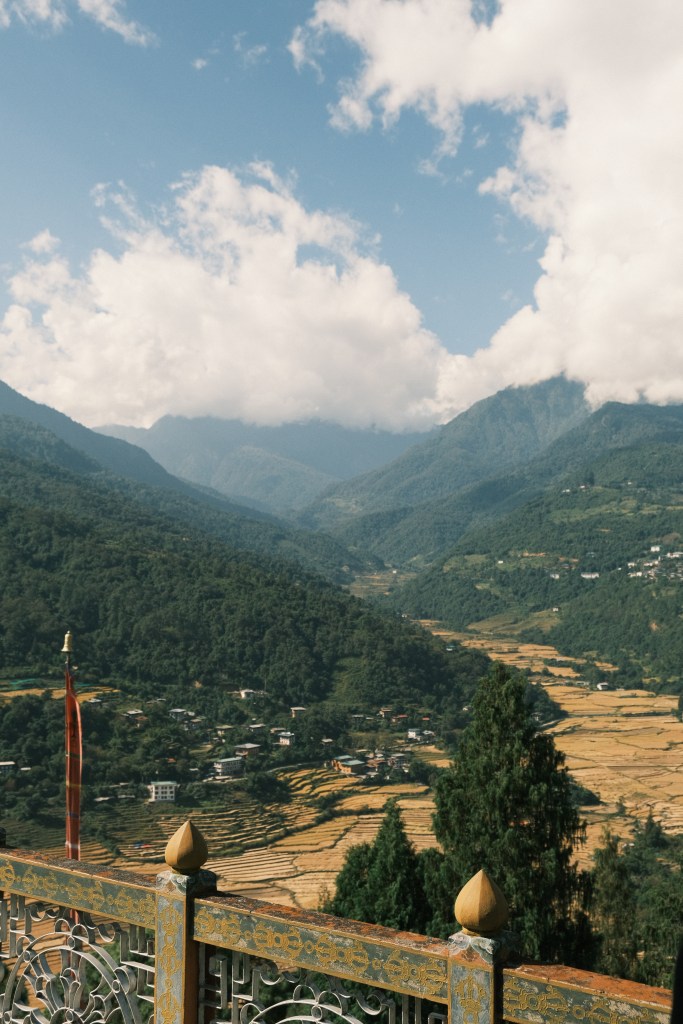
Okay, it might be a stretch to call it a “hike.” We went on a leisurly 2,5 hour walk to the Khamsum Yuelley Namgyel Chorten, which sits on a hilltop overlooking the Punakha valley.
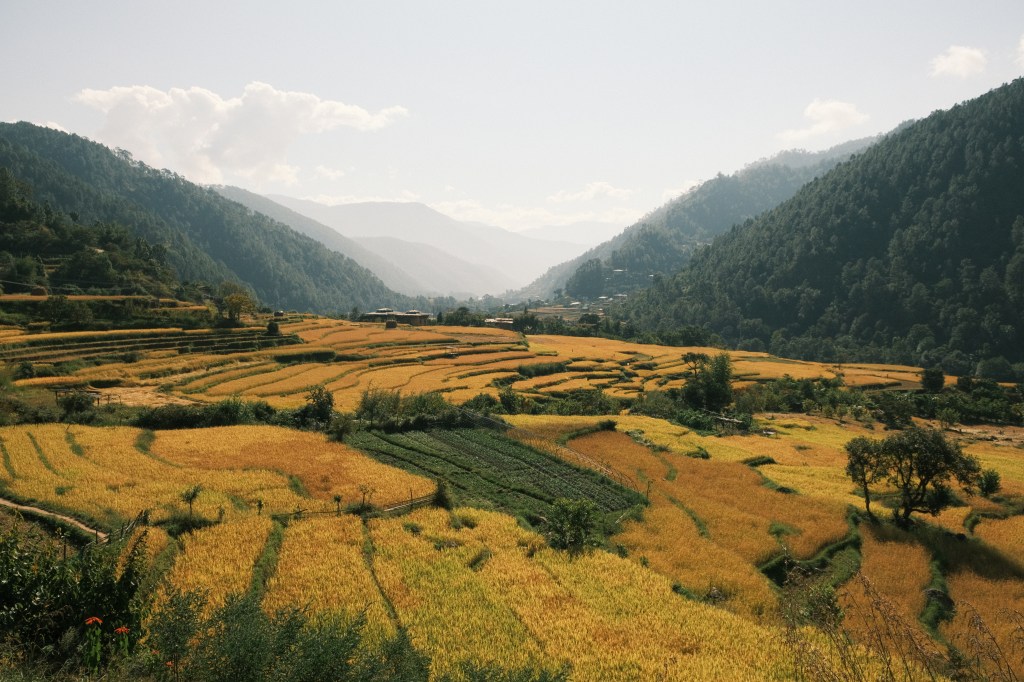
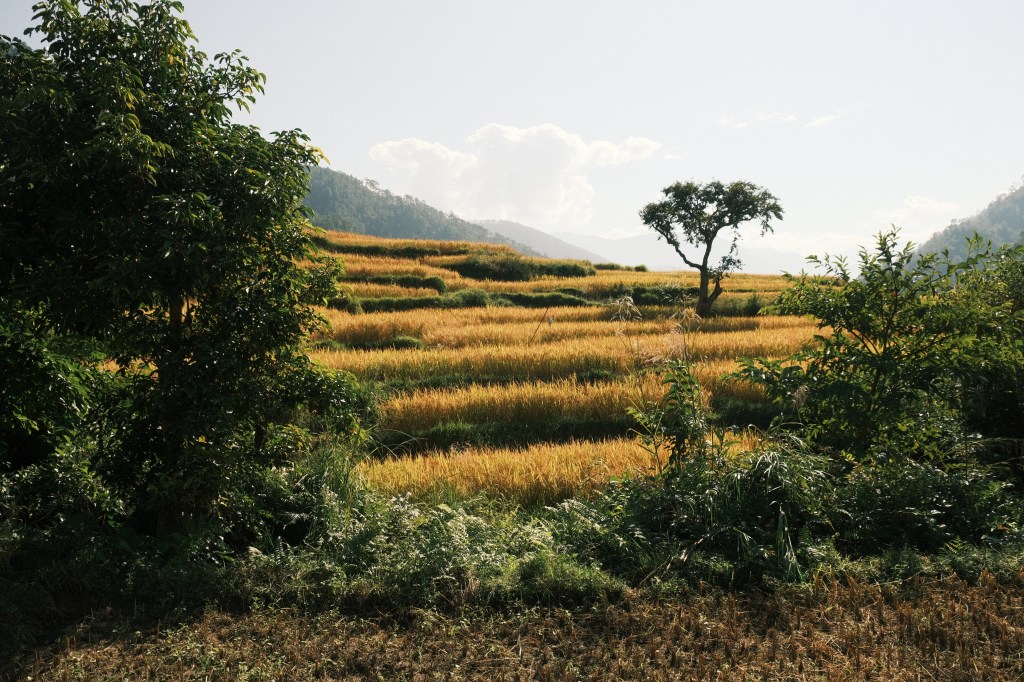
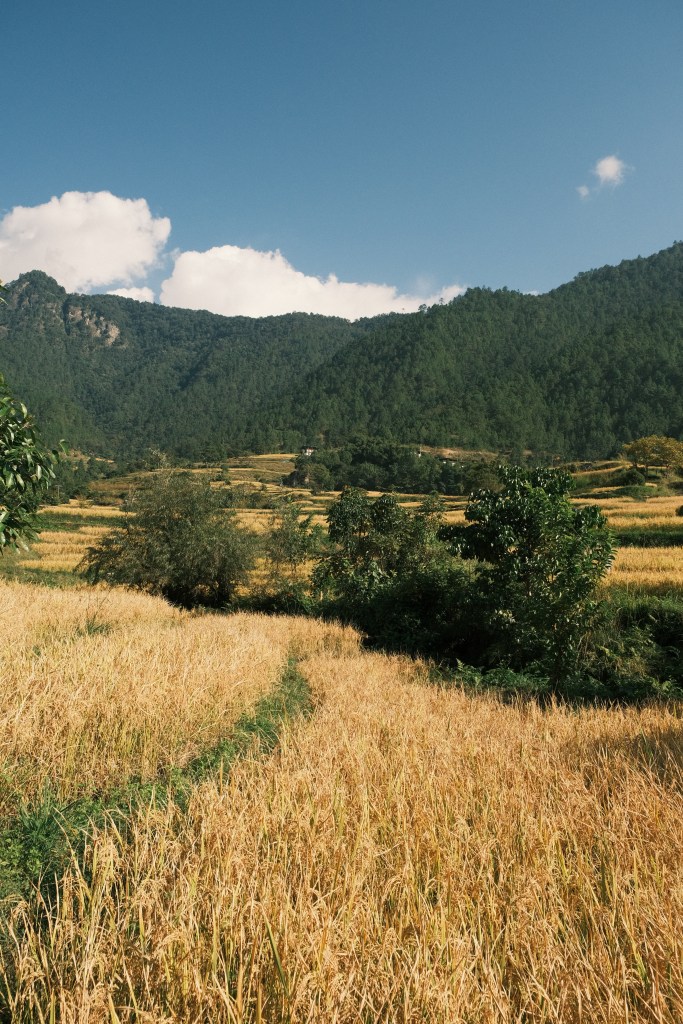
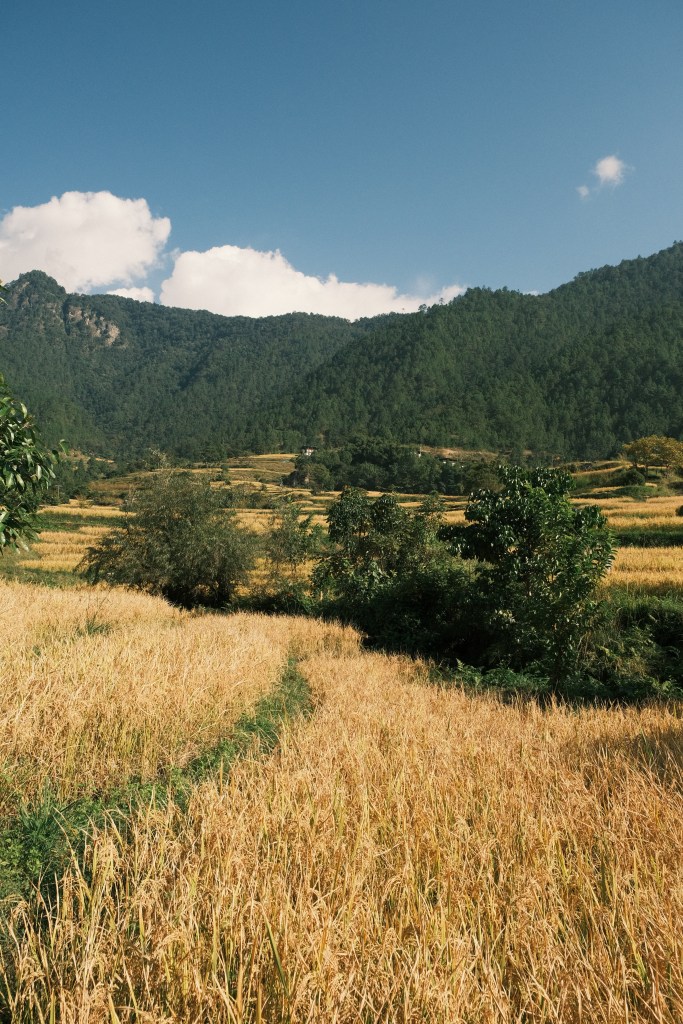

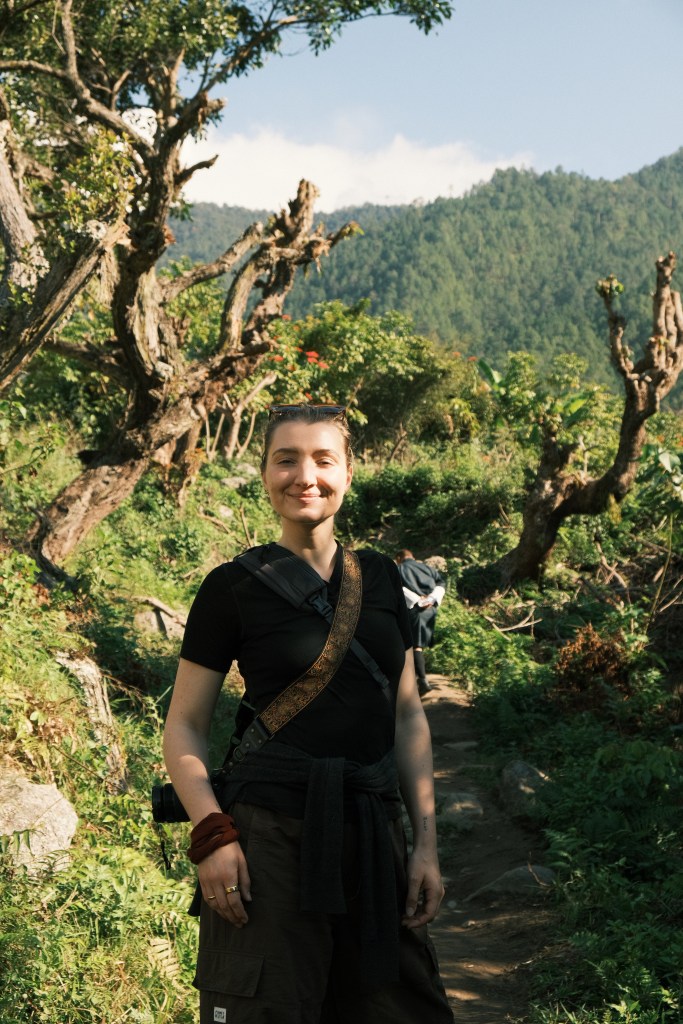
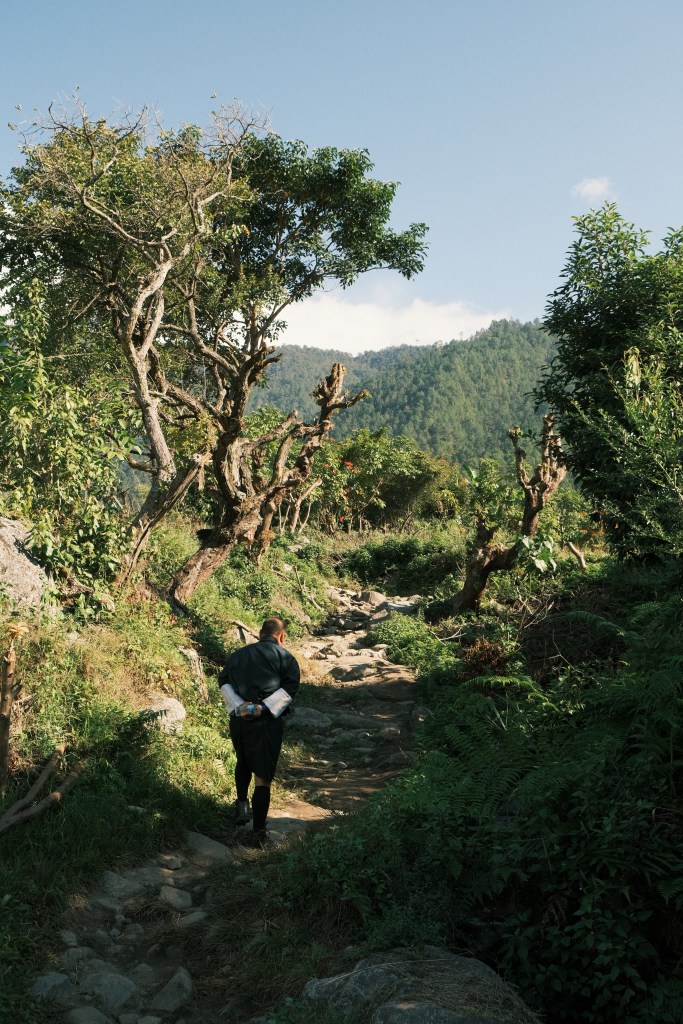
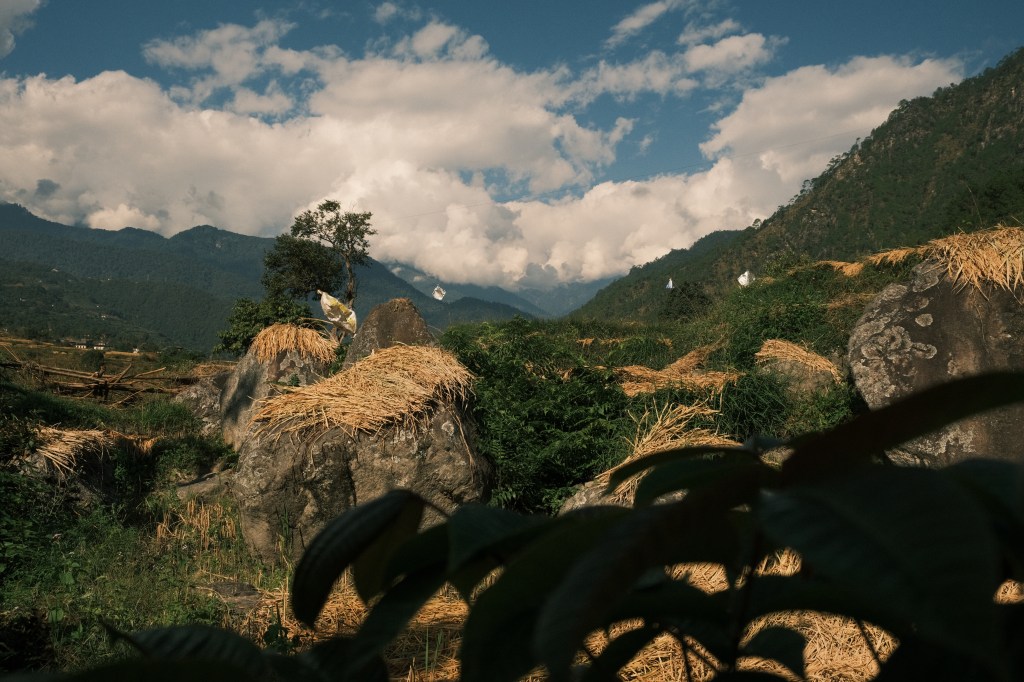
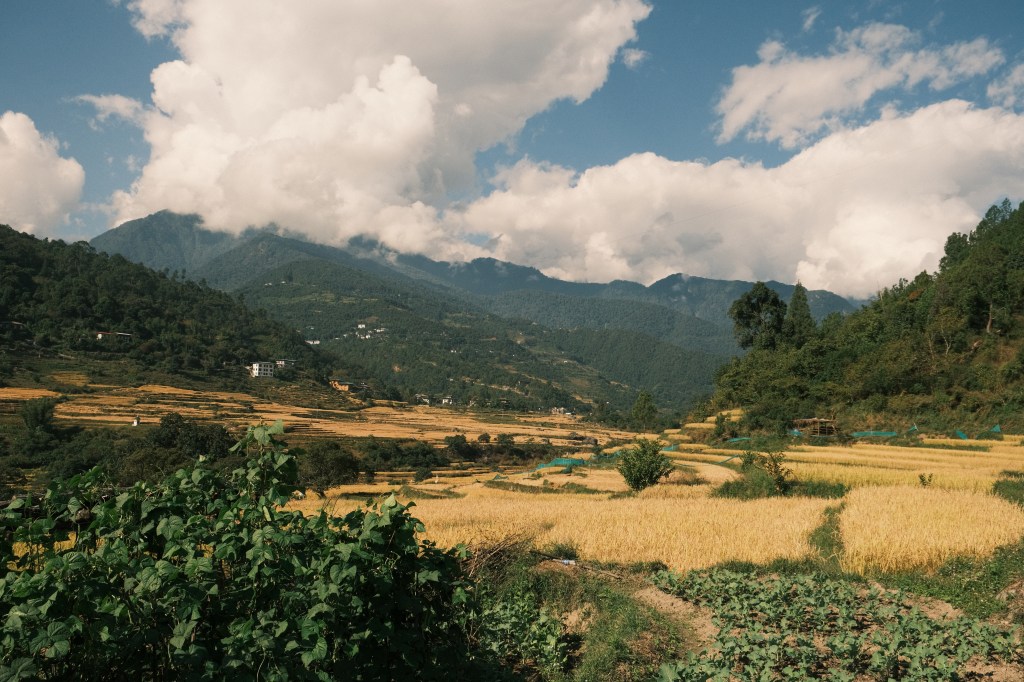
After crossing a hanging bridge over a small river (photos above), we walked across the valley bottom, through rice fields and pine forests and finally (after a brief climb) reached the Chorten.
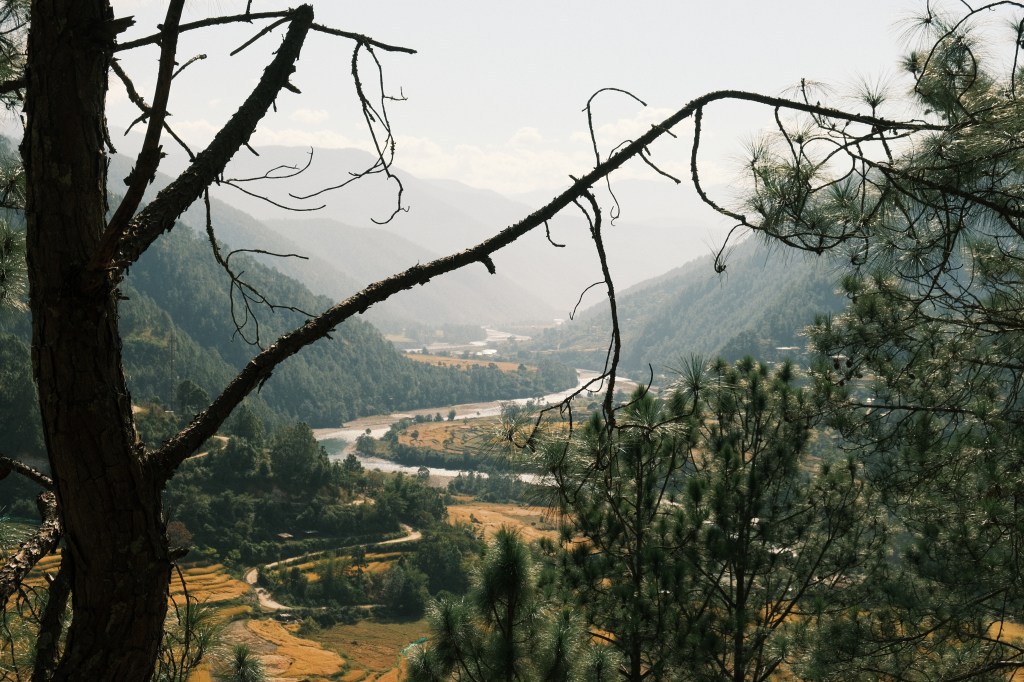
The Chorten (or Stupa) is a large, 2-story building, built in 2004 by the Queen Mother, that holds a temple overlooking the valley.
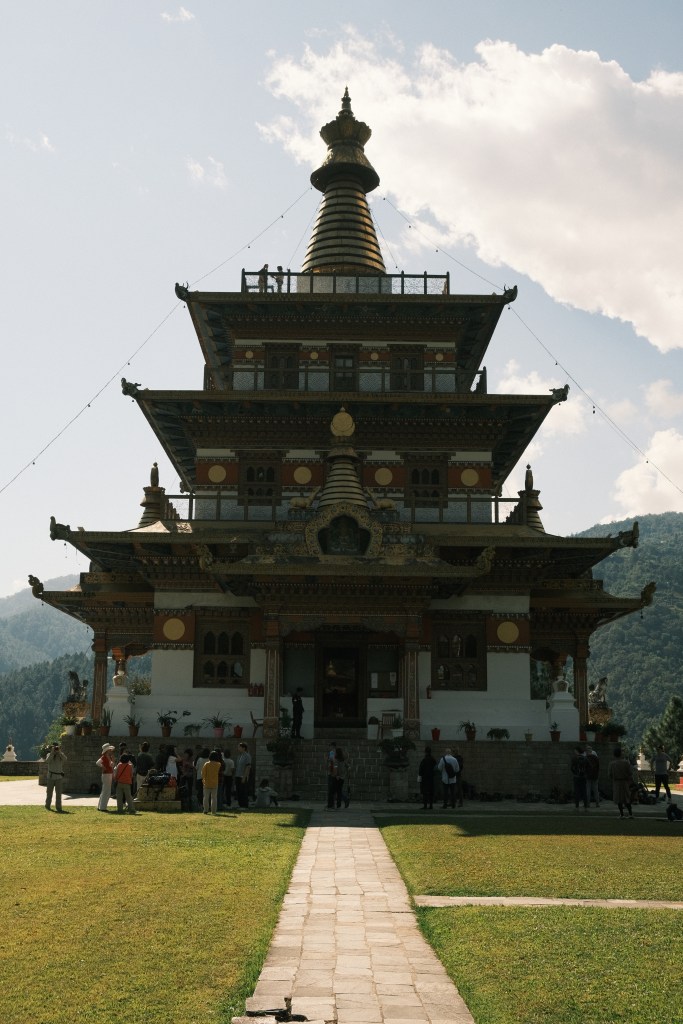
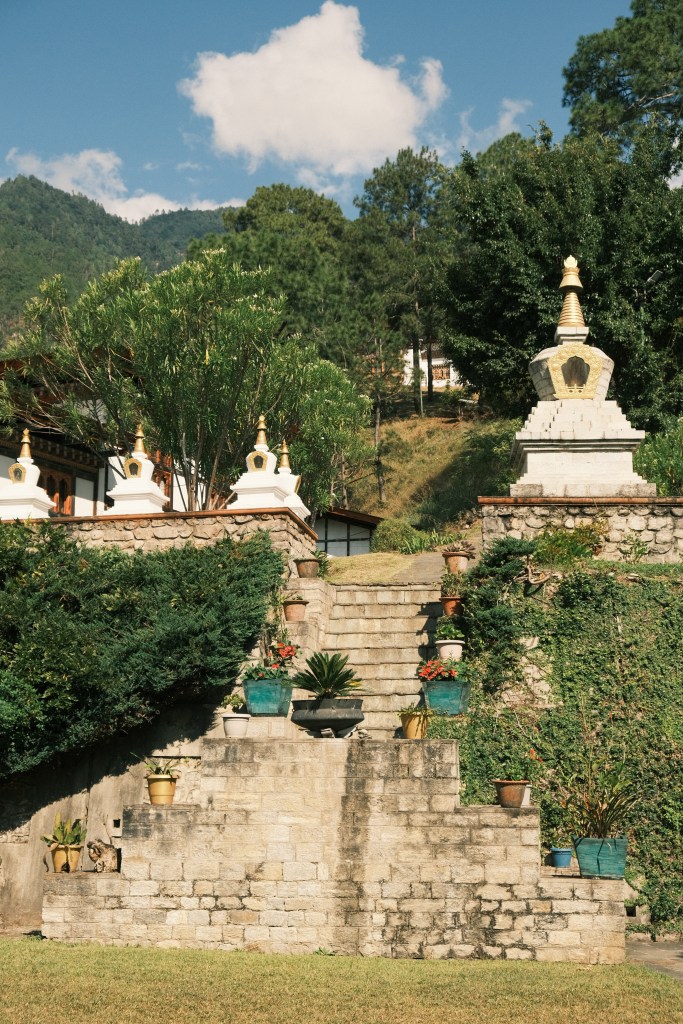
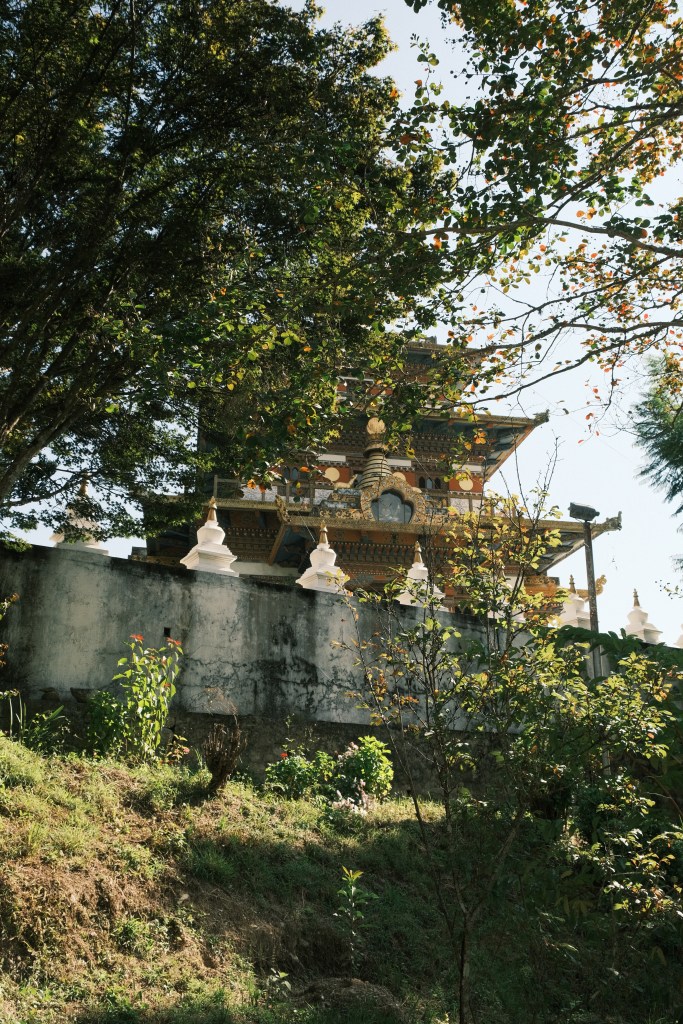
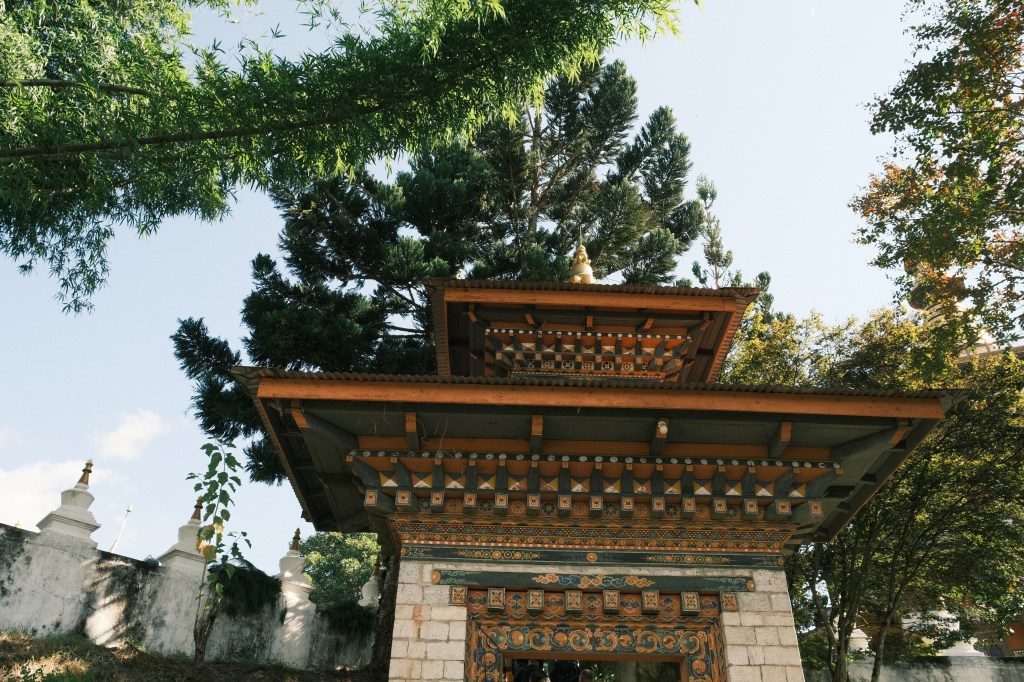
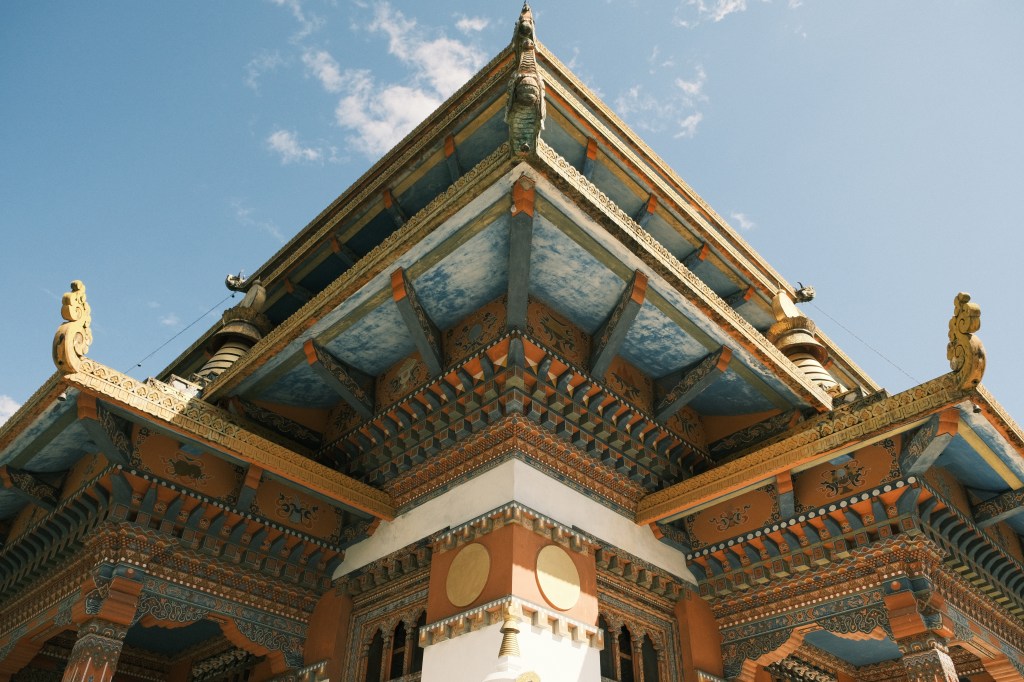
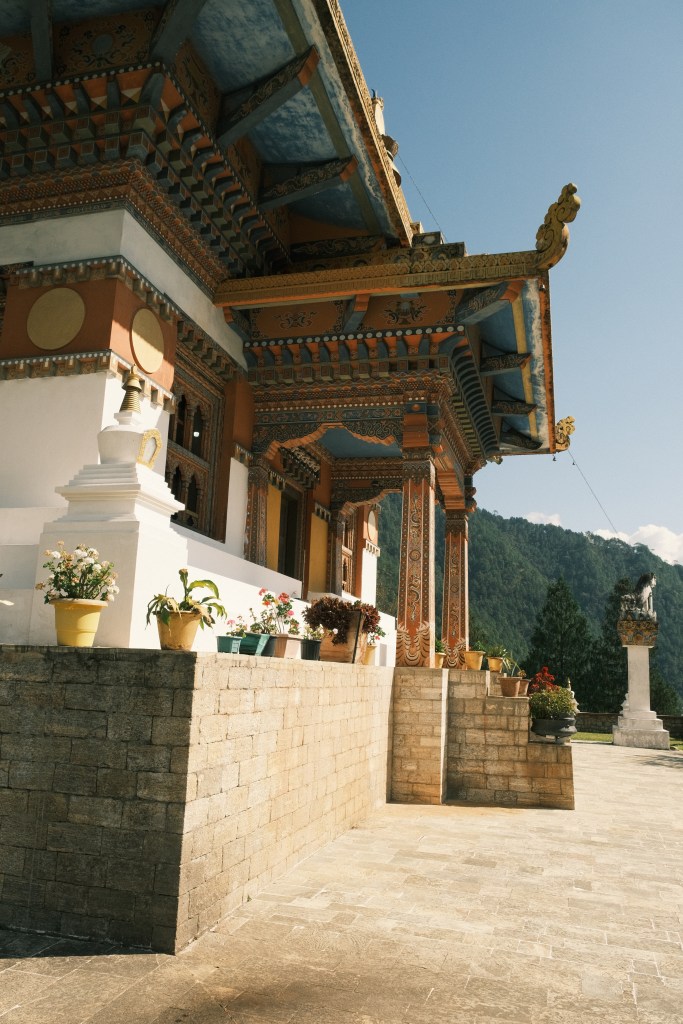
Through careful planning on Tashi’s part, we were able to walk through the temple and climb up all the way to the roof, which opens up onto a square terrace where we were allowed to take photos despite the fact we were in a temple (albeit only of the view, not of the interior).
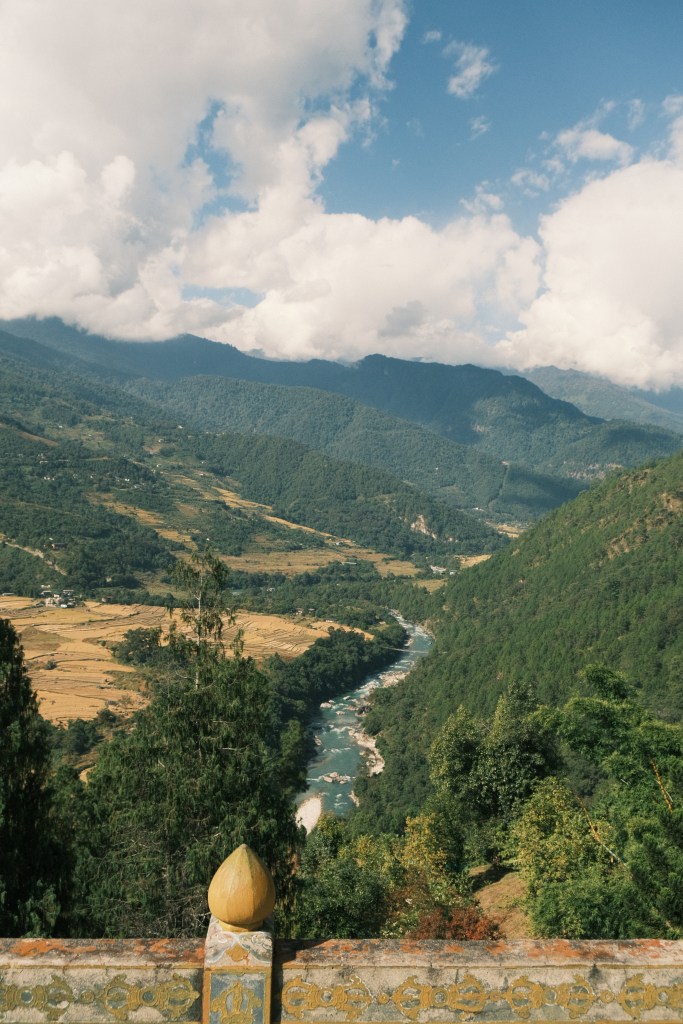
The temple itself is relatively modern, its exterior is in the form of a pagoda-like stupa, while the interior consists of four stories containing images of the deities, of mandalas, and of Vajarakilaya.
While we were there, the monks and lamas gathered to bring offerings, prayers and songs (often accompanied by drums) to please and “feed” the deity.
These “feedings” generally take place several times a day, new water is poured into the offering dishes for the altars, and pilgrims make offerings or donations —different deities prefer different offerings (wrathful deities prefer alcohol, for example)
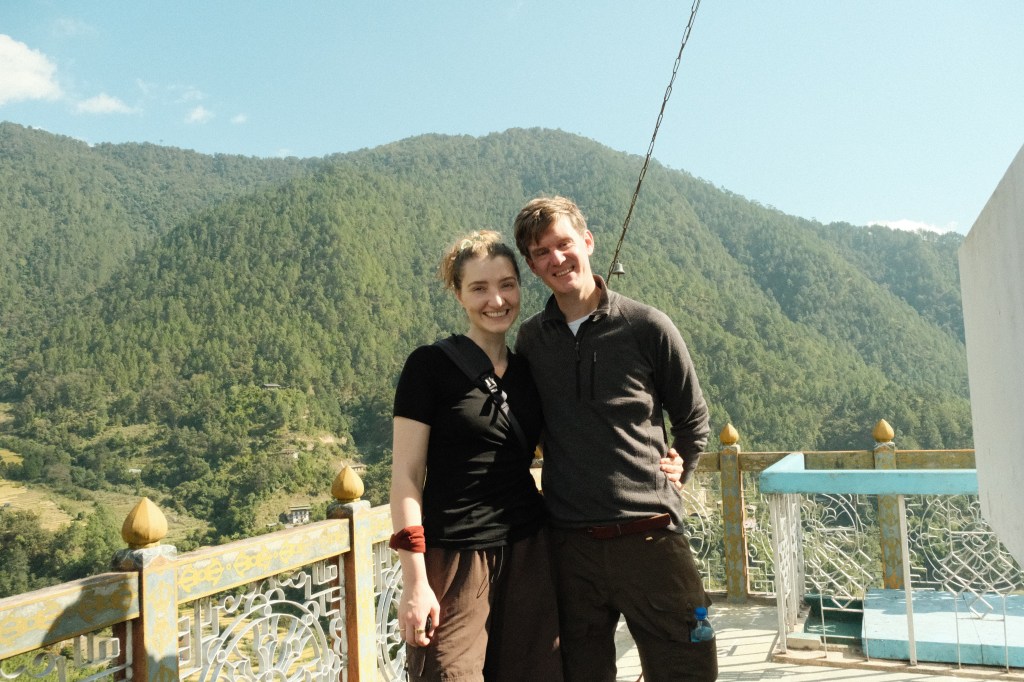

After a walk around the garden, and a stop to refresh our tired minds with some ice-cold water, we were back on our way!
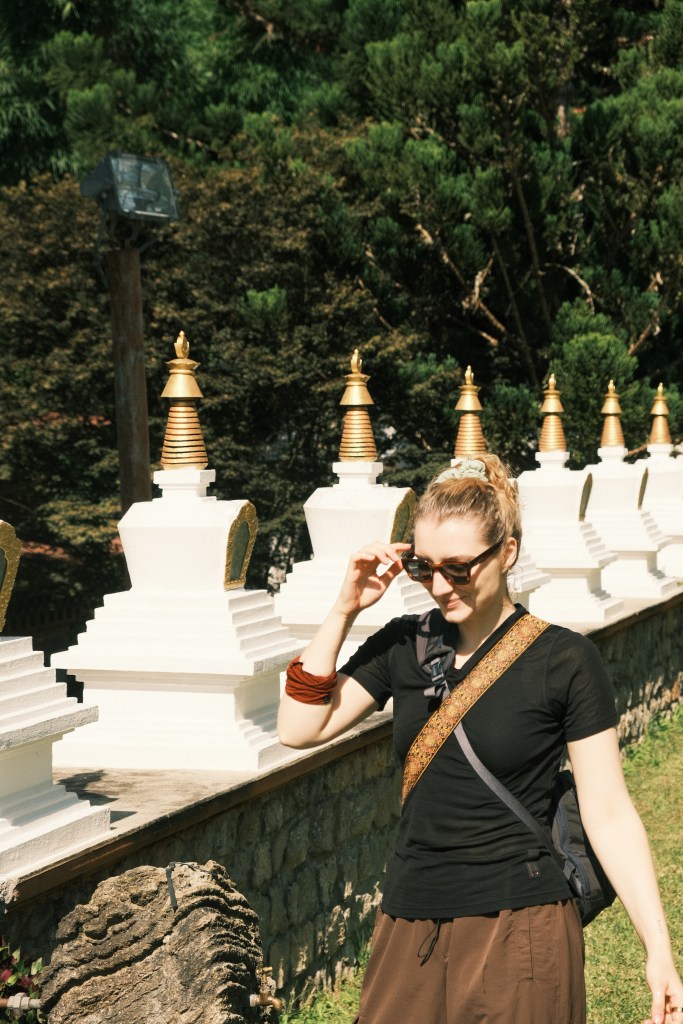
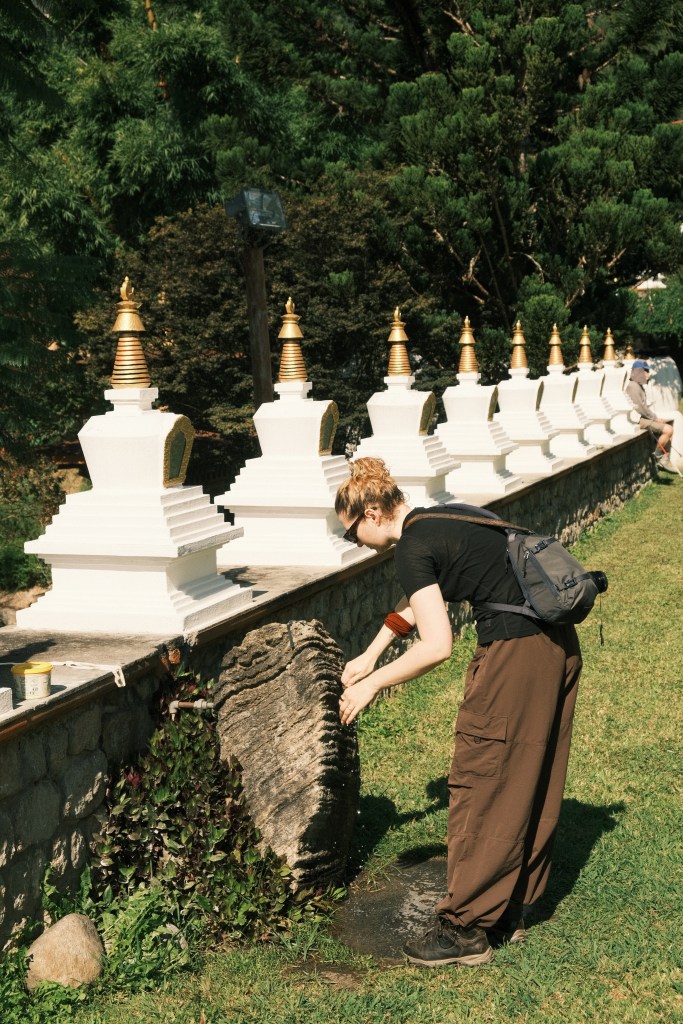

Walking back through the forest and valley, we jumped back in the car to start our journey to Thimphu via the Dochula mountain pass —sacred because of its 108 stupas, built after the brief war between Bhutan and Indian separatists.


The drive to Thimphu was comparably short; we stopped for lunch on the way, and soon arrived in Bhutan’s capital.
As we’ve already mentioned, the capital hosted the nation-wide and first “Global Peace Ceremony” during our stay in Bhutan, and though we hadn’t anticipated it, we found ourselves somewhat in the middle of it:
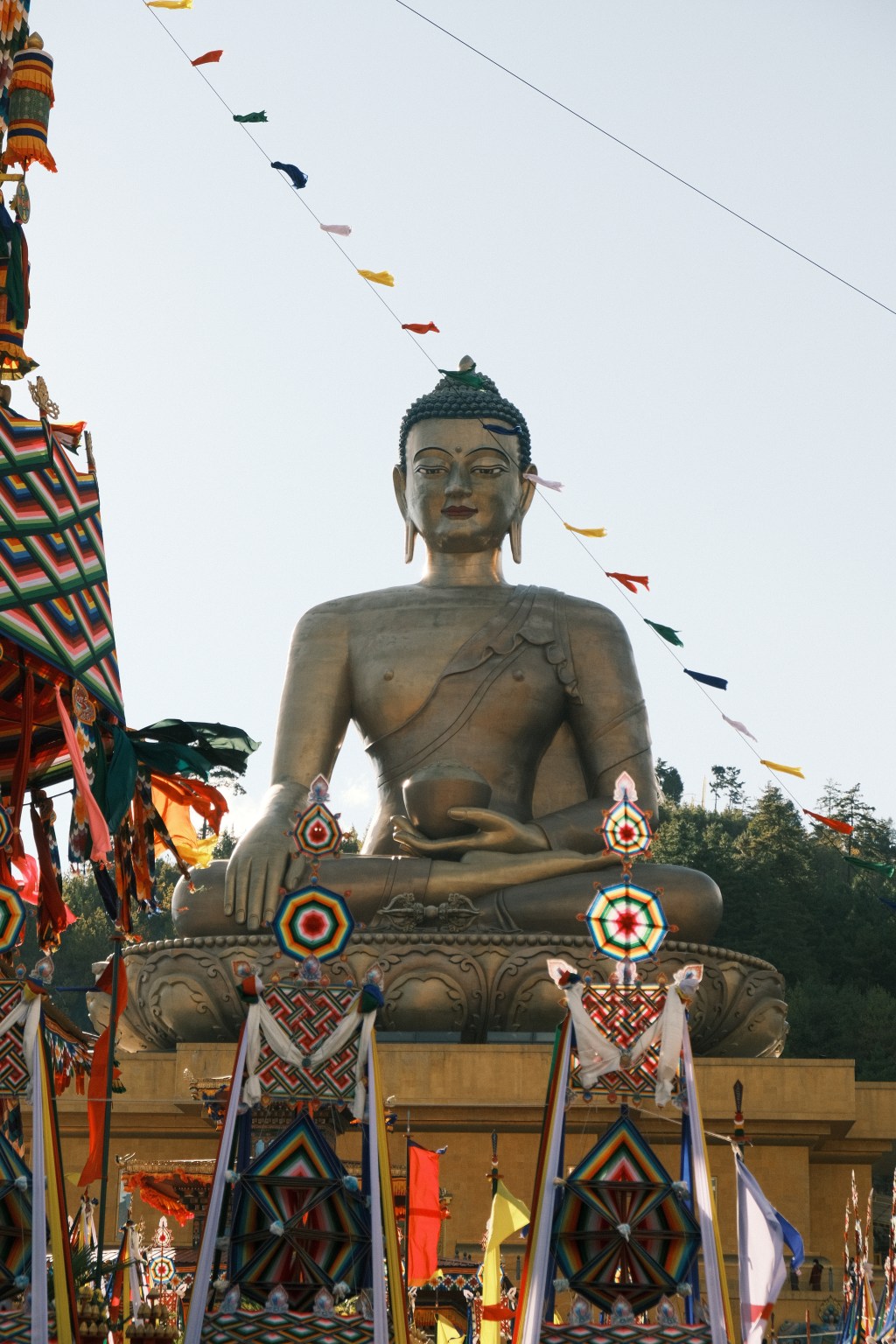
We went to see the Buddha Dordenma Statue, one of the largest Buddha statues in the world (54m high) which houses over one hundred thousand smaller Buddha statues, each of which, like the Buddha Dordenma itself, are made of bronze and gilded in real gold.

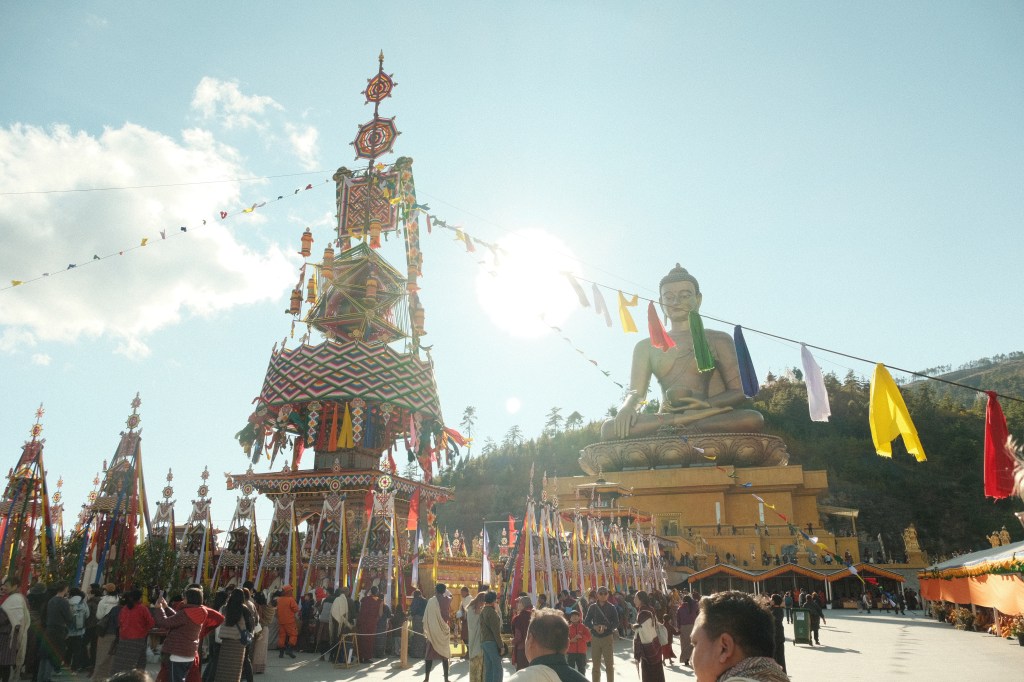
Owing to the Global Peace Prayer however, this was also an important site for prayer, ceremonial offering (money, gifts) and religious chanting.
While we drove up to the statue, we drove past an endless line of Bhutanese pilgrims, waiting to make their offerings and prayers —our travel agencies had to register us, along with the car and our guide weeks ago, though it admittedly still felt a little strange to slip past the line of faithful.

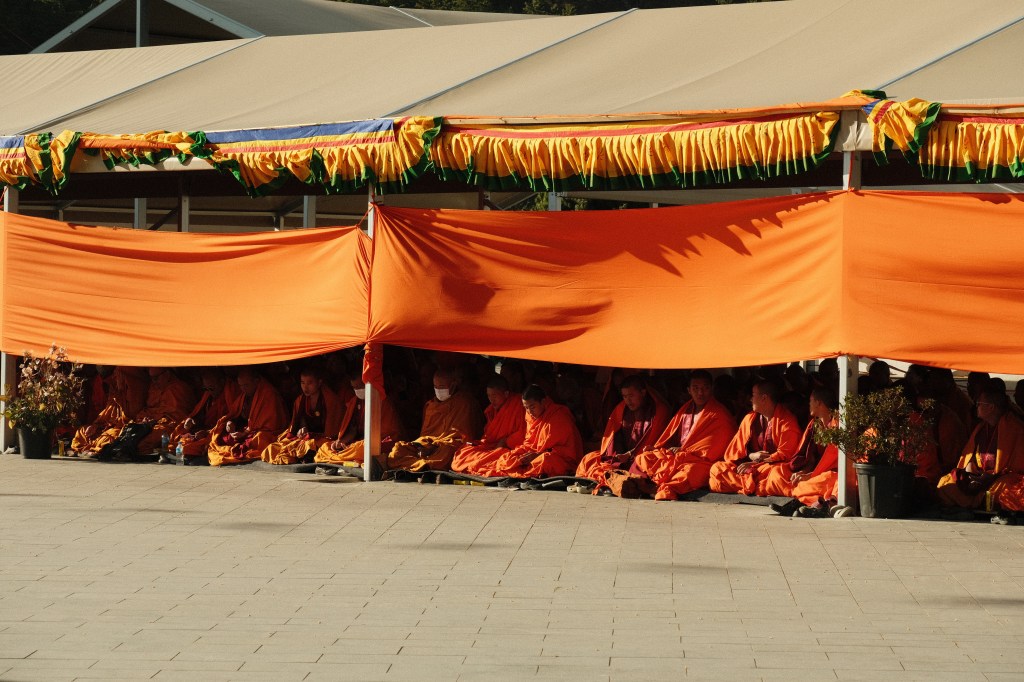
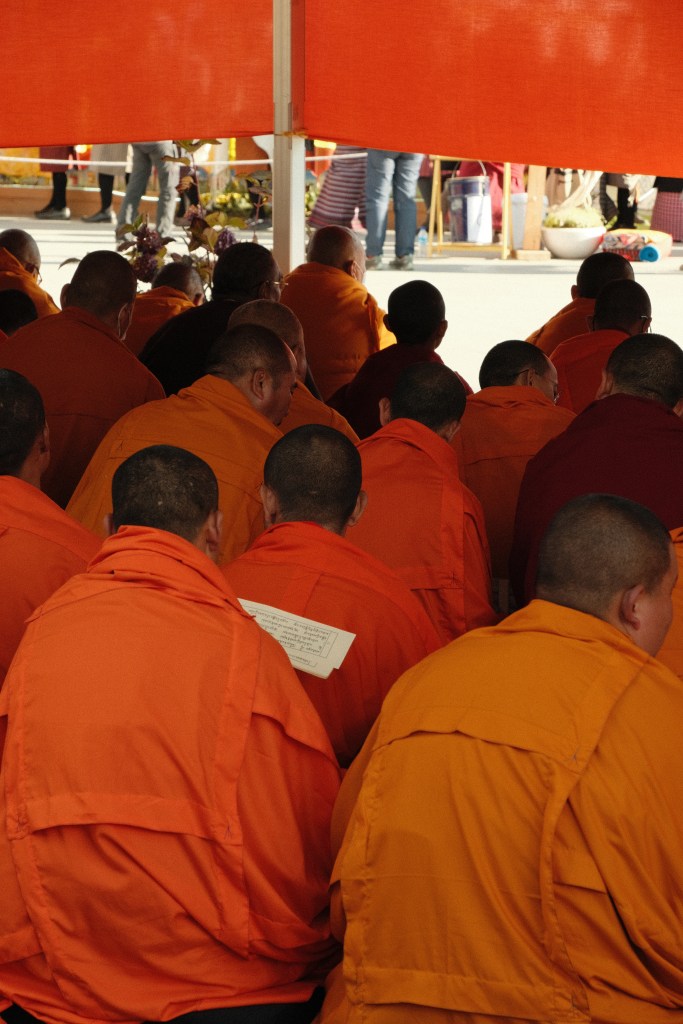
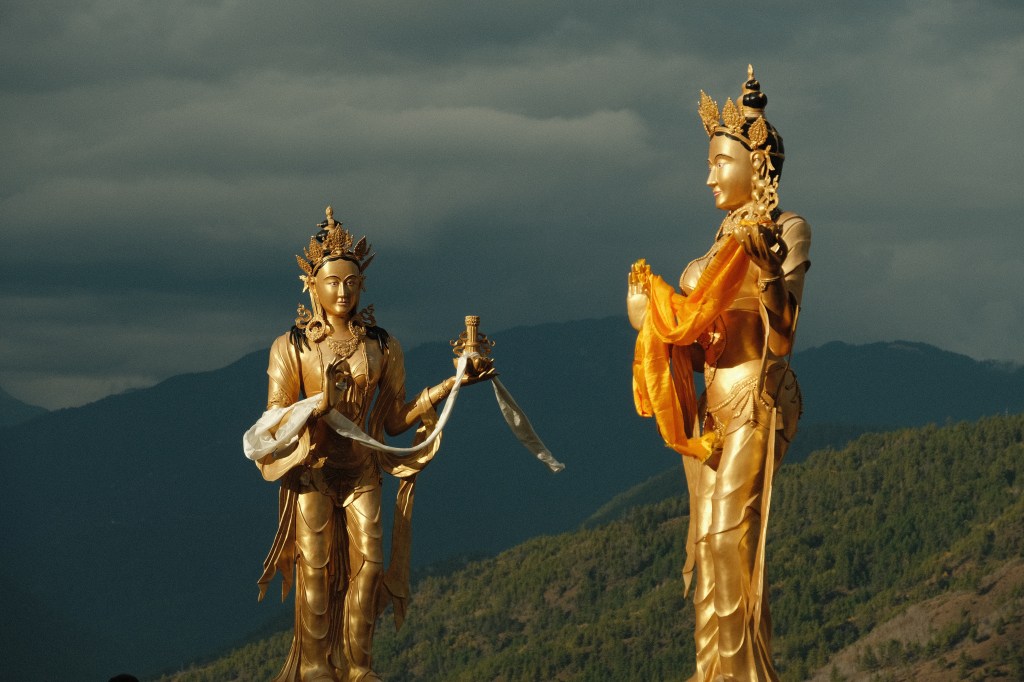

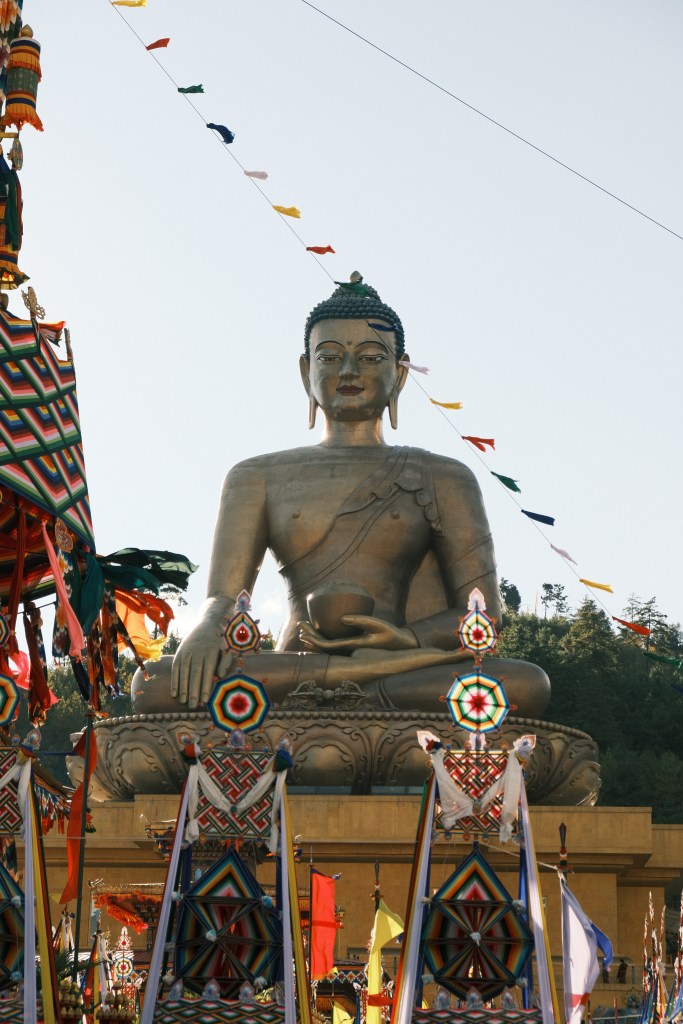
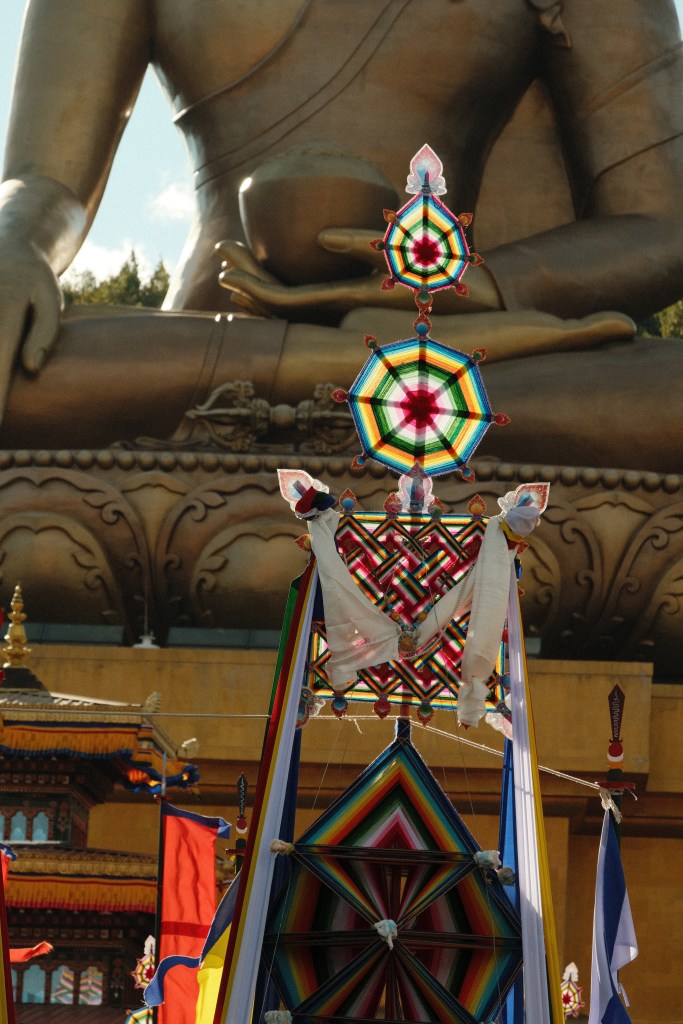

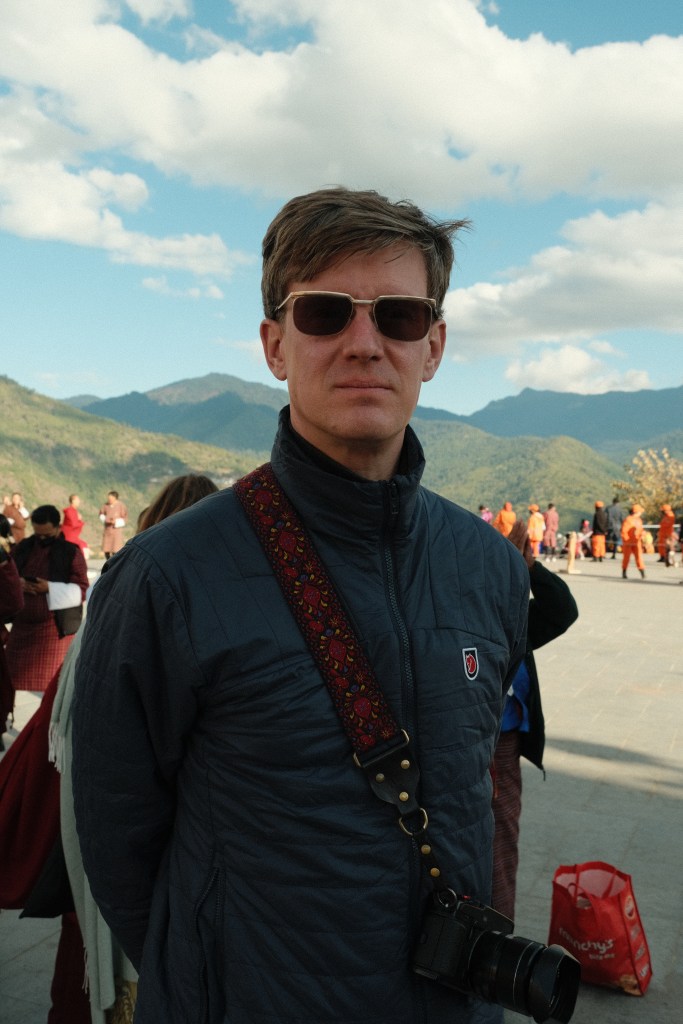
Though being there was interesting, the experience of was also strange and even a little overwhelming at times:
No sooner had we arrived that our guide pressed bundles of bills into our hands, and we proceeded to be rushed from altar-to-altar, making offerings.
Everywhere you looked, there was money being thrown into bowls and cages, smaller bills occasionally being pulled out in exchange for larger ones, all in a rush of prayer.
Tucked into corners, or between statues, monks fastidiously counted the bills from emptied offering bowls… it was unlike anything we had seen before, and strangely unsettling.
After we took a look inside the Buddha statue (the inside is a temple, three stories high, filled with beautiful frescoes and statues) we enjoyed a cup of Nadja and swiftly departed —we had another engagement in Thimphu that needs a little backstory:
A few episodes back, when we spent several hours at the airport (during the cyclone), we made friends with Kinley, a lovely bhutanese woman living in NYC with her husband.
She herself is a yathra-weaver, a skill she learned from her mother while growing up in Bhumthang, and like many Bhutanese on our trip, she showed great interest in renaud’s jacket.
After short examination, she declared that such high-quality yathra would be very hard to find nowadays, and though we had heard this already, fē was heartbroken —she was really hoping to buy a roll of yathra while we were here.
As luck would have it however, Kinley said that her mother —a successful weaver herself— might be able to help!
We connected (Instagram is so useful sometimes) and were soon invited to visit her mother and sister in Thimphu, in order to look at a stunning roll of yathra woven by her mother.
Now, back to present day: Late afternoon, we arrived at their beautiful house (designed and built by Kinley and her husband) and were greeted by Kinley’s sister Kezang, her daughter, her aunt, and of course her mother.
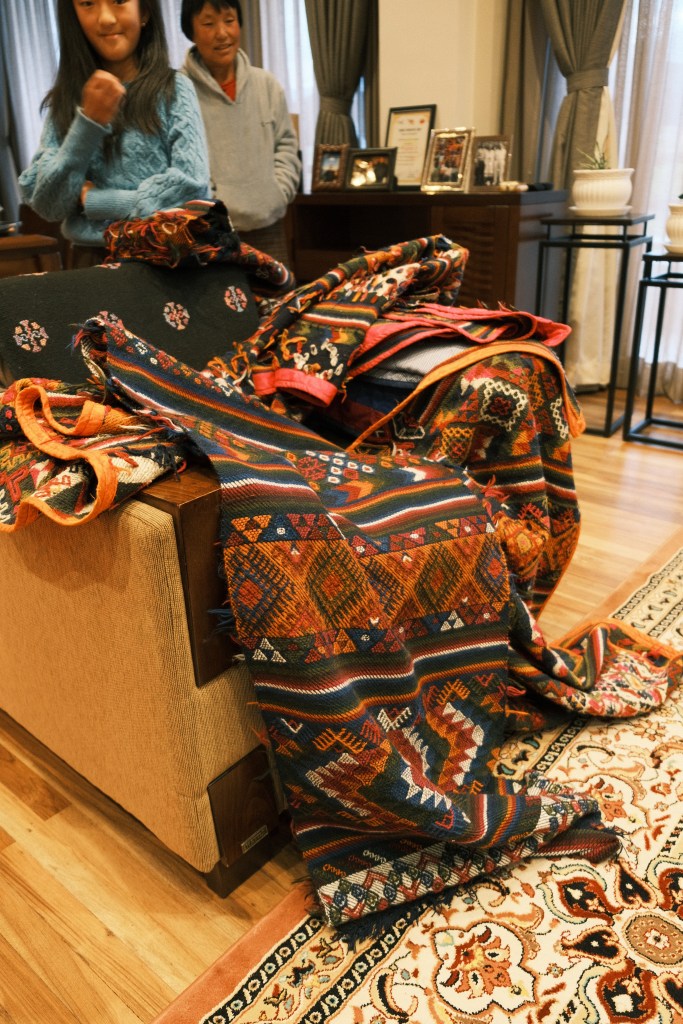
After drinking a cup of Nadja (the best one we’ve had this trip), both Kezang and her mother examined renauds jacket and marvelled at its craftsmanship.

As a quick explanation for why we keep mentioning renaud’s jacket: The Yathra it is made of was sent to his parents by the Royal Family of Bhutan on the occasion of his birth.
12 years ago, renaud decided to have a jacket made of the remaining cloth, which was the reason he stepped onto the number 3 bus in Hamburg that Sunday in 2014… and met fee.
That jacket has been a constant companion, has moved with renaud through many careers and countries, been repaired (and significantly upgraded) by a talented friend of ours, and had now finally led us here, to this home in Bhutan.
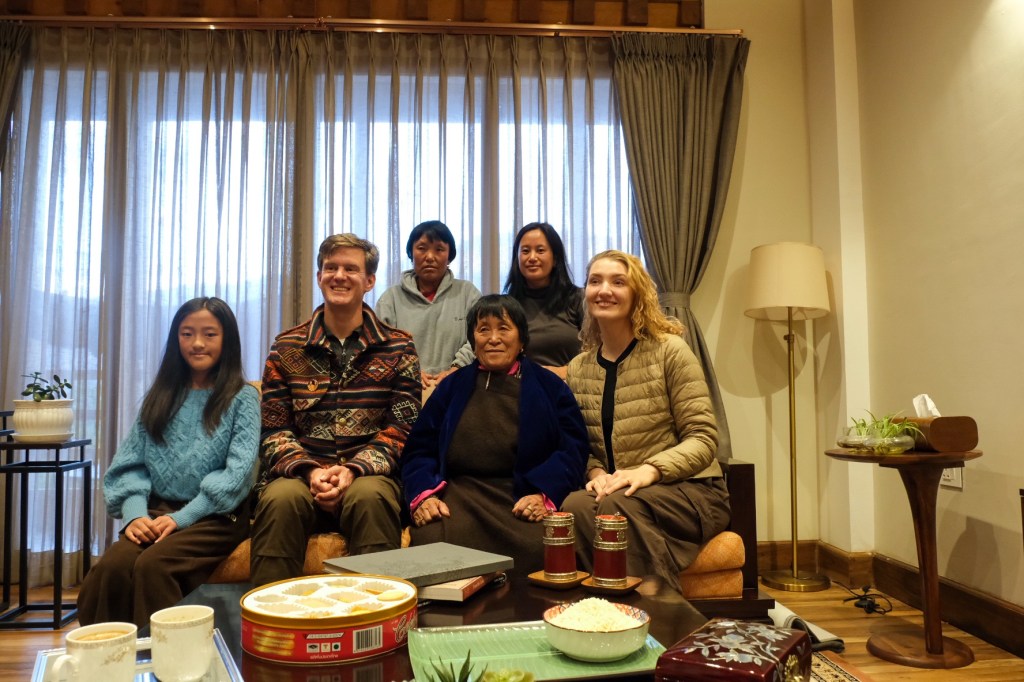
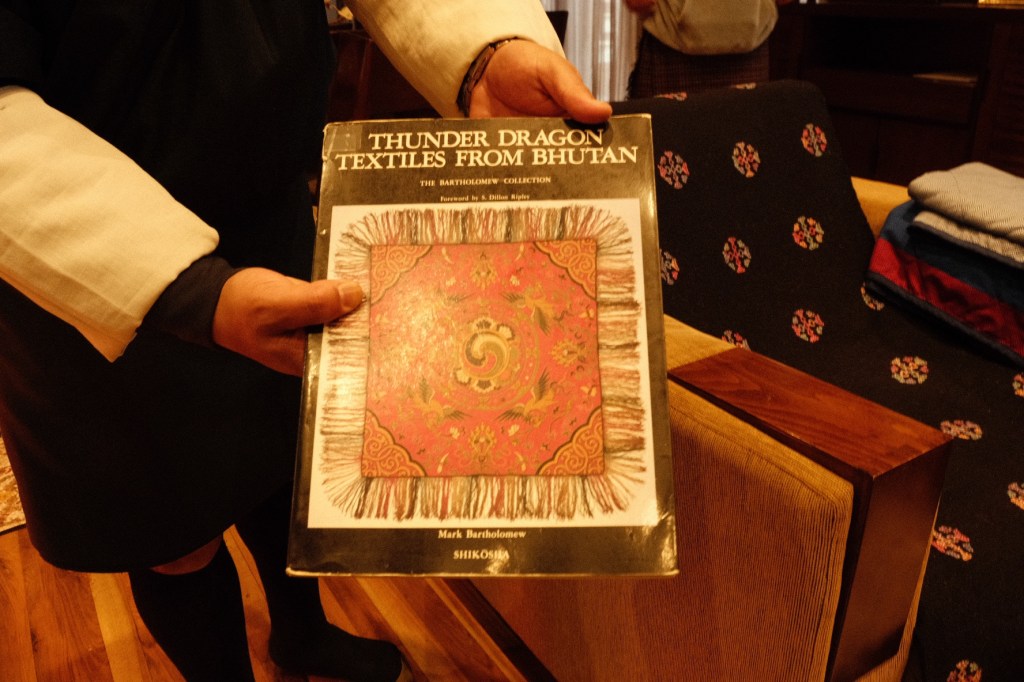
We spent a delightful afternoon with the family, looking at and learning about yathra and —to fee’s delight— were able to purchase the last roll of yathra woven by Kinley’s mother Tshiring, which is of outstanding quality and beauty.
If you want to learn more about her weaving, you can find her and Kinley’s work featured in several books about Yathra-weaving from Bhutan.
After making new friends and drinking a last cup of tea, we made our way back to the hotel.
We were generously invited to dinner by Puntsho, the charming brother of a bhutanese friend of renaud’s family, and after an evening of delicious food and fascinating conversations, we were very ready for bed.
 Renaud and Fee
Leave a comment