We woke in a palatial room with an incredible view of the valley, ready to start our journey to Lhuentse, a district in north-east Bhutan, known for its talented silk weavers.
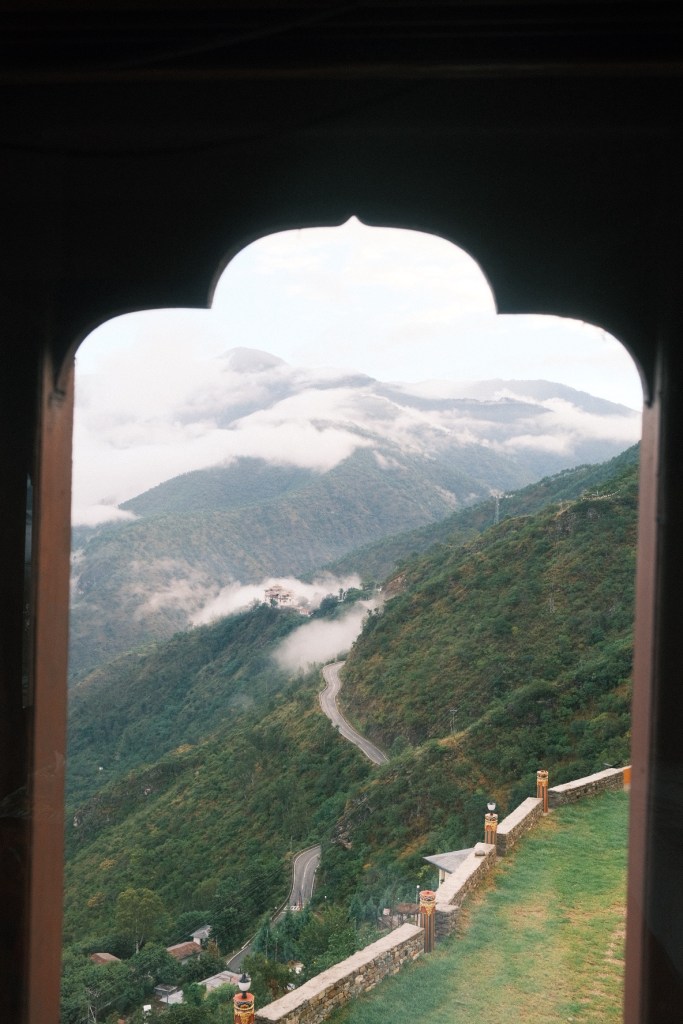
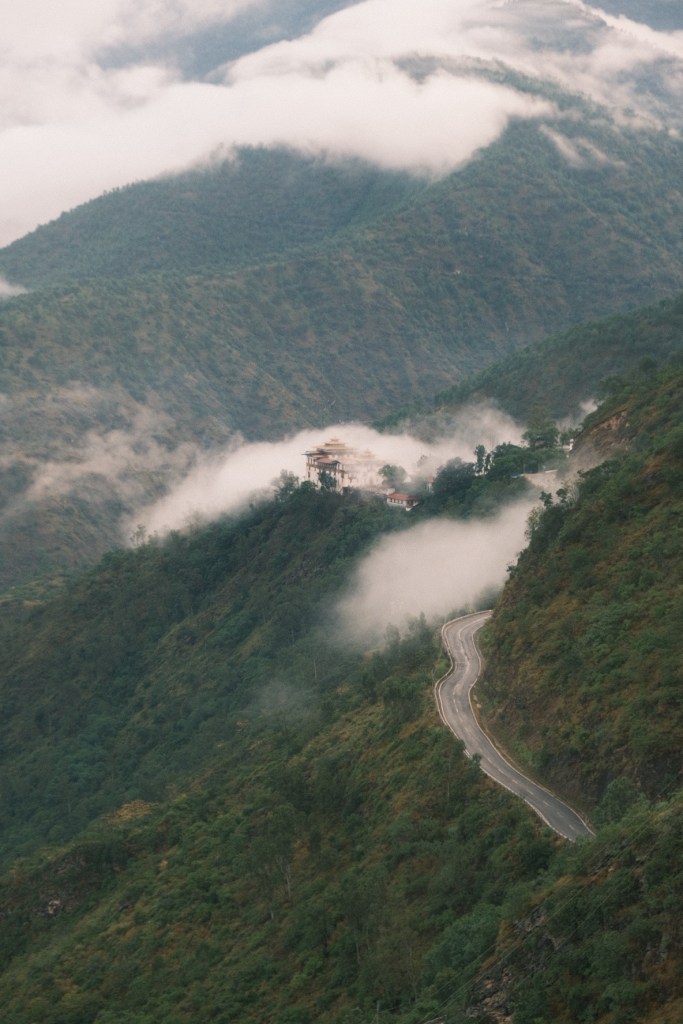
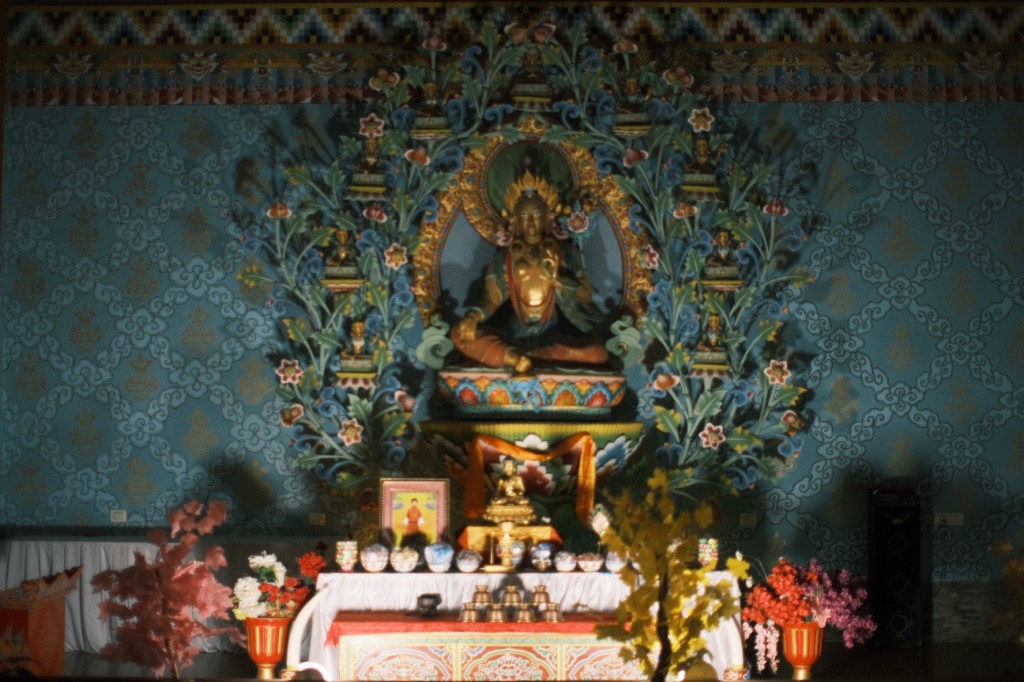

At long last, the sun pierced the clouds on our way, and we had our first real look at a big bright technicolour Bhutan.
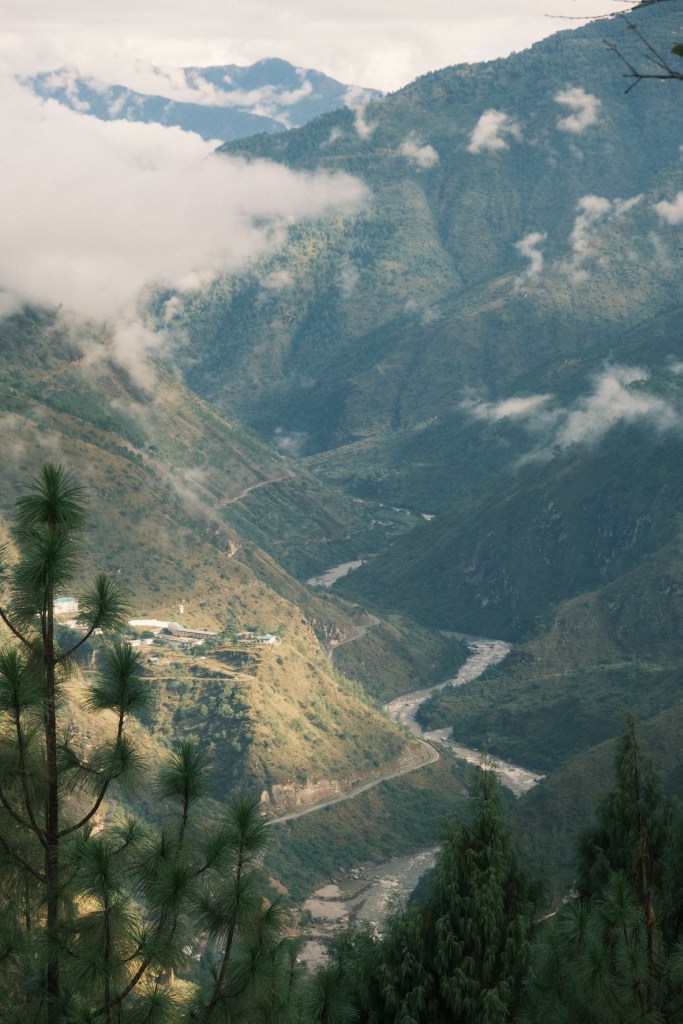
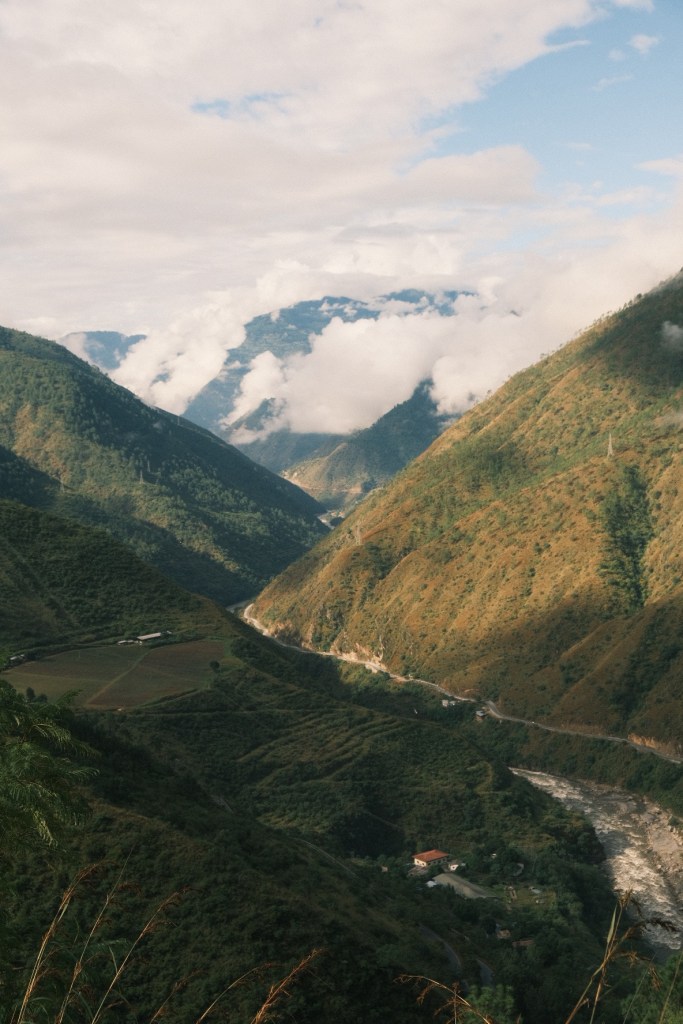
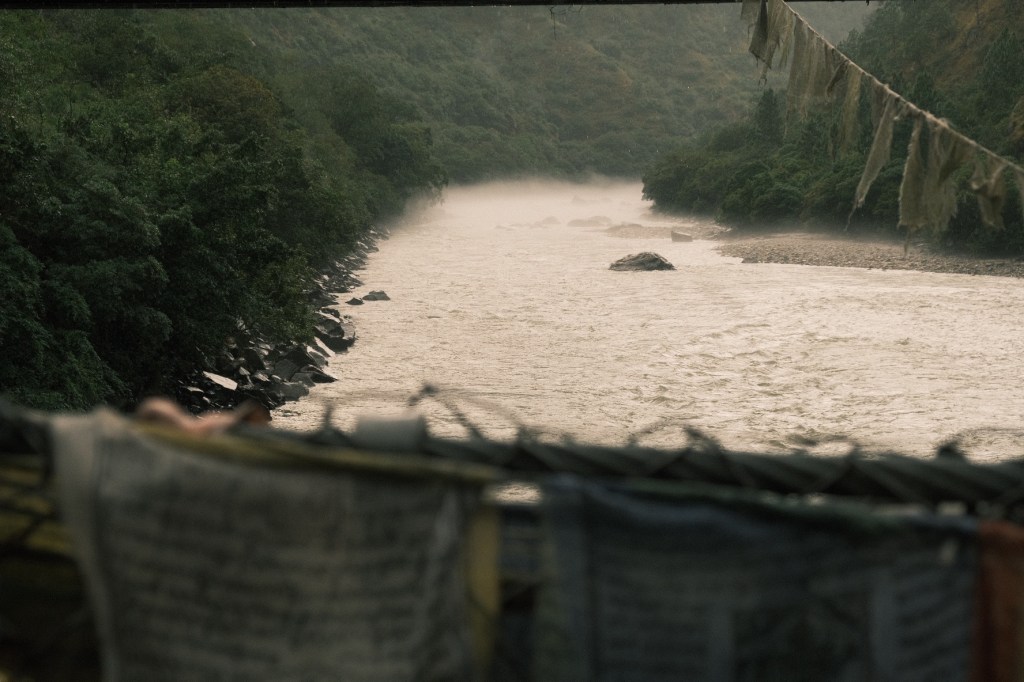
Great big forested valleys, terraced on either side by scattered waves of rice paddies, studded with little clusters of houses, and always a great sinuous river coursing along its length like a dragon.
The region in which we stayed, around Trashigang and Rangjung, is known as the “rice bowl of Bhutan”, this is where most of the country’s rice and buckwheat comes from.
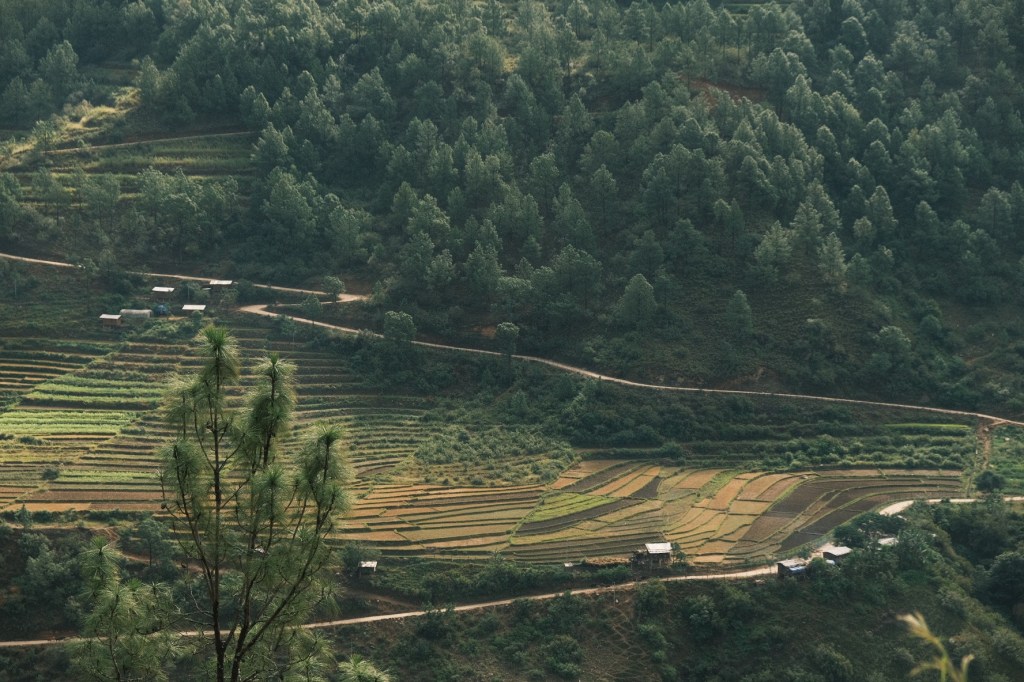
Bhutan traditionally eats primarily red rice, but with the gradual shift from hard labour, this calorie-rich variety is seen as a cause for the rise in diabetes and heart disease in the country.
So, while the rice fields invariably grow red rice, many people eat imported basmati rice.
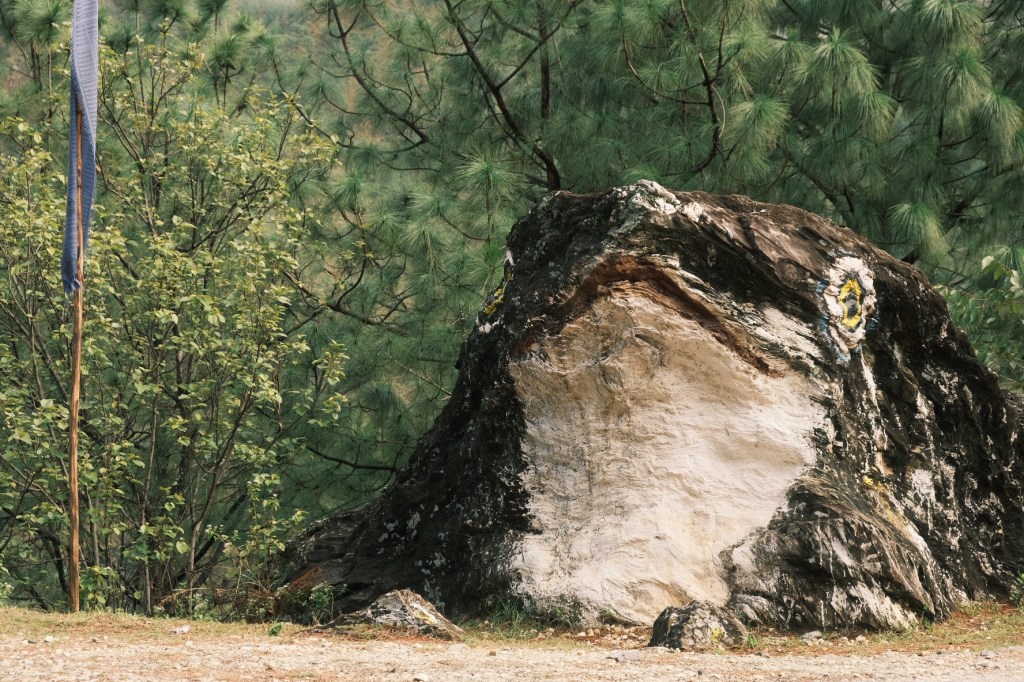
We learned from our guide that when building roads, the Bhutanese do not remove large stones or landmarks unless absolutely necessary — and that they sometimes find deities hidden there when they do.
This then leads to painting, prayer flags and offerings.
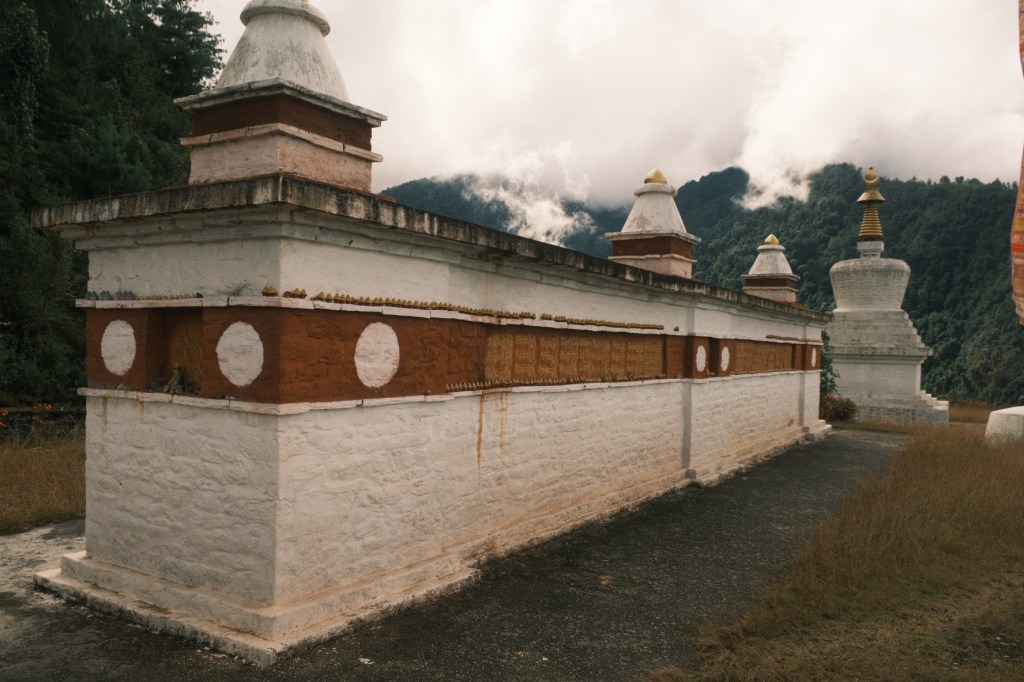
The lovely thing about driving around the country is that we can stop at any time to inspect a flower we don’t know, watch majestic birds or butterflies or photograph yet another different kind of Stupa (increasingly renauds focus, as he is becoming something of an expert in Stupas).
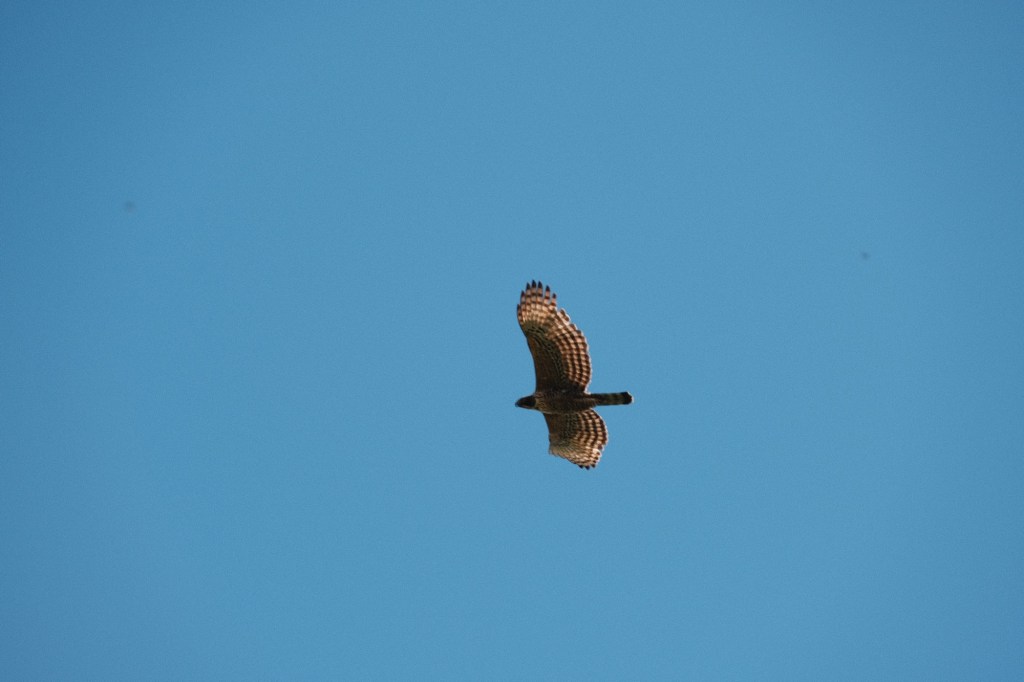
On this journey, we saw a himalayan mountain hawk in flight, found fern by the road side that the Bhutanese like to eat (fried with garlic in a delightful ginger-soy sauce), and two incredible beautiful butterflies.
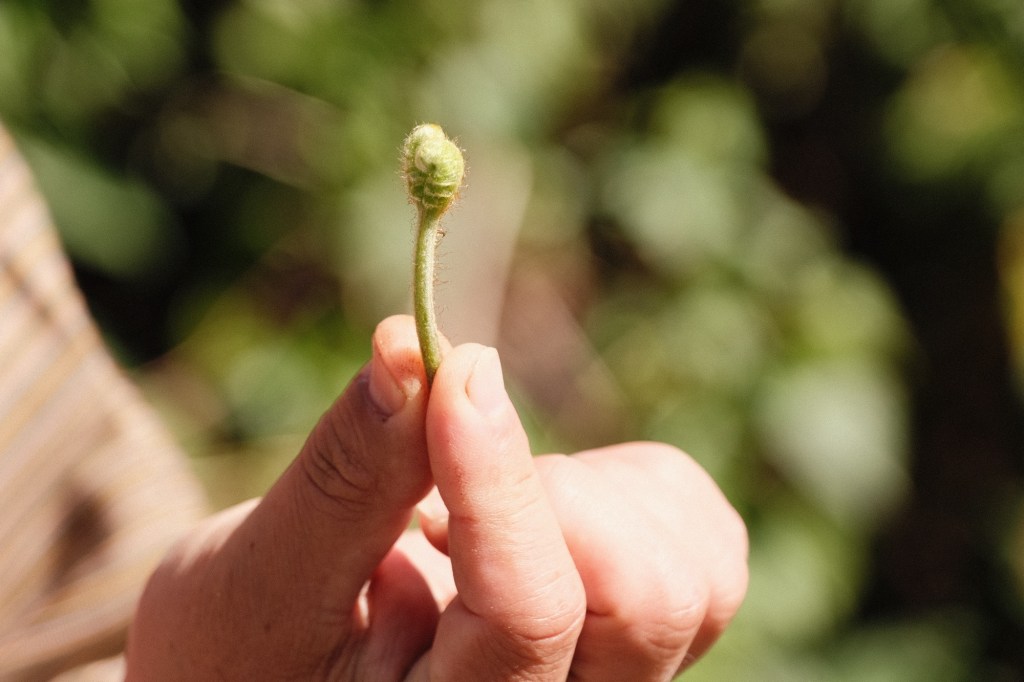
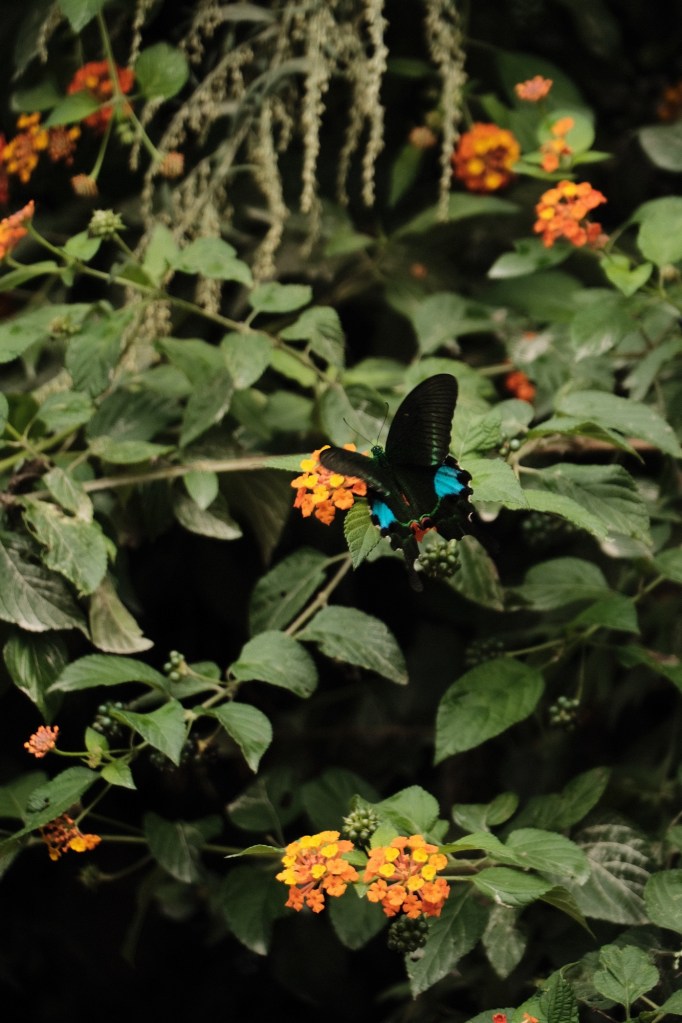

Back on the road, we had to cross another mountain to reach the Lhutense district, this time over the second highest pass in the country at 3,700m asl.
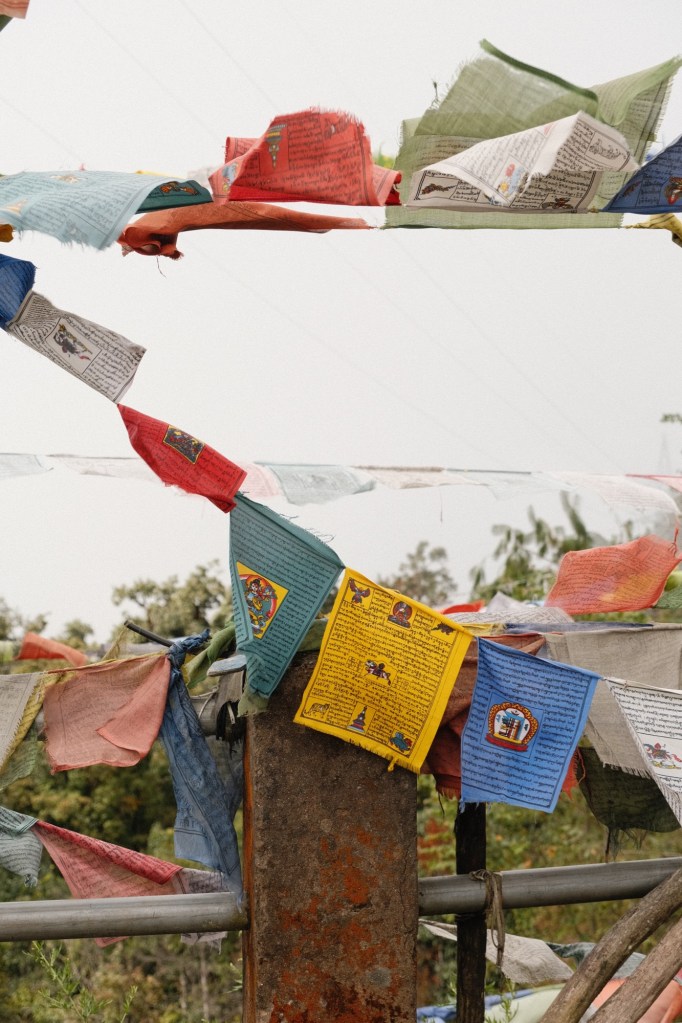

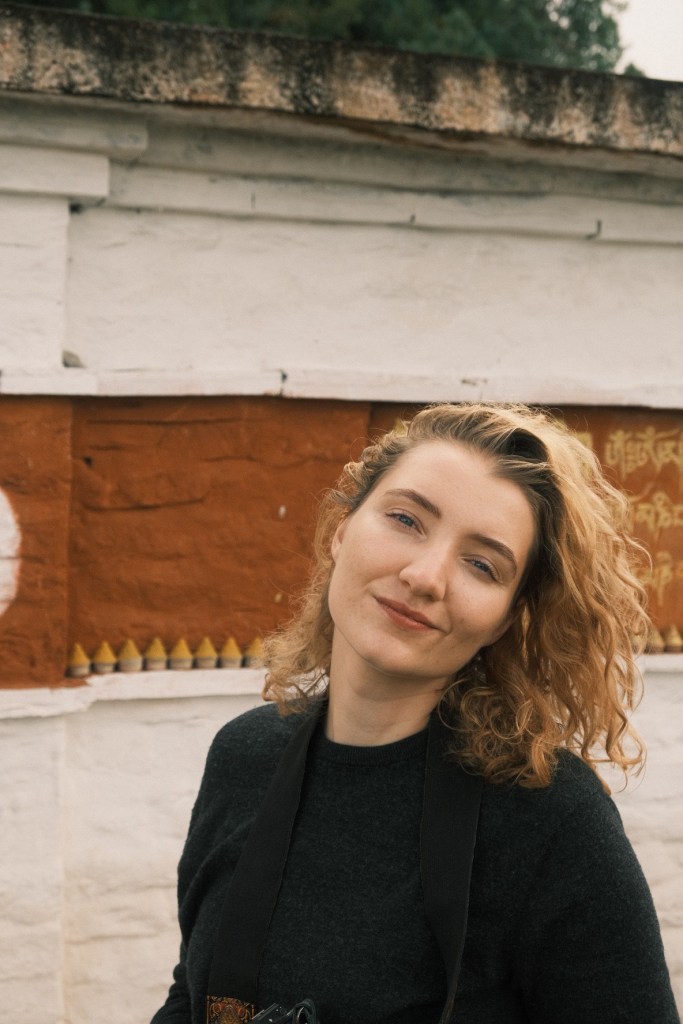
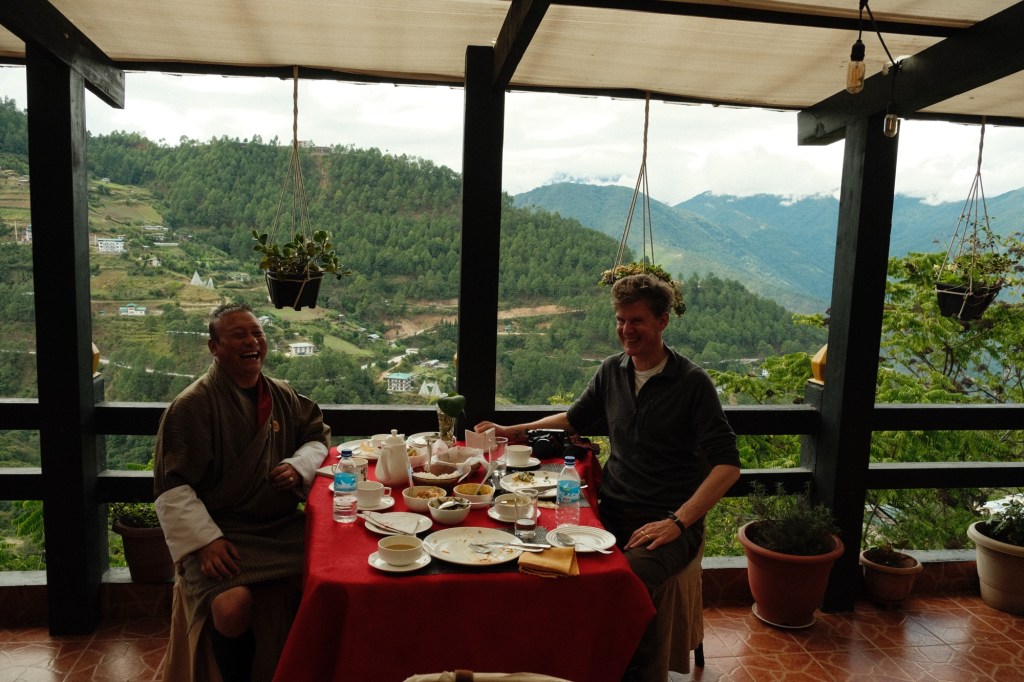
We stopped for lunch at a lovely place where we could finally enjoy some warm air and sunshine, alongside Nadja and traditional bhutanese food.
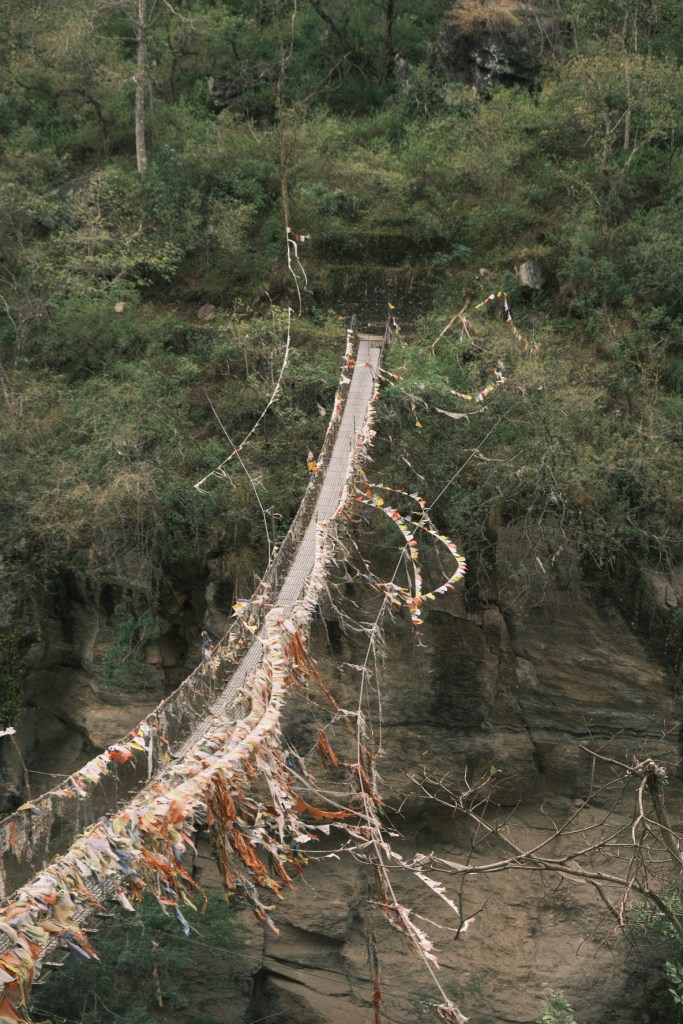
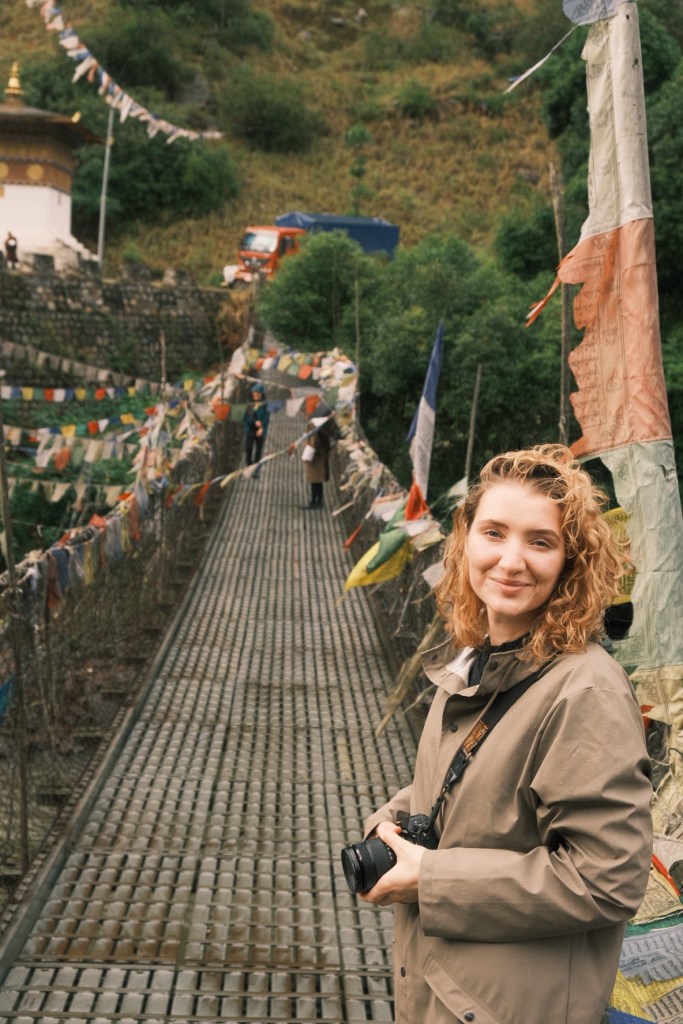
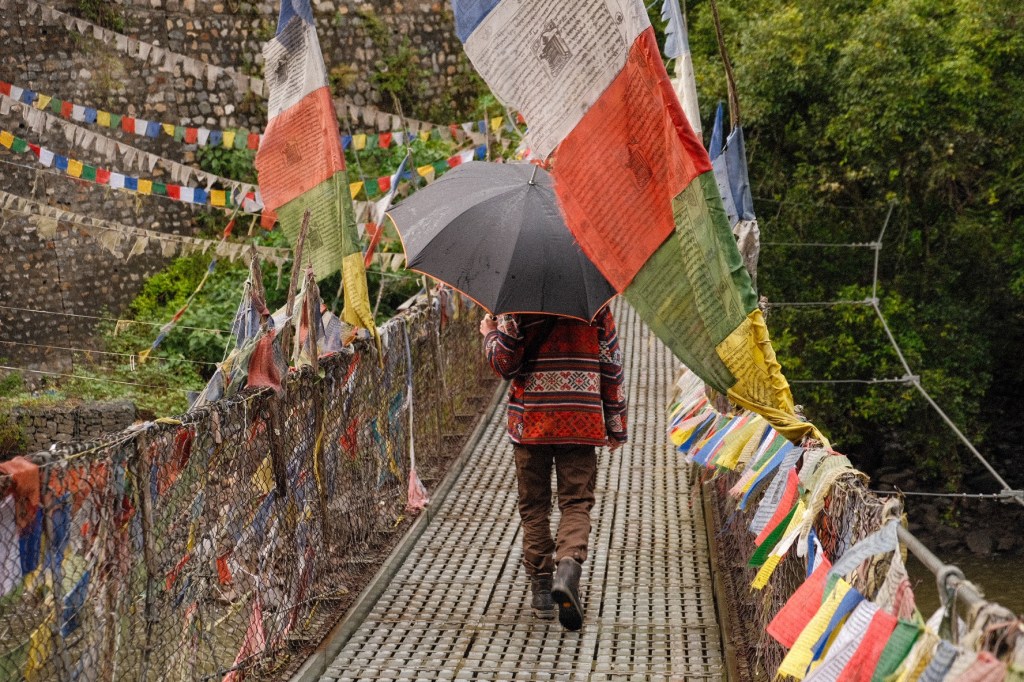
We came across a hanging bridge along our way, and our guide was kind enough to stop so we could walk across it — this one was made of metal, but they would traditionally have been made of wood and rope.
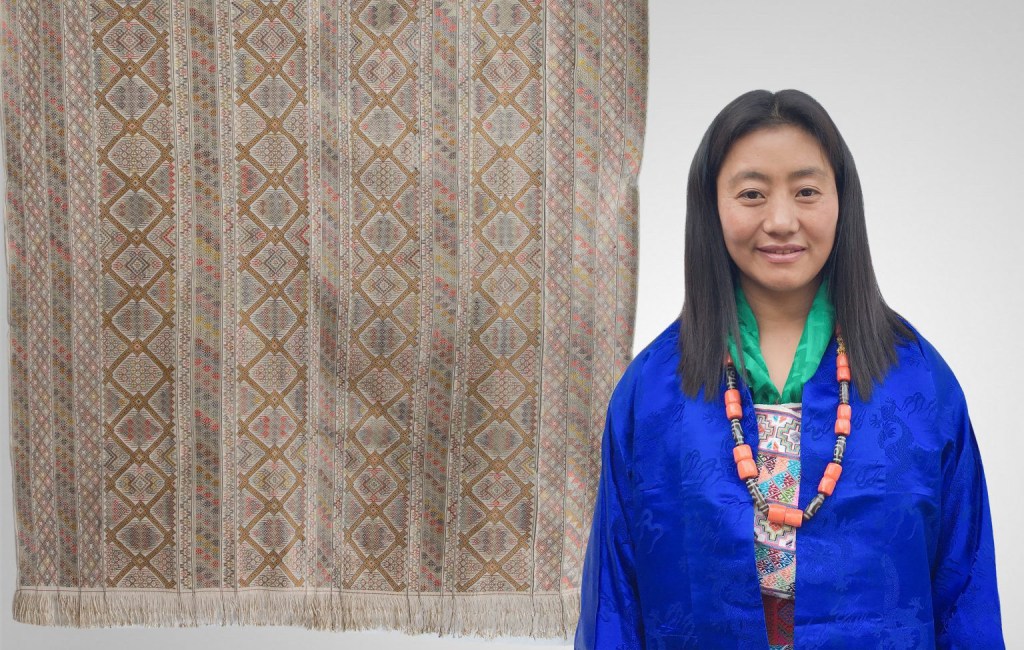
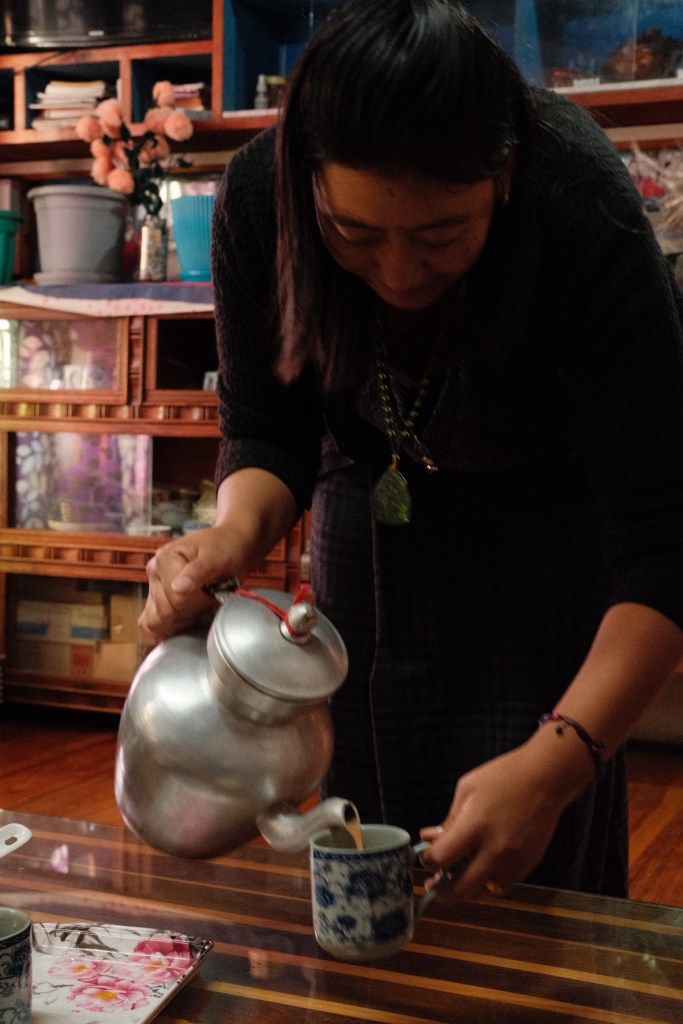
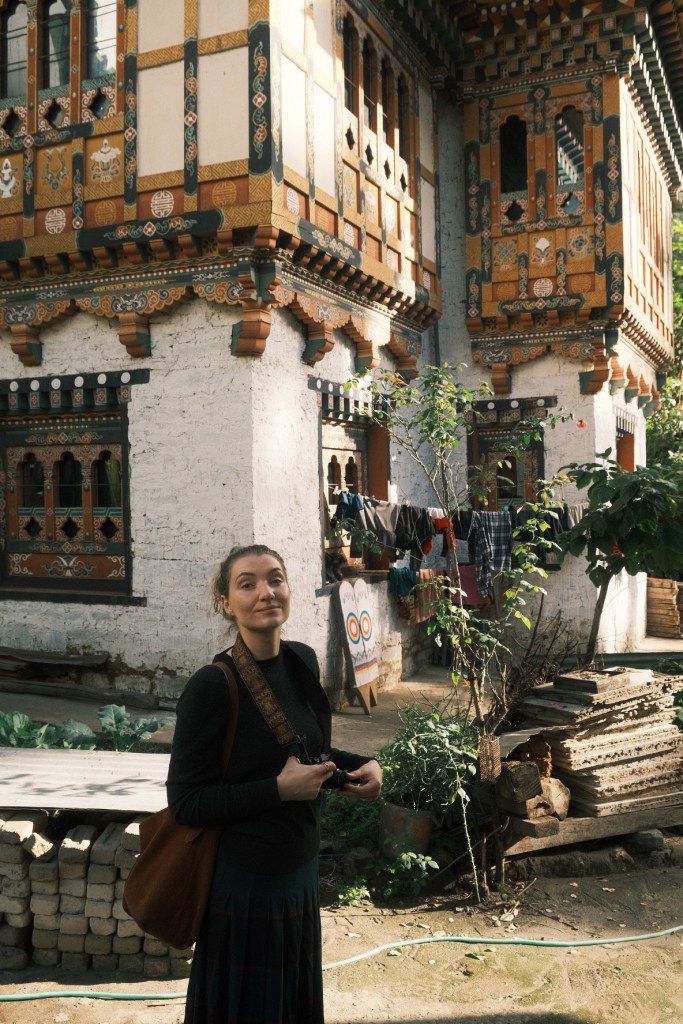
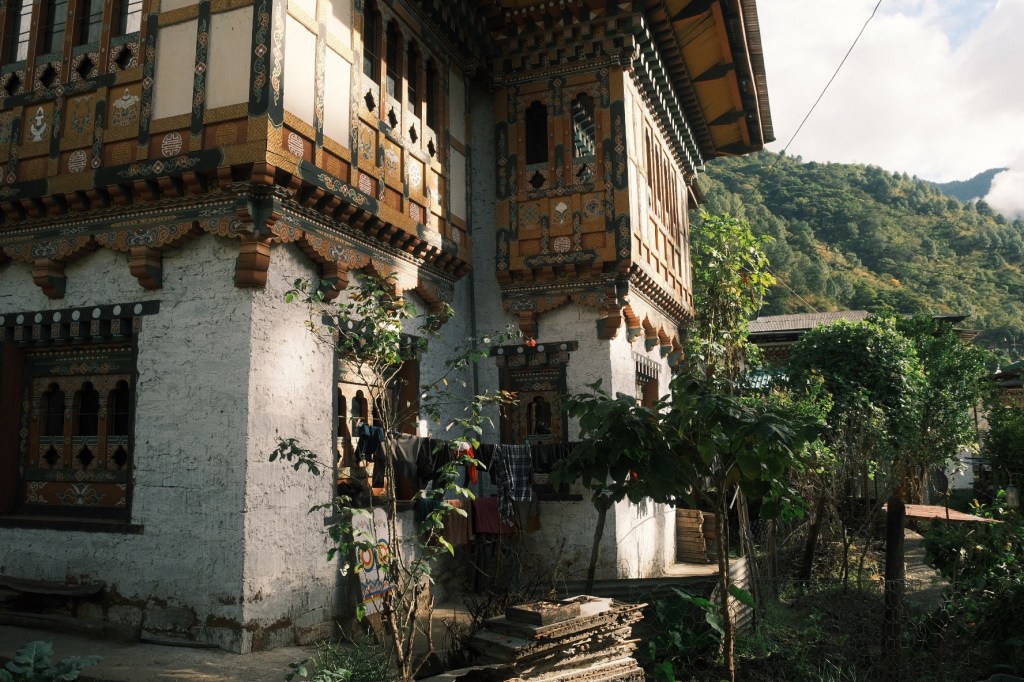
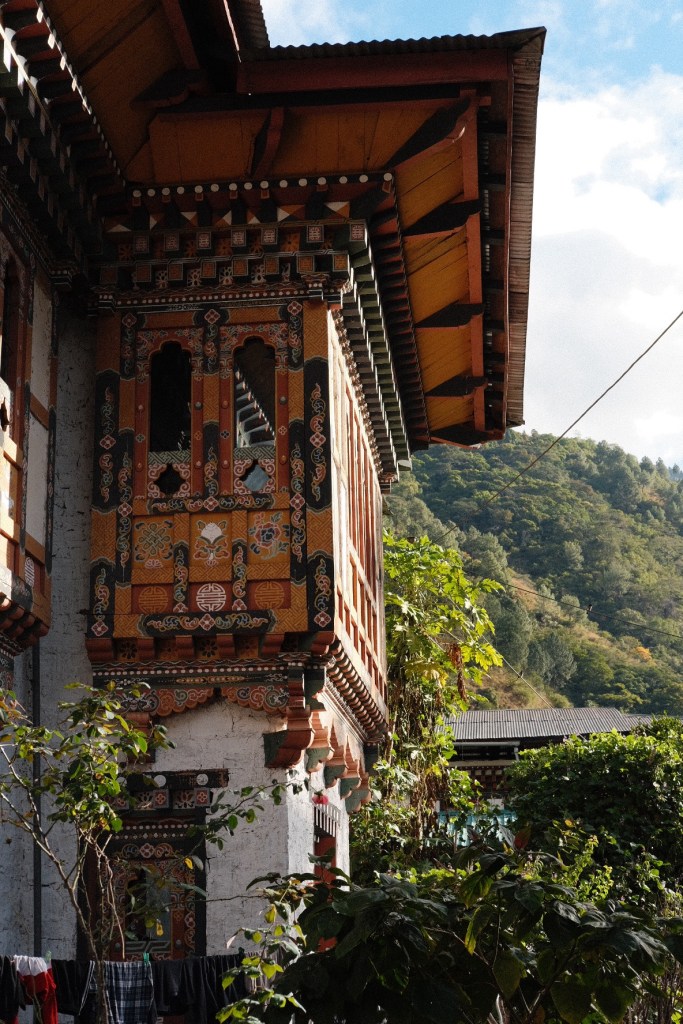
And with that, we reached our stay for the night: Khoma Village in Lhuentse; a beautiful settlement of tightly clustered buildings, where our hostess Mrs. Tshering Yangki Khoma —herself an award-winning silk-weaver— offered us a cup of Nadja and showed us some of her work.
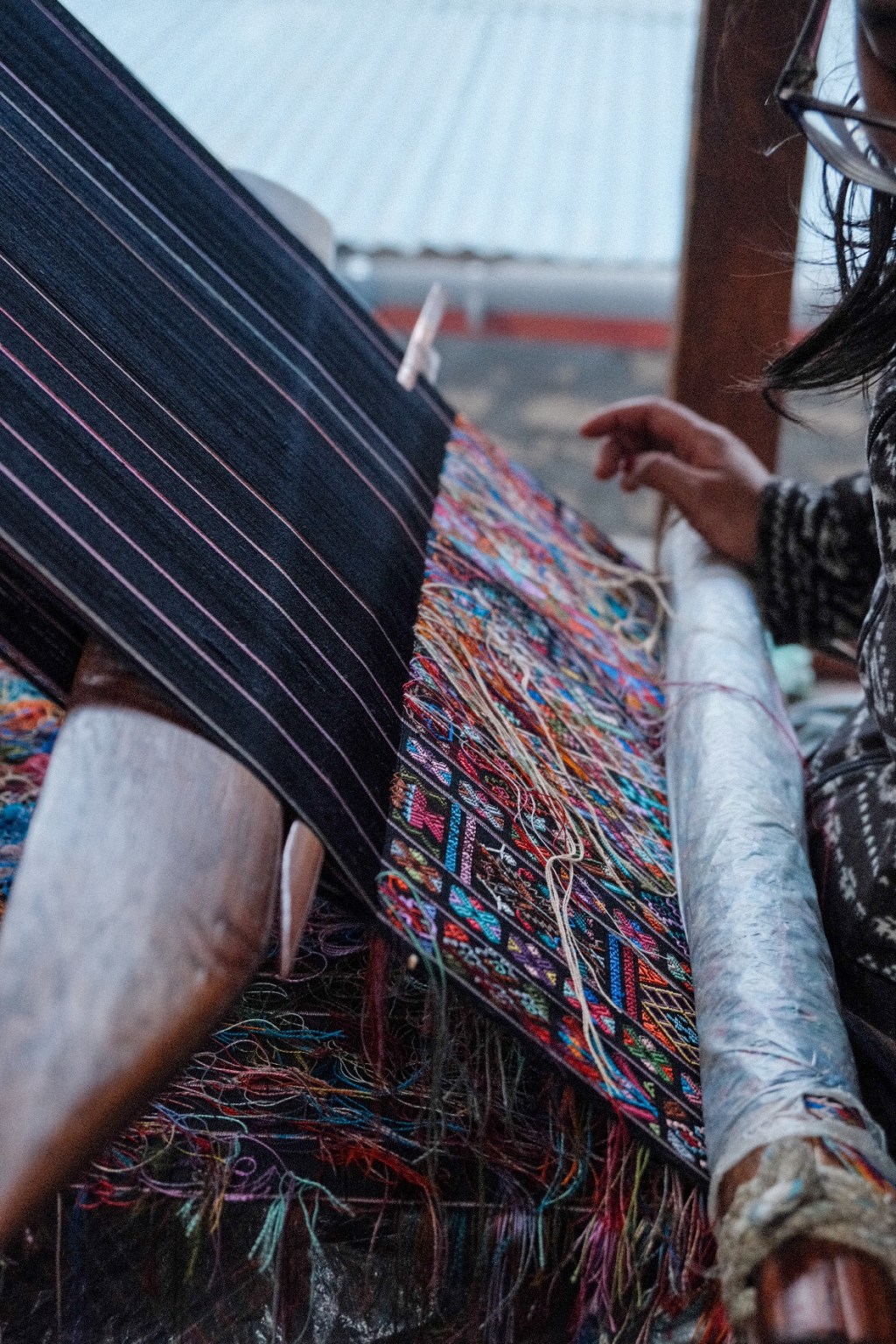
Lhutense is famous for the traditional bhutanese craftsmanship of weaving raw silk (from Rangjung) into delicate and colourful Kiras.
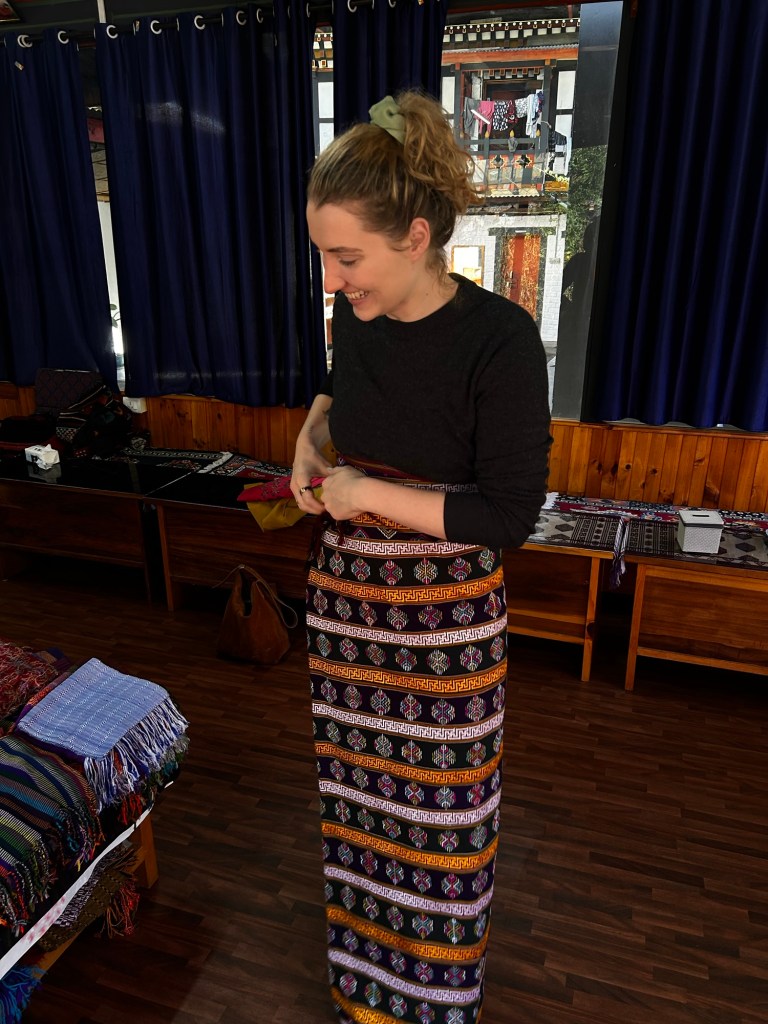
A Kira is the national garment worn by women; a half-length Kira is a skirt that reaches from waist to toes and a full-length Kira will cover the neck and shoulders as well.
Silk Kiras are extravagant both in their designs as well as in their material and price. Women who can afford a silk Kira will wear them for festivals and special occasions, but on a day-to-day basis they wear Kiras made from woven cotton or wool.
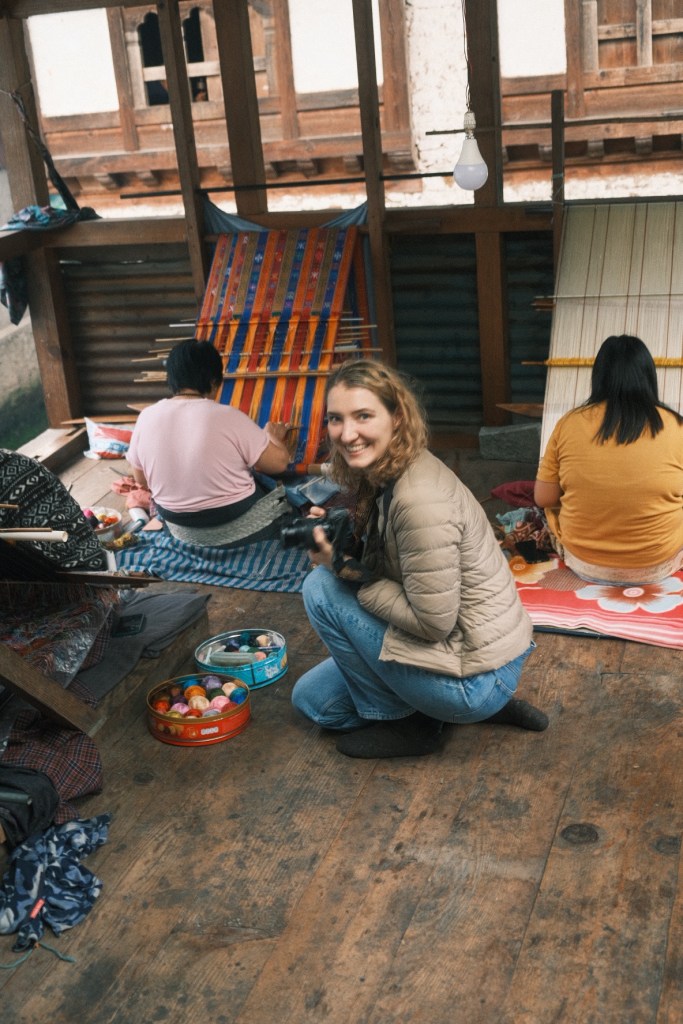
Our homestay (essentially the local equivalent of a bed & breakfast) was located around the corner from a weaving atelier, and we spent the last hours of daylight watching the women weave their beautiful silk Kiras.
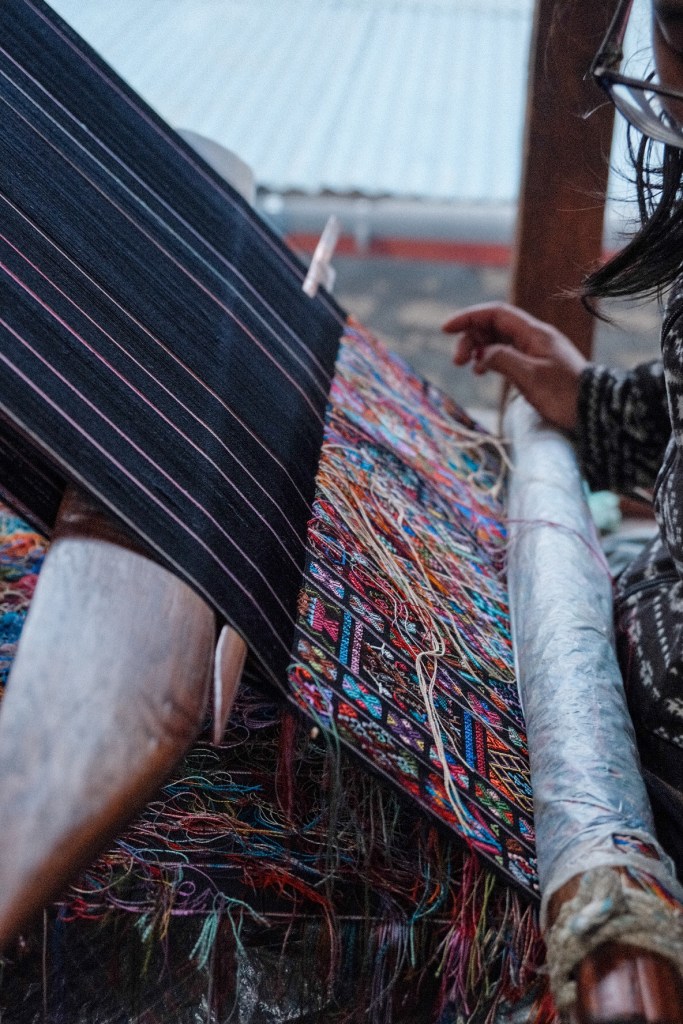
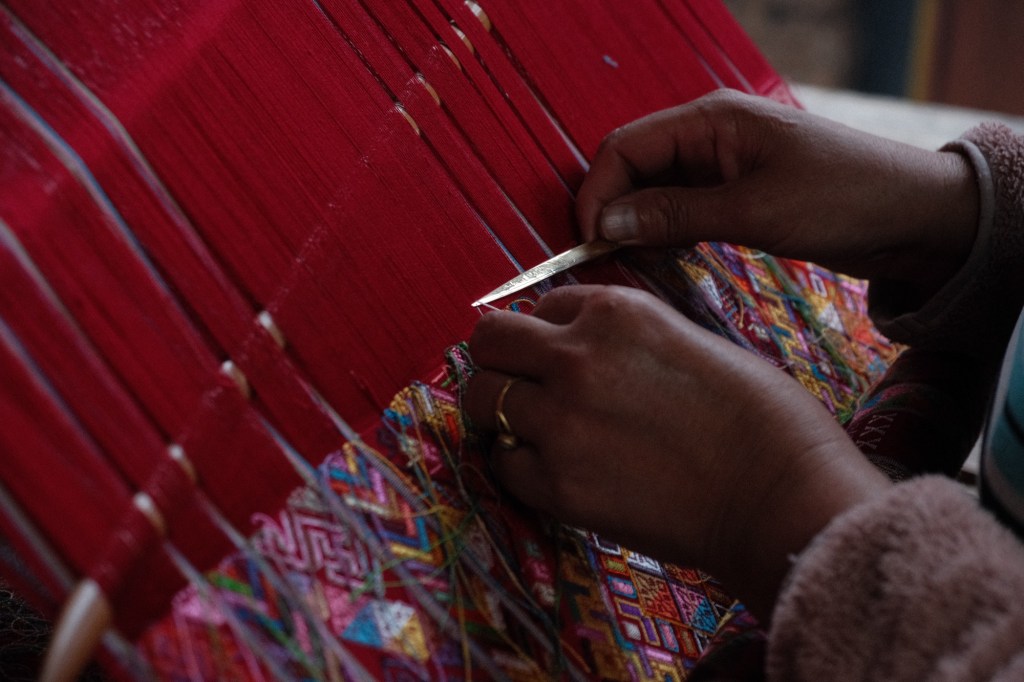
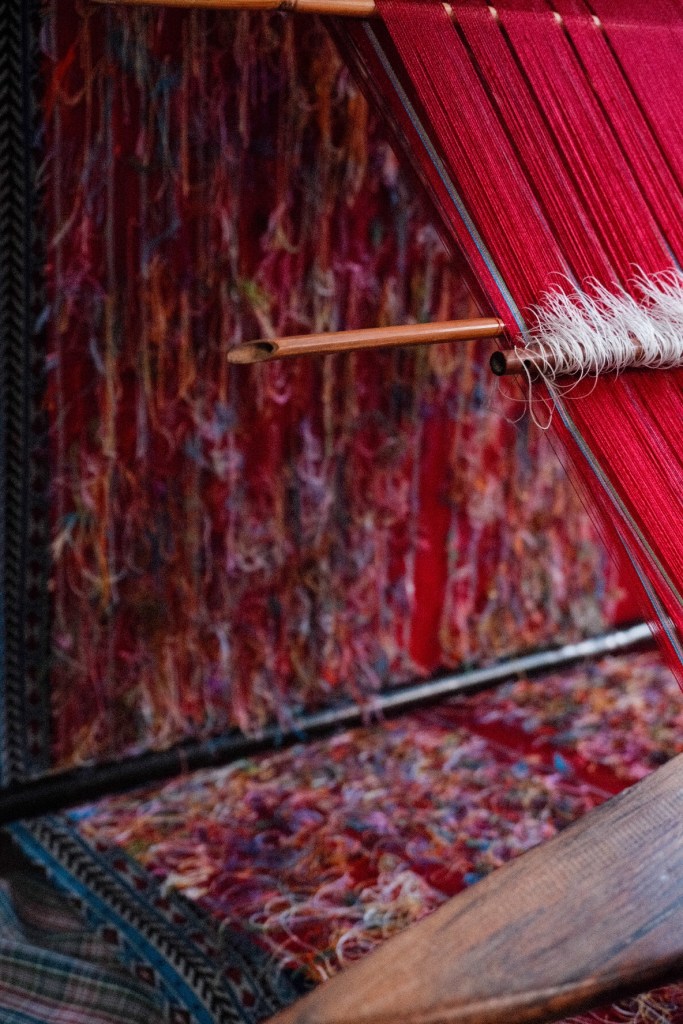
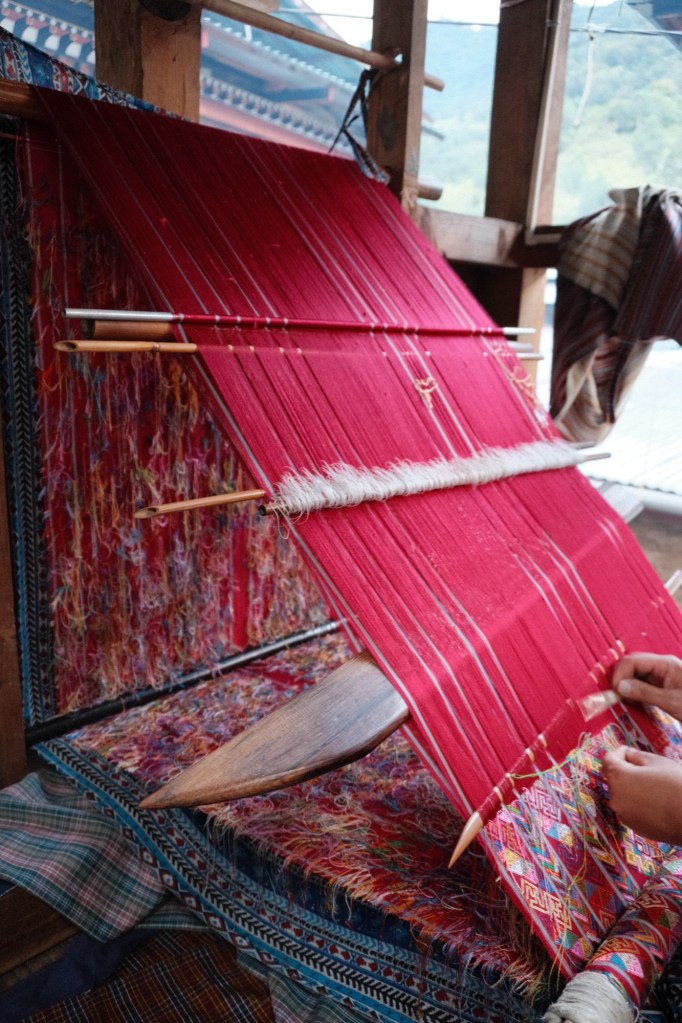
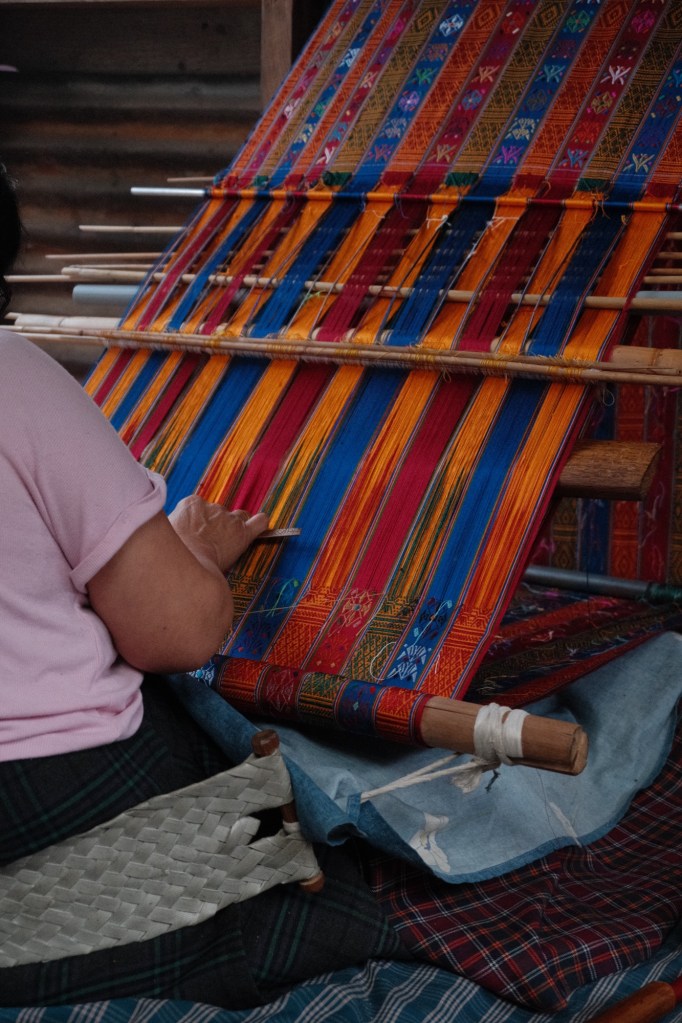
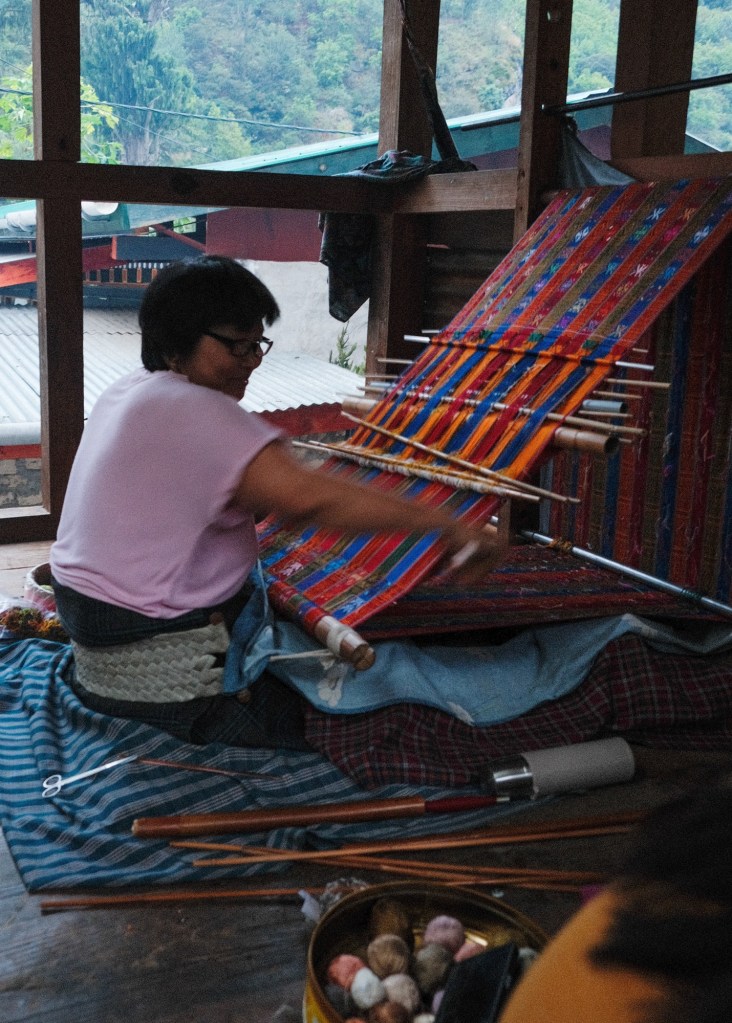
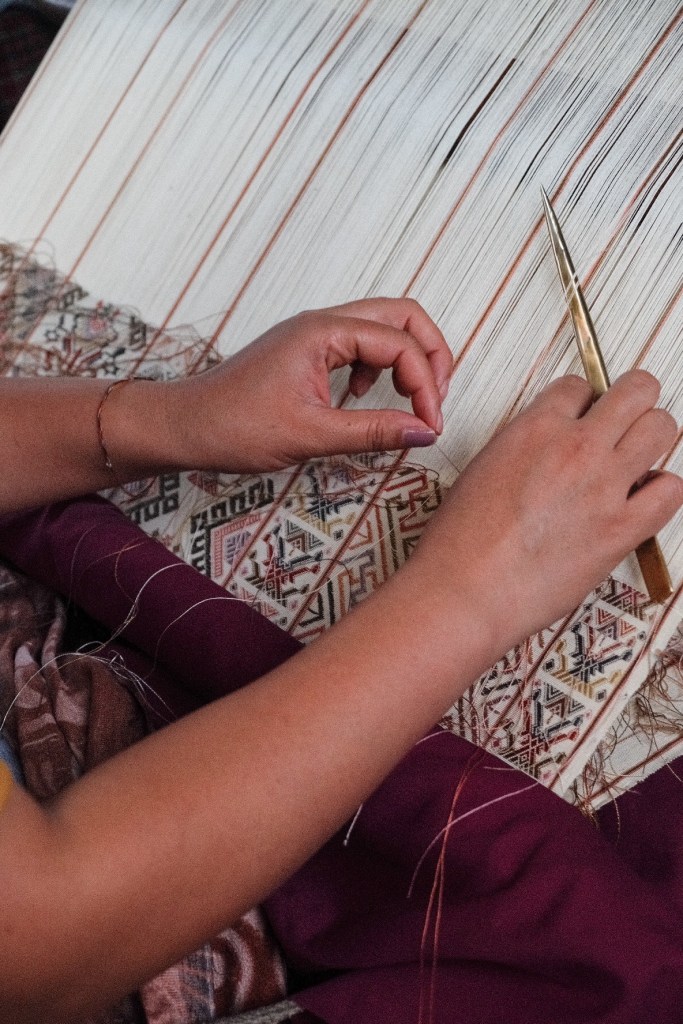
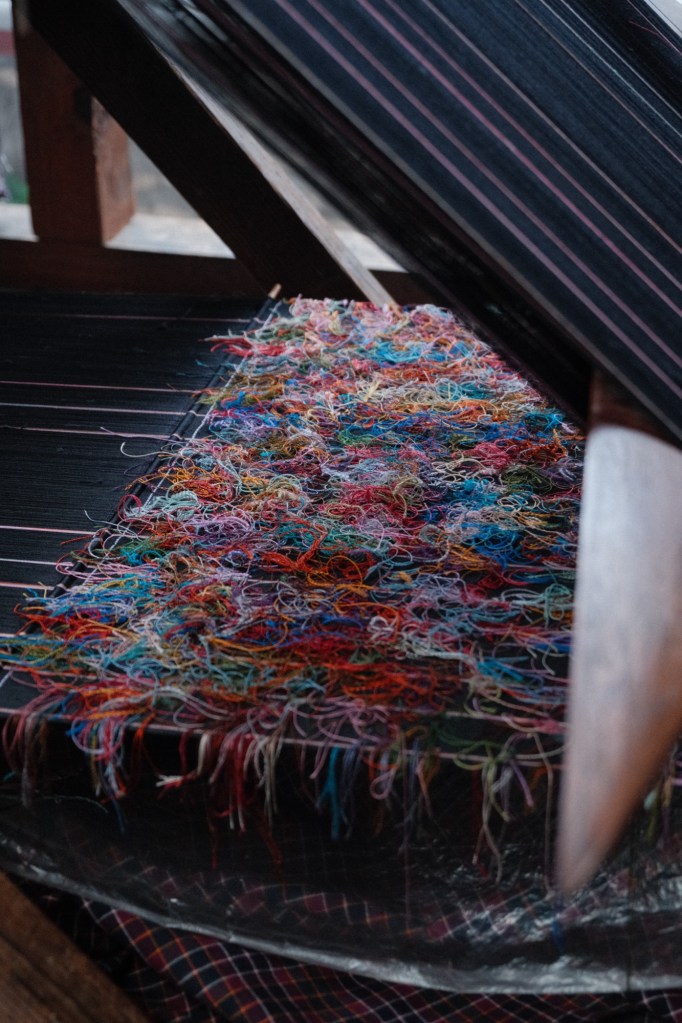
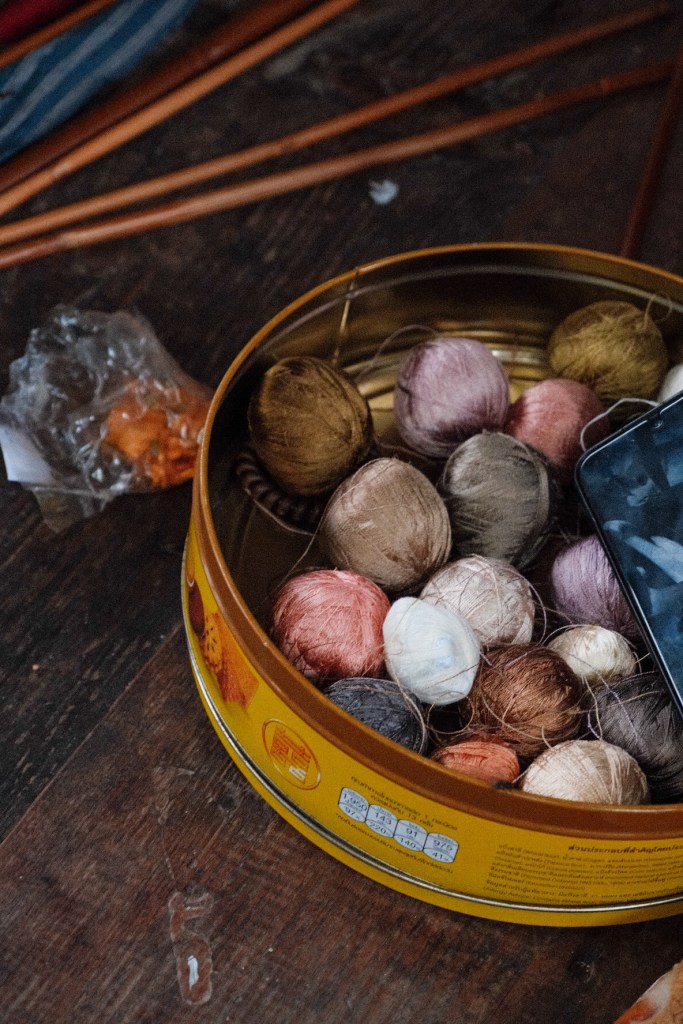
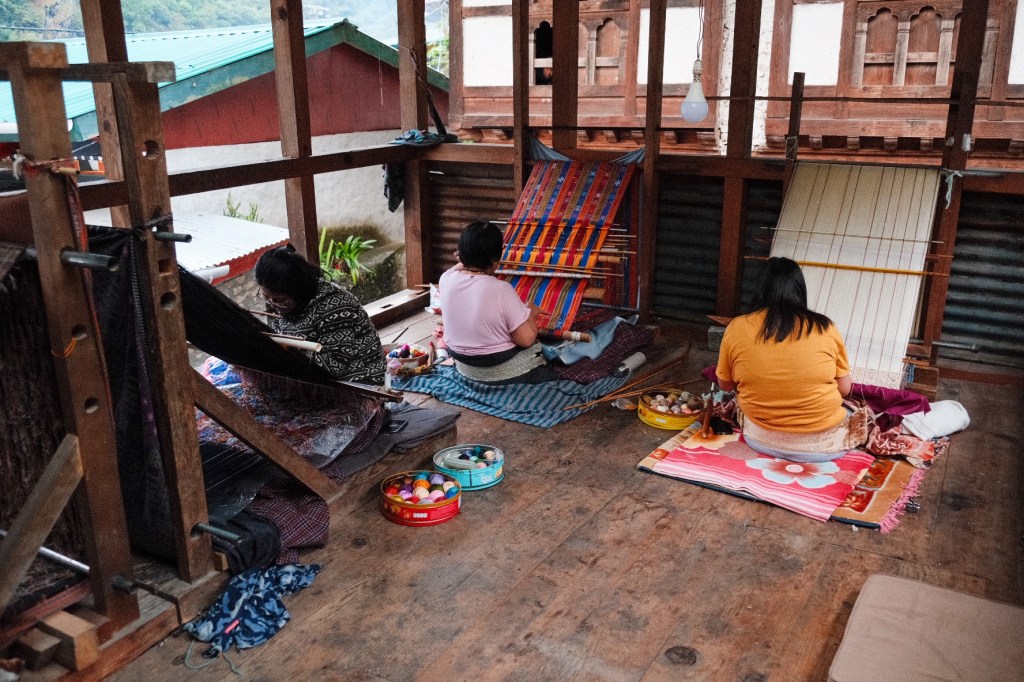
They were incredibly kind, and delighted to answer fee’s many, many questions. They even let her try weaving a little! She also took some videos of the weaving that she is happy to send to you upon request.


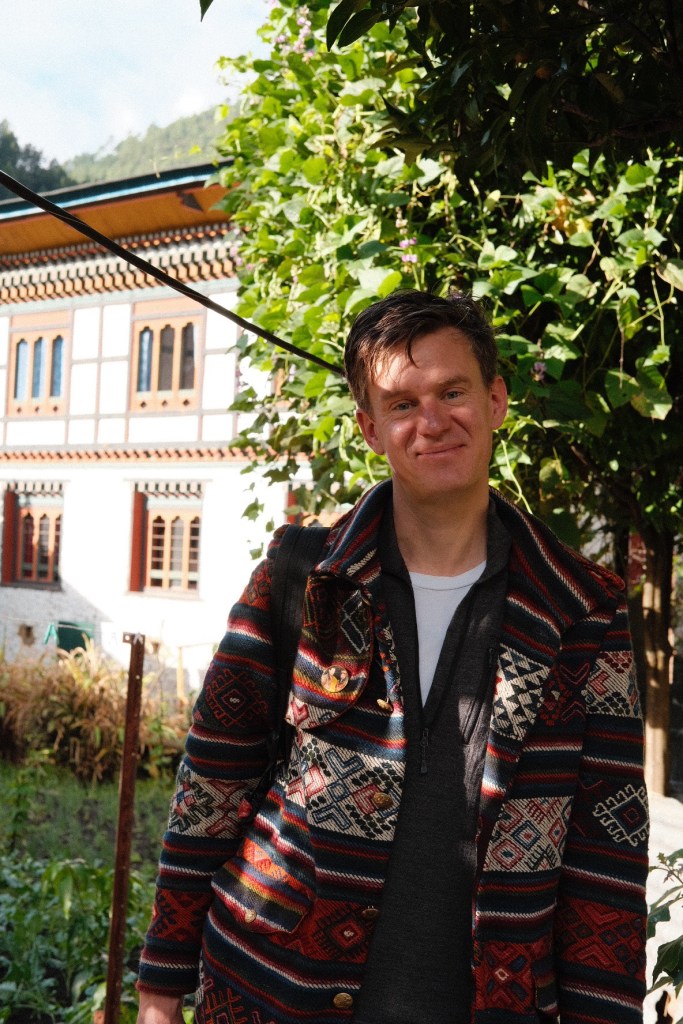
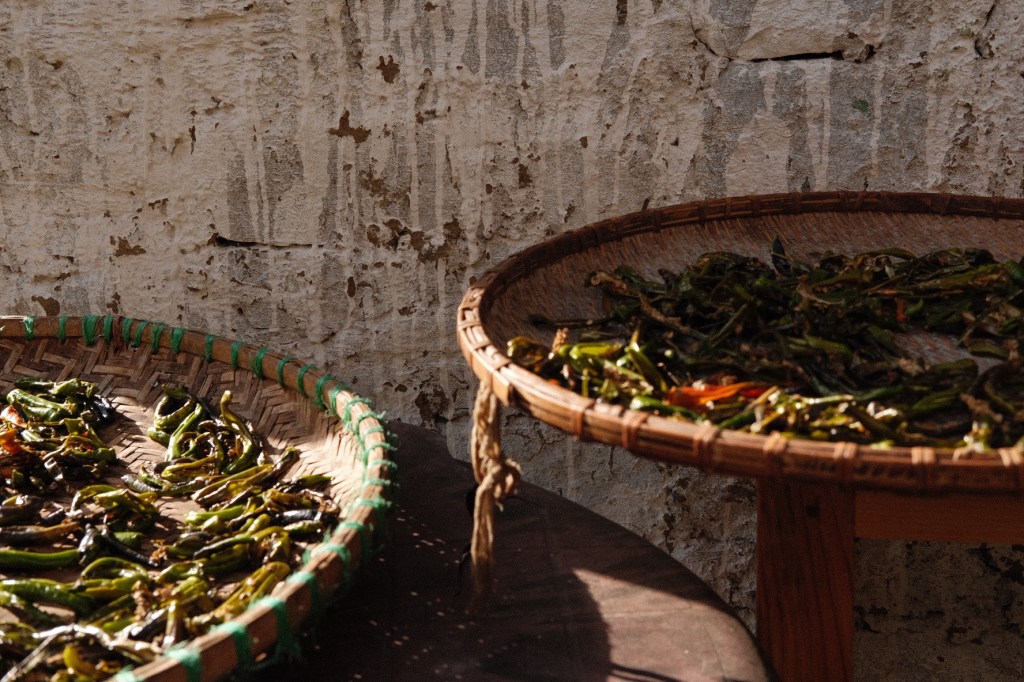
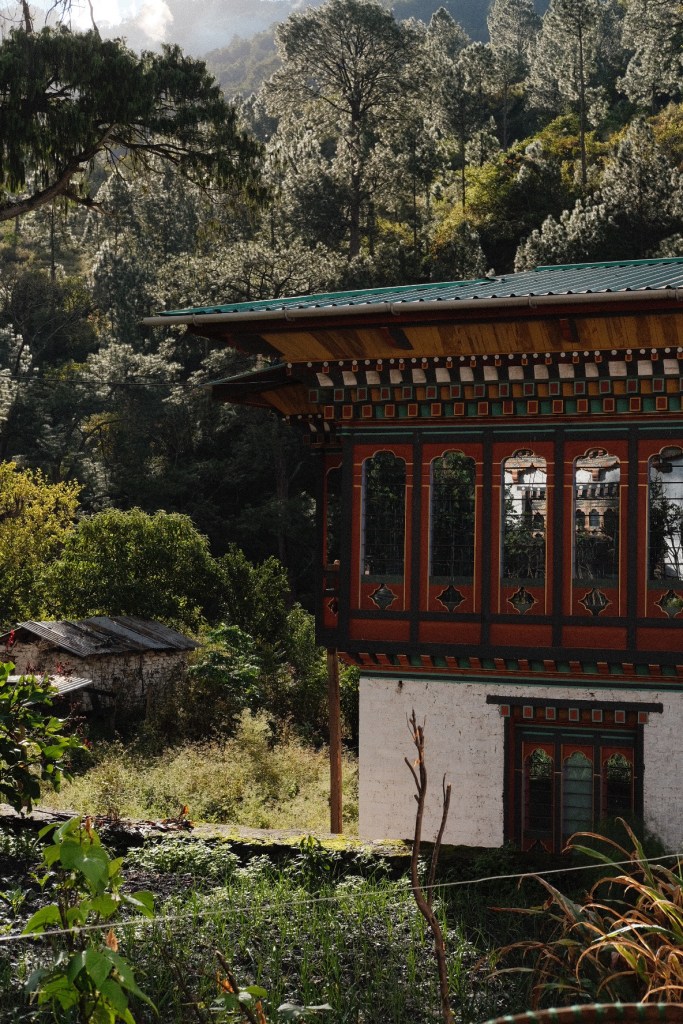
Back in the homestay, were treated to a delicious dinner by our hostess, which we shared with her, our guides, and Jürgen — a gentleman from Bayreuth, and the only other guest (including his guide).
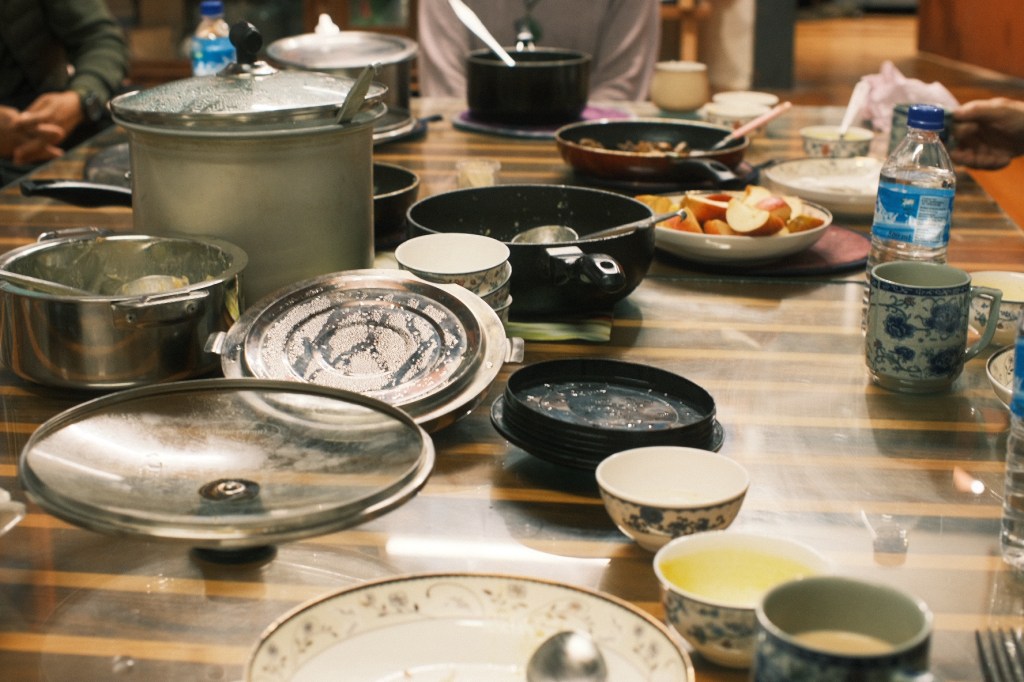
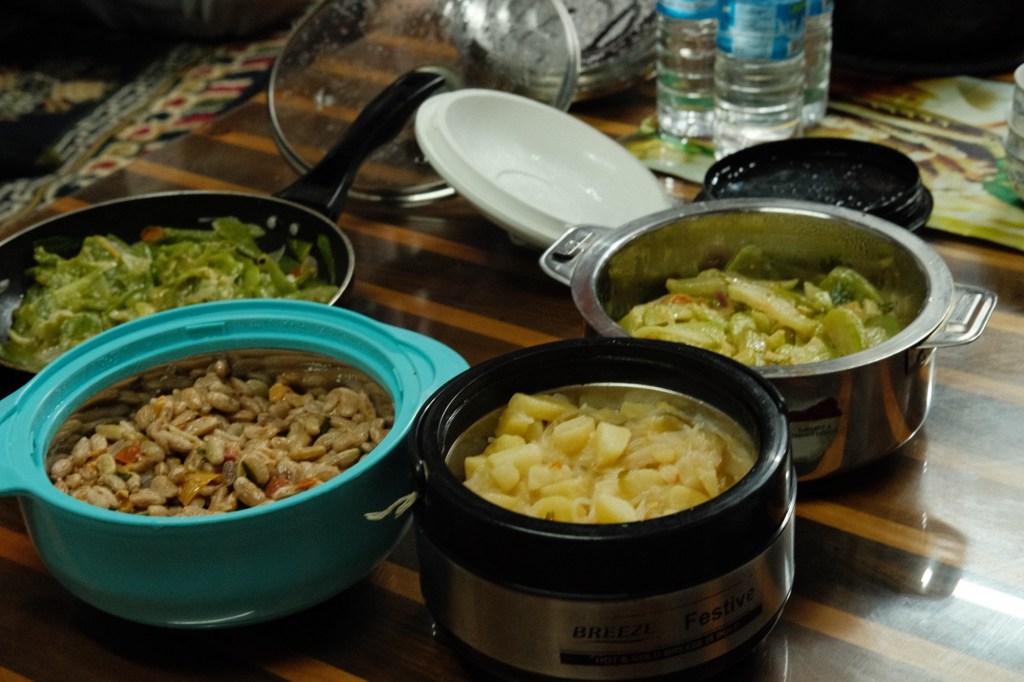
Renaud tried our hostess’ Ara — a local alcohol distilled from various grains, traditionally served to guest as a sign of hospitality — which tasted rather like a warm sake, and after some lovely conversation and a little more Dzongkha lessons, we headed back to the homestay room which was, it has to be said, absolutely lovely.
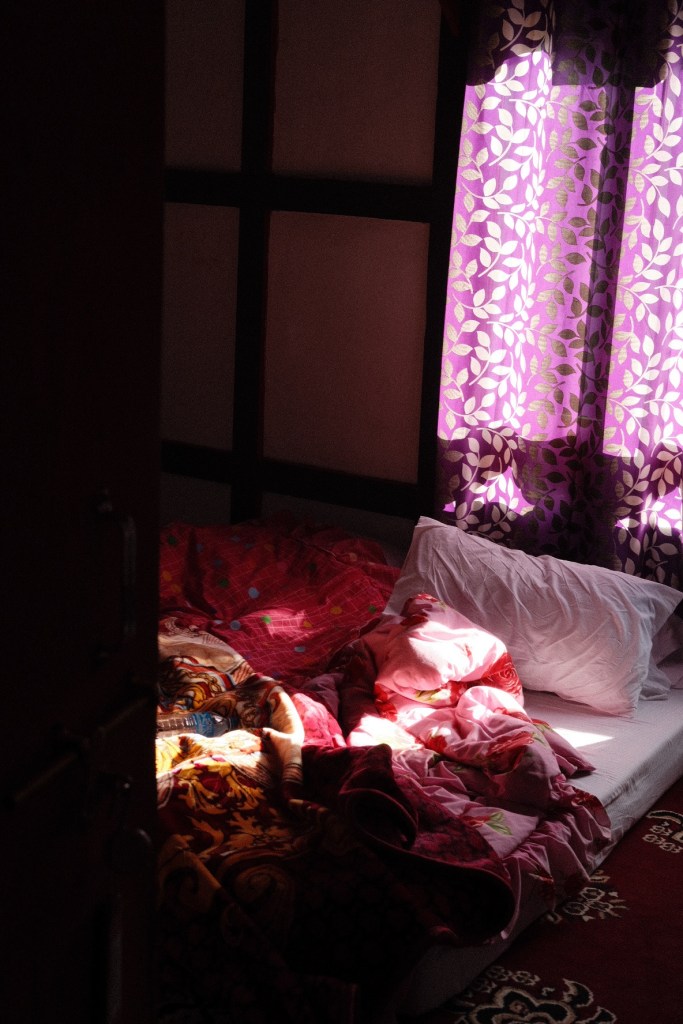
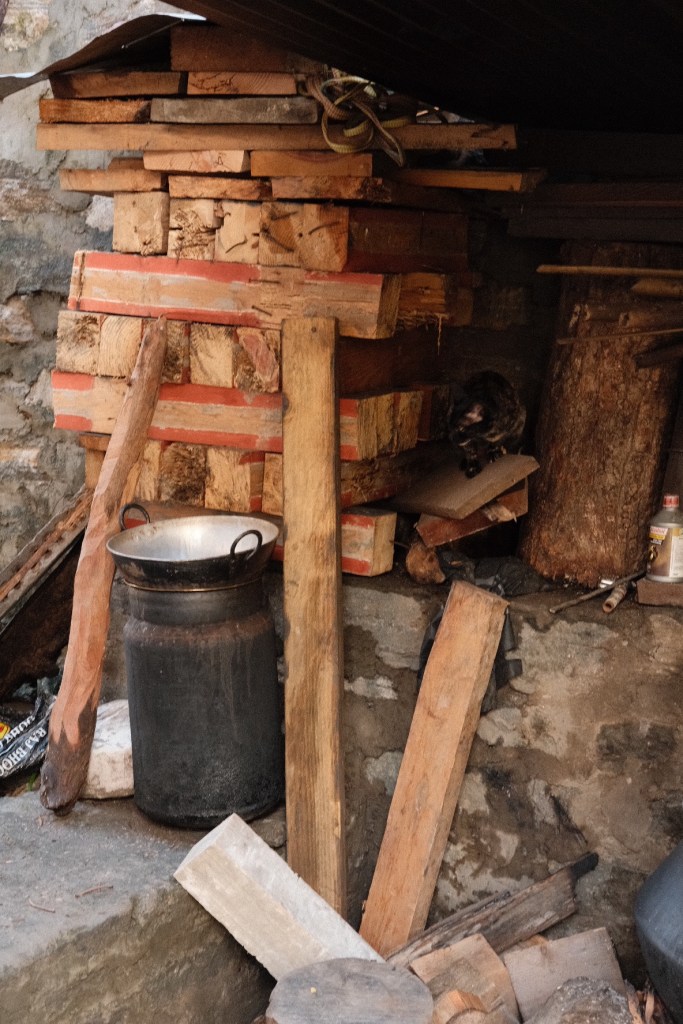
Somehow, a mattress on the floor and a shared bathroom in the hallway felt better than a fancy hotel room. Neighbours had built a fire in a pit outside the house and the air smelled like wood fire.
We fell asleep as soon as our heads hit the pillow.


 Renaud and Fee
Leave a reply to Montreuil.page Cancel reply