We woke to the dawn chorus of thousands of birds, bright sunshine, and a breathtaking view of the Yongkola valley.


The Yongkola district is famous for its many bird varieties, its jungles, and mild climate.
After a light breakfast, we headed off towards the Tang Valley in the beloved Bhumthang district, leaving East Bhutan, and entering Central Bhutan.
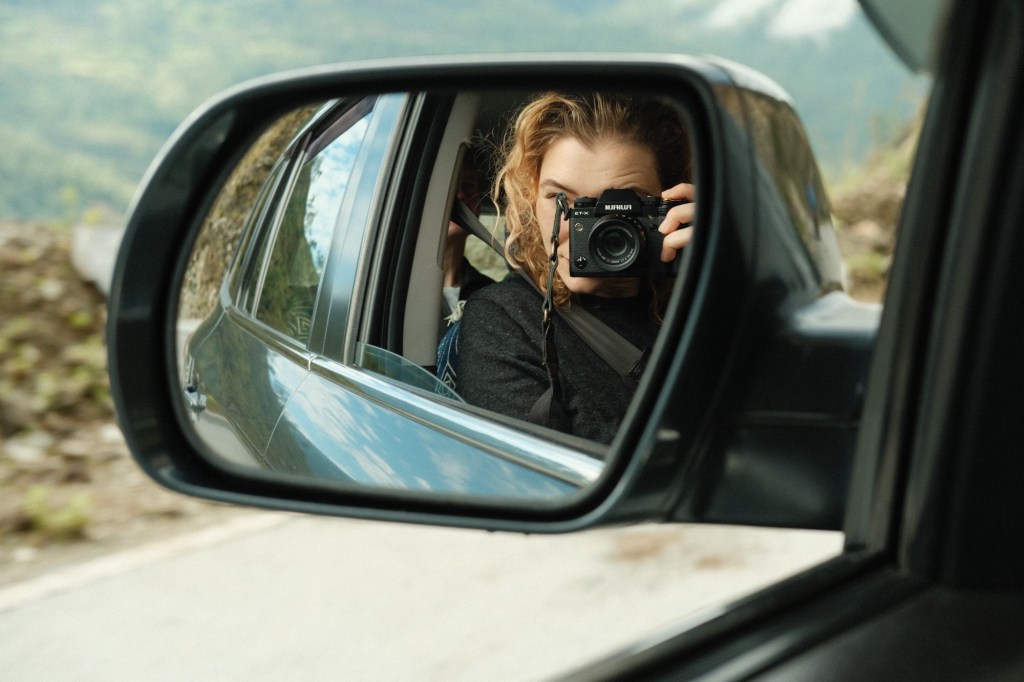
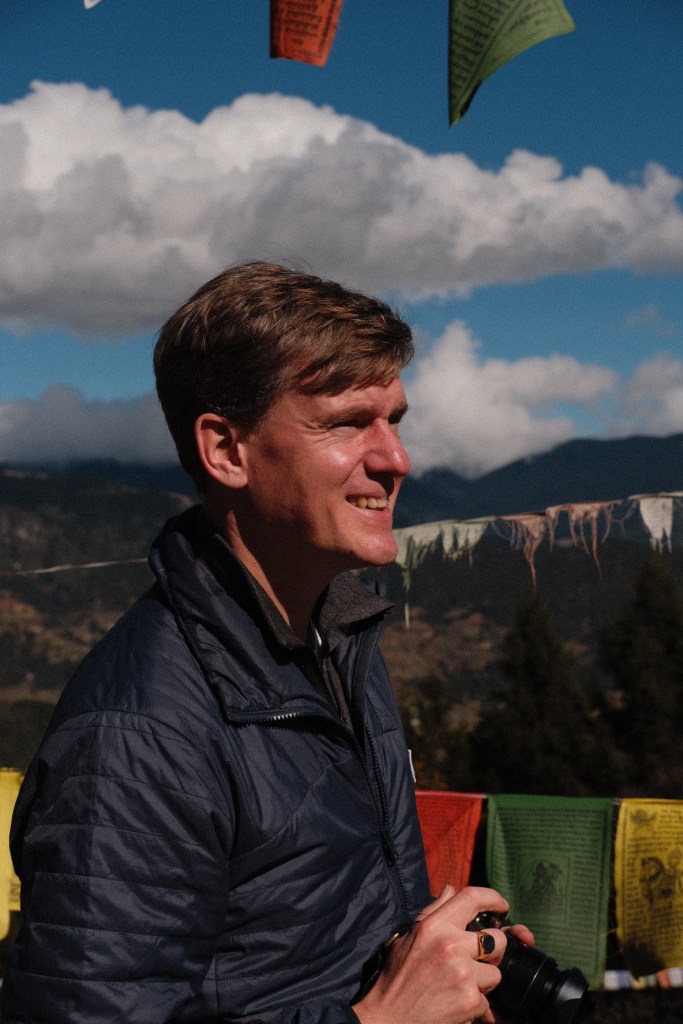
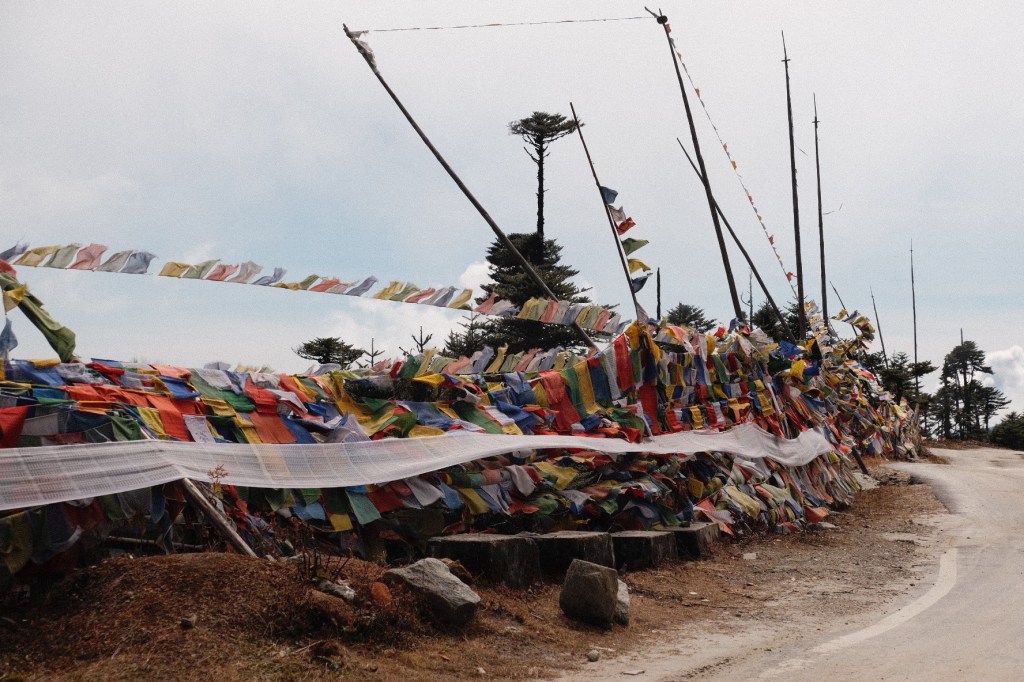
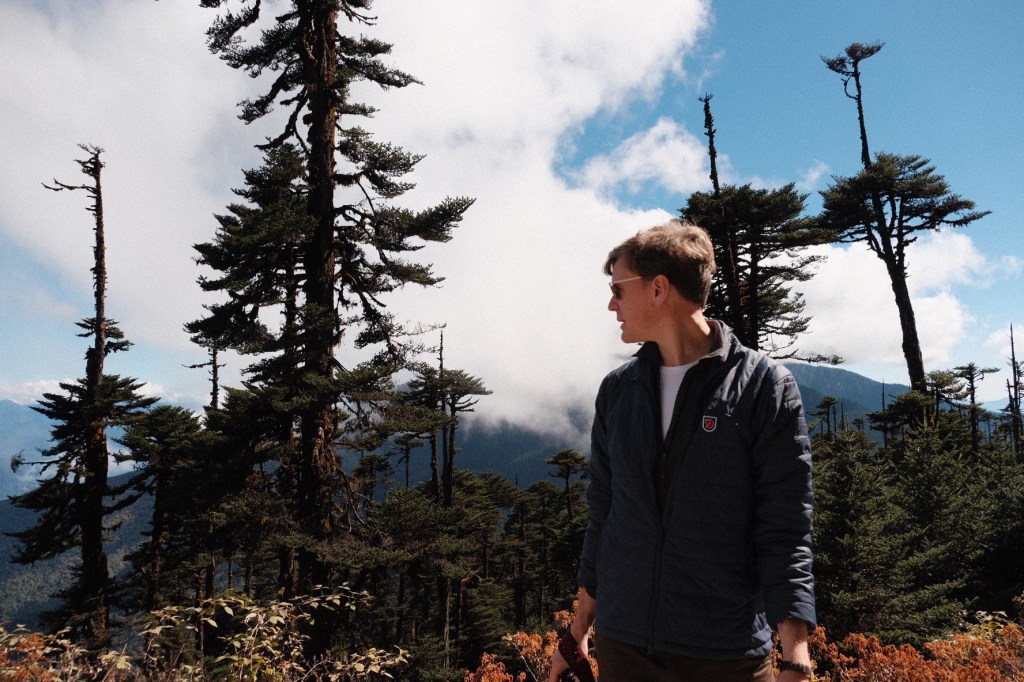
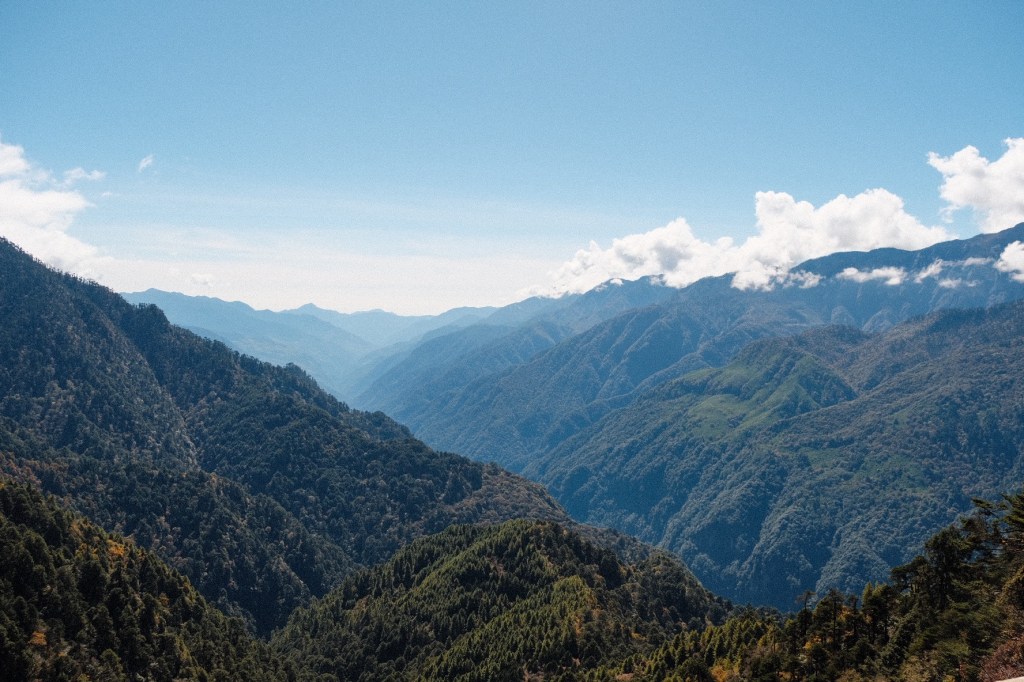
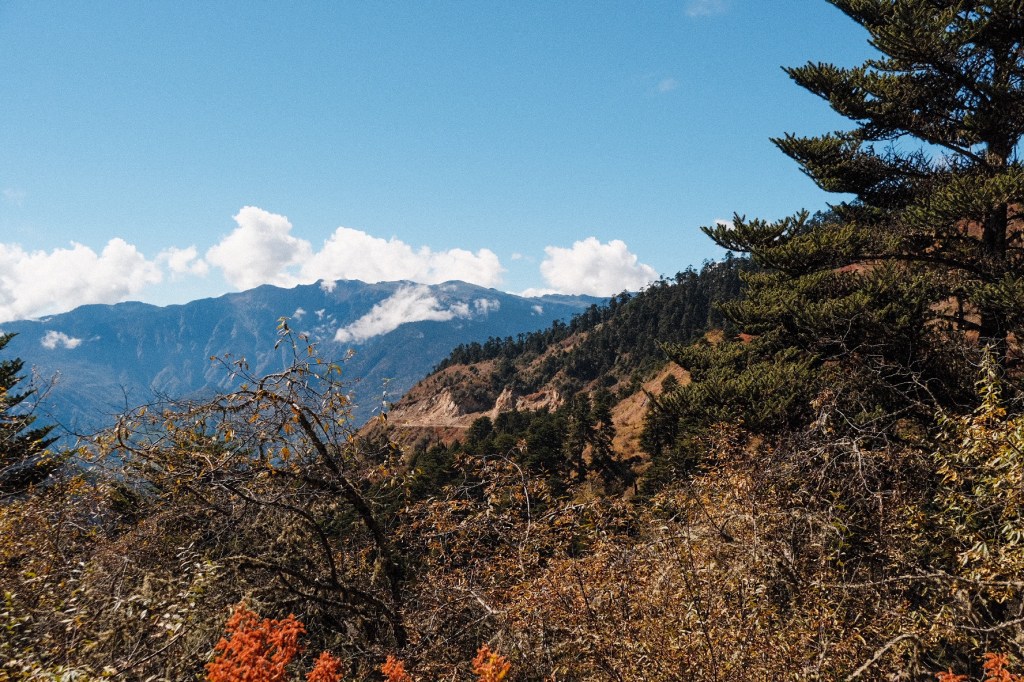
On our way, we had to cross yet another mountain pass, driving through endlessly beautiful pine forests to reach Bumthang district.




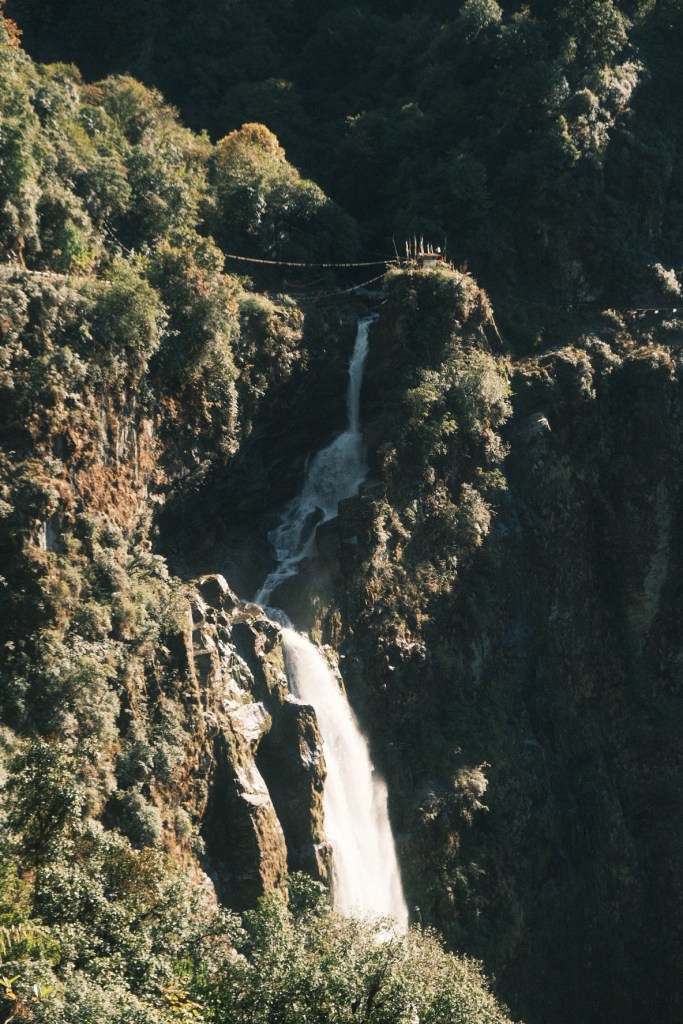
Our path took us past Namling Brakh, one of the biggest waterfalls in Bhutan, and a terrible danger in the old days before the road, when it regularly swept travellers off the cliff.
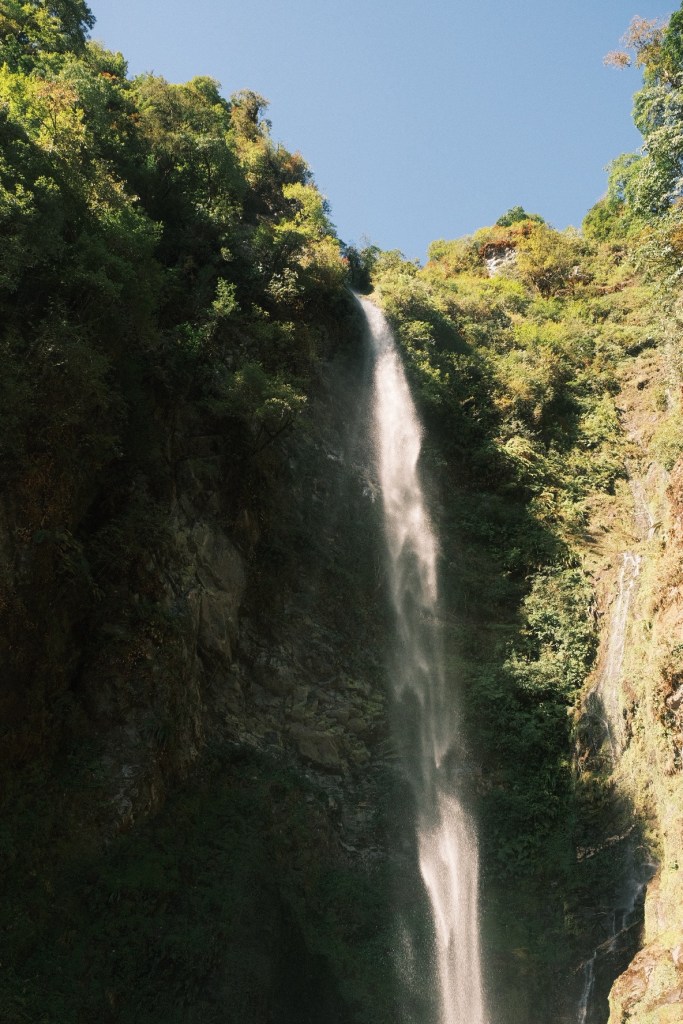
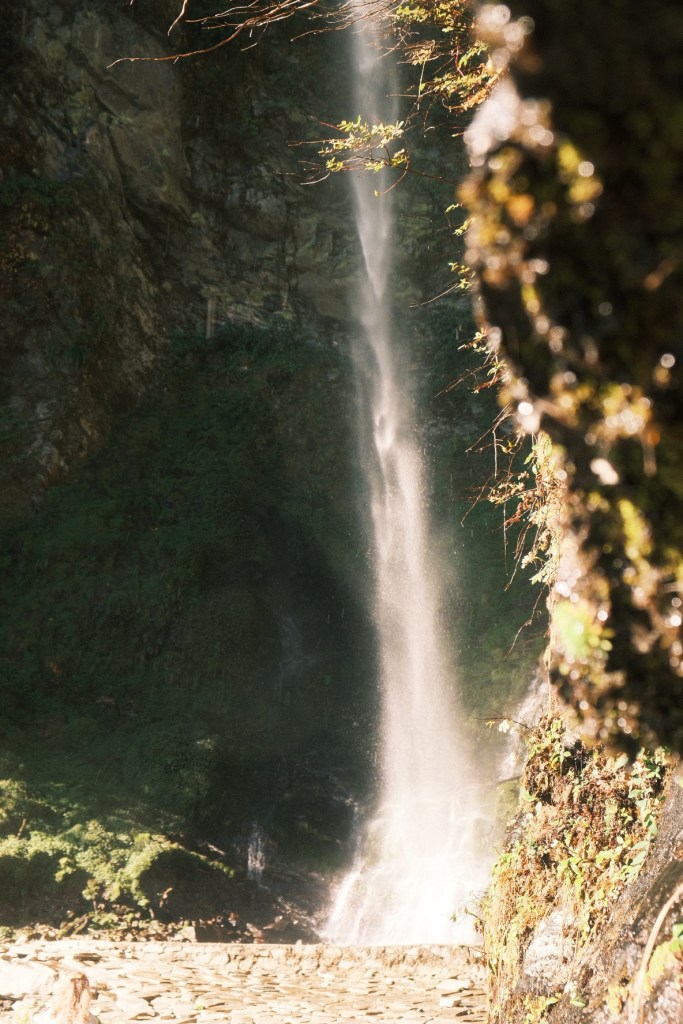


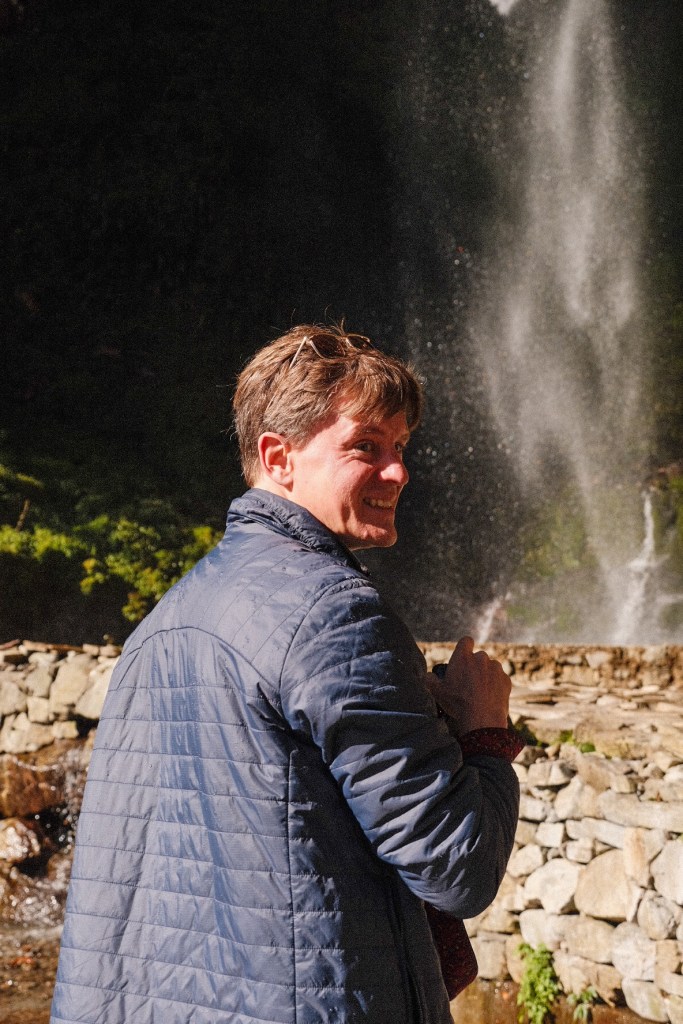
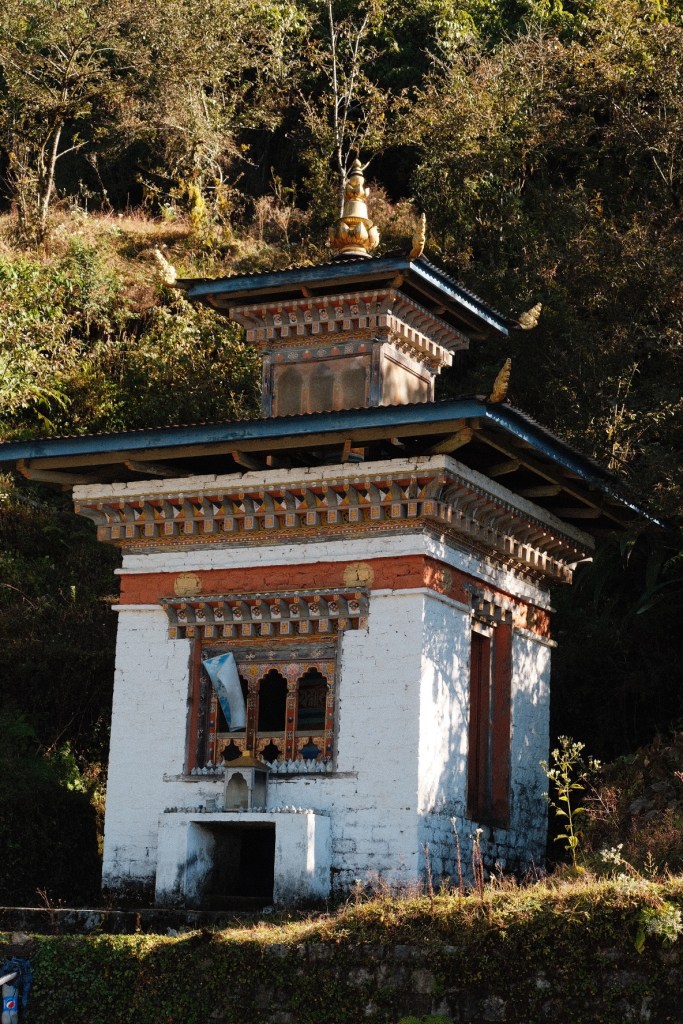
At the top of the waterfall is a stupa, there to tame the dangerous water, and pay reverence to its manifest power


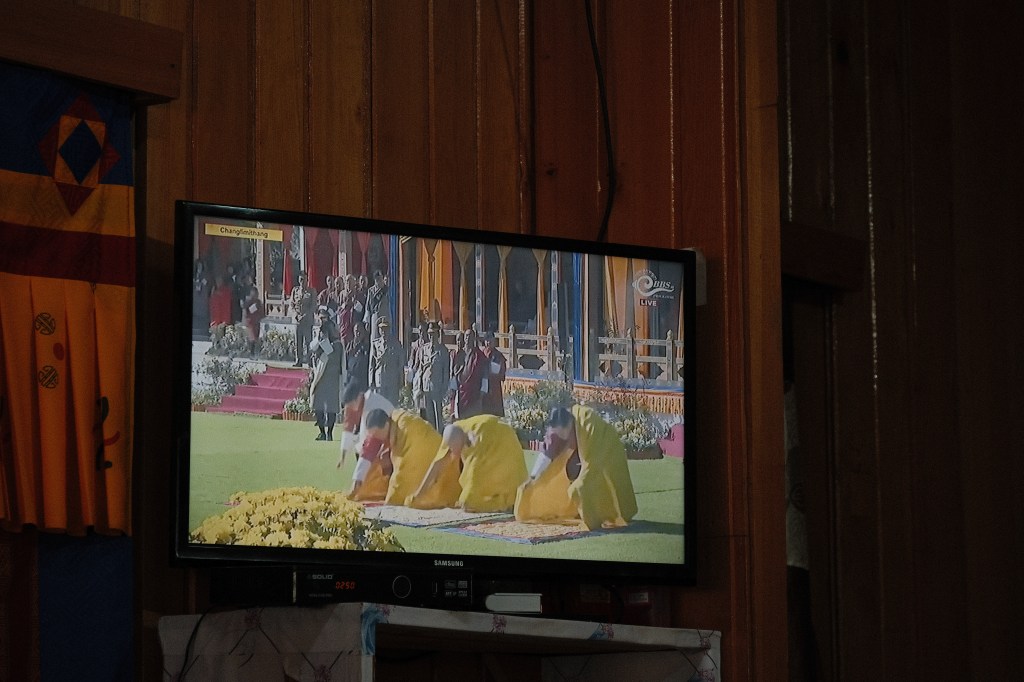
We stopped along the way at a familiar restaurant for a cup of milk tea, and the live casting of the opening ceremony for the Global Peace Prayer Festival in Thimphu on the 4th of November, consisting of several days of prayers and chanting by the highest bhutanese monks for universal peace and the wellbeing of every living being.

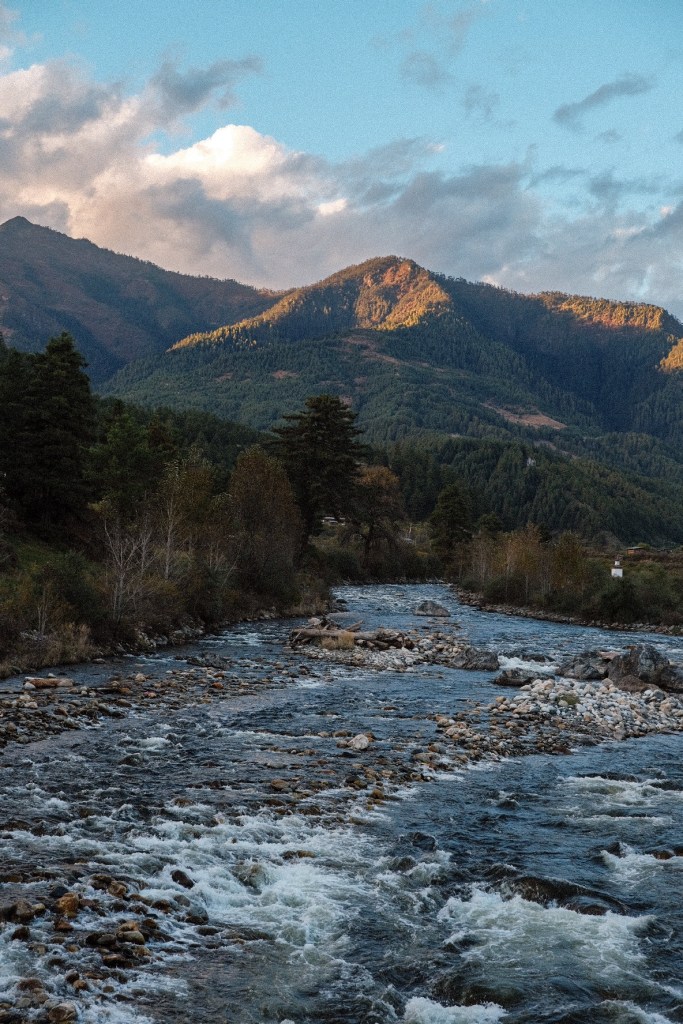
It’s honestly rather difficult to capture the beauty of the Bhutanese landscape in photographs. It’s vast and wild and rich in colour in ways that we can’t do justice to, and it simply extends… forever.
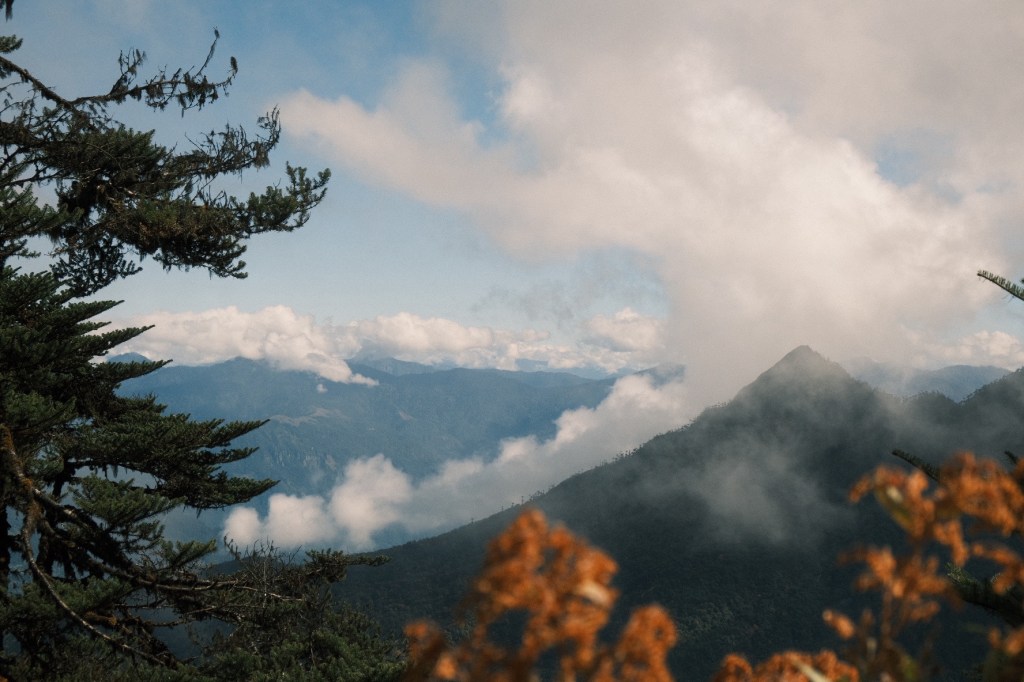
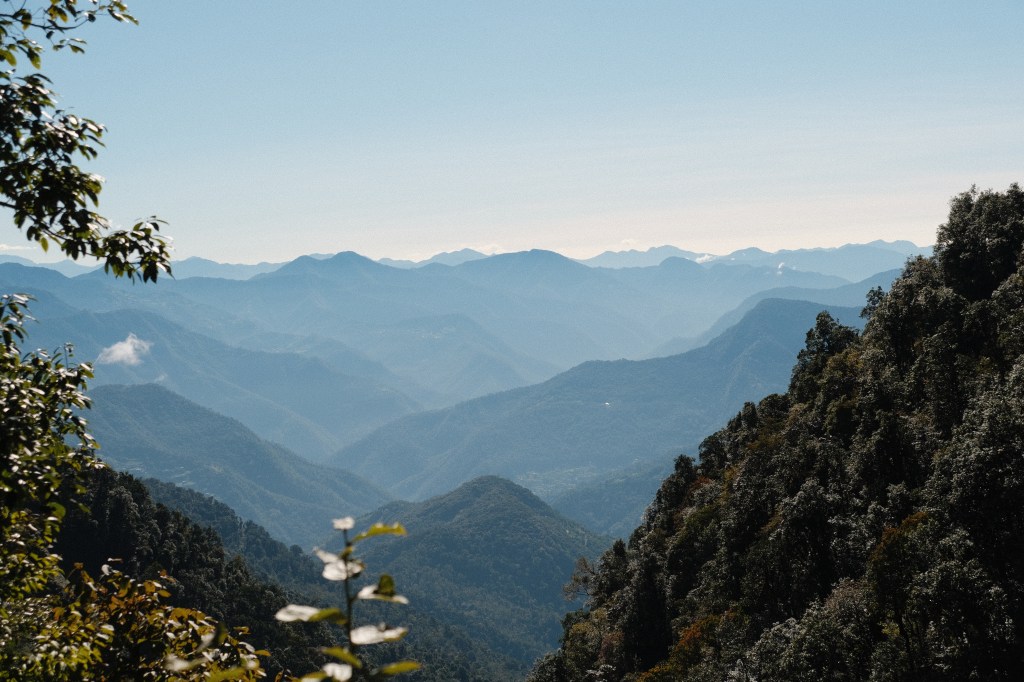
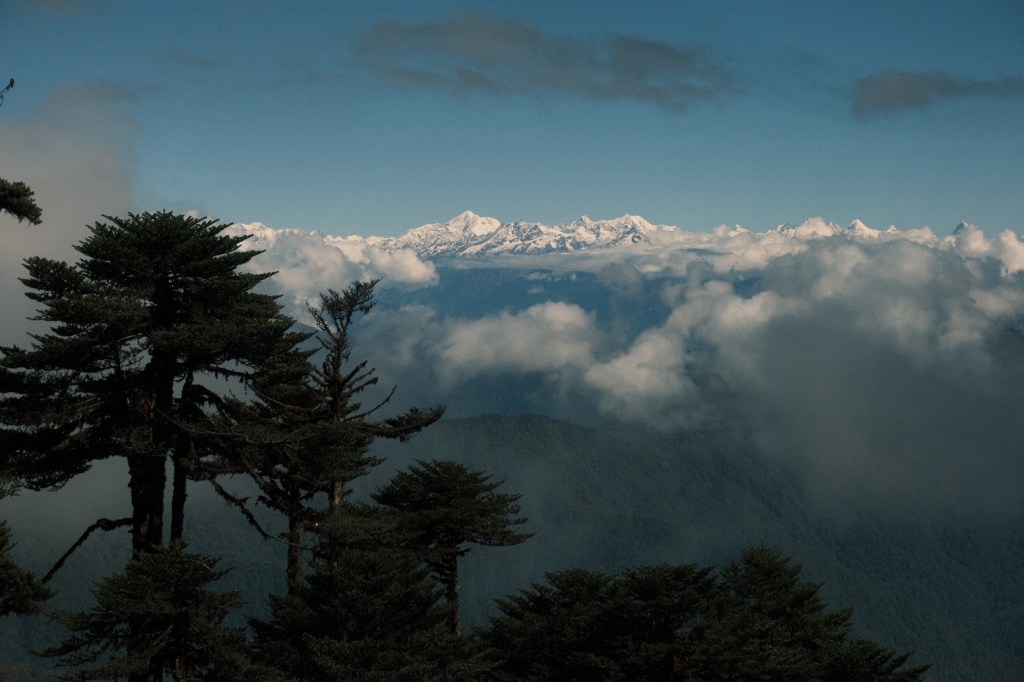

We dipped into the Autcho valley on our way for a lunch break, in a small cafe that spoke a Bumthangese dialect our guide struggled to understand, and who made their own buckwheat muffins (rather dry, but lovely when dipped into milk tea).


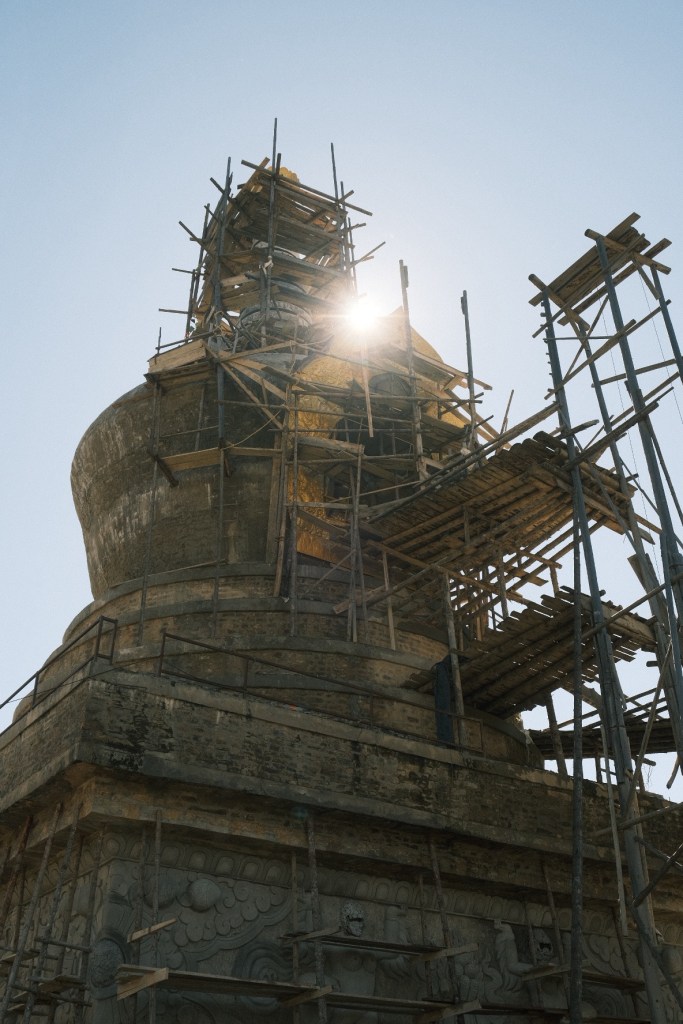
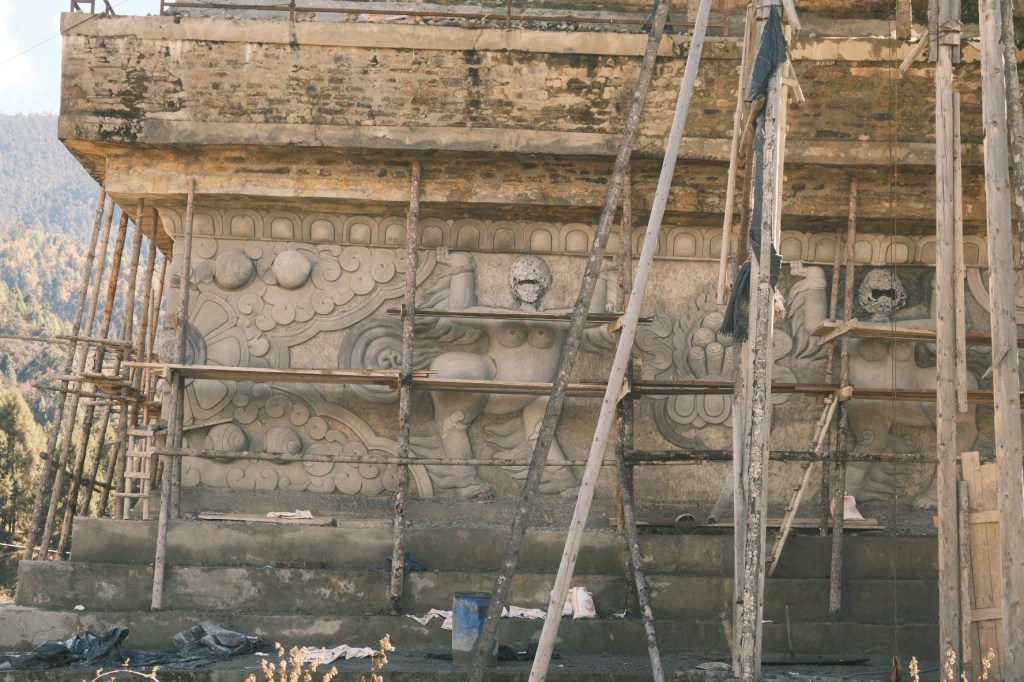
The food was delicious, and we ate within spitting distance of a stupa that has been under construction for 10 years and looked like something straight out of an Indiana Jones movie.

And then onwards, onwards to the Burning Lake!
When Guru Rinpoche brought Buddhism to Bhutan, he reportedly hid many holy treasures throughout the land, and over the years sacred “treasures revealers” have uncovered these artefacts.
One such treasure revealer was Pema Lingpa, who famously proved his sainthood by diving into the lake with a burning butter lamp, and reemerged with the lamp still burning, and the sacred treasure in-hand.
It is a site of pilgrimage for many, who hope to see a stupa in its depths and have their wishes granted, and it’s beautiful.
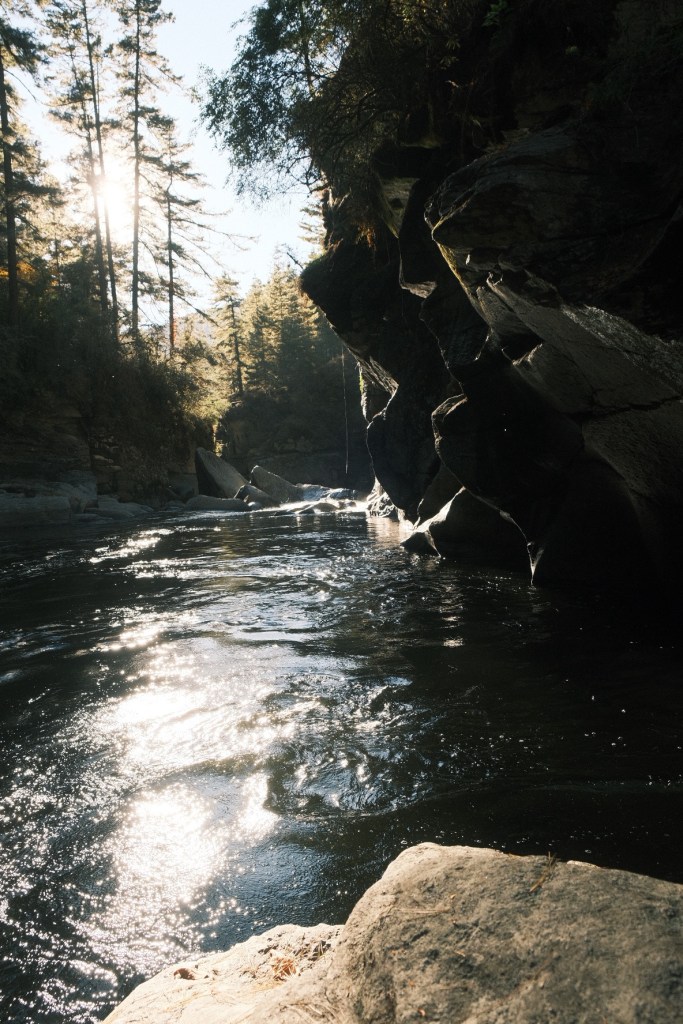

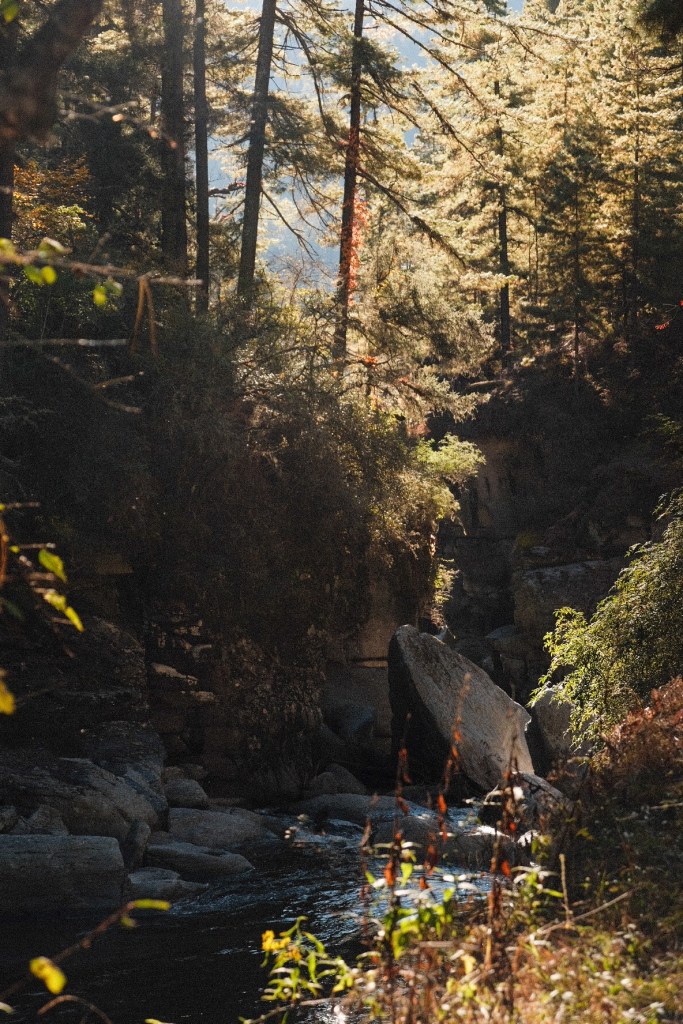

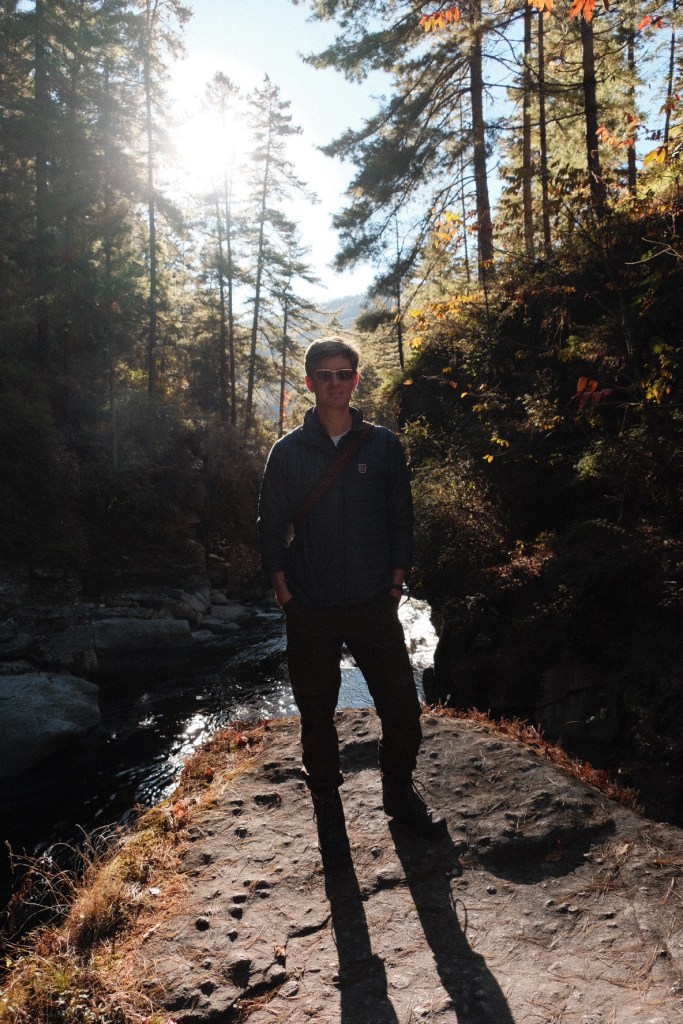
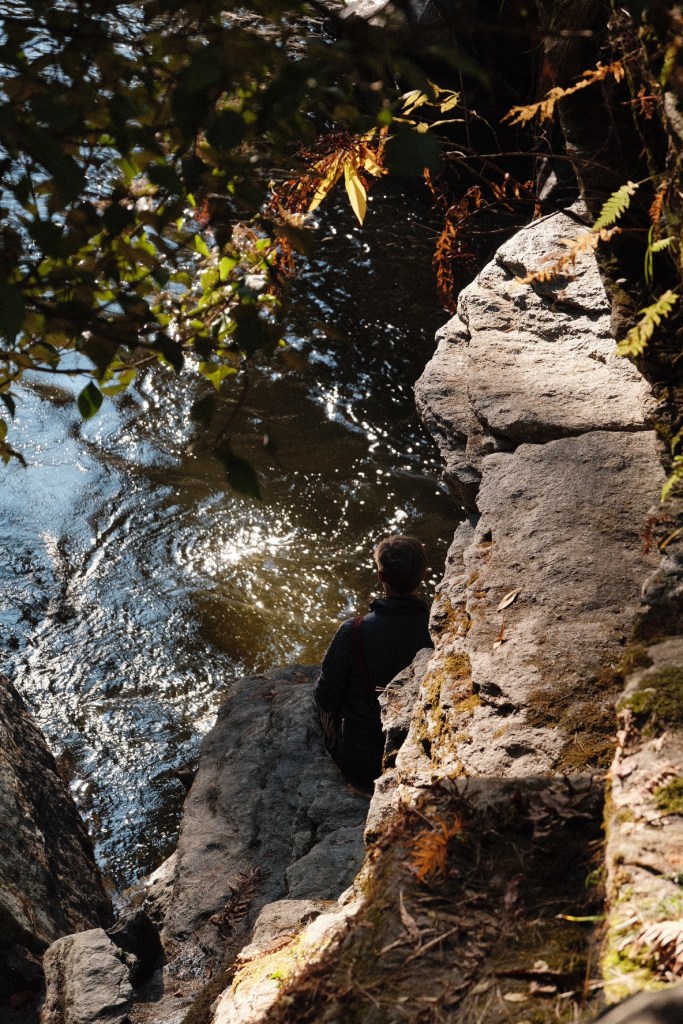

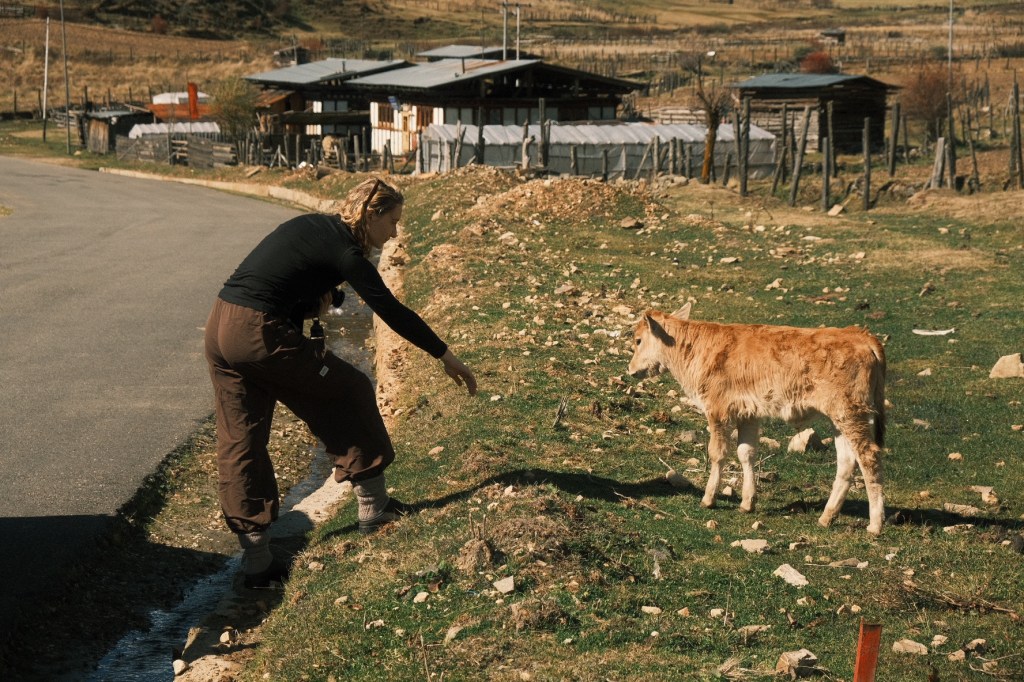
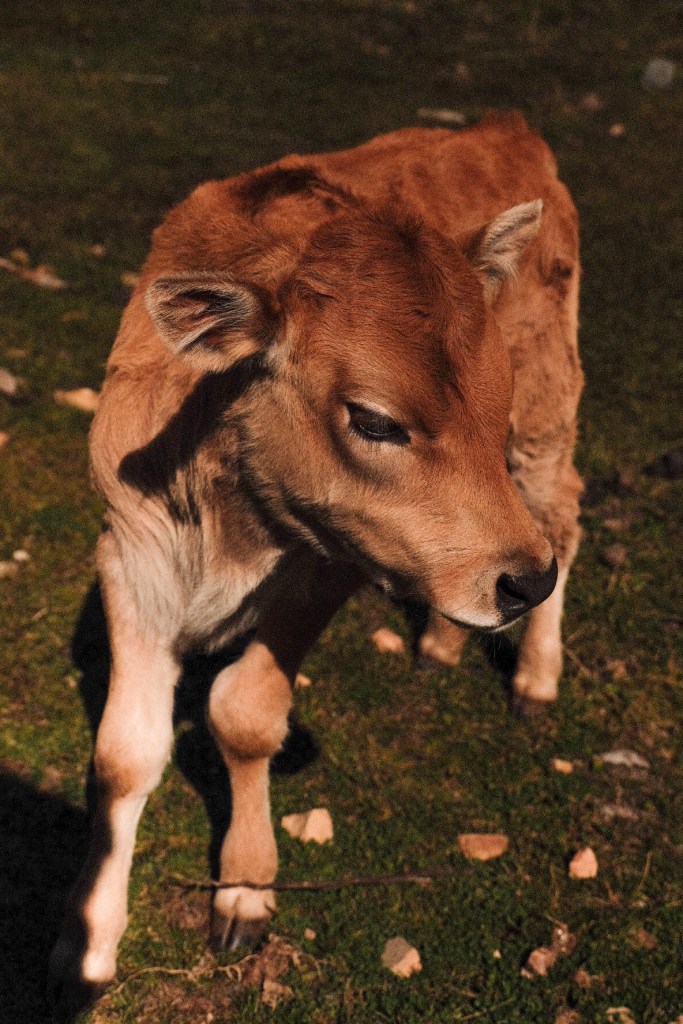
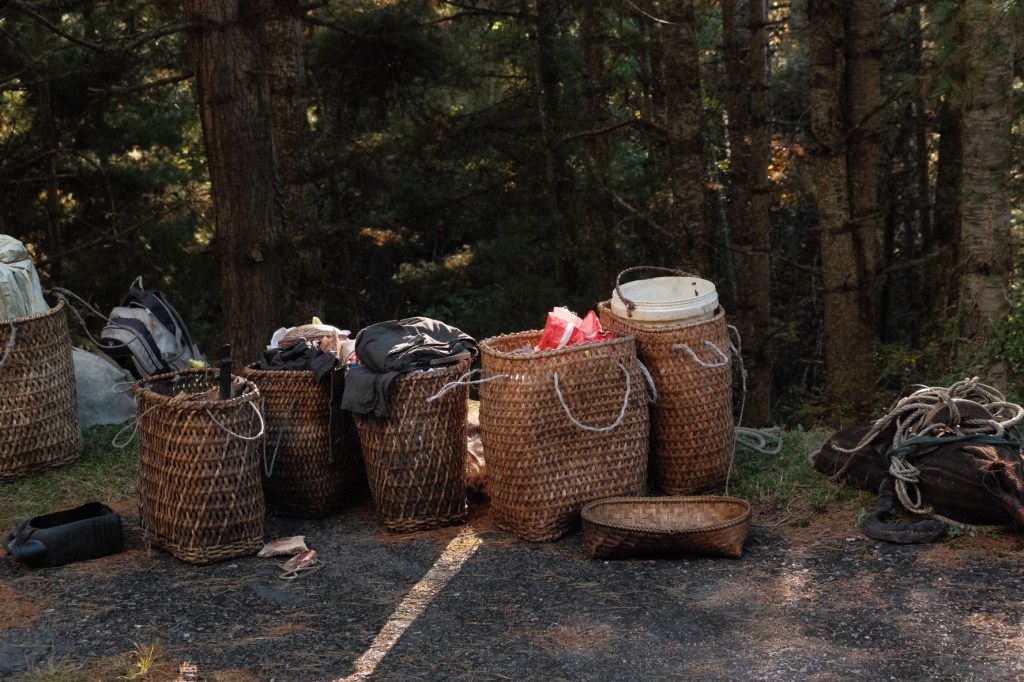
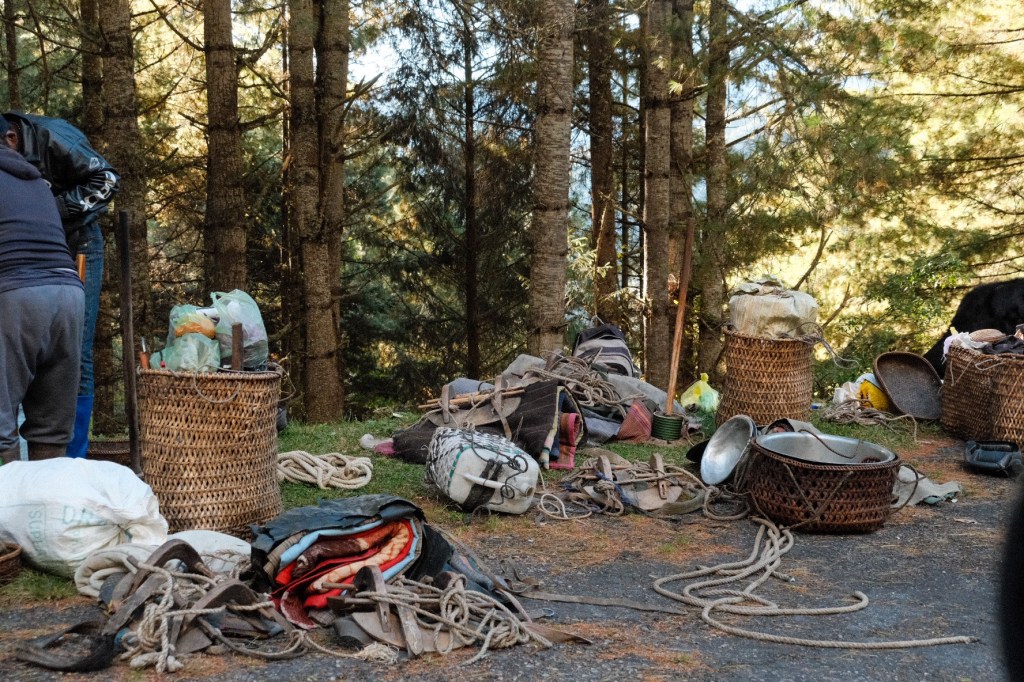
On our way from the Burning Lake, we passed a herd of cows and their travelling herders, exchanging news and trading goods on the roadside.


And then another long drive through pine forest, the road ever turning along the mountains, and down into the Tang Valley, and Bhumthang.

The Ogyen Choling Heritage House is one of Bhutan’s few so-called “manors”, mixing elements of the architecture of Dzongs —the thick walls, the central tower, the surrounding galleries, the in-house temple— with elements and aesthetics of traditional Bhutanese residential buildings, to striking and beautiful effect.

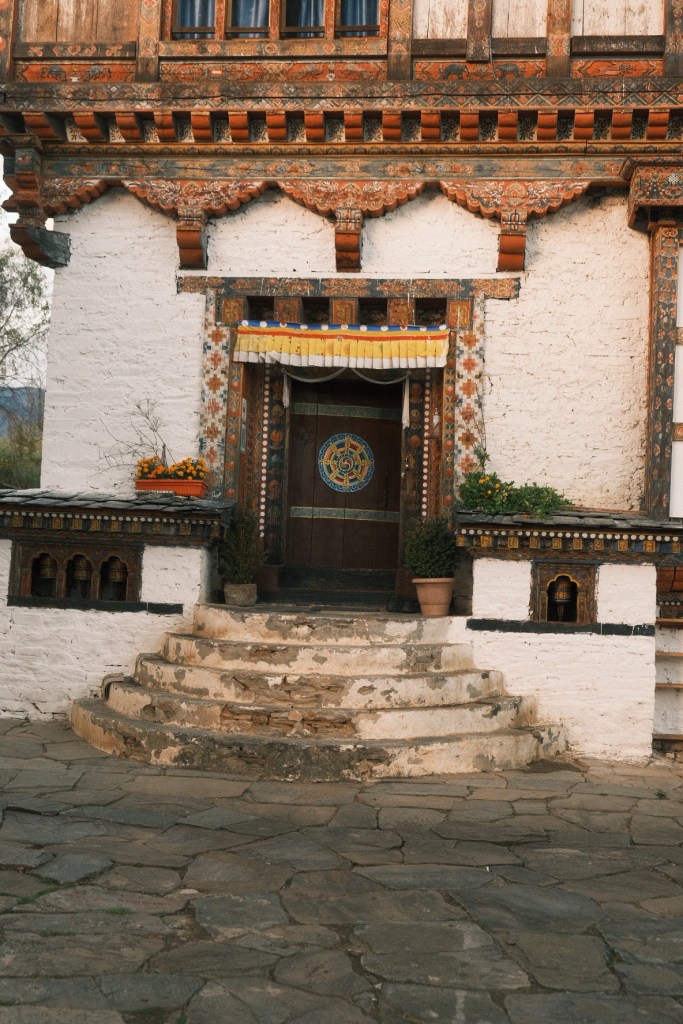
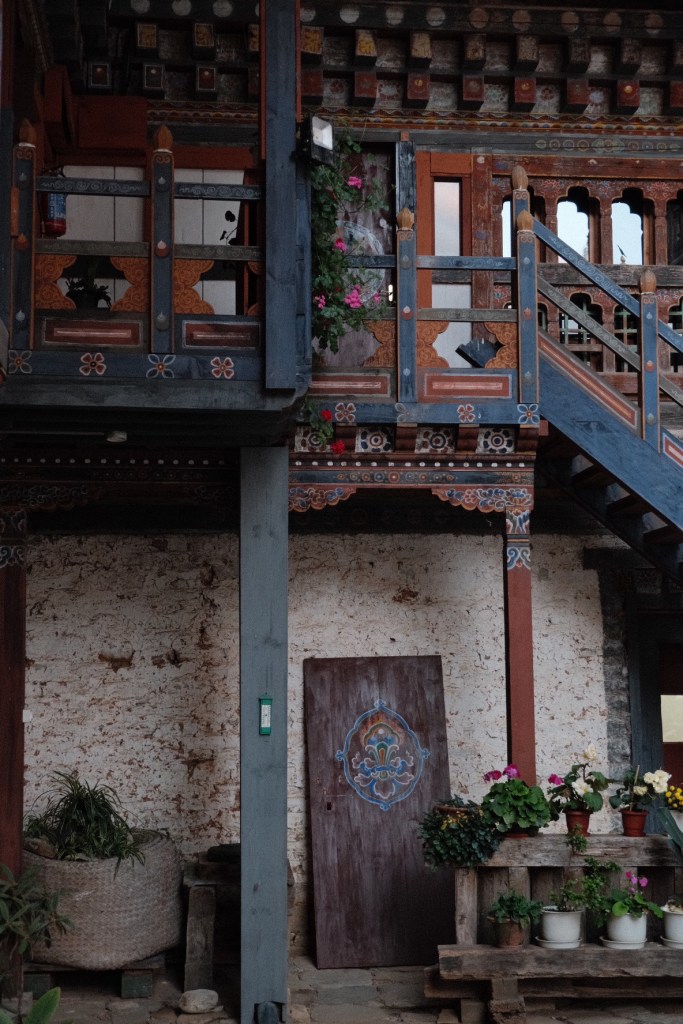
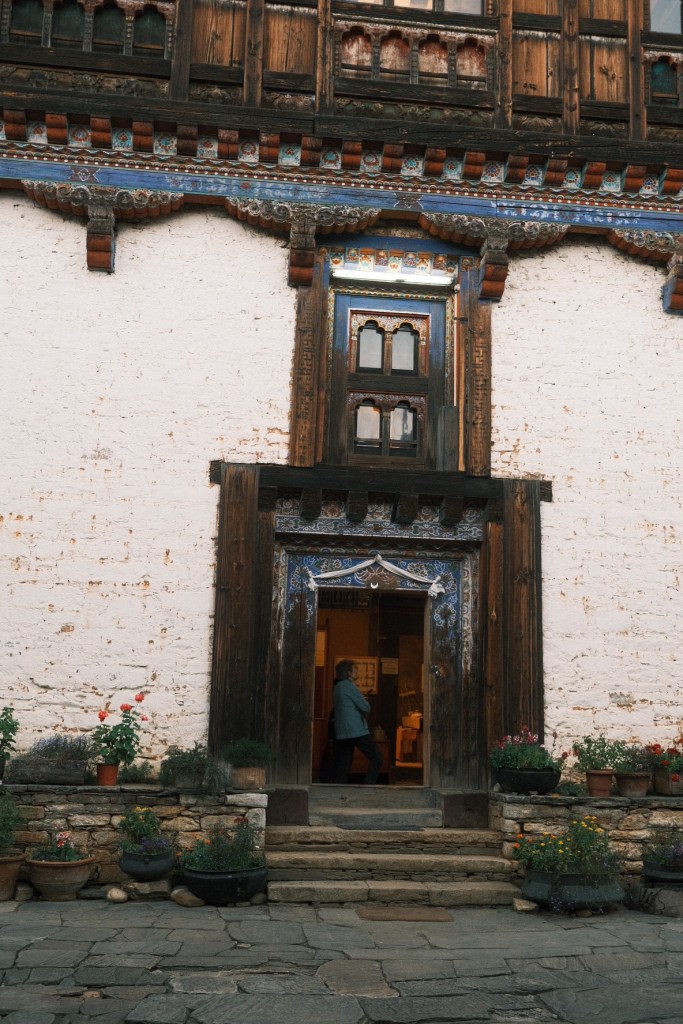
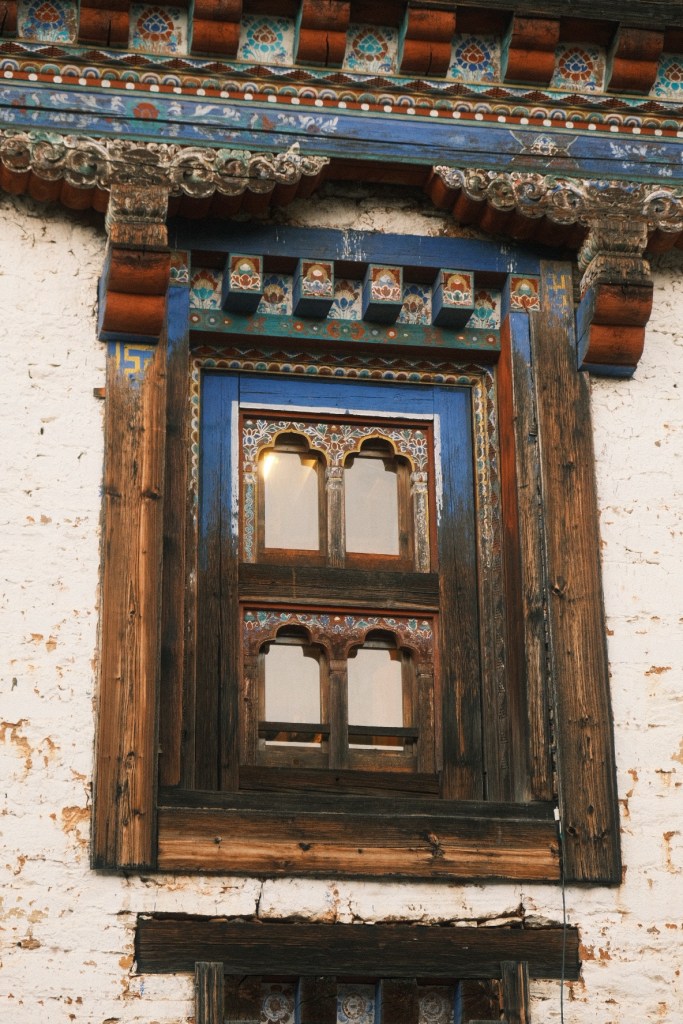

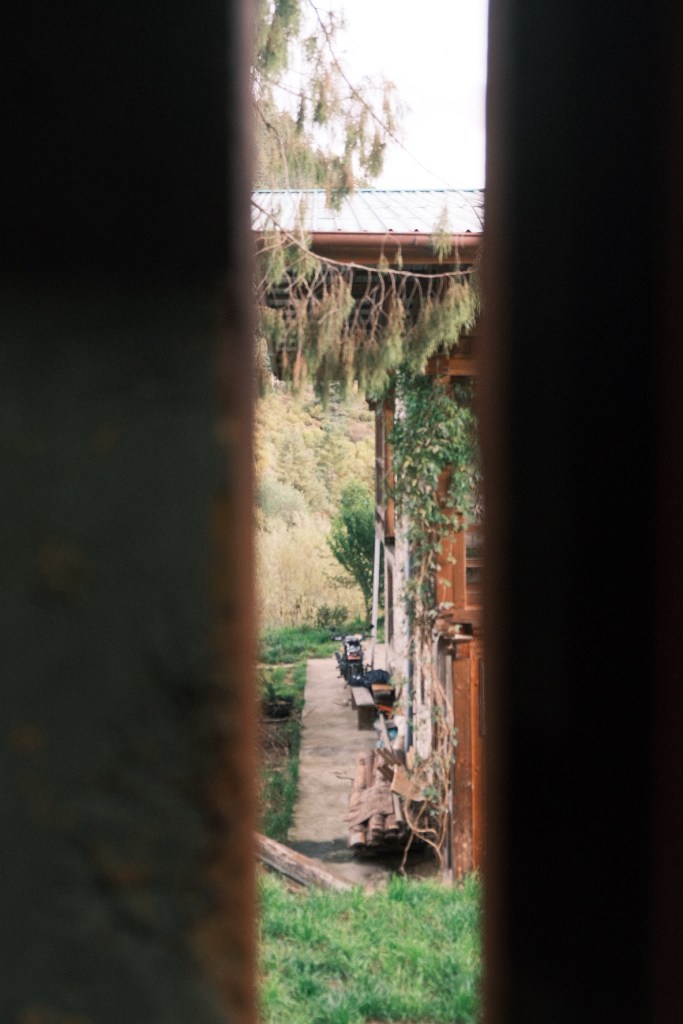
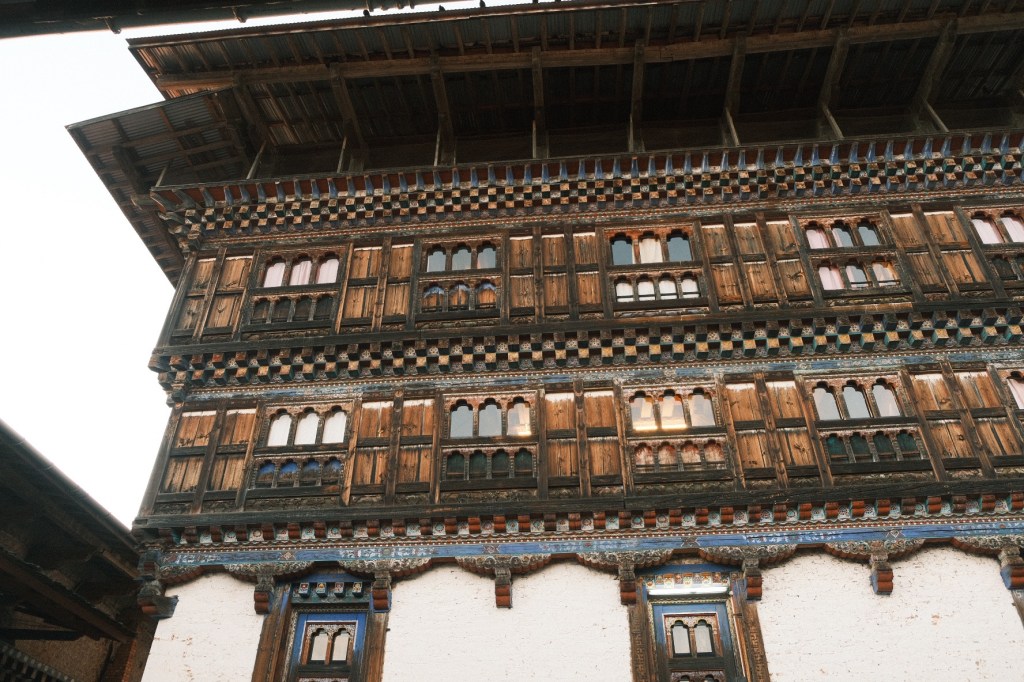
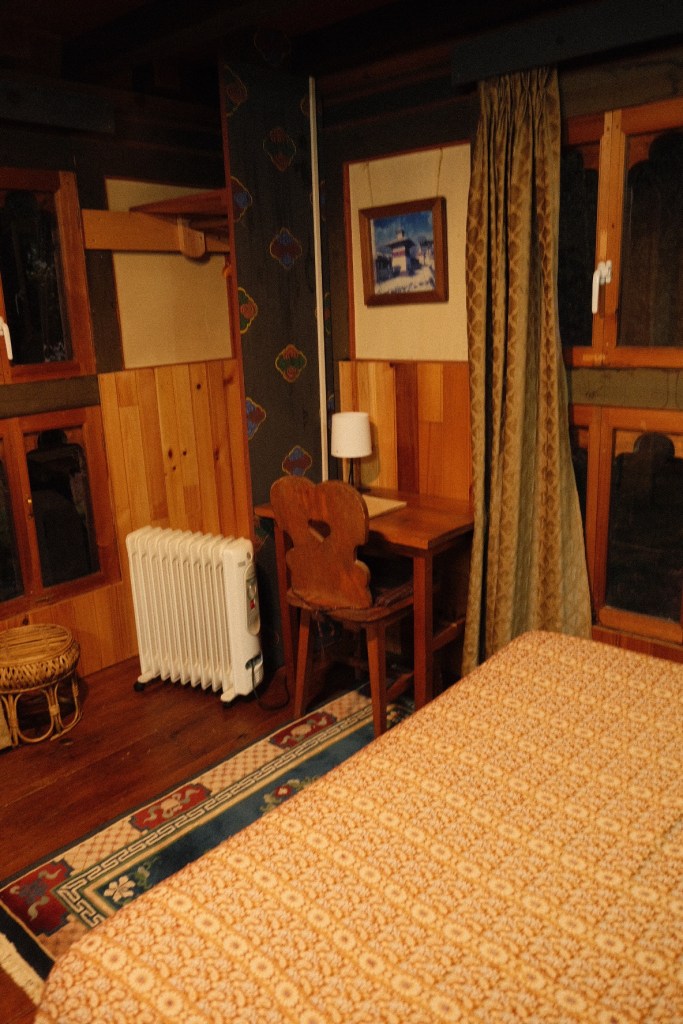
The house-owners partner, Walter, informed us the next morning that our room was once the best room in the house, and then laughed saying “it’s not any more,” but we have to say it was absolutely lovely.
Cozy and quiet and charming, with a lovely view of the surrounding gardens.

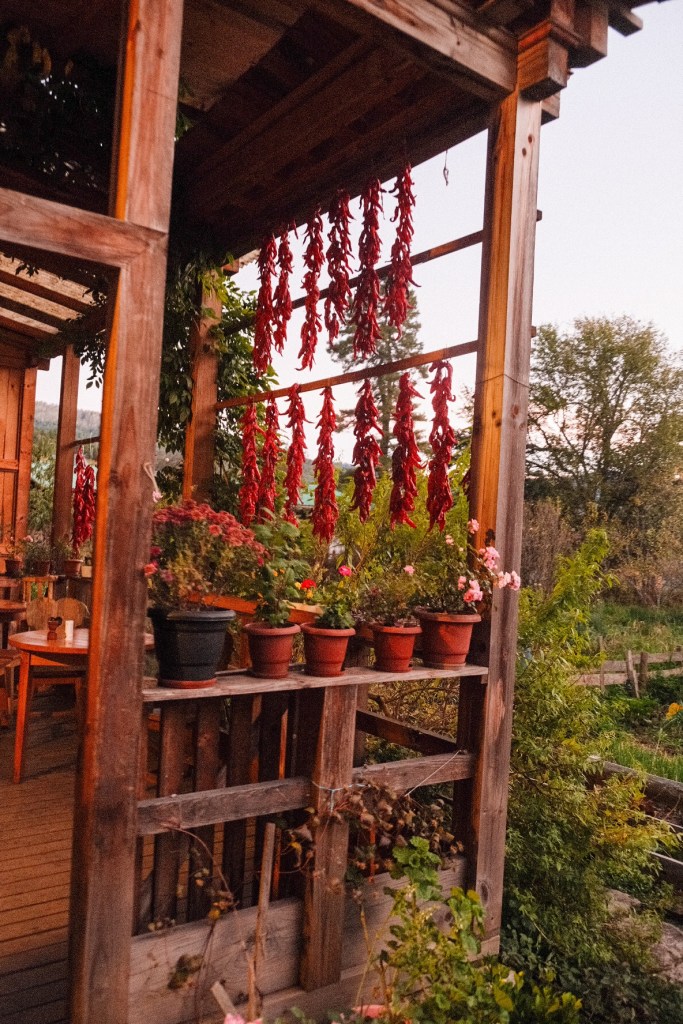

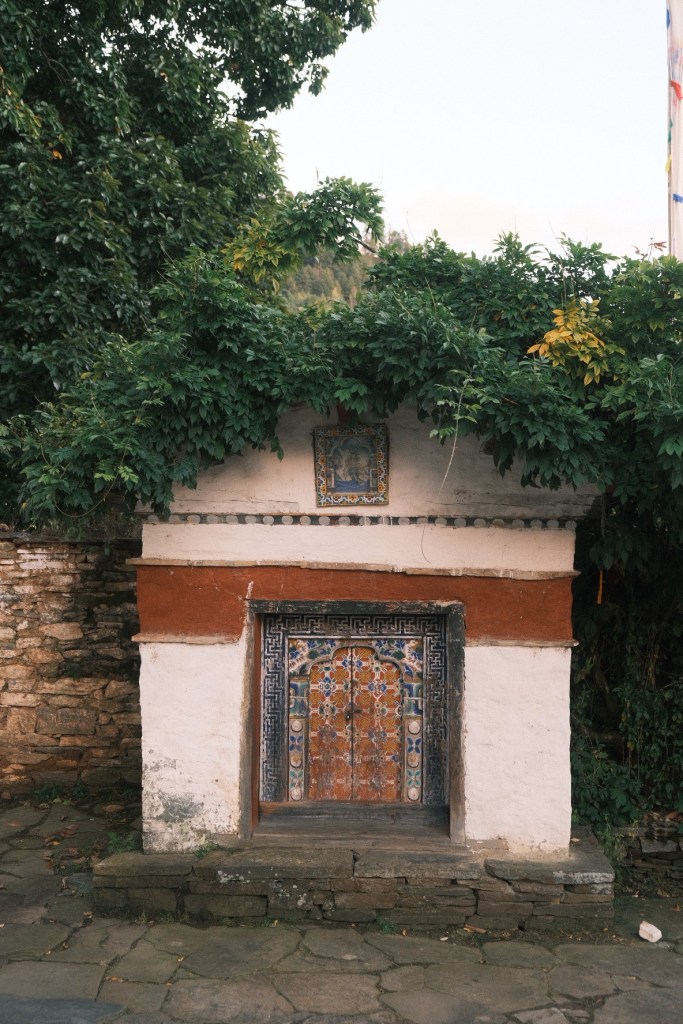
By the evening, the entire house had a fairytale quality about it. Soft-lit stupas and decorative details surrounded us, a gentle convivial atmosphere among the guests, our hostess guiding dinner preparations in the kitchen with soft words and warm hands.
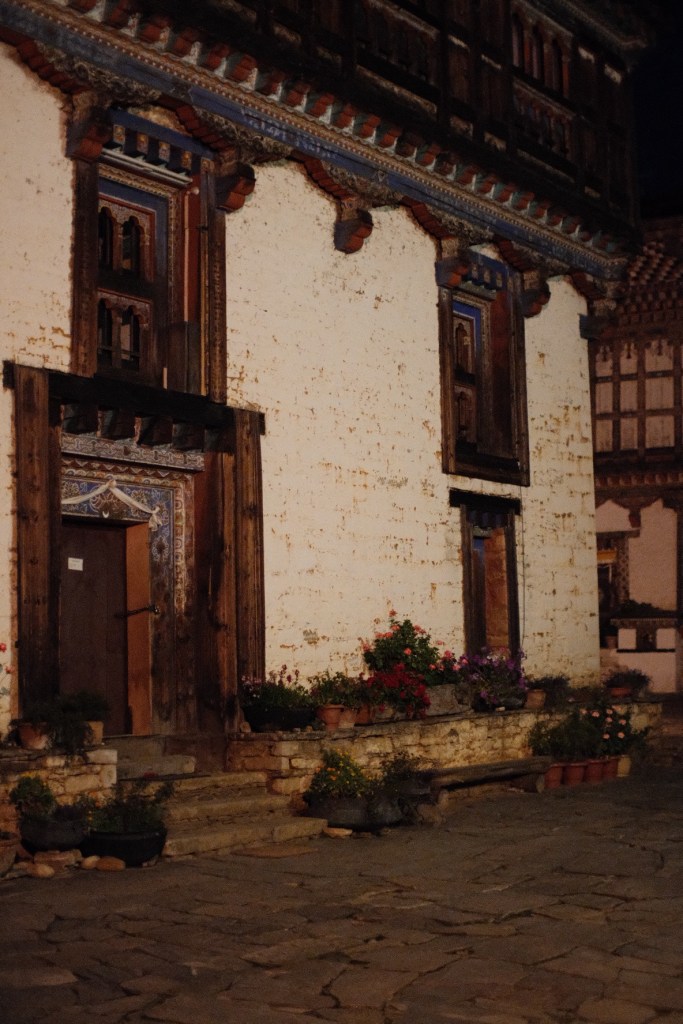
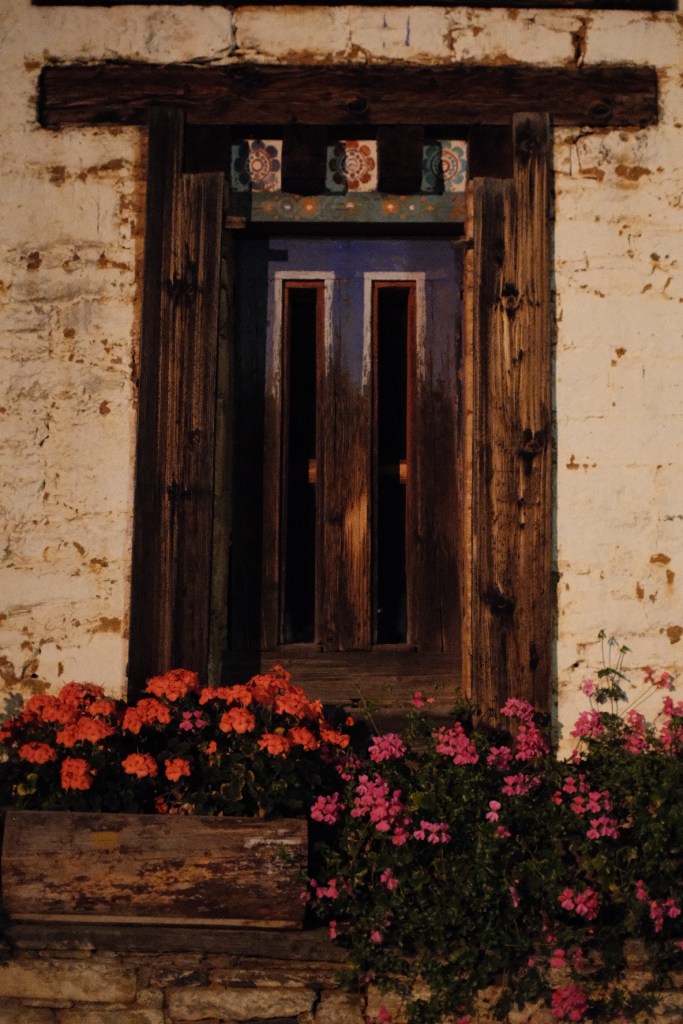

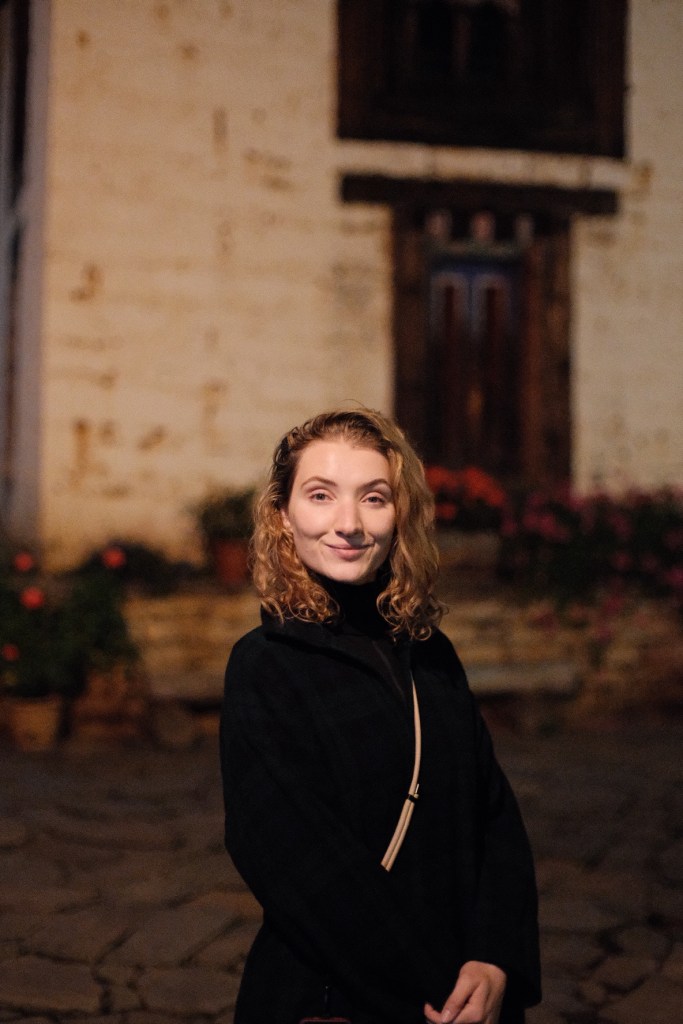
If we could have stayed there another night, or ten, we certainly would have.
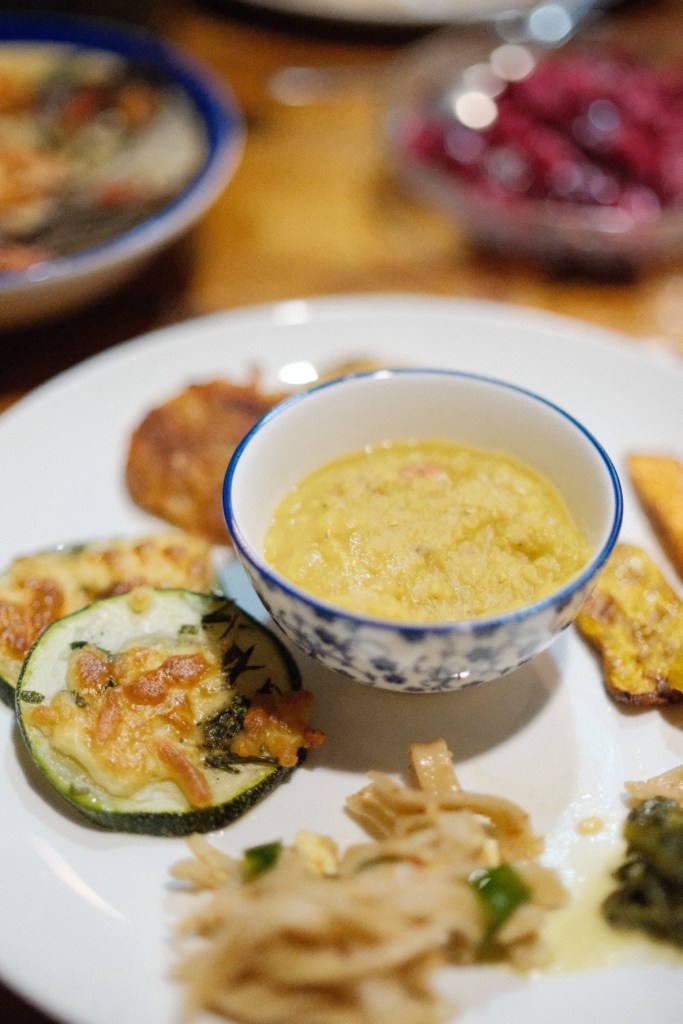
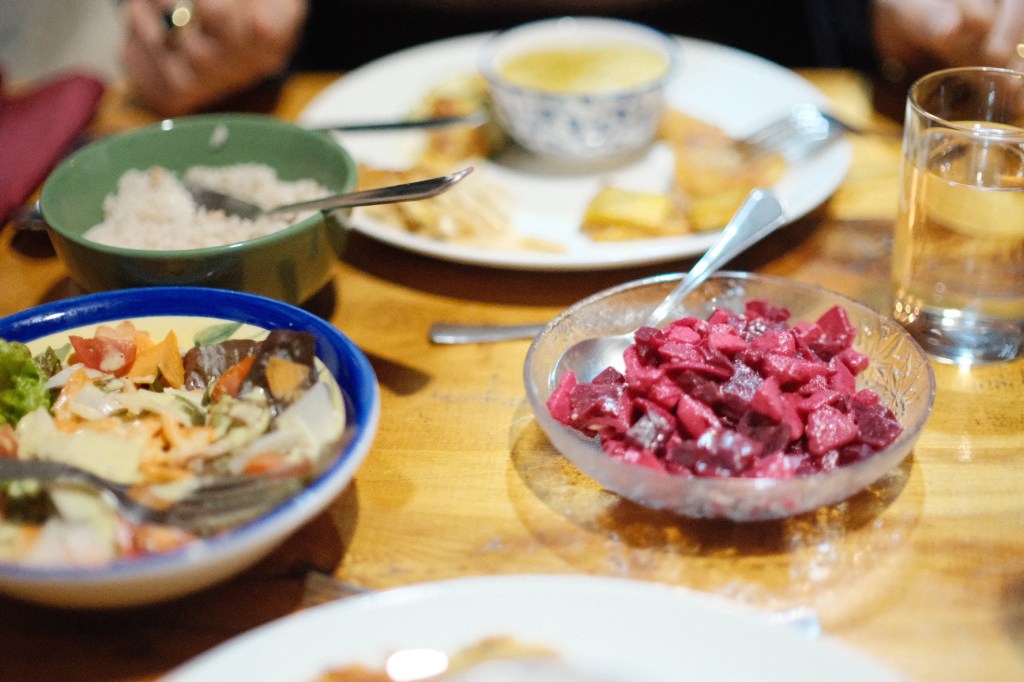
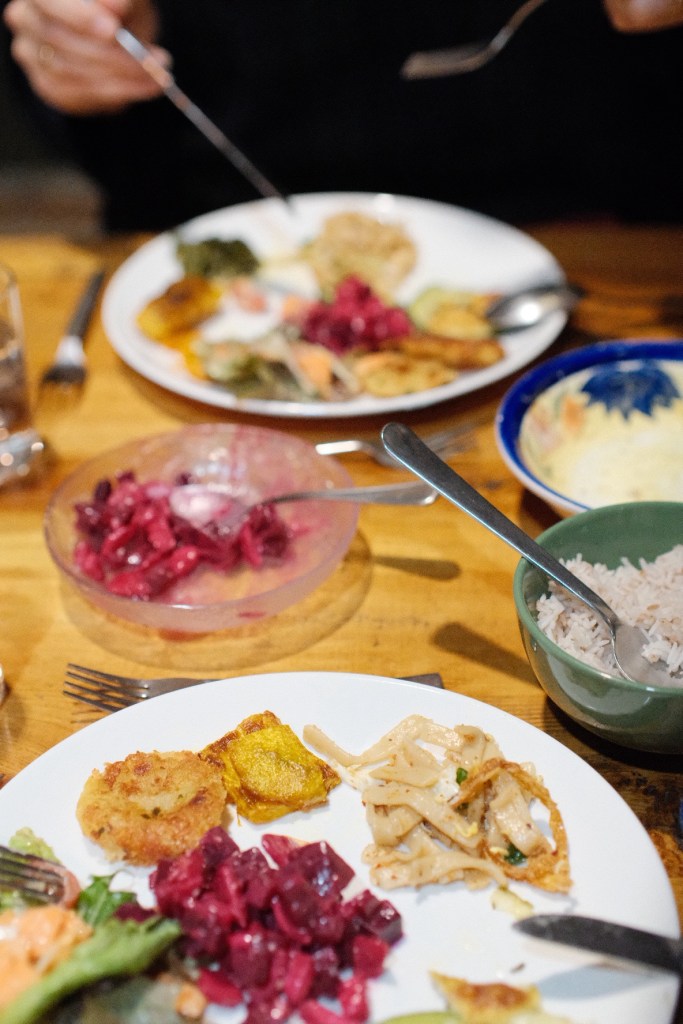
Dinner was absolutely delicious, and completely unique in our experience here, a blend of the modern and the traditional, reinvented and delicious.
And salad! How we had missed salad, and it was so good!
We hope you’re all having a wonderful time out there, and we’re thinking of you!


 Renaud and Fee
Leave a reply to Felicitas Jarchow Cancel reply